
Echinopla fisheri
- Nama Ilmiah
- Echinopla fisheri
- Tribe
- Camponotini
- Subfamili
- Formicinae
- Penulis
- Zettel & Laciny, 2015
- Distribusi
- Ditemukan di 0 negara
Pendahuluan
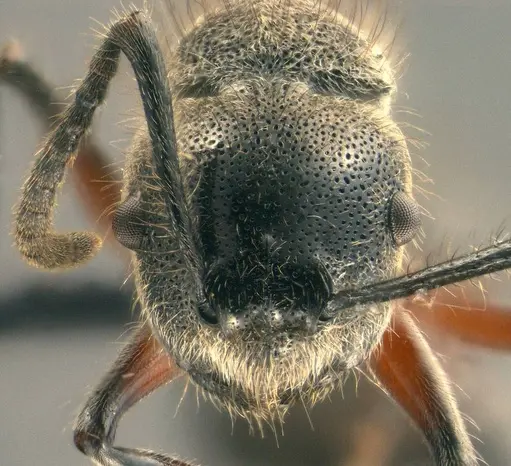
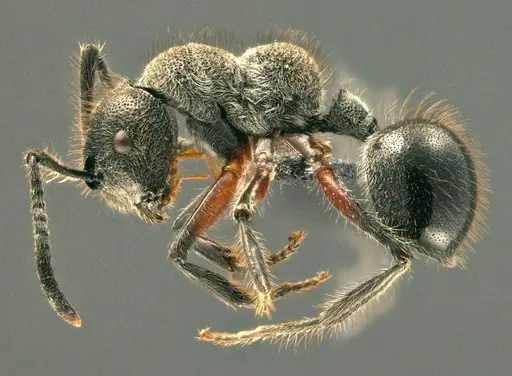
Echinopla fisheri is a rare, large rainforest ant species from Borneo, Malaysia. Workers measure 6.3mm in total length and have a distinctive predominantly black body covered in very long brown setae, giving them a fuzzy appearance. Their most striking features include a very large head, a polyporous (porous) surface texture, and a petiole armed with multiple spines. The mesosoma has a unique biconvex shape with a deep metanotal groove separating the promesonotum and propodeum. This species belongs to the Echinopla serrata species group and was only described in 2015 from a single specimen collected in Danum Valley, Sabah, making it one of the rarest ants in the hobby.
Quick Summary
- Difficulty: Expert
- Origin & Habitat: Borneo, Malaysia (Sabah, Danum Valley) in lowland rainforest at 180m elevation [1]. This is a tropical rainforest species from the Indomalaya region.
- Colony Type: Unknown, only the worker caste has been described. Colony structure (single-queen or multi-queen) has not been documented.
- Size & Growth:
- Antkeeping:
- Temperature: Keep warm at 24-28°C. This is a tropical lowland rainforest species from Borneo, so stable warmth is essential.
- Humidity: High humidity around 70-80%. Rainforest species need consistently moist conditions. Keep the nest substrate damp but not waterlogged.
- Diapause: Unlikely, as a tropical species from lowland Borneo, they probably do not require a hibernation period.
- Nesting: Use a moist substrate nest (Y-tong, soil-based, or 3D-printed) that maintains high humidity. Provide a water reservoir. This species was collected in rainforest leaf litter, so they likely prefer enclosed, humid nesting chambers.
- Behavior: Behavior is unstudied in captivity. Based on the genus and subfamily (Formicinae), they likely forage actively and may tend honeydew from aphids. Their long legs suggest active foraging. Escape risk is moderate given their 6mm size, standard barriers should suffice. As a Formicinae ant, they lack a functional sting and instead use formic acid spray as their primary defense mechanism.
- Common Issues: extreme rarity, this species is virtually unavailable in the antkeeping hobby and may not be legally importable, complete lack of captive husbandry data means all care recommendations are estimates based on genus patterns, high humidity requirements make mold prevention challenging, tropical species are sensitive to temperature drops, stable warmth is critical, only worker caste known, queen and colony founding behavior are completely unconfirmed
Species Overview and Rarity
Echinopla fisheri is an exceptionally rare ant species that has never been kept in captivity by hobbyists. It was only described in 2015 from a single worker specimen collected in Danum Valley, Sabah, Borneo. The species was named after Brian L. Fisher of the California Academy of Sciences, who discovered it. This makes Echinopla fisheri one of the least-known ant species available in the hobby, there is zero captive husbandry data available. All care recommendations must be inferred from related species in the Echinopla genus and general knowledge of Formicinae biology. [1]
Natural History and Distribution
This species is known only from the type locality in Danum Valley, a conservation area in Sabah, Malaysian Borneo. The holotype was collected at 180 meters elevation on a nature trail in lowland rainforest. The Danum Valley features pristine dipterocarp forest. The collection date of July 24,2010,provides a hint about when this species might be active, though nuptial flight timing cannot be reliably inferred from a single collection date. The Indomalaya region (Southeast Asia) is known for its rich ant diversity, and Echinopla species are part of the Camponotini tribe, making them relatives of carpenter ants (Camponotus). [1]
Identification and Morphology
Echinopla fisheri workers reach 6.3mm in total length, making them relatively large within the genus. They have a distinctive polyporous surface texture across the head and mesosoma. The head is very large, approximately as wide as long, with a slightly emarginated anterior clypeal margin. The mesosoma has a unique biconvex dorsal outline with a deep metanotal groove separating the strongly convex promesonotum from the propodeum. The pronotum bears one pair of sharp tubercles. The petiole is longer than high and armed with three pairs of dorsal spines plus three additional spines below the prominent lateral spines. The body is predominantly black without metallic shimmer, but appears grey due to dense whitish pilosity. The legs are mostly black with reddish coxae and trochanters. The most distinctive feature is the very long brown standing setae covering the dorsal surface, legs, and scape. [1]
Temperature and Humidity Requirements
As a lowland tropical rainforest species from Borneo, Echinopla fisheri requires warm and humid conditions. Keep the nest at 24-28°C using a heating cable on one side to create a gentle thermal gradient. This allows the ants to self-regulate their temperature. Humidity should be maintained at 70-80%, which can be achieved through a water reservoir in the nest setup or by keeping the substrate consistently moist. The combination of high humidity and warmth is critical, this species will not tolerate cool or dry conditions. Monitor for mold growth, which can be problematic in humid setups. Adequate ventilation is still necessary to prevent stagnant air while maintaining humidity.
Feeding and Diet
The diet for Echinopla fisheri must be estimated from related Formicinae species. They likely accept sugar sources (honey water, sugar water) and protein foods (insects, mealworms, crickets). As rainforest foragers, they probably also collect honeydew from aphids and scale insects if kept in a naturalistic setup with live plants. Feed protein 2-3 times per week and provide constant access to sugar water. Remove uneaten food after 24-48 hours to prevent mold.
Nesting Preferences
Based on the collection data (rainforest leaf litter environment), this species likely nests in moist soil or rotting wood in nature. In captivity, a Y-tong setup with a water reservoir works well for maintaining humidity. The chambers should be appropriately sized for a 6mm ant. Provide a connection to an outworld for foraging. A naturalistic setup with moist soil and hiding spots can also work but requires more maintenance to control humidity levels.
Frequently Asked Questions
Is Echinopla fisheri available in the antkeeping hobby?
No. This species is exceptionally rare and has never been documented in the antkeeping hobby. Only a single worker specimen has ever been collected and described. It is highly unlikely to be available from any ant supplier.
What do Echinopla fisheri ants eat?
Diet is unconfirmed for this species. Based on related Formicinae, they likely accept sugar sources (honey, sugar water) and protein (insects, mealworms). No captive feeding observations exist.
What temperature should I keep Echinopla fisheri at?
Keep them warm at 24-28°C. This is a tropical lowland rainforest species from Borneo, so they need stable warmth. A heating cable on one side of the nest creates a suitable gradient.
Do Echinopla fisheri need hibernation?
Unlikely. As a tropical species from lowland Borneo, they probably do not require a hibernation period. Slight seasonal temperature variation may be appropriate but is not required.
How big do Echinopla fisheri colonies get?
Unknown. Only a single worker has ever been collected. Colony size data does not exist for this species.
What is the egg to worker timeline for Echinopla fisheri?
Unconfirmed. No development data exists for this species.
Is Echinopla fisheri a good species for beginners?
No. This species is not only extremely rare and likely unavailable, but it is also completely unstudied in captivity. All care recommendations are estimates. This would be an expert-level species for advanced antkeepers pioneering captive husbandry.
Can I keep multiple Echinopla fisheri queens together?
Unknown. The colony structure (monogyne/polygyne) has not been documented for this species. Only the worker caste is known. Without data, combining unrelated queens is not recommended.
What size nest should I use for Echinopla fisheri?
Use a moist nest setup (Y-tong or soil-based) with chambers appropriately sized for a 6mm ant. Provide a water reservoir to maintain humidity. The nest should connect to an outworld for foraging.
Report an Issue
The current care sheet is based fully on literature. See inconsistencies, or something that's incorrect? Please , it will be resolved after review from an admin. Contributing to the blogs tab also helps providing information, to make us be able to further improve the caresheets. Thank you for your support!
References

Lembar perawatan ini dilisensikan di bawah CC BY-SA 4.0 .
Blog Komunitas
CASENT0214564
Lihat di AntWeb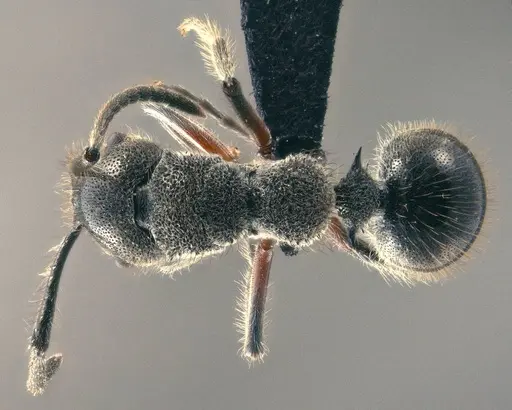
Literatur
Memuat peta distribusi...Memuat produk...