
Discothyrea gryphon
- Nama Ilmiah
- Discothyrea gryphon
- Tribe
- Proceratiini
- Subfamili
- Proceratiinae
- Penulis
- Hita-Garcia & Lieberman, 2019
- Distribusi
- Ditemukan di 1 negara
Pendahuluan
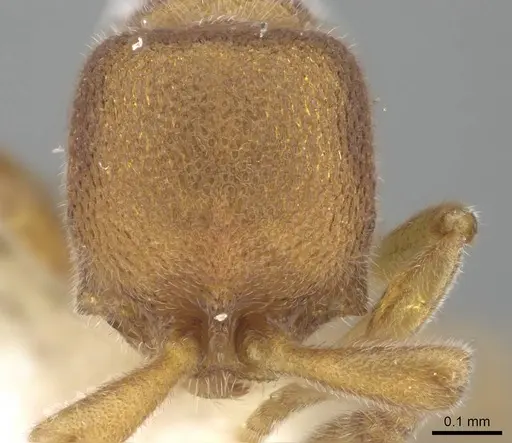
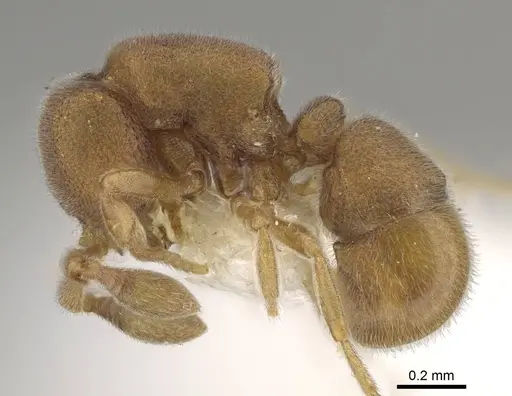
Discothyrea gryphon is an exceptionally tiny ant species from the montane forests of Rwanda and Tanzania in East Africa. Workers are among the smallest ants in the world, estimated at approximately 2-2.5 mm total length based on genus patterns, though exact measurements are unavailable . They have a distinctive subquadrate head with sharply defined genal corners, long erect setae on the clypeal margin, and abundant standing pilosity across their pale yellow to light brown body. Unlike many ants, they lack visible eyes. This species was only described in 2019 and is known from only two montane forest localities at 1600-2100m elevation . What makes D. gryphon special is its bizarre combination of morphological traits that resemble no other Afrotropical Discothyrea except the equally strange D. chimera. The species name references the mythological gryphon - a creature made of different animals - because of these unusual character combinations. The hooked or recurved abdomen (referenced in the name's Greek root 'grypos') gives them a distinctive silhouette. As a leaf-litter dwelling predator, they likely hunt tiny soil micro-arthropods using their specialized mandibles .
Quick Summary
- Difficulty: Expert
- Origin & Habitat: East African montane forests in Rwanda (Kayove, 2100m) and Tanzania (Mkomazi, 1600m). They live in leaf litter on the forest floor at high elevations [1][3].
- Colony Type: Colony structure is unconfirmed. Based on related Discothyrea species, likely single-queen colonies with small worker populations.
- Size & Growth:
- Queen: Undescribed, queen caste has not been documented [1]
- Worker: ~2-2.5 mm total length, inferred from Discothyrea genus patterns. Exact measurements unavailable [1]
- Colony: Likely small, under 100 workers based on genus patterns for leaf-litter species
- Growth: Unknown, likely slow to moderate based on related species
- Development: Unconfirmed (No direct development data exists for this species. Related Discothyrea species typically have slow colony growth.)
- Antkeeping:
- Temperature: Based on their montane forest habitat (1600-2100m elevation), they likely prefer cool to moderate temperatures around 18-22°C. Avoid overheating.
- Humidity: Montane leaf litter requires high humidity, keep substrate consistently moist but not waterlogged. Think damp forest floor conditions.
- Diapause: Unknown, likely experiences seasonal slowdowns given the temperate climate of high-elevation Rwanda/Tanzania. Proceed with caution.
- Nesting: Leaf-litter dwellers need tight chambers scaled to their tiny size. A Y-tong or plaster nest with very small chambers works well. Provide a moisture reservoir. They do best in naturalistic setups that mimic forest floor microhabitats.
- Behavior: These are tiny, cryptic leaf-litter ants. They are likely predatory on micro-arthropods like their relatives. Escape prevention is critical, at their tiny size, they can squeeze through standard barriers. They are not aggressive and likely shy. Eyes are absent or minute, suggesting they rely more on chemical cues than vision [1].
- Common Issues: their extremely small size makes escape likely without fine mesh barriers., very limited distribution means wild-caught colonies are rarely available., slow growth requires patience, colonies may take months to show noticeable progress., high humidity requirements can lead to mold if ventilation is poor., lack of documented care means you are essentially pioneering husbandry for this species.
Discovery and Naming
Discothyrea gryphon was only described in 2019 by Francisco Hita-Garcia and Ziv Lieberman, making it one of the most recently described ant species in the hobby. The type specimens were collected from Kayove in Rwanda (2100m elevation) and Mkomazi in Tanzania (1600m elevation). The species name 'gryphon' references the mythological creature known for being composed of different animals, a fitting name for this ant that combines bizarre character states not seen together in any other Afrotropical Discothyrea. The archaic spelling 'gryphon' (instead of 'griffin') is intentional wordplay on the Greek word 'grypos' meaning hooked, referring to the distinctive recurved abdomen that gives this species its unique silhouette [1].
Identification and Morphology
This species is unmistakable among Afrotropical Discothyrea due to several distinctive features. The subquadrate head has sharply defined anterolateral corners that appear nearly denticulate or toothed. The anterior clypeal margin bears a row of long erect setae, a feature not found in related species. The mandible has a squared apical tooth with a pointed subapical denticle. Most notably, they lack visible eyes, these are either absent or reduced to tiny pigmented spots (OI 0-4). The mesosomal outline is weakly convex, and the propodeum lacks the strong angles or denticles seen in some relatives. Abundant erect white pilosity covers the mesosoma and abdominal terga, becoming longer toward the rear of the body. The abdomen shows the fourth abdominal segment is about 1.1 times longer than the third, giving them a slightly elongated rear profile [1].
Habitat and Distribution
Discothyrea gryphon is known only from two montane forest localities: Kayove in Rwanda at 2100m elevation and Mkomazi in Tanzania at 1600m elevation. Both sites are montane forests, and the species lives in leaf litter on the forest floor. This restricted distribution to high-elevation montane forests makes them particularly sensitive to temperature and humidity conditions. The Rwandan site is at a latitude of approximately 1.9°S, while the Tanzanian site is further north. This limited distribution means they are likely endemic to these specific montane forest habitats and may have very narrow ecological requirements [1][3].
Related Species and Taxonomy
Discothyrea gryphon belongs to the traegaordhi species group and is morphologically most similar to Discothyrea chimera, another highly unusual species with a strange combination of characters. The genus Discothyrea is part of the subfamily Proceratiinae, which includes other specialized predators like Proceratium and Syscia. What makes Discothyrea unique is their highly modified abdomen, where the first abdominal segment is asymmetrically campaniform (bell-shaped) and prolonged anteriorly. This gives them a distinctive 'hooked' appearance. The genus is known for being highly specialized predators of micro-arthropods in leaf litter habitats across the tropics [1][2].
Predatory Biology
While specific feeding behavior has not been documented for D. gryphon, the genus Discothyrea is composed of specialized micro-predators. Their distinctive mandibles with the squared apical tooth and subapical denticle are likely adaptations for hunting tiny soil arthropods like springtails, mites, and other micro-invertebrates found in leaf litter. The long erect setae on the clypeal margin may serve a sensory function, helping them detect prey in the dark, humid leaf litter environment where they live. The absence or near-absence of eyes further supports a lifestyle relying on chemical and tactile senses rather than vision. In captivity, you should expect to feed them tiny live prey, likely springtails and other micro-arthropods [1].
Challenges for Antkeepers
Keeping Discothyrea gryphon represents a true expert challenge. This species has never been documented in the antkeeping hobby, meaning there is no established husbandry protocol. Their extreme rarity (known from only two localities) means wild-caught colonies are essentially unavailable. If colonies ever become available through breeding programs, they would require expert-level care. The combination of their tiny size, specific humidity needs, unknown temperature requirements, and presumed specialized diet makes them unsuitable for beginners. They represent an opportunity for advanced keepers to potentially pioneer husbandry for a species that has never been kept in captivity [1].
Frequently Asked Questions
Is Discothyrea gryphon available in the antkeeping hobby?
No. This species was only described in 2019 and is known from only two localities in Rwanda and Tanzania. Wild colonies are essentially unavailable, and no captive breeding programs exist yet. If they ever become available, expect them to be extremely rare and expensive.
How big are Discothyrea gryphon workers?
They are tiny, approximately 2-2.5 mm total length based on Discothyrea genus patterns. This makes them among the smallest ants in the world, similar in size to some Strumigenys species. Exact measurements are unavailable in scientific literature.
What do Discothyrea gryphon eat?
While not directly documented, Discothyrea species are specialized micro-predators. They likely hunt tiny soil arthropods like springtails, mites, and micro-arthropods in leaf litter. In captivity, you would likely need to culture live springtails or other tiny prey. Sugar acceptance is uncertain.
Do Discothyrea gryphon have eyes?
No, they have either absent or minute eyes (OI 0-4), appearing as tiny asymmetric pigmented spots. This is normal for leaf-litter dwelling Discothyrea species that rely on chemical and tactile senses rather than vision.
Where does Discothyrea gryphon live in the wild?
They live in montane forest leaf litter at high elevations, 2100m in Rwanda (Kayove) and 1600m in Tanzania (Mkomazi). Both are cool, humid montane forest habitats.
What temperature do Discothyrea gryphon need?
Based on their montane forest habitat at 1600-2100m elevation, they likely prefer cool conditions around 18-22°C. Avoid warm temperatures. Since this has never been kept in captivity, these are educated estimates based on habitat.
Are Discothyrea gryphon good for beginners?
No, this is an expert-level species. They have never been kept in captivity, require extremely small prey, need high humidity, and are among the smallest ants in existence. There is no established care protocol.
How many queens does Discothyrea gryphon have?
Unknown. The colony structure has not been documented. Based on related Discothyrea species, they likely form single-queen colonies, but this is unconfirmed.
Do Discothyrea gryphon sting?
Given their tiny size, any sting would likely be imperceptible to humans. Most Proceratiinae have reduced stingers, and these tiny ants are not considered dangerous.
Why is this species called gryphon?
Named after the mythological gryphon, a creature with a body made of different animals, because of this species' bizarre combination of characters not found together in any other Afrotropical Discothyrea. The archaic spelling 'gryphon' is wordplay on Greek 'grypos' meaning hooked, referring to their recurved abdomen.
Can I keep Discothyrea gryphon in a test tube?
While test tubes work for many small ants, the specialized needs of this unstudied species would likely require a more sophisticated setup. A small Y-tong or plaster nest with moisture control would be more appropriate once the species becomes available.
How fast do Discothyrea gryphon colonies grow?
Unknown, no captive colonies have been documented. Based on related leaf-litter Discothyrea species, growth is likely slow. Colony sizes are probably small, likely under 100 workers.
Report an Issue
The current care sheet is based fully on literature. See inconsistencies, or something that's incorrect? Please , it will be resolved after review from an admin. Contributing to the blogs tab also helps providing information, to make us be able to further improve the caresheets. Thank you for your support!
References

Lembar perawatan ini dilisensikan di bawah CC BY-SA 4.0 .
Blog Komunitas
CASENT0247367
Lihat di AntWeb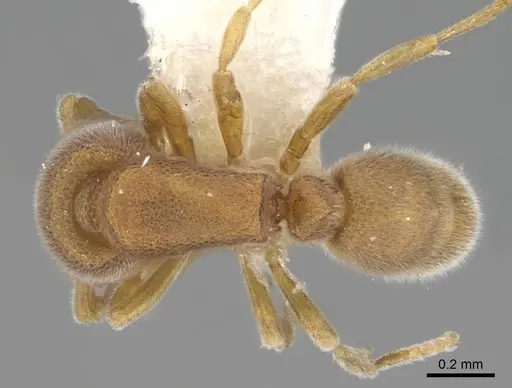
Literatur
Memuat peta distribusi...Memuat produk...