
Cyphoidris spinosa
- Nama Ilmiah
- Cyphoidris spinosa
- Tribe
- Crematogastrini
- Subfamili
- Myrmicinae
- Penulis
- Weber, 1952
- Distribusi
- Ditemukan di 0 negara
Pendahuluan
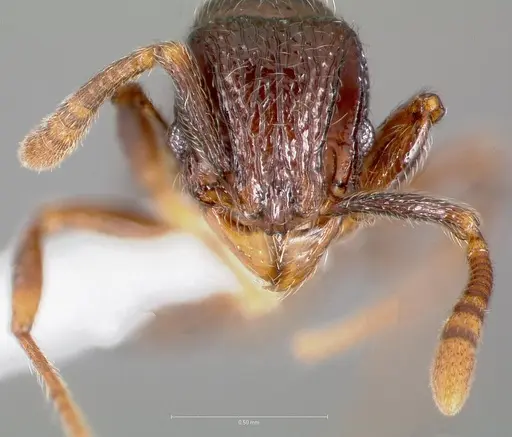
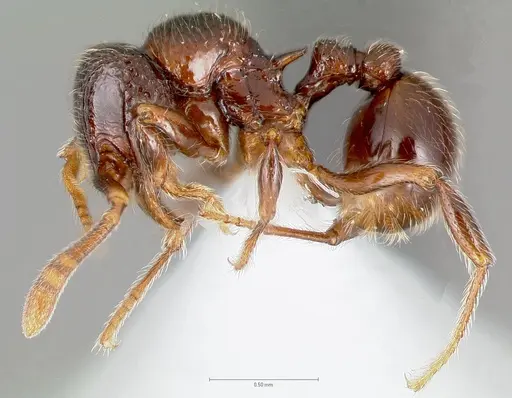
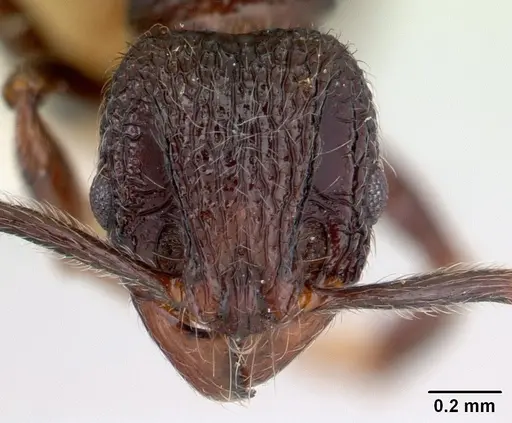
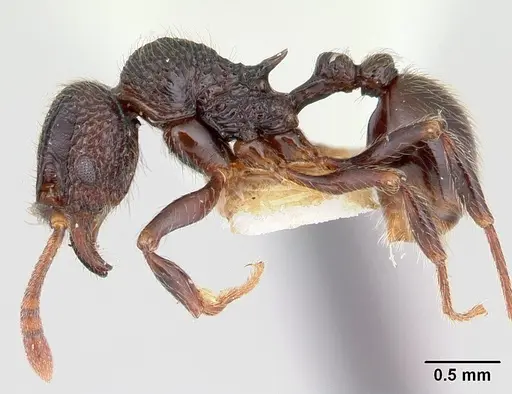
Cyphoidris spinosa is a small ant measuring 3.8-4.3mm in total length, with a dark reddish-brown to blackish-brown coloration [AntWiki]. Workers have a conspicuously swollen promesonotum that sits noticeably higher than the propodeal dorsum, and are armed with a pair of strong, straight to slightly upcurved propodeal spines - the species name 'spinosa' refers to these distinctive spines [AntWiki]. The head and body are densely covered with fine acute hairs, and the dorsal surfaces show strong longitudinal rugose sculpture [AntWiki]. This species remains relatively mysterious in terms of its biology, with most information coming from taxonomic descriptions rather than ecological studies . It inhabits the leaf litter stratum of equatorial rainforests across Central Africa, living among decomposing vegetation on the forest floor . The Ituri Forest in the Democratic Republic of Congo represents the type locality, with additional records from Angola, Ivory Coast, and Kenya .
Quick Summary
- Difficulty: Unknown
- Origin & Habitat: Leaf litter of equatorial rainforests in Central Africa (Democratic Republic of Congo, Angola, Ivory Coast, Kenya) [2][3]
- Colony Type: Colony structure is unconfirmed, no data available on queen number or colony organization
- Size & Growth:
- Antkeeping:
- Temperature: Aim for 22-26°C, typical for tropical forest floor inhabitants. Avoid temperature extremes.
- Humidity: High humidity required, these ants live in damp leaf litter. Keep nest substrate consistently moist but not waterlogged.
- Diapause: Unknown, no data on overwintering requirements. As a tropical species, likely no true diapause but may show reduced activity during cooler periods.
- Nesting: Naturalistic setup with moist substrate works best. They inhabit leaf litter so a setup with decomposing leaves, small chambers, and good moisture retention would be appropriate. Y-tong or plaster nests with high humidity chambers are suitable options.
- Behavior: Behavior is poorly documented. As a leaf-litter inhabitant, they likely forager slowly and methodically through the substrate. Their small size and forest floor habitat suggest they are not aggressive and prefer to avoid confrontation. Escape risk is moderate due to their small size, standard barrier methods should suffice. As Myrmicinae, they have a stinger but given their tiny size, any sting would be negligible to humans.
- Common Issues: very limited biological data makes care recommendations uncertain., no information on founding behavior or colony establishment., colony size potential unknown, difficult to plan long-term housing., humidity requirements may be challenging to maintain consistently., wild-caught colonies may have high parasite loads due to limited study.
Natural History and Distribution
Cyphoidris spinosa is known from four countries in tropical Africa: the Democratic Republic of Congo, Angola, Ivory Coast, and Kenya [1]. The type locality is the Ituri Forest in eastern DRC, a famous biodiversity hotspot where many leaf-litter ant species have been documented [3]. This species prefers the leaf litter stratum of equatorial rainforests, living among decomposing plant material on the forest floor [2].
The genus Cyphoidris is closely related to Lordomyrma, sharing an 11-segmented antennae (compared to 12 in Lordomyrma) and a distinctive palpal formula of 4:3 (maxillary:labial) [3]. The propodeal spines and swollen promesonotum are key identifying features that distinguish this genus from similar small Myrmicinae. Despite being described in 1952, the species remains biologically poorly understood, with most available information coming from taxonomic descriptions rather than ecological studies [2].
Housing and Nest Preferences
In captivity, these ants should be provided with a naturalistic setup that mimics their forest floor habitat. A mix of moist soil, decomposing leaves, and small hiding structures works well. The key requirement is consistently high humidity, these ants are adapted to the damp conditions of tropical leaf litter [2].
Y-tong or plaster nests with small chambers work better than test tubes, as they allow better humidity control and provide appropriately scaled spaces for these tiny ants. The chambers should be small and snug-fitting, as overly large spaces can stress small colonies. Include some slightly drier areas within the nest so ants can self-regulate their humidity preferences.
Feeding and Diet
Feeding habits are unconfirmed for this species. As a member of the Crematogastrini tribe, they likely have a typical omnivorous diet similar to related genera like Crematogaster or Lordomyrma. Based on typical leaf-litter ant behavior, they probably consume small invertebrates, honeydew, and nectar.
For captive care, offer a varied diet including sugar water or honey, small protein sources like fruit flies or pinhead crickets, and occasional treats. Start with small portions and observe acceptance. Given their small size, prey items should be appropriately sized.
Temperature and Seasonal Care
Maintain temperatures in the 22-26°C range, which aligns with typical equatorial rainforest floor conditions. Avoid temperatures below 20°C or above 30°C. As a tropical species, they likely do not require a true diapause period, though they may show reduced activity during cooler periods in captivity.
Use a heating cable on one side of the nest to create a gentle temperature gradient, allowing the colony to self-regulate. Place the heating on top of the nest rather than underneath to avoid drying out the substrate. Room temperature within the recommended range is acceptable without additional heating.
Challenges and Considerations
The primary challenge with Cyphoidris spinosa is the very limited biological data available. Unlike common ant species, there are no captive breeding guides or established care protocols. Everything recommended here is based on inference from related species and general knowledge of leaf-litter ant biology.
Expect a learning curve when establishing this species. Colonies may be difficult to find in the antkeeping hobby due to their limited distribution and obscure status. Wild-caught colonies should be monitored for parasites, as poorly studied species often harbor commensal organisms that can cause problems in captivity. Patience is essential, growth rates and development timelines are unknown and may differ significantly from common species. [2]
Frequently Asked Questions
How long does it take for Cyphoidris spinosa to produce first workers?
The egg-to-worker timeline is unconfirmed, no development data exists for this species.
What do Cyphoidris spinosa ants eat?
Feeding habits are unconfirmed, but they likely accept typical ant foods. Offer sugar water or honey as an energy source, small protein sources like fruit flies or tiny crickets, and occasional fruit. Start with small amounts and observe what the colony accepts.
Are Cyphoidris spinosa good for beginners?
This species is not recommended for beginners due to the very limited biological data available. There are no established care protocols, and everything must be inferred from related species. Only experienced antkeepers comfortable with uncertain conditions should attempt this species.
What temperature should I keep Cyphoidris spinosa at?
Maintain 22-26°C. This range reflects typical equatorial rainforest floor conditions. Avoid temperatures below 20°C or above 30°C. A gentle temperature gradient allowing self-regulation is ideal.
Do Cyphoidris spinosa ants need hibernation?
Diapause requirements are unknown. As a tropical species from equatorial Africa, they likely do not require a true hibernation period. They may show reduced activity during cooler periods but should not be artificially cooled.
How big do Cyphoidris spinosa colonies get?
Maximum colony size is unknown. No published data exists on colony size for this species.
What humidity level do Cyphoidris spinosa need?
High humidity is essential. These ants inhabit damp leaf litter in tropical rainforests. Keep the nest substrate consistently moist but not waterlogged. Some dry areas within the nest allow self-regulation.
Can I keep multiple Cyphoidris spinosa queens together?
Colony structure is unconfirmed. No data exists on whether this species is monogyne (single queen) or polygyne (multiple queens). Combining unrelated queens is not recommended given the lack of information.
What type of nest is best for Cyphoidris spinosa?
Naturalistic setups with moist substrate work best. Y-tong or plaster nests with small, appropriately-sized chambers allow humidity control. Avoid large, open spaces that could stress these tiny ants.
Do Cyphoidris spinosa ants sting?
Stinging ability is not documented, but as Myrmicinae they likely have a stinger. However, given their tiny size (3.8-4.3mm), any sting would be negligible to humans. They are not considered dangerous.
Where is Cyphoidris spinosa found in the wild?
They inhabit leaf litter in equatorial rainforests across Central Africa, Democratic Republic of Congo, Angola, Ivory Coast, and Kenya. The Ituri Forest in DRC is the type locality.
Why is so little known about Cyphoidris spinosa?
This species has been poorly studied because it lives in dense leaf litter (making it hard to observe), has a limited geographic distribution, and is not economically significant. Most ant research focuses on more common or impactful species.
Report an Issue
The current care sheet is based fully on literature. See inconsistencies, or something that's incorrect? Please , it will be resolved after review from an admin. Contributing to the blogs tab also helps providing information, to make us be able to further improve the caresheets. Thank you for your support!
References

Lembar perawatan ini dilisensikan di bawah CC BY-SA 4.0 .
Blog Komunitas
CASENT0005905
Lihat di AntWeb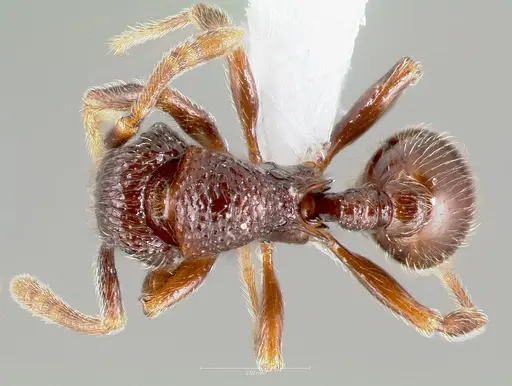
CASENT0178293
Lihat di AntWeb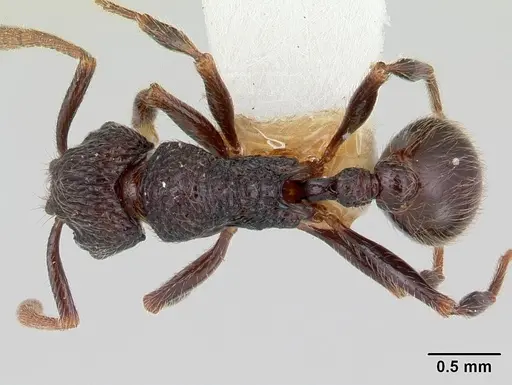
Literatur
Memuat peta distribusi...Memuat produk...