
Crematogaster vicina
- Nama Ilmiah
- Crematogaster vicina
- Subgenus
- Orthocrema
- Tribe
- Crematogastrini
- Subfamili
- Myrmicinae
- Penulis
- André, 1893
- Distribusi
- Ditemukan di 1 negara
Pendahuluan
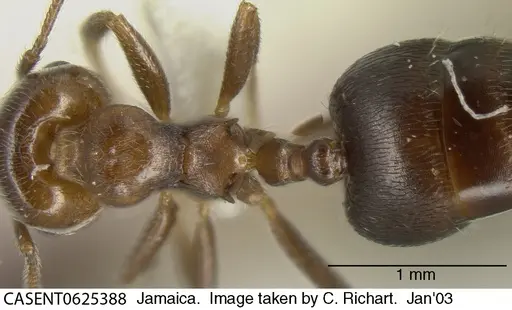
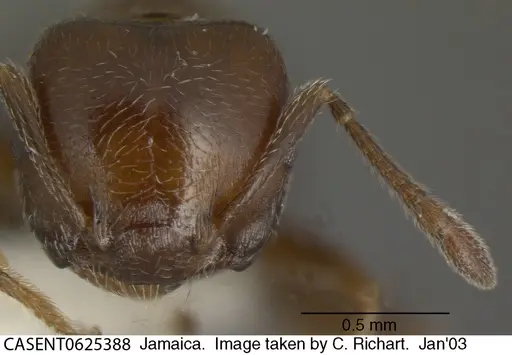
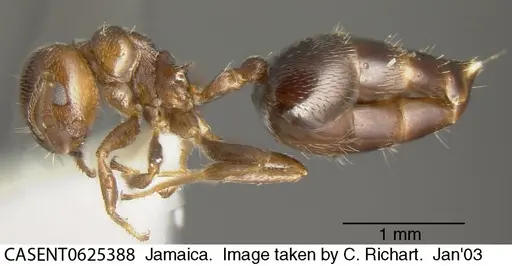
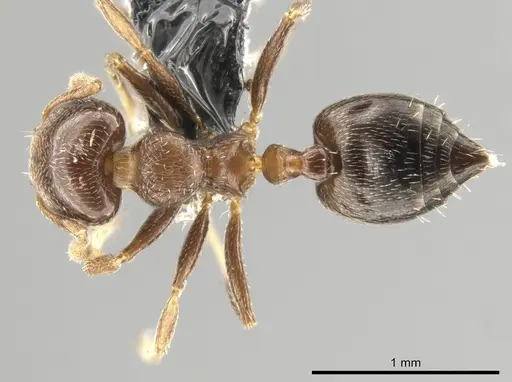
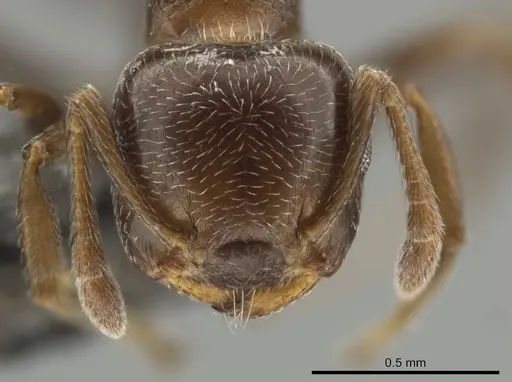
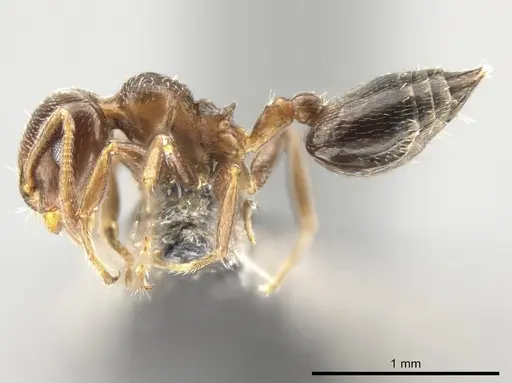
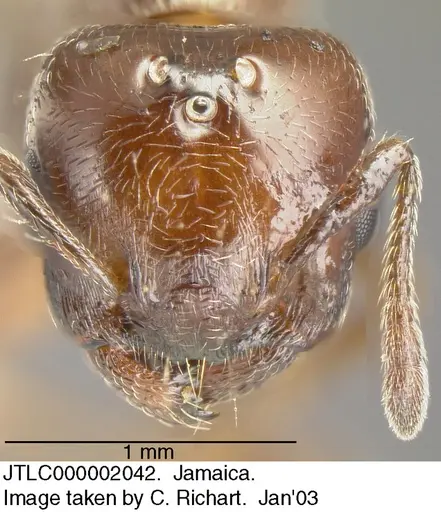
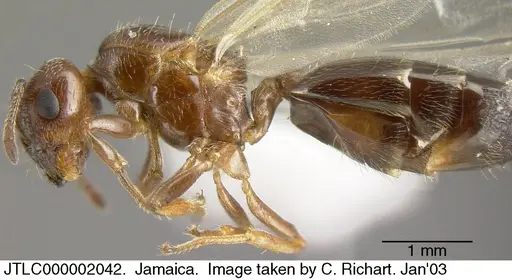
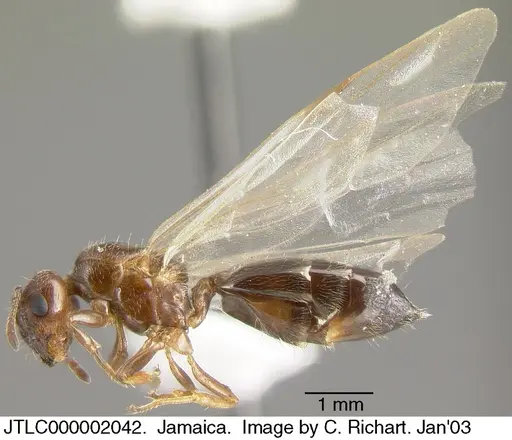
Crematogaster vicina is a small ant species belonging to the Crematogaster crinosa complex. Workers have a distinctive heart-shaped gaster that they can raise like an acrobat, giving them their common name. They have a dark brown to black coloration with relatively smooth and shiny body surfaces. This species is native to Jamaica in the Greater Antilles, where it is extremely abundant across the island . What makes C. vicina unique is its nesting behavior - unlike most other crinosa complex species that nest in dead wood, these ants build large, completely exposed carton nests that wrap around narrow stems of small trees .
Quick Summary
- Difficulty: Medium
- Origin & Habitat: Native to Jamaica in the Greater Antilles (Neotropical Region). Found throughout the island in tropical habitats, particularly in areas with small trees and shrubs where they construct their distinctive exposed carton nests on narrow stems [1].
- Colony Type: Polygynous colonies, multiple queens work together in the same nest. Workers are monomorphic (all the same size) [2].
- Size & Growth:
- Queen: Size data unavailable, inferred from Crematogaster genus patterns to be approximately 6-8mm
- Worker: Approximately 3-5mm based on available worker descriptions [1]
- Colony: Colonies can reach several hundred workers
- Growth: Moderate
- Development: Development timeline unconfirmed, likely several weeks to months based on typical tropical Myrmicinae patterns (Actual development time may vary based on temperature and conditions)
- Antkeeping:
- Temperature: Keep at 24-28°C. As a Jamaican tropical species, they prefer warm conditions year-round.
- Humidity: Moderate to high humidity. Keep the nest substrate slightly moist but not waterlogged. Mist the outworld occasionally.
- Diapause: No, as a tropical species from Jamaica, they do not require hibernation. Keep them warm year-round.
- Nesting: This species has unusual nesting requirements. In the wild, they build exposed carton nests wrapping around stems. In captivity, a naturalistic setup with small branches or twigs works well. Alternatively, a Y-tong (AAC) or plaster nest with small chambers can work, but provide some vertical structures for their natural carton-building behavior.
- Behavior: Crematogaster vicina workers are active and alert. They are not particularly aggressive toward keepers but will defend their nest vigorously. Their most distinctive behavior is the ability to raise their gaster upward when threatened, this is a defensive display where they can secrete chemicals from their anal gland. They are good climbers and may attempt escapes. They are primarily arboreal in the wild, so they will explore vertical spaces readily. Workers forage for honeydew, small insects, and nectar.
- Common Issues: escape prevention is important, they are good climbers and will explore any gaps in setup, polygynous colonies mean multiple queens are present, do not attempt to separate them as this can cause colony stress, their unique arboreal and carton-nesting behavior means standard fully-enclosed nests may not be ideal, tropical species require consistent warmth, cold temperatures can slow or stop brood development, wild-caught colonies from Jamaica may carry parasites that can affect captive colonies
Nest Preferences and Housing
Crematogaster vicina presents unique housing challenges due to their distinctive natural nesting behavior. In the wild, they build large exposed carton nests that wrap completely around narrow stems of small trees, this is highly unusual among Caribbean Crematogaster species [1]. For captive care, you have several options. A naturalistic setup with small branches or twigs works best as it mimics their natural environment. You can use a formicarium with built-in vertical structures or simply allow them to build on twigs you provide. Alternatively, a Y-tong (AAC) nest can work, but provide small twigs or branches inside for them to build on. Plaster nests with moisture wells are also suitable. Avoid fully enclosed acrylic nests without any vertical structures, these ants are arboreal by nature and need space to express their natural carton-building behavior. Ensure excellent escape prevention as they are good climbers.
Feeding and Diet
Like other Crematogaster species, C. vicina is omnivorous with a preference for sweet liquids. Feed them sugar water, honey, or diluted maple syrup regularly, this should be available at all times in a small test tube or cotton ball. For protein, offer small insects like fruit flies, pinhead crickets, mealworms, or other small arthropods. They will also collect honeydew from aphids if available. Feed protein prey 2-3 times per week, removing any uneaten prey after 24 hours. Fresh fruit can occasionally be offered as a supplemental sugar source. Because they are arboreal foragers, place food in the outworld where they can easily access it. [1]
Temperature and Seasonal Care
As a Jamaican tropical species, Crematogaster vicina requires warm conditions year-round. Keep the nest area at 24-28°C. Room temperature may be sufficient if your home stays in this range, otherwise use a heating cable placed on top of the nest (never under as it can dry out the nest). A gentle temperature gradient allows workers to regulate their own exposure. Unlike temperate species, they do not require any cooling period or hibernation. In fact, cold temperatures below 20°C can slow or stop brood development entirely. Maintain consistent warmth throughout the year to support continuous colony growth. [1]
Colony Structure and Multi-Queen Care
This species is polygynous, meaning colonies naturally have multiple queens working together [2]. This is an important consideration for keepers. Do not attempt to separate the queens or remove some to create single-queen colonies, this goes against their natural social structure and can cause colony stress or failure. The workers are monomorphic, meaning all workers are the same size [2]. In a polygynous colony, all queens typically participate in egg-laying, which can support faster colony growth than single-queen species. When the colony reaches several hundred workers, you may notice multiple queens in different areas of the nest. This is normal and healthy behavior for this species.
Behavior and Defense
Crematogaster vicina workers are active foragers with a distinctive defensive behavior. When threatened, they raise their heart-shaped gaster upward, this is where their name 'acrobat ant' comes from. They can secrete irritating chemicals from their anal gland as a defensive mechanism. They are not particularly aggressive toward humans but will vigorously defend their nest. Workers are excellent climbers and will readily explore vertical surfaces. In the outworld, they will establish foraging trails to food sources. They are primarily active during the day but can forage at night as well. Their arboreal nature means they are comfortable exploring three-dimensional spaces. [1]
Frequently Asked Questions
Can I keep Crematogaster vicina in a test tube?
A test tube setup can work for founding colonies, but due to their unique arboreal and carton-nesting behavior, you will eventually need to move them to a more naturalistic setup with vertical structures or branches. A test tube alone may not provide enough space for their natural behaviors.
How long until first workers in Crematogaster vicina?
Development time is unconfirmed for this species. Based on related Crematogaster species, expect first workers several weeks to a few months after the queen lays eggs, assuming temperatures are maintained at 25-28°C. Development may be slower if temperatures drop below optimal range.
Can I keep multiple queens together?
Yes, this is actually recommended and natural for this species. C. vicina is polygynous, meaning colonies naturally have multiple queens. Unlike single-queen species, you do not need to separate queens, keeping them together mimics their natural colony structure.
Do Crematogaster vicina ants sting?
They do not have a painful sting like some ants, but they can secrete irritating chemicals from their anal gland as a defense. This is generally not harmful to humans beyond mild skin irritation. They are not considered dangerous to keep.
What do Crematogaster vicina eat?
They are omnivorous. Provide a constant sugar source (sugar water, honey, or diluted maple syrup) and protein prey (small insects like fruit flies, pinhead crickets, or mealworms) 2-3 times per week. They will also collect honeydew from aphids if available.
Are Crematogaster vicina good for beginners?
This species is rated as Medium difficulty. While not the easiest species, they are rewarding if you can provide their specific needs: warm temperatures year-round, a naturalistic or semi-naturalistic setup with vertical structures, and proper escape prevention. Their polygynous nature makes them more forgiving of mistakes than single-queen species.
Do Crematogaster vicina need hibernation?
No. As a tropical Jamaican species, they do not require any hibernation or cooling period. Keep them warm year-round at 24-28°C. Cold temperatures can actually harm the colony by slowing or stopping brood development.
Why are my Crematogaster vicina dying?
Common causes include: cold temperatures below 20°C, too dry conditions, improper escape prevention leading to colony escape, or stress from separating queens (remember they are polygynous). Also ensure you are not using a fully enclosed nest without vertical structures, they need space to exhibit natural behaviors.
When should I move my colony to a formicarium?
Move them when the test tube water reservoir is nearly depleted and the colony has outgrown the tube, or when you see workers exploring beyond the tube regularly. For this species, providing a formicarium with naturalistic elements (branches, twigs, or vertical structures) is ideal earlier rather than later to support their arboreal nature.
How big do Crematogaster vicina colonies get?
Based on typical crinosa complex species, colonies can reach several hundred workers. Their polygynous structure supports relatively large colony sizes. Growth is moderate, expect several years to reach maximum size under good care.
Report an Issue
The current care sheet is based fully on literature. See inconsistencies, or something that's incorrect? Please , it will be resolved after review from an admin. Contributing to the blogs tab also helps providing information, to make us be able to further improve the caresheets. Thank you for your support!
References

Lembar perawatan ini dilisensikan di bawah CC BY-SA 4.0 .
Blog Komunitas
Literatur
Memuat peta distribusi...Memuat produk...