
Crematogaster tumidula
- Nama Ilmiah
- Crematogaster tumidula
- Tribe
- Crematogastrini
- Subfamili
- Myrmicinae
- Penulis
- Emery, 1900
- Distribusi
- Ditemukan di 0 negara
Pendahuluan
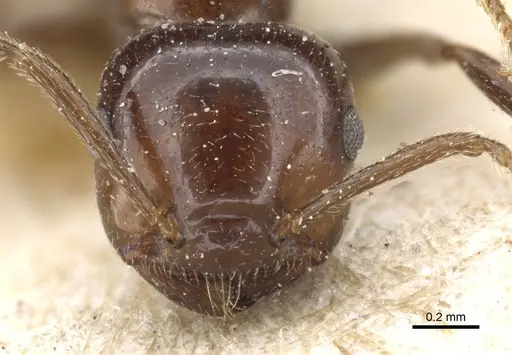
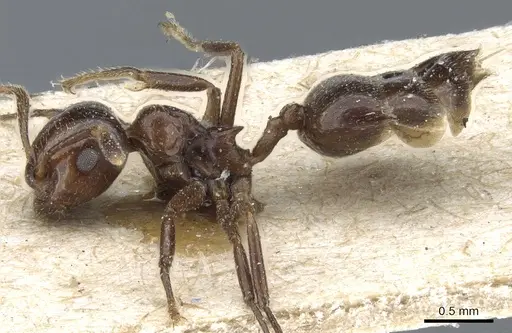
Crematogaster tumidula is a small ant species belonging to the ranavalonae-group, native to the tropical rainforests of Southeast Asia. Workers have a distinctive reddish-brown coloration and are characterized by short, stout propodeal spines, a scoop-shaped petiole with developed anterolateral corners, and a bilobed postpetiole. Their integument is smooth and shiny with very little erect pilosity . This species was originally described from Sumatra by Emery in 1900 and is now known from Borneo, Kalimantan, Sumatra, and Thailand [AntWiki]. As a member of the Crematogaster genus, these ants are known for their distinctive acrobat behavior - when disturbed, they raise their gasters overhead like scorpions. This species is similar to Crematogaster ebenina and Crematogaster pia but can be distinguished by its developed anterolateral petiole corners and short propodeal spines . The species has been moved between subgenera over time, currently placed in subgenus Oxygyne based on morphological characteristics .
Quick Summary
- Difficulty: Medium
- Origin & Habitat: Tropical rainforest regions of Malaysia (Borneo) and Indonesia (Kalimantan, Sumatra) [1]. This species is found in Indomalaya region and has been recorded in rainforest conversion areas [5].
- Colony Type: Colony structure is unconfirmed for this specific species.
- Size & Growth:
- Queen: Size data unavailable, queen measurements not described in available literature
- Worker: ~3-4mm total length, inferred from Crematogaster genus patterns (head width 0.73-0.88mm suggests small species) [1]
- Colony: Colony size data unavailable for this species
- Growth: Unknown, no development data available for this species
- Development: Unknown, no species-specific development data available (No direct development data exists for this species.)
- Antkeeping:
- Temperature: Keep at 24-28°C. This species comes from tropical rainforest environments in Borneo and Sumatra, so it requires warm, stable temperatures.
- Humidity: Keep humidity high at 70-85%. These ants come from damp rainforest environments, the substrate should remain consistently moist but not waterlogged.
- Diapause: No, this is a tropical species that does not require hibernation. Maintain warm temperatures year-round.
- Nesting: In the wild, Crematogaster often nest in rotting wood, under bark, or in hollow twigs. For captivity, a Y-tong (AAC) nest or plaster nest with moisture chambers works well. Provide narrow chambers and passages scaled to their small worker size.
- Behavior: Crematogaster tumidula will display typical acrobat ant behavior, raising their gasters when threatened. They are generally active foragers and will search for food across the outworld. Workers are small, so escape prevention must be excellent, use fine mesh and tight-fitting barriers.
- Common Issues: escape prevention is critical due to their small worker size, they can squeeze through standard mesh, tropical species requires constant warmth, cold drafts can be fatal, high humidity needs can lead to mold if ventilation is poor, lack of species-specific care data means keepers must adapt from related species, wild-caught colonies may carry parasites that are difficult to treat in captivity
Nest Preferences and Housing
Crematogaster tumidula originates from the tropical rainforests of Borneo, Sumatra, and Kalimantan, where they typically nest in rotting wood, under bark, or in hollow twigs and branches [1]. In captivity, Y-tong (AAC) nests work well because they allow you to control humidity while providing dark chambers for the colony. Plaster nests with moisture chambers are another good option, as they help maintain the high humidity this species needs.
Because workers are small, use narrow chambers and passages scaled to their size. Avoid tall, open spaces that can make them feel exposed. A naturalistic setup with cork bark or rotting wood pieces can also work well, but requires careful attention to humidity levels. Always ensure excellent escape prevention, these tiny ants can slip through standard mesh barriers.
Feeding and Diet
While specific dietary preferences for Crematogaster tumidula are not documented, Crematogaster species are typically omnivorous and will accept a variety of foods. They naturally tend to forage for honeydew from aphids and scale insects, and will also hunt small insects and arthropods.
In captivity, offer sugar sources such as sugar water, honey, or diluted maple syrup regularly. For protein, provide small live prey like fruit flies, pinhead crickets, or mealworms. Since workers are small, prey items should be appropriately sized. Observe your colony's preferences and adjust feeding accordingly. Remove uneaten prey after 24-48 hours to prevent mold issues in the humid environment they require.
Temperature and Humidity Requirements
As a tropical species from Southeast Asian rainforests, Crematogaster tumidula requires warm and humid conditions. Maintain temperatures between 24-28°C, avoiding any cold drafts or temperature drops below 22°C. A heating cable placed on one side of the nest can create a gentle thermal gradient, but avoid direct heat that could dry out the nest.
Humidity should be kept high at 70-85%. The substrate should feel consistently moist but never waterlogged. In Y-tong nests, use a water tube or moisture chamber to maintain humidity. In plaster nests, keep the moisture reservoir filled but not overflowing. Mist the nest area occasionally if humidity drops, but ensure good ventilation to prevent mold growth, poor airflow combined with high humidity is a common killer of tropical ant colonies. [5]
Behavior and Temperament
Crematogaster ants are famous for their acrobat behavior, when threatened, workers raise their gasters overhead in a defensive posture, which gives them their common name. This species will likely display this behavior when disturbed. They are generally active foragers that will send workers out to search for food across the outworld.
Workers are small, which means escape prevention must be excellent. Use fine mesh (0.5mm or smaller), tight-fitting lids, and apply barrier products like Fluon to the rim of the outworld. Despite their small size, they are not typically aggressive toward keepers but will defend their colony vigorously against intruders. [1]
Colony Establishment and Growth
The colony structure and founding behavior of Crematogaster tumidula specifically has not been documented in scientific literature. Since this is a poorly studied species, expect some trial and error when establishing your colony. Start with a simple test tube setup for the founding queen, then transition to a proper nest once the colony reaches a stable number of workers. Be patient with founding colonies, as they can take several months to establish their first major worker cohort.
Frequently Asked Questions
How long does it take for Crematogaster tumidula to produce first workers?
The exact development timeline is unknown for this species. Based on typical Crematogaster patterns in tropical conditions, expect several weeks from egg to first worker at optimal temperature (24-28°C). Founding colonies may take several months to become established.
What size nest do I need for Crematogaster tumidula?
Start with a test tube for the founding queen. Once the colony reaches a stable number of workers, transition to a Y-tong or plaster nest with narrow chambers scaled to their small worker size. They do not need large spaces, compact chambers work better.
Do Crematogaster tumidula ants sting?
Crematogaster ants have a stinger but rarely use it on humans due to their small size. They may attempt to bite, and their characteristic defensive behavior (raising the gaster) is their primary deterrent. They are not considered dangerous to keepers.
What do Crematogaster tumidula eat?
They are omnivorous. Offer sugar sources (sugar water, honey, maple syrup) regularly for energy, and protein (small live insects like fruit flies, pinhead crickets, or tiny mealworms) for brood development. Adjust based on what your colony accepts.
Do I need to hibernate Crematogaster tumidula?
No, this is a tropical species from Southeast Asian rainforests. They do not require hibernation or winter cooling. Maintain warm temperatures (24-28°C) year-round to keep the colony active and growing.
Are Crematogaster tumidula good for beginners?
This species is rated as Medium difficulty. While not the easiest species, experienced beginners can succeed with them. The main challenges are maintaining high humidity and preventing escapes due to their small worker size.
How big do Crematogaster tumidula colonies get?
Colony size is not documented for this specific species. Related Crematogaster species typically form moderate colonies.
Why are my Crematogaster tumidula escaping?
This species has small workers that can squeeze through standard mesh. Use fine mesh (0.5mm or smaller), ensure all lid seams are tight, and apply barrier products like Fluon to the rim of the outworld. Check for any tiny gaps in your setup.
Can I keep multiple Crematogaster tumidula queens together?
The colony structure of this specific species is unconfirmed. Most Crematogaster are monogyne (single queen), though some species can be polygyne. Unless you have confirmed this species accepts multiple queens, it is not recommended to introduce additional queens to an established colony.
What temperature is best for Crematogaster tumidula?
Keep the nest at 24-28°C. This tropical species requires warm, stable temperatures. Avoid temperatures below 22°C or sudden temperature changes. A heating cable on one side of the nest can create a gentle gradient if your room temperature is below this range.
Report an Issue
The current care sheet is based fully on literature. See inconsistencies, or something that's incorrect? Please , it will be resolved after review from an admin. Contributing to the blogs tab also helps providing information, to make us be able to further improve the caresheets. Thank you for your support!
References

Lembar perawatan ini dilisensikan di bawah CC BY-SA 4.0 .
Blog Komunitas
CASENT0904533
Lihat di AntWeb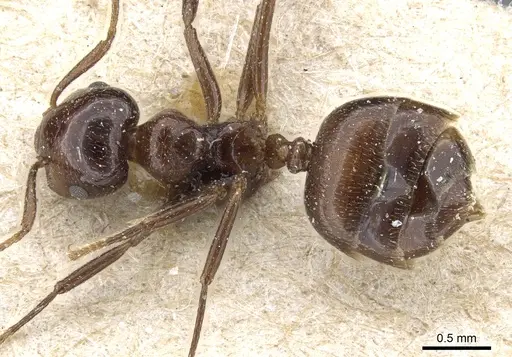
Literatur
Memuat peta distribusi...Memuat produk...