
Crematogaster stigmatica
- Nama Ilmiah
- Crematogaster stigmatica
- Subgenus
- Orthocrema
- Tribe
- Crematogastrini
- Subfamili
- Myrmicinae
- Penulis
- Forel, 1911
- Distribusi
- Ditemukan di 0 negara
Pendahuluan
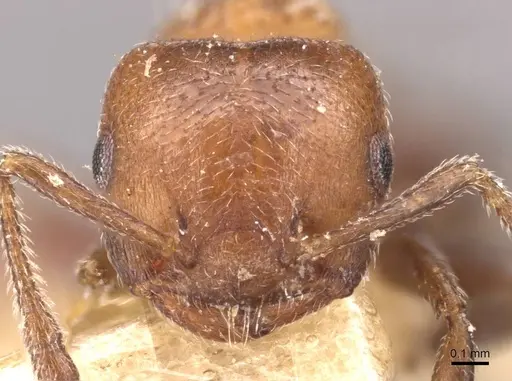
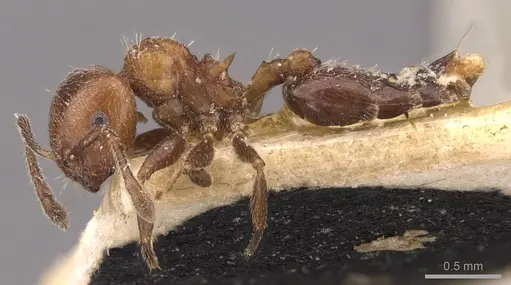
Crematogaster stigmatica is a small myrmicine ant native to Brazil, specifically the Minas Gerais region. This species belongs to the Crematogaster crinosa complex, characterized by a deeply invaginated propodeal suture and an elevated, compressed dorsal face of the propodeum . Workers have a distinctive bicolored appearance with a reddish-brown head and mesosoma contrasting against a black gaster. Like all Crematogaster, they exhibit acrobat behavior - when disturbed, workers raise their abdomen over their head in a defensive display. These ants are arboreal to semi-arboreal, typically nesting in dead wood, hollow twigs, or under bark in tropical forest environments.
Quick Summary
- Difficulty: Medium
- Origin & Habitat: Tropical Brazil, specifically Minas Gerais. Found in forest habitats where they nest in dead wood, hollow twigs, and under bark [1].
- Colony Type: Unconfirmed, colony structure has not been specifically documented for this species.
- Size & Growth:
- Queen: Size data unavailable, no specific measurements exist for this species
- Worker: Size data unavailable, no specific measurements exist for this species
- Colony: Unknown, colony size has not been documented for this species
- Growth: Unknown, specific growth rate has not been documented
- Development: Unknown, specific development timing has not been documented for this species (Development time varies significantly among Crematogaster species. Temperature and conditions will influence development.)
- Antkeeping:
- Temperature: Keep around 24-28°C, mimicking tropical conditions. A gentle gradient allowing workers to self-regulate is ideal. Room temperature in most homes (20-24°C) may slow development but is generally acceptable.
- Humidity: Moderate to high humidity (60-80%). These forest-dwelling ants prefer moist conditions but need good ventilation to prevent mold. Keep the nest substrate slightly moist but not waterlogged.
- Diapause: Unlikely, as a tropical species from Brazil, they probably do not require a true hibernation period. They may show reduced activity during cooler periods but do not enter diapause.
- Nesting: Prefers nests that mimic their natural arboreal habitat. Y-tong (AAC) nests, plaster nests, or naturalistic setups with dead wood and twigs work well. They do well in test tube setups initially but will benefit from more complex nesting structures as the colony grows. Avoid overly wet or saturated substrates.
- Behavior: Crematogaster stigmatica is an active, arboreal species with typical acrobat ant behavior, workers readily raise their gaster when threatened. They are generally not aggressive toward keepers but will defend their nest vigorously. Foraging activity is moderate, with workers actively patrolling and searching for food. Their small size means escape prevention is important, they can squeeze through small gaps. They are primarily nocturnal or crepuscular foragers. Colonies are moderately defensive and will release alarm pheromones and attack intruders.
- Common Issues: escape prevention is critical due to their small size, use fine mesh and tight-fitting barriers, colonies may be slow to establish initially, patience is needed during the founding phase, mold can be an issue if humidity is too high without adequate ventilation, wild-caught colonies may carry parasites that can cause colony failure in captivity, test tube setups work for founding but colonies need more complex nesting as they grow
Housing and Nest Setup
For founding colonies, a simple test tube setup works well, fill a test tube with water, plug with cotton, and place the queen in a dark area. The queen will seal herself into a chamber and begin laying eggs. Once the first workers (nanitics) emerge, you can continue in the test tube or transition to a more complex setup. For established colonies, Y-tong (AAC) nests, plaster nests, or naturalistic setups with dead wood and twigs work best. These ants naturally nest in arboreal habitats, so providing structures that mimic hollow twigs or spaces under bark is ideal. Avoid nests that are too wet or humid, good drainage and ventilation are important to prevent mold. A small outworld area allows for foraging and feeding. Because of their small size, ensure all connections and barriers are secure.
Feeding and Diet
Crematogaster stigmatica is omnivorous like most Crematogaster species. They readily accept sugar sources including honey water, sugar water, and ripe fruit. For protein, offer small insects such as fruit flies, small mealworms, pinhead crickets, and other appropriately-sized prey. In the wild, they also forage for honeydew from aphids and scale insects, so providing a sugar source regularly is important. Feed small amounts of protein 2-3 times per week, and keep a sugar source available at all times. Remove uneaten prey after 24-48 hours to prevent mold. These ants are foragers and will actively search for food, especially during evening and nighttime hours.
Temperature and Seasonal Care
As a tropical species from Brazil, Crematogaster stigmatica prefers warmer temperatures in the range of 24-28°C. This temperature range supports optimal brood development and colony activity. At lower temperatures (below 20°C), colony activity will slow significantly. You can use a heating cable or heating mat on one side of the nest to create a temperature gradient, allowing the ants to self-regulate. Place the heating on top of the nest, not underneath, to avoid drying out the substrate too quickly. Unlike temperate species, they do not require hibernation or diapause. However, they may show reduced activity during cooler periods in your home. Room temperature in most heated homes (around 20-24°C) is acceptable but will result in slower development.
Behavior and Temperament
These ants exhibit classic Crematogaster behavior, when threatened, workers raise their abdomen over their head in an acrobatic defensive display. This behavior, combined with their ability to release alarm pheromones, makes them effective nest defenders. They are not typically aggressive toward keepers and can be handled gently, but their small size makes handling difficult and potentially stressful for the ants. Workers are active foragers, primarily during evening and nighttime hours. Colonies expand moderately and can become quite active once established. Their small size means they can escape through tiny gaps, so excellent escape prevention is essential. Use fine mesh on any ventilation holes and ensure all connections are tight-fitting.
Colony Development and Growth
Colony founding typically proceeds claustrally, the queen seals herself in a chamber and lives off stored fat reserves while raising the first brood. The first workers, called nanitics, are usually smaller than subsequent workers and help expand the nest and forage for food. After the nanitics emerge, the colony enters a growth phase where brood production increases. Colony growth is moderate, it may take several months to reach 50 workers, but growth accelerates as the colony establishes. Maximum colony size is not documented for this specific species. Patience is key during the founding phase, as colonies can appear stagnant before rapid growth begins.
Frequently Asked Questions
How long does it take for Crematogaster stigmatica to produce first workers?
Specific development timing has not been documented for this species. Based on typical Crematogaster patterns, expect first workers in 6-10 weeks under optimal conditions (24-28°C).
What do Crematogaster stigmatica ants eat?
They are omnivorous. Offer sugar water, honey, or ripe fruit regularly, and supplement with small insects like fruit flies, small mealworms, or pinhead crickets 2-3 times per week.
Do Crematogaster stigmatica ants need hibernation?
No, they do not require hibernation. As a tropical species from Brazil, they prefer consistent warm temperatures year-round. They may show reduced activity in cooler conditions but do not enter a diapause state.
What temperature is best for Crematogaster stigmatica?
Keep them at 24-28°C for optimal brood development and colony activity. Room temperature (20-24°C) is acceptable but will slow development. A gentle temperature gradient allowing self-regulation is ideal.
Are Crematogaster stigmatica good for beginners?
They are rated as medium difficulty. They are more challenging than some beginner species due to their small size (requiring excellent escape prevention), need for warm temperatures, and slower founding phase. However, they are rewarding once established.
How big do Crematogaster stigmatica colonies get?
Colony size is not specifically documented for this species. Based on related species in the genus, colonies likely reach several hundred workers. Growth is moderate, patience is needed during the founding phase.
Do Crematogaster stigmatica ants sting?
They have a stinger but rarely use it against humans due to their small size. Their primary defense is the acrobat behavior, raising the gaster and releasing alarm pheromones to deter threats.
What type of nest is best for Crematogaster stigmatica?
Y-tong (AAC) nests, plaster nests, or naturalistic setups with dead wood and twigs work well. They naturally nest in arboreal habitats. Test tubes work for founding but transition to more complex nesting as the colony grows.
Can I keep multiple Crematogaster stigmatica queens together?
This has not been documented for this specific species. Based on typical Crematogaster behavior, they are likely monogyne (single queen). Combining unrelated queens is not recommended without evidence they can coexist.
Why are my Crematogaster stigmatica escaping?
Their small size means they can squeeze through tiny gaps. Use fine mesh on all ventilation, ensure connections are tight-fitting, and consider using fluon or other barriers on nest openings. Escape prevention must be excellent.
Report an Issue
The current care sheet is based fully on literature. See inconsistencies, or something that's incorrect? Please , it will be resolved after review from an admin. Contributing to the blogs tab also helps providing information, to make us be able to further improve the caresheets. Thank you for your support!
References

Lembar perawatan ini dilisensikan di bawah CC BY-SA 4.0 .
Blog Komunitas
CASENT0908416
Lihat di AntWeb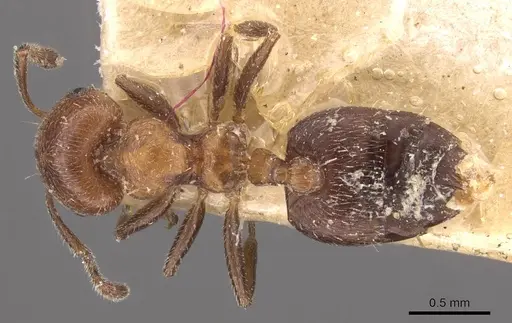
Literatur
Memuat peta distribusi...Memuat produk...