
Crematogaster gordani
- Nama Ilmiah
- Crematogaster gordani
- Tribe
- Crematogastrini
- Subfamili
- Myrmicinae
- Penulis
- Karaman, 2008
- Distribusi
- Ditemukan di 0 negara
Pendahuluan
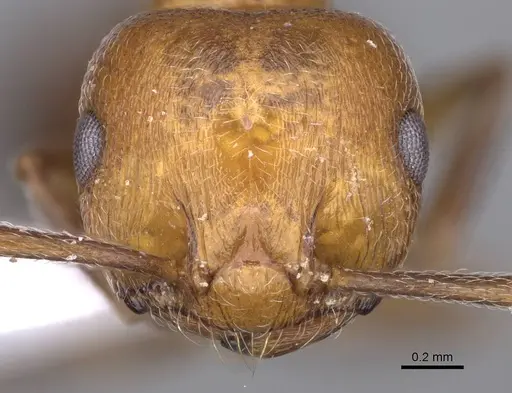
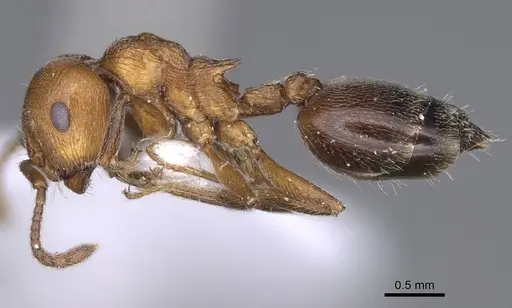
Crematogaster gordani is a small to medium-sized ant belonging to the Crematogaster scutellaris group. Workers measure 4.2-5.0mm and have a distinctive dark yellow to brownish-yellow coloration with a slightly darker abdomen. They feature long, straight propodeal spines that are about 2.3-2.5 times longer than their basal width. Queens are larger at 8.5-9.2mm with shorter triangular propodeal spines. This species is a Balkan endemic, originally described from Montenegro in 2008 where it was previously misidentified as a yellow variety of Crematogaster schmidti. It has since been recorded in Bulgaria along the southern Black Sea coast. The species nests in the ground, with specimens collected near riverbanks and in wooden structures .
Quick Summary
- Difficulty: Medium
- Origin & Habitat: Balkan endemic found in Montenegro and Bulgaria. In Montenegro, specimens have been collected near the Morača river bank in Podgorica at altitudes of 45-450m, with nests in the ground of wooden structures. In Bulgaria, workers have been found in oak forests, foraging on tree trunks at low elevations below 500m [1][2][4][5].
- Colony Type: Colony structure for this specific species has not been studied. Based on patterns in the Crematogaster scutellaris group, likely single-queen colonies [2].
- Size & Growth:
- Queen: 8.5-9.2 mm [1]
- Worker: 4.2-5.0 mm [1]
- Colony: Unknown for this species. Based on related Crematogaster species, colonies likely reach several hundred workers.
- Growth: Moderate
- Development: Estimated 6-8 weeks based on typical Crematogaster scutellaris group development at warm temperatures (Queens have well-developed fat reserves for claustral founding.)
- Antkeeping:
- Temperature: Keep at 22-26°C. This species originates from the Mediterranean region of the Balkans with warm summers. A heating cable on one side of the nest creates a useful gradient. Room temperature within this range is acceptable [4].
- Humidity: Moderate humidity. In their natural habitat near riverbanks and in oak forests, they experience moderate moisture levels. Keep the nest substrate slightly moist but not waterlogged. Provide a water tube for drinking water [4].
- Diapause: Likely beneficial. This species originates from the temperate Balkans (Montenegro and Bulgaria) at low altitudes. A winter rest period at cooler temperatures may support natural cycles, though specific requirements are unconfirmed [6][5].
- Nesting: Ground-nesting species that accepts various nest types. In captivity, they do well in Y-tong (AAC) nests, plaster nests, or naturalistic setups with soil. They have been found nesting in the ground of wooden structures in the wild, so they adapt well to captive environments. Provide a dark nesting area and moderate humidity [1][4].
- Behavior: Crematogaster gordani workers are active foragers that will search for food both on the ground and on vertical surfaces (they've been observed on tree trunks in oak forests). Like other Crematogaster species, they can raise their abdomen as a defensive posture when threatened. They are not particularly aggressive but will defend their colony. Workers are medium-sized at 4-5mm, so escape prevention should be standard, they can squeeze through small gaps but are not as tiny as some Myrmicinae. Use standard ant keeping barriers and secure setups [1][4].
- Common Issues: limited availability, this is a rare species in the antkeeping hobby, being a Balkan endemic only described in 2008, colony size unknown, without established captive colonies, growth expectations are based on related species, diapause requirements unconfirmed, while likely beneficial given temperate origin, specific requirements are not documented, oak forest habitat suggests they need some structural complexity, bare setups may not provide enough enrichment, wild-caught colonies may have parasites given their limited distribution and recent description
Nest Preferences and Housing
Crematogaster gordani is a ground-nesting species that naturally establishes nests in soil, including under structures like wooden houses near riverbanks. In captivity, they adapt well to various nest types including Y-tong (AAC) nests, plaster nests, and naturalistic setups with soil substrate. The key is providing a dark, quiet nesting area with moderate humidity. Since they've been found in oak forests in Bulgaria, adding some structural complexity like pieces of wood or bark in the outworld can mimic their natural environment. Workers have been observed foraging on tree trunks in the wild, so they'll appreciate vertical surfaces in their foraging area. A test tube setup works well for founding colonies, transitioning to a formicarium as the colony grows [1][4].
Feeding and Diet
Like other Crematogaster species, C. gordani is omnivorous with a preference for sweet liquids and protein. Feed them sugar water or honey regularly as an energy source. For protein, offer small insects like fruit flies, small crickets, or mealworms. In the wild, workers have been observed foraging on tree trunks, likely collecting honeydew from aphids or hunting small prey. Feed protein sources 2-3 times per week, and keep a constant supply of sugar water. Remove uneaten food after 24-48 hours to prevent mold. They are medium-sized ants at 4-5mm workers, so prey items should be appropriately sized [1].
Temperature and Seasonal Care
This species comes from the Mediterranean Balkans (Montenegro and Bulgaria), so they prefer warm conditions. Keep the nest area at 22-26°C during the active season. A heating cable on one side of the nest creates a temperature gradient that allows ants to regulate their own temperature. During winter, a cooler period at 10-15°C for 1-2 months may support natural cycles, though specific diapause requirements are not documented for this species. The species is found at low altitudes (below 500m) in its native range, suggesting it prefers warmer conditions. Do not feed during cooler periods but ensure some moisture is available. Return to normal temperatures gradually in spring [4][5].
Behavior and Defense
Crematogaster gordani workers are active foragers that will explore their environment thoroughly. Like all Crematogaster species, they have a distinctive defensive behavior, when threatened, they can raise their abdomen forward over their head, similar to a scorpion posture, and may secrete defensive chemicals from their anal gland. This species is not considered particularly aggressive but will defend the nest if disturbed. Workers are medium-sized (4-5mm), so standard escape prevention measures are sufficient, they are not prone to escaping through tiny gaps like some smaller ant species. They are good climbers and have been observed on vertical surfaces in the wild, so ensure your setup has barriers that account for this [1].
Colony Development
Crematogaster gordani queens are likely claustral, meaning they seal themselves in a chamber and raise the first brood alone using stored fat reserves, though specific founding behavior has not been documented for this species. The founding chamber should be small and dark. Queens measure 8.5-9.2mm and have well-developed fat bodies for this purpose. First workers (nanitics) will be smaller than normal workers but will quickly grow as more brood develops. Based on related species in the scutellaris group, expect 6-8 weeks from egg to first worker at optimal temperatures. Colony growth is moderate, once established, colonies can grow to several hundred workers over 1-2 years. The species has been found at low altitudes (below 500m) in its native range, suggesting it prefers warmer conditions than some temperate ants [1][5].
Frequently Asked Questions
How long does it take for Crematogaster gordani to produce first workers?
Expect 6-8 weeks from egg to first worker at optimal temperatures (22-26°C). This estimate is based on typical development times for related species in the Crematogaster scutellaris group. Queens likely seal themselves in during founding, using stored fat reserves to survive until the first workers emerge, though specific founding behavior is unconfirmed.
What do Crematogaster gordani ants eat?
They are omnivorous like other Crematogaster species. Feed them sugar water or honey as a constant energy source, and offer protein (small insects like fruit flies, small crickets, or mealworms) 2-3 times per week. They may also accept other sweet liquids.
Do Crematogaster gordani ants need hibernation?
Specific diapause requirements are not documented for this species. However, it originates from the temperate Balkans at low altitudes, so a cooler winter period may be beneficial. Consider a brief cooler period (1-2 months at 10-15°C) rather than extended cold dormancy.
What size colony does Crematogaster gordani reach?
Maximum colony size is not well documented for this species. Based on related species in the scutellaris group, colonies likely reach several hundred workers over 1-2 years of development.
Are Crematogaster gordani ants good for beginners?
This species is rated as Medium difficulty. While not the easiest species for beginners, their care requirements are straightforward once you understand the basics. The main challenges are their limited availability (rare in the hobby as a Balkan endemic) and the need for a winter cool period. Standard ant keeping knowledge is sufficient to keep them successfully.
What temperature should I keep Crematogaster gordani at?
Keep the nest at 22-26°C during the active season. A heating cable on one side of the nest creates a useful gradient. This species originates from the Mediterranean Balkans and prefers warm conditions.
Can I keep multiple Crematogaster gordani queens together?
Colony type is not specifically documented for this species. While likely single-queen based on scutellaris group patterns, it is not recommended to combine unrelated foundress queens as this often leads to fighting.
Do Crematogaster gordani ants sting?
Crematogaster ants can raise their abdomen in a defensive posture and may secrete irritating chemicals, but they are not considered dangerous to humans. Their sting is minor and these ants are not aggressive toward keepers. Standard handling precautions are sufficient.
When should I move my colony to a formicarium?
Move from a test tube setup to a formicarium when the colony reaches around 50-100 workers and the test tube is becoming crowded. Ensure the new setup has appropriately sized chambers for their medium 4-5mm workers.
Where is Crematogaster gordani native to?
This is a Balkan endemic found only in Montenegro and Bulgaria. In Montenegro, it's known from the Podgorica area and Boka Kotorska Bay. In Bulgaria, it's found along the southern Black Sea coast. It was only described as a separate species in 2008.
Report an Issue
The current care sheet is based fully on literature. See inconsistencies, or something that's incorrect? Please , it will be resolved after review from an admin. Contributing to the blogs tab also helps providing information, to make us be able to further improve the caresheets. Thank you for your support!
References

Lembar perawatan ini dilisensikan di bawah CC BY-SA 4.0 .
Blog Komunitas
CASENT0914235
Lihat di AntWeb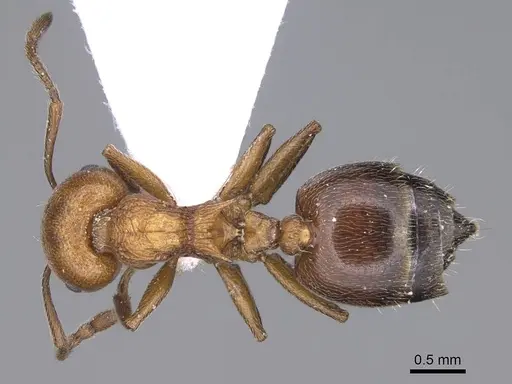
Literatur
Memuat peta distribusi...Memuat produk...