
Cardiocondyla opistopsis
- Nama Ilmiah
- Cardiocondyla opistopsis
- Tribe
- Crematogastrini
- Subfamili
- Myrmicinae
- Penulis
- Seifert, 2003
- Distribusi
- Ditemukan di 0 negara
Pendahuluan
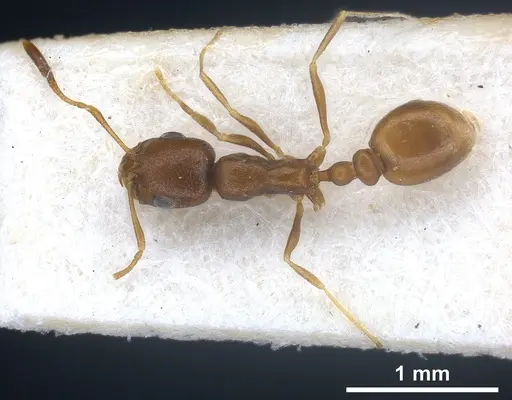
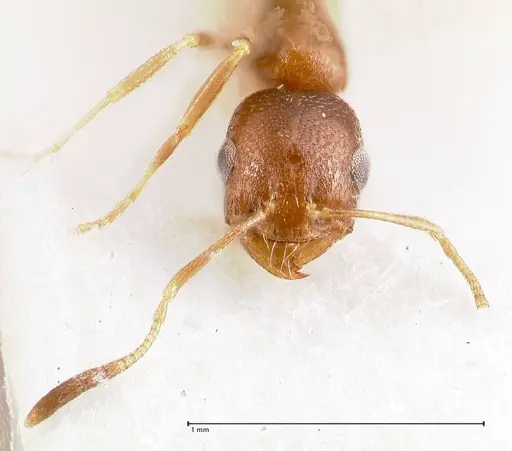
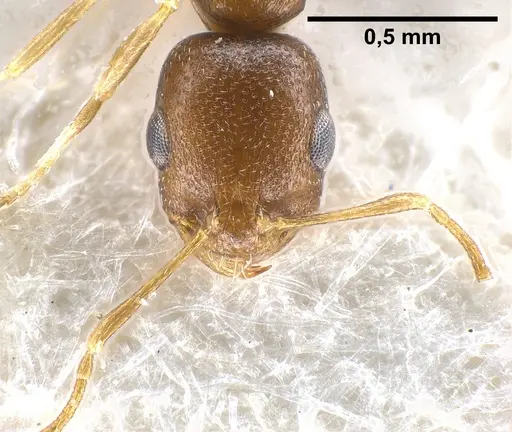
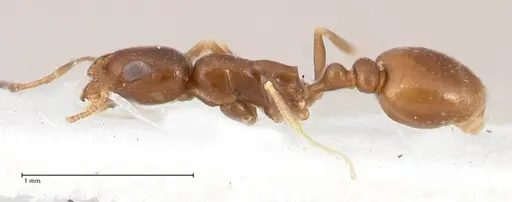
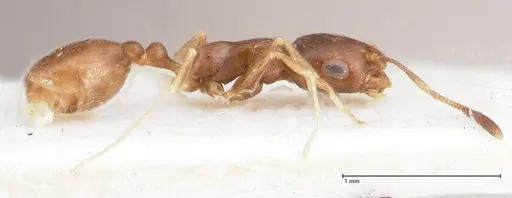
Cardiocondyla opistopsis is an extremely tiny ant species, with workers measuring approximately 1.5-2mm in total length - inferred from typical Cardiocondyla genus size . It belongs to the batesii species group and is only known from four worker specimens collected in Kuwait - making it one of the rarest and least-studied ant species in the world . The species is unmistakable due to its unique combination of extremely low postocular index (the space behind the eyes is narrower than in any other Cardiocondyla), very large eyes, a very low petiole (the waist segment), and a particularly narrow postpetiole . The entire body is dark to medium brown . This species is essentially a complete mystery in terms of biology. No one has ever observed a queen, colony, nuptial flight, or any aspect of its natural history. All care recommendations below are estimates based on what is known about other Cardiocondyla species and the Kuwaiti environment, not confirmed requirements for this specific species.
Quick Summary
- Difficulty: Unknown, likely moderate based on genus patterns
- Origin & Habitat: Only known from the type locality in Burgan, Kuwait (Palaearctic region) [1][2].
- Colony Type: Unconfirmed. Most Cardiocondyla species are polygynous (multiple queens per colony), but this has not been documented for C. opistopsis.
- Size & Growth:
- Queen: Unknown, no queens have ever been collected or described
- Worker: ~1.5-2mm, inferred from Cardiocondyla genus size range [1]
- Colony: Unknown, only 4 workers have ever been collected
- Growth: Unknown
- Development: Unknown, no development data exists for this species (No direct data exists for this species.)
- Antkeeping:
- Temperature: Estimated 24-28°C based on Kuwait's climate and typical Cardiocondyla preferences. Provide a temperature gradient so ants can choose their preferred zone.
- Humidity: Estimated low to moderate, Kuwait has an arid climate. Keep nest substrate slightly moist but allow drying periods.
- Diapause: Unknown, likely reduced activity during cooler winter months given the Palaearctic location, but specific requirements unconfirmed.
- Nesting: Estimated to prefer small cavities in soil or under stones, typical of Cardiocondyla. A small test tube setup or Y-tong nest with tight chambers would likely work. Avoid large, open spaces.
- Behavior: Unknown for this specific species. Based on genus patterns, they are likely relatively docile and not aggressive. Their tiny size means escape prevention is critical, they can squeeze through extremely small gaps. Use tight-fitting barriers.
- Common Issues: no biological data exists, all care is estimated from genus patterns, tiny size makes escape likely without fine mesh barriers, nothing known about founding or colony establishment, no confirmed diet, only estimate based on related species, unknown whether they accept sugar sources, no data on hibernation or seasonal requirements
Why This Species Is So Challenging
Cardiocondyla opistopsis presents a unique challenge in antkeeping: we essentially know nothing about its biology. The species was described in 2003 from just four worker specimens collected in Kuwait, and no one has ever documented a queen, colony behavior, nuptial flight, or any aspect of its natural history since then [1]. This means every piece of care advice below is an educated guess based on what is known about other Cardiocondyla species and the Kuwaiti environment, not confirmed requirements. If you acquire this species, treat it as an experimental project and document everything you observe, your observations could be scientifically valuable for such an understudied ant.
Estimated Housing and Nesting
Based on the genus and this species' tiny worker size, they likely nest in small cavities in the ground or under stones in nature. For captivity, a small test tube setup works well for founding colonies. The chambers should be tight and narrow, these are very small ants that would be overwhelmed in large, open spaces. A Y-tong nest with small chambers or a small plaster nest could also work. Because of their minute size, escape prevention must be excellent, standard mesh may not contain them. Use tight-fitting lids and consider applying Fluon or similar barriers to the rim of any container. Keep the nest relatively dry, Kuwait has an arid climate, so avoid overly humid conditions that could cause mold. [1]
Estimated Temperature and Heating
Kuwait has a hot desert climate with temperatures regularly exceeding 40°C in summer and dropping to 10-15°C in winter. Based on typical Cardiocondyla preferences and this species' origin, aim for a warm setup around 24-28°C during the active season. A heating cable on one side of the nest can create a temperature gradient, allowing the ants to regulate their own temperature by moving between warmer and cooler areas. During winter, room temperature is likely sufficient, do not actively cool the colony unless you observe clear signs of stress in warm conditions. The key is stability rather than extreme temperatures.
Estimated Feeding and Diet
No direct observations exist for this species, but Cardiocondyla ants are typically omnivorous, feeding on small insects, honeydew, and nectar. For this tiny species, offer small live prey like fruit flies, springtails, or other micro-arthropods. Sugar water or honey may be accepted, but start with small amounts and observe. Feed protein sources (small insects) a few times per week, and keep a constant sugar source available. Remove uneaten food promptly to prevent mold. Because nothing is known about this species' specific dietary needs, treat any accepted foods as a success and document what they eat, this information would be scientifically valuable.
Colony Structure and Reproduction
The colony structure of Cardiocondyla opistopsis is completely unknown. Most Cardiocondyla species are polygynous (multiple queens per colony), with some having ergatoid (wingless) queens that can serve as replacement reproductives if the primary queen dies. However, we have no data on whether C. opistopsis follows this pattern. Nuptial flight timing is also unknown, in the Kuwaiti climate, flights likely occur during the warmer months, possibly in spring or early summer. If you keep this species, carefully document any queen behavior, egg-laying rates, and colony development. The complete lack of biological data makes any observations potentially valuable.
Frequently Asked Questions
How do I care for Cardiocondyla opistopsis ants?
This is one of the least-studied ant species in the world, with only 4 workers ever collected. All care recommendations are estimates based on other Cardiocondyla species and Kuwait's climate. Keep them warm (24-28°C), provide small prey insects and sugar sources, and use excellent escape prevention due to their tiny size.
What do Cardiocondyla opistopsis eat?
Unknown specifically, but based on genus patterns they likely eat small insects and honeydew. Offer small live prey like fruit flies or springtails, and sugar water or honey. Document what they accept, this would be new scientific information.
How big do Cardiocondyla opistopsis colonies get?
Unknown, only 4 workers have ever been collected in the wild. Based on related species, colonies may reach a few hundred workers, but this is purely speculative.
Do Cardiocondyla opistopsis ants sting?
Given their extremely tiny size, any sting would be negligible even if present. They are not considered dangerous to humans. This species belongs to the Myrmicinae subfamily, which typically have a smear-type venom delivery system, but no specific defense observations exist for this species.
What temperature do Cardiocondyla opistopsis need?
Estimated 24-28°C based on Kuwait's climate and typical Cardiocondyla preferences. Provide a temperature gradient so ants can self-regulate. Room temperature is likely adequate in most homes.
How long does it take for Cardiocondyla opistopsis to develop from egg to worker?
Unknown, no development data exists for this species.
Can I keep multiple Cardiocondyla opistopsis queens together?
Unknown, colony structure has never been documented for this species. Most Cardiocondyla are polygynous, but we don't know if this species is. Start with a single queen until more is known.
Where is Cardiocondyla opistopsis found?
Only known from Kuwait, specifically the Burgan area. It is one of the rarest ant species with only 4 workers ever collected [1][2].
Are Cardiocondyla opistopsis good for beginners?
No, this is not recommended for beginners. The species has never been kept in captivity, and no biological data exists to guide care. This would be an experimental species only for experienced antkeepers willing to document their observations.
Do Cardiocondyla opistopsis need hibernation?
Unknown, Kuwait has mild winters, so they may not require a true hibernation. Reduce feeding and activity during cooler months, but a full diapause may not be necessary.
Why is Cardiocondyla opistopsis so rare?
The species has only been collected twice (4 workers total) since being described in 2003. It may be genuinely rare in the wild, difficult to collect, or overlooked due to its tiny size. No one has studied its population status or ecology.
What makes Cardiocondyla opistopsis different from other Cardiocondyla?
It has the lowest postocular index (space behind the eyes) of any Cardiocondyla species, combined with very large eyes, a very low petiole, and a narrow postpetiole. These features make it unmistakable under a microscope but tell us nothing about its behavior or biology [1].
Report an Issue
The current care sheet is based fully on literature. See inconsistencies, or something that's incorrect? Please , it will be resolved after review from an admin. Contributing to the blogs tab also helps providing information, to make us be able to further improve the caresheets. Thank you for your support!
References

Lembar perawatan ini dilisensikan di bawah CC BY-SA 4.0 .
Blog Komunitas
FOCOL0730
Lihat di AntWeb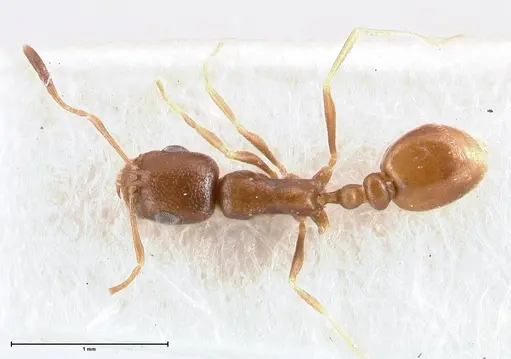
Literatur
Memuat peta distribusi...Memuat produk...