
Cardiocondyla excavata
- Nama Ilmiah
- Cardiocondyla excavata
- Tribe
- Crematogastrini
- Subfamili
- Myrmicinae
- Penulis
- Seifert, 2023
- Distribusi
- Ditemukan di 0 negara
Pendahuluan
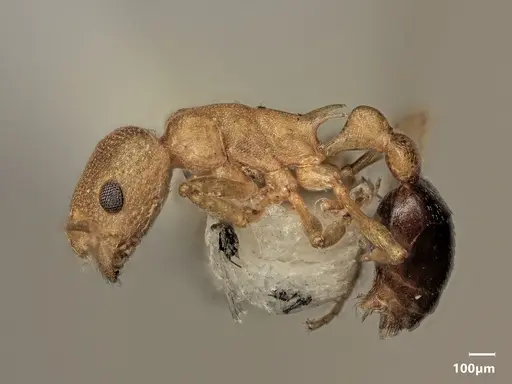
Cardiocondyla excavata is a tiny ant species from the mountains of Papua New Guinea, only formally described in 2022. Workers are among the smallest ants in the genus, with a distinctive deeply concave clypeus (the plate covering the front of the head) that gives the species its name 'excavata' meaning 'excavated' in Latin. The body is yellowish with a dark brown abdomen. This species belongs to the Cardiocondyla wheeleri group and is known only from a single nest collected in 1963 at 1670m elevation in a mixed oak forest near Kainantu. [AntWiki]
Quick Summary
- Difficulty: Unknown, Insufficient Data
- Origin & Habitat: Papua New Guinea, Kainantu region at 1670m elevation. The only known nest was found in a log at the margin of a mixed oak forest. [1][2]
- Colony Type: Unknown, no colony data exists for this species.
- Size & Growth:
- Queen: Size data unavailable, only worker specimens have been described
- Worker: ~1-1.5mm, inferred from Cardiocondyla genus [1]
- Colony: Unknown, only three worker specimens have ever been collected
- Growth: Unknown
- Development: Unknown, no development data exists for this species (No data available.)
- Antkeeping:
- Temperature: Likely prefers cooler conditions given the high-elevation mountain forest habitat (1670m). Based on the habitat, aim for temperatures around 18-22°C. Start in this range and observe colony activity.
- Humidity: Likely requires moderate to high humidity, similar to other forest-dwelling Cardiocondyla. Keep the nest substrate consistently moist but not waterlogged. The log-nesting behavior suggests they prefer humid, shaded conditions.
- Diapause: Unknown, no seasonal data exists. The highland Papua New Guinea location suggests they may not experience harsh winters, but their exact seasonal requirements are unconfirmed.
- Nesting: In nature, they nest in rotting wood (logs). In captivity, a small test tube setup or a tiny plaster or soil nest with narrow chambers would be appropriate. The extremely small size means chambers must be very small and tight-fitting.
- Behavior: No behavioral observations have been documented in scientific literature. Cardiocondyla ants are generally non-aggressive, slow-moving, and tend to be secretive. Their tiny size makes them difficult to observe. Escape prevention is critical due to their minute size, they can squeeze through the smallest gaps.
- Common Issues: this species has never been kept in captivity, there is no established care protocol, only three worker specimens exist in museum collections, meaning wild colonies have never been studied, no information exists on what they eat, making feeding experimental, their tiny size creates extreme escape risk, standard barriers may be insufficient, no data on temperature tolerance, humidity requirements, or colony development exists
Discovery and Taxonomy
Cardiocondyla excavata was formally described in 2022 by myrmecologist Bernhard Seifert, making it one of the most recently described ant species. The species was identified from three worker specimens collected in 1963 by A.G.E. Emerson from a nest in a log at the edge of a mixed oak forest in Papua New Guinea. The species name 'excavata' refers to the deeply concave anterior clypeal margin, a distinctive feature that helps differentiate it from the similar Cardiocondyla wheeleri. The type locality is at 1670m elevation near Kainantu, which is a relatively cool, highland tropical environment. [1]
Identification and Distinguishing Features
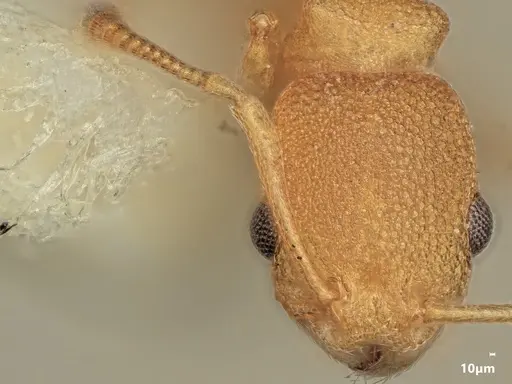
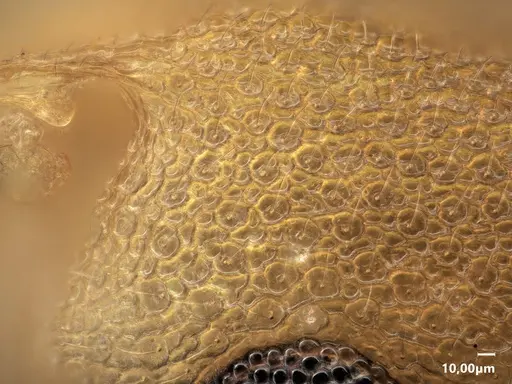
This is a tiny ant species, workers have a head size of approximately 0.5mm. The most distinctive feature is the deeply concave clypeus, which measures 2.9-3.3% of the head length, significantly deeper than the similar C. wheeleri which has a shallower concavity of only 1.0-2.1% CL. Other distinguishing features include a shorter head, larger eyes, and narrower waist segments compared to C. wheeleri. The body is mostly yellowish with a dark brown abdomen. These are among the smallest ants in the genus Cardiocondyla. [1]
Natural Habitat and Distribution
Cardiocondyla excavata is known only from a single location in Papua New Guinea, the Kainantu region at approximately 6.33°S, 145.86°E at 1670m elevation. This is in the highlands of eastern Papua New Guinea, a region of tropical mountain forest. The only known nest was found in a log at the margin of a mixed oak forest, suggesting this species prefers shaded, humid forest environments with access to decaying wood for nesting. The type specimens were collected in January 1963. Nothing else is known about their distribution, abundance, or ecological requirements. [1][2]
Keeping Considerations
This species has never been kept in captivity and no biological data exists to guide care. Based on the natural habitat (highland forest at 1670m elevation, nesting in logs), they likely prefer cooler temperatures and higher humidity than typical tropical ants. The extremely small size means they require specialized housing with very small chambers and excellent escape prevention, standard test tube setups may need additional barriers. Feeding would be entirely experimental, but related Cardiocondyla species typically feed on small insects, honeydew, and sugar sources. This species is not recommended for beginners due to the complete lack of established care information and the challenges posed by their minute size. If you were to obtain this species, careful observation and documentation would be essential to advance knowledge. [1]
Frequently Asked Questions
How do I keep Cardiocondyla excavata ants?
This species has never been kept in captivity, so no established care protocol exists. Based on their natural habitat (mountain forest in Papua New Guinea, nesting in logs), they likely need cool temperatures (18-22°C), high humidity, and very small nest chambers. This would be entirely experimental keeping.
What do Cardiocondyla excavata eat?
Unknown, no feeding observations have been documented. Related Cardiocondyla species typically eat small insects, honeydew, and sugar water, but this is unconfirmed for C. excavata. Feeding would be experimental.
How big do Cardiocondyla excavata colonies get?
Unknown, only three worker specimens have ever been collected. The maximum colony size for this species is completely unstudied.
Are Cardiocondyla excavata good for beginners?
No. This species is not recommended for beginners. There is no established care information, they are extremely tiny (making housing and observation difficult), and they are known only from three museum specimens. This would be an expert-level species for documentation purposes only.
Do Cardiocondyla excavata ants sting?
Unknown, no defensive behavior has been documented. Given their extremely small size, any sting would likely be imperceptible to humans, similar to other tiny Cardiocondyla species.
What temperature do Cardiocondyla excavata need?
Unconfirmed, but likely cooler than typical tropical ants due to their high-elevation mountain forest habitat (1670m). Based on the habitat, temperatures in the range of 18-22°C are a reasonable starting point. Observe colony behavior and adjust accordingly.
How long do Cardiocondyla excavata take to develop from egg to worker?
Unknown, no development data exists for this species.
Can I keep multiple Cardiocondyla excavata queens together?
Unknown, no colony structure data exists for this species. The colony type (single-queen or multi-queen) has not been documented. Combining unrelated queens is not recommended given the complete lack of information.
Report an Issue
The current care sheet is based fully on literature. See inconsistencies, or something that's incorrect? Please , it will be resolved after review from an admin. Contributing to the blogs tab also helps providing information, to make us be able to further improve the caresheets. Thank you for your support!
References

Lembar perawatan ini dilisensikan di bawah CC BY-SA 4.0 .
Blog Komunitas
ANTWEB1048513
Lihat di AntWeb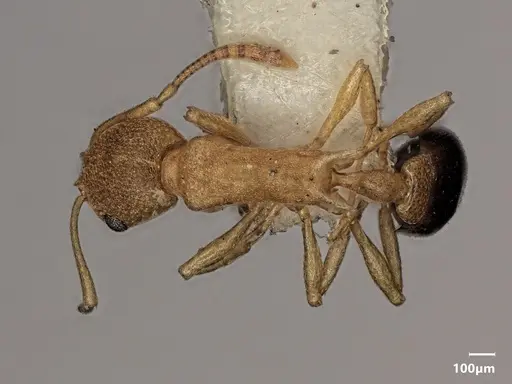
Literatur
Memuat peta distribusi...Memuat produk...