
Camponotus verae
- Nama Ilmiah
- Camponotus verae
- Subgenus
- Myrmaphaenus
- Tribe
- Camponotini
- Subfamili
- Formicinae
- Penulis
- Forel, 1908
- Distribusi
- Ditemukan di 0 negara
Pendahuluan
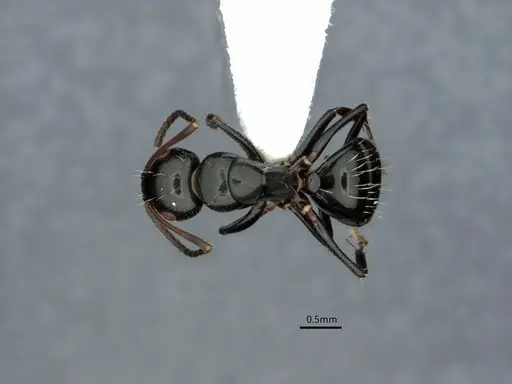
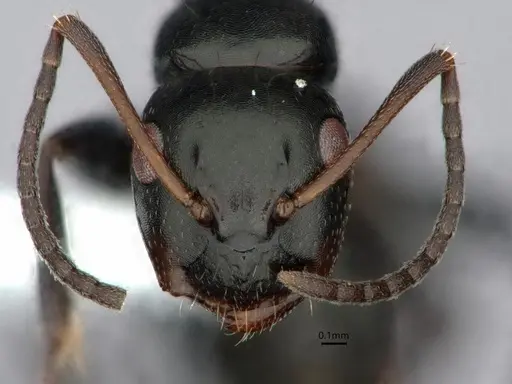
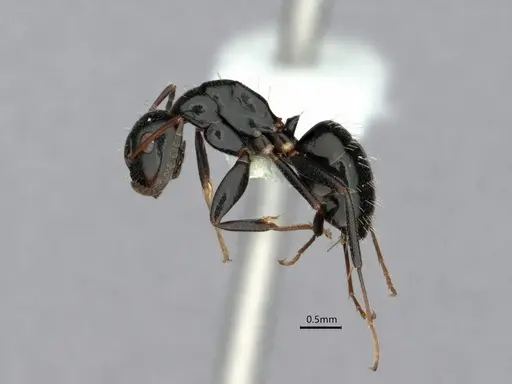
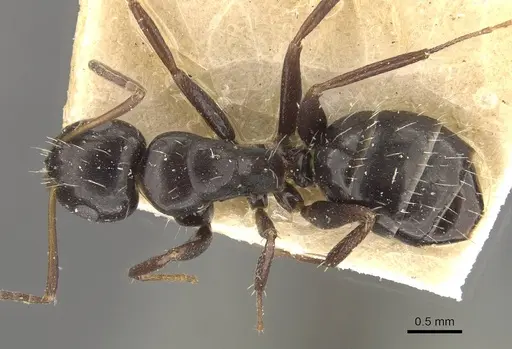
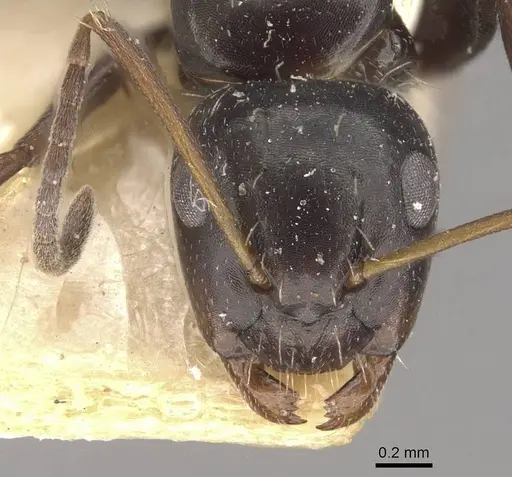
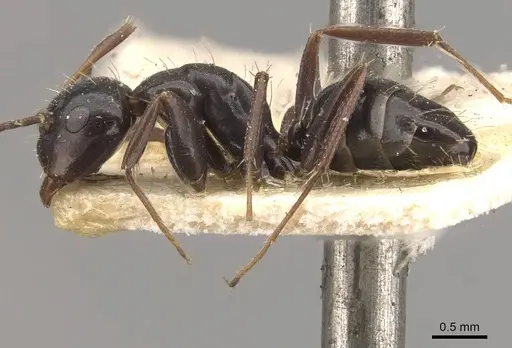
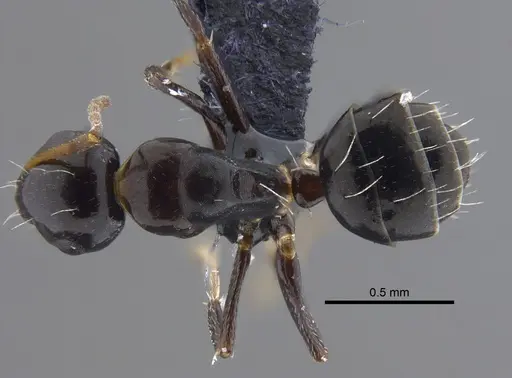
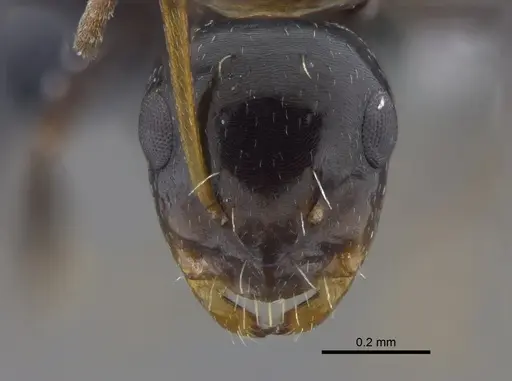
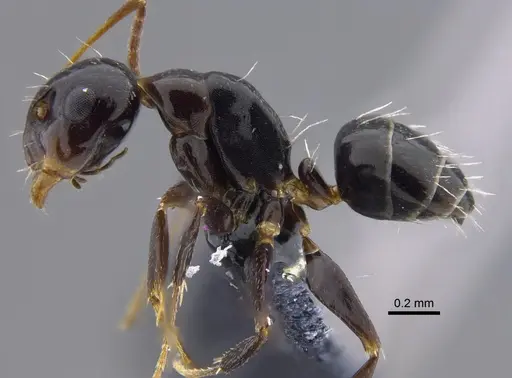
Camponotus verae is a small to medium-sized ant belonging to the subgenus Myrmaphaenus, native to the Neotropical region. Workers are medium brown to dark brown, with the anterior part of the head showing a reddish-brown coloration that contrasts with the darker rest of the head. The head is notably elongated with nearly parallel sides, and the species has short scapes that do not reach the posterior lateral corners of the head. This species nests under bark on living trees and inside Cecropia trees, and is attracted to protein baits. Major workers can be distinguished from similar species by the form of the mesosoma, which has its highest point between the mesonotum and dorsopropodeum.
Quick Summary
- Difficulty: Medium
- Origin & Habitat: Found across the Neotropical region from Colombia (Huila) through Brazil (São Paulo) to Paraguay and Venezuela, living in humid tropical rainforests at elevations of 600-900m. They nest under bark on living trees and in Cecropia trees.
- Colony Type: Colony structure is unconfirmed for this species.
- Size & Growth:
- Queen: Size data unavailable, inferred from Camponotus genus patterns (~10-12mm)
- Worker: Size data unavailable, major workers are larger, minor workers smaller [1]
- Colony: Colony size data unavailable for this species
- Growth: Growth rate data unavailable
- Development: Development time unconfirmed for this species (No species-specific development data available.)
- Antkeeping:
- Temperature: Keep at 22-26°C. Provide a gentle temperature gradient so ants can self-regulate. This species comes from humid tropical forests, so stable warmth is important.
- Humidity: High humidity is essential, they naturally live in rainforest environments. Keep nest substrate consistently moist but not waterlogged. Provide a water tube for drinking.
- Diapause: Unlikely required, being a tropical species from Brazil and Colombia, they probably do not need a true hibernation. However, a slight reduction in temperature during winter months may be beneficial.
- Nesting: Best kept in a Y-tong (AAC) nest or plaster formicarium with chambers sized appropriately for this medium-sized Camponotus. They naturally nest under bark and in trees, so a naturalistic setup with wood or cork can work well.
- Behavior: Workers are moderately active and forage both in the nest area and outworld. They are attracted to protein baits and likely supplement their diet with honeydew from aphids or scale insects. Major workers are larger and may serve as soldiers or foragers for larger prey. Escape risk is moderate, use standard Camponotus escape prevention (fluon on edges, tight-fitting lids). This species defends by biting and spraying formic acid, typical of Formicinae ants.
- Common Issues: tropical species may decline if kept too cool, maintain warm temperatures year-round, high humidity requirements mean mold can be an issue if ventilation is poor, founding phase may be slow, queens need patience during the first few months, wild-caught colonies may carry parasites that can devastate captive colonies, test tube setups may dry out too quickly in dry climates, monitor moisture levels closely
Nest Preferences and Housing
Camponotus verae naturally nests under bark on living trees and inside Cecropia trees, which tells us they prefer enclosed, humid spaces with some wood material. In captivity, a Y-tong (AAC) nest or plaster formicarium works well. The chambers should be appropriately sized for medium Camponotus, not too tight, but not overly spacious either. A naturalistic setup with cork or wood pieces can mimic their natural arboreal nesting sites. Keep the nest area humid but ensure some ventilation to prevent mold. A water tube should always be available for drinking, as these rainforest ants need access to free water. [1]
Feeding and Diet
Based on their attraction to sausage baits (a protein source), C. verae is primarily predatory and protein-eating like most Camponotus species. Feed them protein sources such as small insects (fruit flies, small crickets, mealworms), and offer sugar water or honey as an energy source. They will likely accept a variety of protein foods. Feed protein 2-3 times per week, and keep sugar water constantly available. Remove uneaten prey after 24-48 hours to prevent mold. As they are arboreal nesters, they may also tend aphids or scale insects for honeydew in the wild, so offering occasional sweet foods is beneficial. [1]
Temperature and Seasonal Care
Being a tropical species from Brazil, Colombia, and Paraguay, C. verae requires warm conditions year-round. Maintain temperatures between 22-26°C, with a slight gradient allowing workers to choose their preferred warmth. Avoid temperatures below 20°C for extended periods. Unlike temperate species, they do not require a true hibernation diapause. However, a slight seasonal reduction in temperature during winter months (dropping a few degrees) may be natural and could help maintain colony health. Monitor your colony's activity levels, if workers become sluggish, they may need warmer conditions. Heating cables or mats can be used on one side of the nest to create a gradient. [1]
Colony Founding and Early Development
The founding behavior of C. verae is unconfirmed. Place your founding queen in a test tube setup with a water reservoir, and keep it dark and undisturbed. Do not feed the founding queen until the first workers emerge. After nanitics appear, you can begin offering tiny food items. The colony will grow slowly at first, then accelerate once the first batch of workers is established. Patience is essential during founding, many colonies fail when keepers disturb the queen too often or try to feed too early.
Behavior and Temperament
Camponotus verae workers are moderately active and will forage for food in the outworld. Major workers, being larger, may handle bigger prey items. The species shows typical Camponotus foraging behavior, workers will recruit nestmates to good food sources through chemical trails. Escape prevention should be moderate, while not the smallest ants, they can still climb smooth surfaces. Apply fluon to the inner rim of the outworld and ensure lids fit tightly. They are primarily nocturnal or crepuscular in the wild, so they may be more active during evening hours. As a Formicinae ant, they defend by biting and spraying formic acid from their acidopore. [1]
Frequently Asked Questions
How long does it take for Camponotus verae to get their first workers?
Development time is unconfirmed for this species. For Camponotus in general, expect 6-10 weeks from egg to first worker (nanitics) at optimal temperatures around 24°C. The exact timing depends on temperature, warmer within their range speeds development, while cooler temperatures slow it down.
What do Camponotus verae ants eat?
They need a balanced diet of protein and sugar. Feed small insects like fruit flies, small crickets, or mealworms 2-3 times per week. Keep sugar water or honey constantly available. They are attracted to protein baits, so protein is especially important for colony growth.
Do Camponotus verae ants need hibernation?
No, they do not require hibernation. Being a tropical species from Brazil and Colombia, they need warm conditions year-round. A slight temperature reduction in winter may be natural but is not required. Keep them at 22-26°C consistently.
Are Camponotus verae good for beginners?
They are intermediate in difficulty. They require more attention to humidity and temperature than hardy temperate species. If you have kept another Camponotus species successfully, this one should be manageable.
What temperature should I keep Camponotus verae at?
Keep them at 22-26°C. A slight temperature gradient is ideal so workers can self-regulate. Use a heating cable on one side of the nest if your room temperature is below 22°C. Avoid temperatures below 20°C.
How big do Camponotus verae colonies get?
Colony size data is unavailable for this species. Based on similar Camponotus species, growth is moderate, expect the first year to produce perhaps 20-50 workers, with faster growth in subsequent years once the colony establishes.
When should I move Camponotus verae to a formicarium?
Wait until the colony has at least 30-50 workers before moving from a test tube setup to a formicarium. The founding tube should suffice for the first few months. Moving too early can stress the colony. Ensure the formicarium is appropriately sized, not too large for a small colony.
Can I keep multiple Camponotus verae queens together?
This is not recommended. While colony structure is unconfirmed for this species, Camponotus are typically single-queen colonies. Combining unrelated queens usually results in fighting. If you have multiple foundresses, keep them in separate setups.
Why is my Camponotus verae colony declining?
Common causes include: too low temperature (keep above 22°C), too dry conditions (they need high humidity), mold from poor ventilation, or parasites from wild-caught colonies. Check your temperature and humidity levels first. Ensure the nest is not too wet or too dry, and provide adequate ventilation.
Report an Issue
The current care sheet is based fully on literature. See inconsistencies, or something that's incorrect? Please , it will be resolved after review from an admin. Contributing to the blogs tab also helps providing information, to make us be able to further improve the caresheets. Thank you for your support!
References

Lembar perawatan ini dilisensikan di bawah CC BY-SA 4.0 .
Blog Komunitas
Literatur
Memuat peta distribusi...Memuat produk...