
Camponotus sklarus
- Nama Ilmiah
- Camponotus sklarus
- Subgenus
- Tanaemyrmex
- Tribe
- Camponotini
- Subfamili
- Formicinae
- Penulis
- Bolton, 1995
- Distribusi
- Ditemukan di 0 negara
Pendahuluan
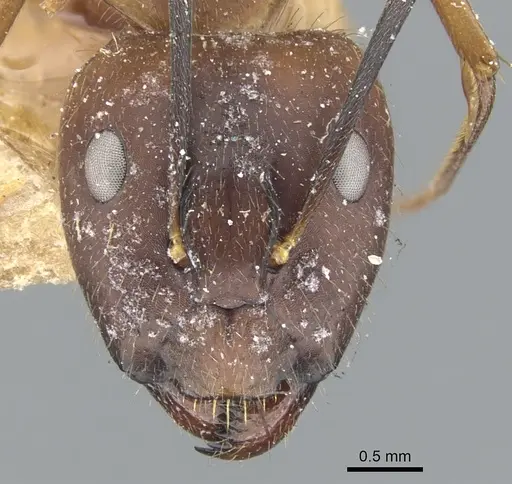
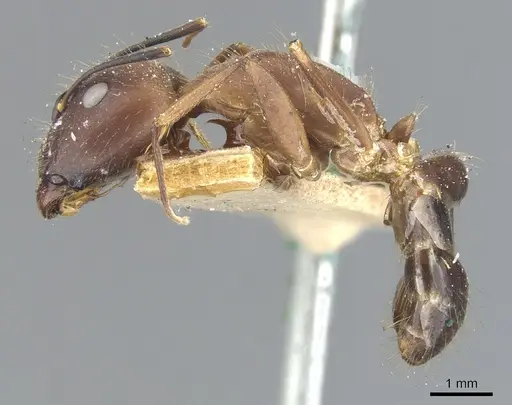
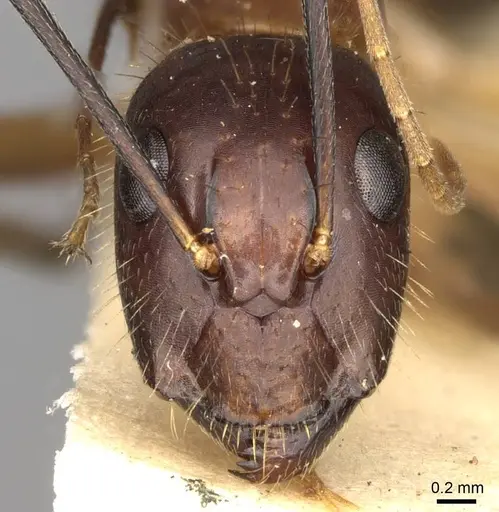
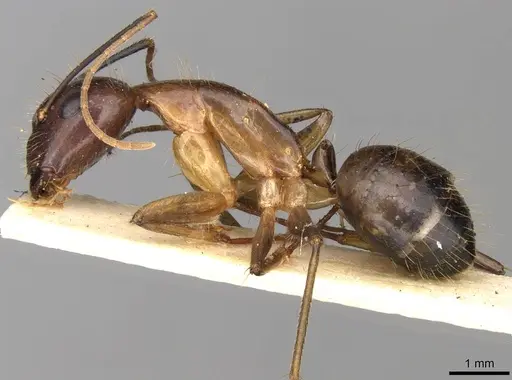
Camponotus sklarus is a carpenter ant species native to South and Southeast Asia, found in India, Myanmar, Sri Lanka, Malaysia, and Indonesia . Workers display a distinctive color pattern with a black head and gaster contrasting against the mesosoma, which has a relatively dull appearance without shine . The clypeus features a serrated anterior margin, a distinguishing characteristic of this species . This species belongs to the Formicinae subfamily and Camponotini tribe. Like other carpenter ants, they nest in wood cavities but do not eat wood - they tunnel through it to create gallery systems. They are generally docile, making them suitable for antkeepers who want larger, visually striking ants without aggressive behaviors.
Quick Summary
- Difficulty: Easy
- Origin & Habitat: Native to South and Southeast Asia, including India, Myanmar, Sri Lanka, Malaysia, and Indonesia. Found in tropical and subtropical forest environments [1][2].
- Colony Type: Colony structure is unconfirmed for this species. Based on typical Camponotus patterns, likely single-queen (monogyne) colonies, though some genus members can form multi-queen colonies.
- Size & Growth:
- Queen: Size data unavailable, inferred from Camponotus genus (~15-20mm)
- Worker: Size data unavailable, inferred from Camponotus genus (6-12mm typical for the genus)
- Colony: Colony size data unavailable for this species
- Growth: Growth rate data unavailable for this species
- Development: Development time unconfirmed, likely several months based on typical Camponotus patterns (First workers (nanitics) are typically smaller than mature workers. Development time varies with temperature.)
- Antkeeping:
- Temperature: Keep nest area at 24-28°C. A heating cable on one side creates a gentle gradient. These are tropical ants that prefer warm, stable conditions.
- Humidity: Moderate humidity around 50-70%. Carpenter ants are somewhat adaptable but prefer nest areas that are not overly dry. Provide a water tube for drinking water.
- Diapause: No, as a tropical species, they do not require hibernation. Keep temperatures stable year-round.
- Nesting: Y-tong (AAC) nests, wooden formicaria, or plaster nests work well. These ants need nesting chambers large enough for their colony. Avoid overly compact setups, they prefer spacious galleries.
- Behavior: Docile and non-aggressive. Workers are active foragers that primarily seek honeydew and small insects. Major workers serve as defenders and food processors. They are not prone to biting but will spray formic acid if threatened (this is typical for Formicinae ants). Escape prevention should be moderate, they are large enough that standard barriers work well, but they can climb smooth surfaces.
- Common Issues: colonies may grow slowly, patience is needed during the founding phase, queens can be sensitive to disturbance during founding, minimize vibrations, large colonies need spacious nests or they may abandon them, wild-caught colonies may contain parasites that cause colony collapse
Housing and Nest Setup
Camponotus sklarus does well in a variety of captive setups. Y-tong (AAC) nests are popular because they provide dark, enclosed chambers that mimic the inside of rotting wood where these ants naturally nest. Wooden formicaria or plaster nests also work well. The key is providing appropriately sized chambers, too small and the colony may abandon the nest, too large and they may not feel secure. For a founding queen, a test tube setup works fine. Once the colony reaches 20-30 workers, you can consider moving them to a more elaborate setup, but many colonies do well in test tubes for quite some time.
Connect the nest to an outworld (foraging area) that is escape-proof. A simple plastic container with smooth walls works as an outworld. Add some decorations like small rocks or plants to give the workers something to explore. A thin layer of substrate in the outworld is optional but helps with humidity stability.
Feeding and Diet
Like most Camponotus species, these ants are omnivorous. Their diet in captivity should include a sugar source and protein. Sugar water (1:3 ratio sugar to water) or honey water (1:4 ratio) should be available constantly. For protein, offer small insects like fruit flies, mealworms, or crickets. Feed protein 2-3 times per week, adjusting based on how quickly the colony consumes it.
Camponotus ants have a social stomach and can store liquid food to share with nestmates. Workers will forage for honeydew in nature, so providing sugar sources mimics this. Remove uneaten prey after 24-48 hours to prevent mold. A small water tube with a cotton plug provides drinking water, this is especially important once the colony grows larger.
Temperature and Seasonal Care
As a tropical species from South and Southeast Asia, Camponotus sklarus prefers warm conditions. Keep the nest area at 24-28°C. A heating cable placed on top of the nest (never underneath where it could dry out the substrate) can create a gentle thermal gradient. This allows the ants to choose their preferred temperature.
These ants do not require hibernation or diapause. In fact, cooler temperatures can slow their development significantly. Keep temperatures stable year-round. Avoid placing the nest near air conditioning vents or drafty windows. Room temperature in a typical home (around 22-25°C) is usually acceptable, but the warmer end of this range supports better growth.
Colony Founding
Camponotus sklarus likely follows typical Camponotus claustral founding, where the queen seals herself in a chamber and does not leave to forage during the founding phase. She would rely on stored fat reserves to produce eggs and feed the first generation of larvae. This pattern is common in the genus, though specific behavior for this species is unconfirmed.
When you obtain a founding queen, place her in a test tube setup with a water reservoir. Keep the setup dark and undisturbed. Do not check on her daily, excessive disturbance can cause her to abandon the chamber or eat her eggs. After several months (depending on temperature), the first workers (nanitics) will emerge. These initial workers are smaller than mature workers but will begin foraging once the colony establishes itself.
Behavior and Temperament
This species is known for being docile and relatively non-aggressive. Workers go about their activities without threatening behavior. They are primarily active at night and during twilight hours, though they will forage during the day if food is available. Major workers (the larger soldiers) primarily serve for defense and food processing, while minor workers handle most foraging and brood care.
When threatened, Camponotus ants can spray formic acid as a defense. This is more of a deterrent than a serious threat to keepers. They are not prone to biting unless handled roughly. Overall, they are a calm species that is pleasant to observe.
Frequently Asked Questions
How long does it take for Camponotus sklarus to produce first workers?
Development time is unconfirmed for this specific species. Based on typical Camponotus patterns, expect several months from egg to first worker at optimal temperature (around 26°C). Cooler temperatures will slow development significantly.
What do Camponotus sklarus ants eat?
They are omnivorous. Provide a constant sugar source (sugar water or honey water) and protein 2-3 times weekly (small insects like fruit flies, mealworms, or crickets). Remove uneaten prey after 24-48 hours.
Do Camponotus sklarus ants need hibernation?
No. As a tropical species from South and Southeast Asia, they do not require hibernation. Keep temperatures stable year-round at 24-28°C for optimal growth.
Are Camponotus sklarus good for beginners?
Yes. They are relatively easy to care for, docile, and not prone to escaping. They are more forgiving of beginner mistakes than some more sensitive species. The main challenge is patience, founding colonies take months before they really start growing.
How big do Camponotus sklarus colonies get?
Colony size data is unavailable for this specific species. Based on typical Camponotus patterns, colonies likely reach several thousand workers at maturity over several years of growth.
What is the best nest type for Camponotus sklarus?
Y-tong (AAC) nests, wooden formicaria, or plaster nests work well. They prefer dark, enclosed chambers that mimic the inside of rotting wood. Avoid overly compact setups, they need spacious galleries as the colony grows.
Can I keep multiple Camponotus sklarus queens together?
Colony structure is unconfirmed for this species. While some Camponotus species can be polygynous, there is no evidence C. sklarus is one of them. It is not recommended to combine unrelated queens.
When should I move Camponotus sklarus from a test tube to a formicarium?
Move them when the test tube becomes crowded or the water reservoir runs dry. Many colonies do well in test tubes until they reach 50+ workers. Watch for signs they need more space: workers clustering on the cotton, or the colony avoiding the nest area.
What temperature is best for Camponotus sklarus?
Keep nest temperatures at 24-28°C. A heating cable on top of the nest can create a gradient. Room temperature in the low-mid 20s is acceptable, but the warmer end of this range supports faster development.
Report an Issue
The current care sheet is based fully on literature. See inconsistencies, or something that's incorrect? Please , it will be resolved after review from an admin. Contributing to the blogs tab also helps providing information, to make us be able to further improve the caresheets. Thank you for your support!
References

Lembar perawatan ini dilisensikan di bawah CC BY-SA 4.0 .
Blog Komunitas
CASENT0903596
Lihat di AntWeb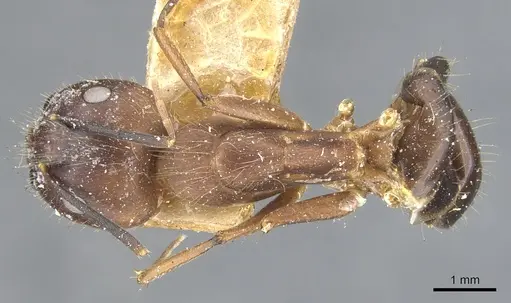
CASENT0906988
Lihat di AntWeb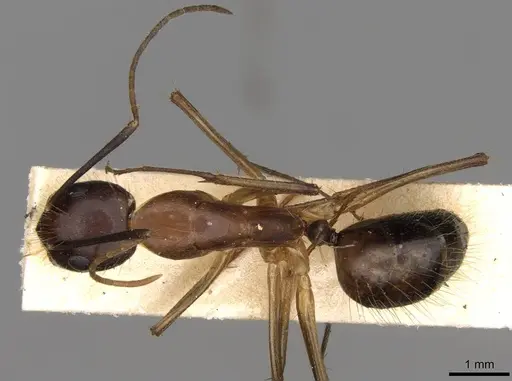
Literatur
Memuat peta distribusi...Memuat produk...