
Camponotus sericatus
- Nama Ilmiah
- Camponotus sericatus
- Subgenus
- Myrmothrix
- Tribe
- Camponotini
- Subfamili
- Formicinae
- Penulis
- Mayr, 1887
- Distribusi
- Ditemukan di 0 negara
Pendahuluan
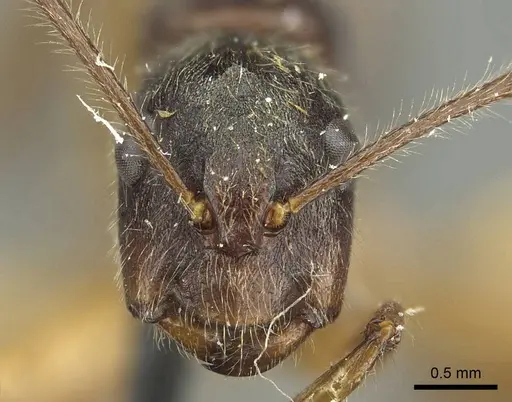
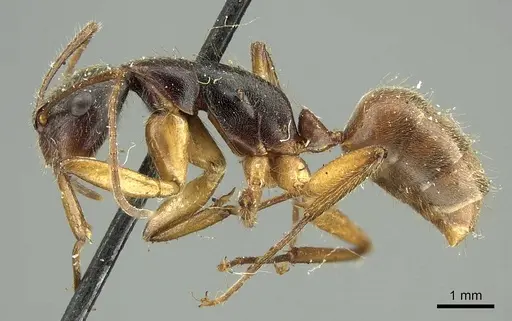
Camponotus sericatus is a carpenter ant species native to Paraguay in South America . Workers are polymorphic, meaning they come in different sizes - major workers are robust and can reach around 12-15mm, while minor workers are smaller at 6-8mm. Queens are large and chunky, typically 18-22mm, with a dark brown to black coloration and a distinct silky sheen on their abdomen that gives them their name 'sericatus' (meaning silky). This species nests in wood in its natural habitat, excavating galleries in dead trees, stumps, or wooden structures. As a tropical Camponotus species from Paraguay, these ants are active year-round without a true hibernation period. They are moderately aggressive when defending their nest but not particularly dangerous to humans. Like other carpenter ants, they maintain moderate-sized colonies with a single queen and show the typical claustral founding behavior where the queen seals herself in to raise her first workers alone.
Quick Summary
- Difficulty: Medium
- Origin & Habitat: Paraguay in South America, tropical to subtropical forest habitats where they nest in dead wood [1]
- Colony Type: Monogyne (single queen colonies). Like most Camponotus species, colonies have one founding queen that establishes the colony alone. Colonies grow to moderate sizes of several hundred to a few thousand workers over several years.
- Size & Growth:
- Queen: 18-22mm, large robust queens
- Worker: 6-15mm polymorphic, minor workers 6-8mm, major workers 12-15mm
- Colony: Several hundred to a few thousand workers
- Growth: Moderate, Camponotus species typically take 6-12 months to establish first workers, then grow steadily over years
- Development: 6-10 weeks at optimal temperature (around 24-28°C) (Development is temperature-dependent, warmer temperatures speed development, cooler slows it. First workers (nanitics) are smaller than normal workers.)
- Antkeeping:
- Temperature: Keep at 24-28°C (warm room temperature). A slight gradient is appreciated but not required. This is a tropical species that does not tolerate cold well.
- Humidity: Moderate humidity around 50-70%. As wood-nesting ants, they prefer slightly drier conditions than soil-nesting species. Provide a water tube but avoid damp substrates.
- Diapause: No, this is a tropical species from Paraguay with no cold season. Keep at stable warm temperatures year-round.
- Nesting: Y-tong (AAC) nests or plaster nests work well. They can also adapt to test tube setups. Provide nesting chambers scaled to colony size, avoid overly large spaces. Wood-based naturalistic setups mimic their natural preferences.
- Behavior: Generally calm and not overly aggressive. Workers are active foragers that search for sugar sources (honeydew, nectar) and protein (insects). They are moderate escape artists due to their size, standard barriers work well but ensure lids fit securely. Major workers can deliver a mild bite if provoked but are not considered dangerous to humans. They are primarily nocturnal or crepuscular in activity patterns, becoming more active in evening hours.
- Common Issues: queen death during founding, claustral queens can fail if disturbed or if conditions are unstable, slow initial growth, first workers take months, which can frustrate beginners, cold sensitivity, temperatures below 20°C can slow or stop development and may harm the colony, escape during feeding, workers can slip out when foraging, use barrier tape on outworlds, mold in nests, keep nesting area dry, remove uneaten food promptly
Defense Mechanism
Camponotus sericatus belongs to the subfamily Formicinae, which lacks a functional sting. Instead, these ants defend by biting the target and spraying a stream of concentrated formic acid from an acidopore into the wound. The formic acid causes irritation and helps deter predators or threats.
Nest Preferences
Camponotus sericatus naturally nests in dead wood, excavating galleries in fallen trees, stumps, or wooden structures. In captivity, they adapt well to several nest types. Y-tong (AAC) nests work excellently, the smooth walls mimic the interior of wood galleries and allow you to observe colony activity. Plaster nests are also suitable, providing some moisture retention while still being dry enough for these wood-preferring ants. Test tube setups can work for founding colonies but may need upgrading as the colony grows. Avoid overly large nesting chambers, these ants prefer cozy spaces that match their colony size. A naturalistic setup with actual wood pieces can work but requires careful humidity control to prevent mold.
Feeding and Diet
Like all Camponotus species, C. sericatus is omnivorous with a preference for sugar sources and protein. Provide a constant supply of sugar water, honey, or diluted maple syrup in a small dish. For protein, offer insects such as mealworms, crickets, or other small arthropods. They will also accept protein jelly or cat food as alternatives. Feed protein sources 2-3 times per week, adjusting based on colony size and consumption. Remove uneaten prey within 24-48 hours to prevent mold. Sugar should be available at all times, replace every few days. Unlike some tropical ants, they are not specialized feeders and accept a wide variety of foods.
Temperature and Care
As a tropical species from Paraguay, Camponotus sericatus requires warm temperatures between 24-28°C. Room temperature in most homes (20-24°C) is acceptable but may slow development slightly. A small heating cable or heat mat on one side of the nest can create a gentle gradient if your room runs cool. Place the heating on top of the nest, not underneath, to avoid excessive drying. They do not require hibernation or cooling periods, maintain stable temperatures year-round. Avoid temperatures below 20°C for extended periods as this can stress the colony and slow or halt brood development. No special seasonal adjustments are needed.
Behavior and Temperament
These ants are relatively calm and not particularly aggressive. Workers go about their foraging activities, searching for sugar and protein sources. They are primarily crepuscular or nocturnal, becoming more active in evening and night hours, though they will adjust activity patterns to food availability. Major workers can deliver a mild bite if the nest is threatened or they feel cornered, but they are not considered dangerous to humans. They are moderate escape artists, their size makes them easier to contain than tiny ants, but standard barrier methods (Fluon, barrier tape) should still be used on the outworld. They communicate through chemical trails and will establish foraging routes once food sources are discovered.
Colony Growth Timeline
Expect slow but steady growth. A newly mated queen will seal herself in a chamber and lay eggs within a week or two. The eggs develop through larval and pupal stages over 6-10 weeks at optimal temperature, with the first workers (nanitics) emerging smaller than normal workers. These first workers will begin foraging to feed the colony, and the queen will stop leaving the nest entirely. Colony growth accelerates as more workers hatch, but it typically takes 1-2 years to reach 50-100 workers, and several years to reach several hundred. Patience is key with Camponotus species, they are long-lived ants that build sustainable colonies rather than rapid growers.
Frequently Asked Questions
How long does it take for Camponotus sericatus to get first workers?
First workers typically emerge 6-10 weeks after the queen lays eggs, assuming temperatures around 24-28°C. This is slower than many ant species, which is normal for Camponotus. The first workers (nanitics) will be smaller than normal workers.
Can I keep Camponotus sericatus in a test tube?
Yes, test tubes work well for founding colonies. Use a small test tube with a water reservoir sealed with a cotton plug. Once the colony reaches 20-30 workers, consider upgrading to a larger nest like a Y-tong or plaster formicarium.
What temperature do Camponotus sericatus need?
Keep them warm at 24-28°C. This tropical species does not tolerate cold well. Room temperature (20-24°C) is acceptable but may slow development. A small heat source can help maintain optimal temperatures.
Do Camponotus sericatus need hibernation?
No, they do not need hibernation. As a tropical species from Paraguay, they are active year-round. Maintain stable warm temperatures throughout the year.
How big do Camponotus sericatus colonies get?
Colonies typically reach several hundred to a few thousand workers over several years. They are moderate growers compared to some fast-expanding species.
Are Camponotus sericatus good for beginners?
They are moderate difficulty, not the easiest but not challenging either. The main consideration is their slow growth and the need for warm temperatures. Beginners should be prepared for the months-long wait for first workers.
What do Camponotus sericatus eat?
They eat sugar (honey, sugar water, maple syrup) and protein (insects like mealworms, crickets, or other small arthropods). Provide sugar constantly and protein 2-3 times per week.
When should I move Camponotus sericatus to a formicarium?
Move to a larger nest when the test tube becomes crowded or the colony reaches 20-30 workers. A Y-tong or plaster nest works well for this species.
Can I keep multiple Camponotus sericatus queens together?
No, this is a monogyne species with single-queen colonies. Only keep one queen per colony. Introducing additional queens will result in fighting.
Report an Issue
The current care sheet is based fully on literature. See inconsistencies, or something that's incorrect? Please , it will be resolved after review from an admin. Contributing to the blogs tab also helps providing information, to make us be able to further improve the caresheets. Thank you for your support!
References

Lembar perawatan ini dilisensikan di bawah CC BY-SA 4.0 .
Blog Komunitas
CASENT0915803
Lihat di AntWeb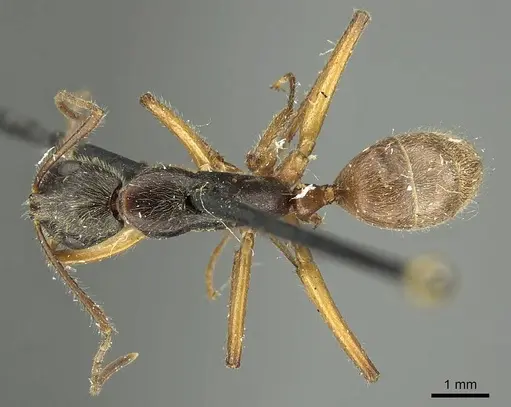
Literatur
Memuat peta distribusi...Memuat produk...