
Camponotus pachylepis
- Nama Ilmiah
- Camponotus pachylepis
- Subgenus
- Myrmobrachys
- Tribe
- Camponotini
- Subfamili
- Formicinae
- Penulis
- Emery, 1920
- Distribusi
- Ditemukan di 0 negara
Pendahuluan
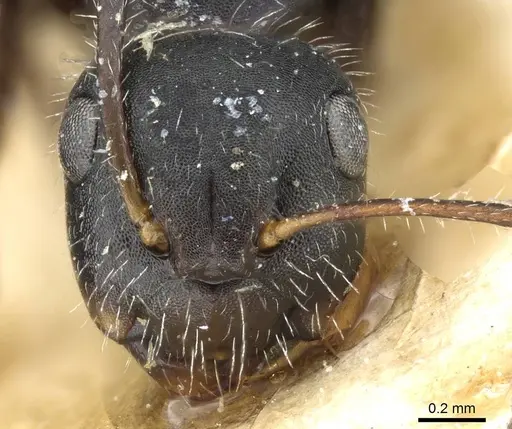
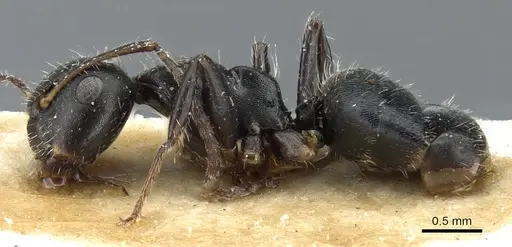
Camponotus pachylepis is a Neotropical carpenter ant from the subgenus Myrmobrachys and the dimorphus species group . Workers have a distinctive bicolored head – the front half reddish-brown, the back half black. The head surface is rough with pits, and the gaster (abdomen) has dense punctures . The notopropodeal suture is strongly impressed, and the propodeum has notably few hairs compared to similar species like Camponotus abscisus . The propodeum dorsum is lower posteriorly in lateral view, with a concave posterior margin, and the petiolar node is not inclined anteriorly . This species ranges from Guatemala through Colombia and Peru to Bolivia . In Colombia they've been found at around 980 m elevation in the Antioquia region . They are not commonly encountered , which makes them a less familiar choice for antkeepers.
Quick Summary
- Difficulty: Medium
- Origin & Habitat: Neotropical distribution from Guatemala through Colombia and Peru to Bolivia. Found at mid-elevations around 980 m in Colombia (Antioquia) [4]. Biology in the wild is not well documented [1].
- Colony Type: Unknown – colony structure has not been documented in scientific literature [1].
- Size & Growth:
- Queen: ~10–15 mm – inferred from Camponotus genus (species-specific data unavailable)
- Worker: ~5–12 mm – inferred from Camponotus genus (species-specific data unavailable)
- Colony: Unknown – no colony size data available
- Growth: Moderate – inferred from Camponotus patterns
- Development: Estimated 6–8 weeks at optimal temperature based on genus-level Camponotus data (Development time is inferred from related Camponotus species – specific data for C. pachylepis is not available)
- Antkeeping:
- Temperature: Keep around 22–26 °C. As a Neotropical species from mid‑elevation, they likely prefer warm but not hot conditions. A temperature gradient allows workers to regulate their preferred zone.
- Humidity: Moderate humidity. Keep the nest substrate slightly moist but not waterlogged, allowing some drying between waterings.
- Diapause: Likely minimal or no true diapause – Neotropical species from low latitudes typically remain active year‑round with possible slowdown during cooler months.
- Nesting: Subgenus Myrmobrachys suggests arboreal or cavity‑nesting preferences [1]. In captivity they do well in Y‑tong (AAC) nests, plaster nests, or naturalistic setups with wood pieces. Avoid overly wet substrates.
- Behavior: Not well documented [1], but Camponotus workers are typically moderate in activity level with good foraging behavior. They are carpenter ants – expect some wood‑boring behavior if provided with wood‑based nests. Workers likely communicate via chemical trails and may show moderate aggression if threatened. Escape risk is moderate – use standard Camponotus escape prevention (fluon on edges, tight‑fitting lids).
- Common Issues: biology is largely unknown – much of captive care is inferred from genus patterns rather than species‑specific research, not common in the hobby so finding colony founders may be difficult, escape prevention needed – standard Camponotus precautions apply, slow growth compared to faster‑developing tropical species may frustrate beginners, wild‑caught colonies may have parasites or diseases not yet understood for this species
Nest Preferences and Housing
Camponotus pachylepis belongs to the subgenus Myrmobrachys [1], which suggests a preference for nesting in cavities, rotting wood, or elevated positions rather than in soil. In captivity, Y‑tong (AAC) nests work well – the chambers are easy to maintain and allow you to observe colony development. Plaster nests with water reservoirs also work, providing consistent moderate humidity. Naturalistic setups with pieces of wood or cork bark can mimic their natural arboreal preferences. Avoid overly wet substrates – these ants are from mid‑elevation habitats and prefer conditions that are damp but not saturated. A small water test tube connected to the nest provides drinking water and helps maintain humidity without over‑wetting the nest chambers.
Feeding and Diet
Like most Camponotus species, C. pachylepis is likely omnivorous with a preference for protein sources and sugar. Feed them protein‑rich foods like small insects (fruit flies, small crickets, mealworms) and provide a constant sugar source such as sugar water, honey, or diluted maple syrup. Workers need regular protein to support colony growth. Feed protein 2‑3 times per week depending on colony size, and keep sugar water available at all times. Fresh fruit (especially sweet fruits) can also be offered occasionally. Remove uneaten protein after 24‑48 hours to prevent mold.
Temperature and Seasonal Care
As a Neotropical species from Guatemala to Bolivia, C. pachylepis prefers warm conditions in the low‑to‑mid 20s Celsius. Keep the nest area at 22‑26 °C, with a slight gradient if possible so workers can choose their preferred temperature. A heating cable on one side of the nest can create this gradient – place it on top of the nest rather than underneath to avoid excessive drying. Unlike temperate species, these ants likely do not require a true hibernation period. They may slow down slightly during what would be winter in the northern hemisphere, but should remain active year‑round if kept warm. Monitor colony behavior – if workers cluster near heat sources, increase temperature slightly, if they avoid heated areas, reduce heat.
Colony Development and Growth
Specific development data for C. pachylepis is not available, but based on typical Camponotus patterns, expect 6‑8 weeks from egg to first worker (nanitics) at optimal temperature. The queen seals herself in and raises her first brood alone (claustral founding). Initial workers will be smaller than mature workers – this is normal as the queen invests her stored energy into getting the colony started. Growth is moderate – once workers emerge, the colony will gradually expand. Patience is key with this species, as they are not fast growers like some tropical ants. A well‑fed colony with proper temperature and humidity can reach several dozen workers within the first year.
Behavior and Temperament
Camponotus pachylepis likely exhibits typical carpenter ant behavior – workers are moderately active foragers that communicate through chemical trails. They are not typically aggressive toward humans but will defend their nest if threatened. Workers may show stridulation (rubbing body parts to make sound) when disturbed – this is a defensive warning behavior. As with other Camponotus, they may chew through soft materials if provided wood‑based nests, so monitor for escape routes. The species is not well‑documented in captivity [1], so observing your colony’s specific behaviors will contribute to our understanding of this ant. Their moderate size and typical Camponotus morphology suggest they are not especially prone to escaping compared to smaller ants, but standard precautions (fluon barriers, tight lids) should still be used.
Frequently Asked Questions
How long does it take for Camponotus pachylepis to have first workers?
Based on typical Camponotus development, expect 6‑8 weeks from egg to first worker at optimal temperature (22‑26 °C). The queen seals herself in and raises her first brood alone – this is called claustral founding. Initial workers (nanitics) will be smaller than mature workers.
What do Camponotus pachylepis ants eat?
They are omnivorous like most Camponotus. Feed protein sources like small insects (fruit flies, small crickets, mealworms) 2‑3 times per week, and provide a constant sugar source (sugar water, honey, or maple syrup). Remove uneaten protein after 24‑48 hours.
What temperature do Camponotus pachylepis need?
Keep them at 22‑26 °C. A temperature gradient allows workers to regulate their own temperature. A heating cable on top of the nest can create this gradient. They are Neotropical and do not need hibernation.
Are Camponotus pachylepis good for beginners?
They are rated Medium difficulty. The main challenge is that their biology is not well‑documented [1], so much care is inferred from genus patterns rather than species‑specific research. They are also not commonly available in the antkeeping hobby.
How big do Camponotus pachylepis colonies get?
Colony size is not documented for this species. Most Camponotus species can reach several hundred to a few thousand workers over several years with proper care.
Can I keep multiple Camponotus pachylepis queens together?
Colony structure is unconfirmed for this species. Most Camponotus are single‑queen (monogyne) colonies. Combining unrelated queens is not recommended unless you observe them peacefully coexisting, which is rare.
What type of nest is best for Camponotus pachylepis?
Y‑tong (AAC) nests, plaster nests with water reservoirs, or naturalistic setups with wood pieces work well. They belong to subgenus Myrmobrachys [1], which suggests a preference for cavities or elevated positions rather than soil nesting.
Do Camponotus pachylepis need hibernation?
Likely no true hibernation – they are Neotropical species from low latitudes and should remain active year‑round if kept warm. They may slow down slightly during cooler months.
Where is Camponotus pachylepis found in the wild?
They range from Guatemala through Colombia and Peru to Bolivia [3][4][1][5]. In Colombia they have been found at around 980 m elevation in Antioquia [4]. They are not commonly encountered.
Report an Issue
The current care sheet is based fully on literature. See inconsistencies, or something that's incorrect? Please , it will be resolved after review from an admin. Contributing to the blogs tab also helps providing information, to make us be able to further improve the caresheets. Thank you for your support!
References

Lembar perawatan ini dilisensikan di bawah CC BY-SA 4.0 .
Blog Komunitas
CASENT0905520
Lihat di AntWeb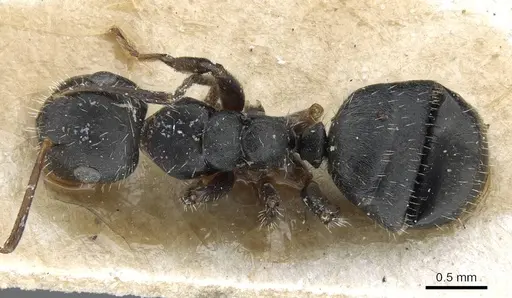
Literatur
Memuat peta distribusi...Memuat produk...