
Camponotus nigricans
- Nama Ilmiah
- Camponotus nigricans
- Subgenus
- Myrmotarsus
- Tribe
- Camponotini
- Subfamili
- Formicinae
- Penulis
- Roger, 1863
- Distribusi
- Ditemukan di 0 negara
Pendahuluan
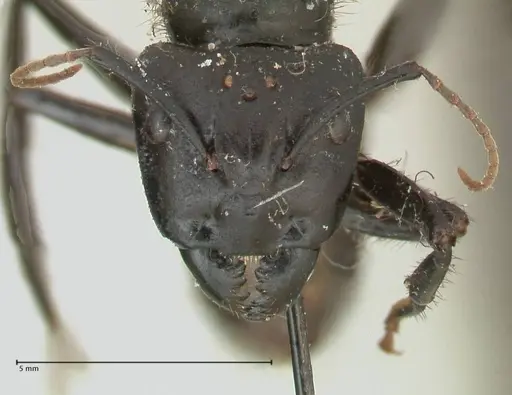
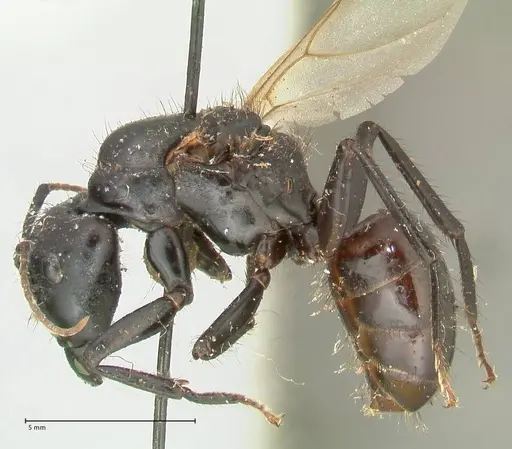
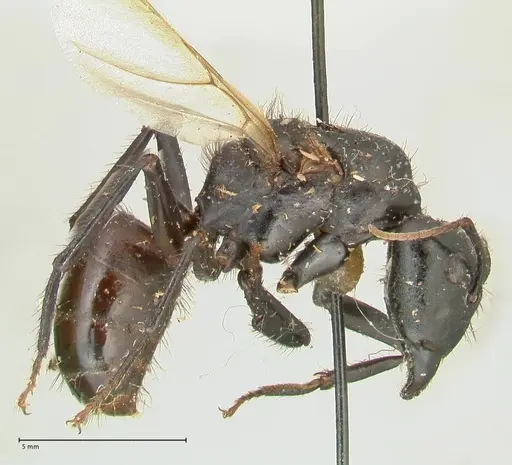
Camponotus nigricans is a carpenter ant species native to the Philippines and Indonesia (Sumatra). Originally described from Manila in 1863 as a variety of Camponotus platypus, it was later elevated to full species status. Workers display typical Camponotus polymorphism with major and minor castes. This tropical species is found in forest environments, typically nesting in rotting wood or under stones.
Quick Summary
- Difficulty: Medium
- Origin & Habitat: Philippines (Luzon, Jolo) and Indonesia (Sumatra). Tropical forest environments, typically nesting in rotting wood or under stones [1][2].
- Colony Type: Unconfirmed. Colony structure data is unavailable for this species.
- Size & Growth:
- Queen: size data unavailable, inferred from Camponotus genus (~15-20mm)
- Worker: size data unavailable, inferred from Camponotus genus (5-12mm polymorphic)
- Colony: Up to several thousand workers at maturity (estimated)
- Growth: Moderate
- Development: approximately 6-10 weeks at optimal temperature (estimated based on typical Camponotus development) (Development time varies with temperature, warmer conditions accelerate development)
- Antkeeping:
- Temperature: Keep warm, roughly 24-28°C. A heating cable on one side of the nest creates a gradient allowing ants to self-regulate.
- Humidity: Maintain moderate to high humidity. Keep the nest substrate consistently moist but not waterlogged. Provide a water source.
- Diapause: No, tropical species does not require hibernation. Maintain warm conditions year-round.
- Nesting: Y-tong (AAC) nests work well. They also accept plaster nests and naturalistic setups with rotting wood or cork. Provide chambers scaled to colony size.
- Behavior: Generally docile and non-aggressive toward keepers. Workers are active foragers that search for sugar sources and protein. They have the typical Camponotus defense mechanism, formic acid spray rather than a stinger. Escape risk is moderate due to their size, standard barriers work well but ensure lids are secure.
- Common Issues: tropical species is sensitive to temperature drops, keep warm year-round, overfeeding can lead to mold in nest, remove uneaten food promptly, colonies may stall if humidity is too low, monitor substrate moisture, wild-caught colonies may carry parasites, quarantine and observe new colonies, major workers can be intimidating but are not aggressive
Housing and Nest Preferences
Camponotus nigricans adapts well to various captive setups. Y-tong (AAC) nests are an excellent choice as they provide the dark, humid environment these ants prefer. Plaster nests with hydration systems also work well. For naturalistic setups, use cork or rotting wood as nesting material. The nest should have chambers large enough for the colony but not excessively spacious, ants feel more secure in appropriately scaled spaces. Provide an outworld area for foraging and feeding. Ensure the setup has good escape prevention, while not extreme escape artists, they will take advantage of any gaps. [2]
Feeding and Diet
Like most Camponotus species, C. nigricans is omnivorous with a preference for sugar sources. Offer sugar water, honey, or diluted maple syrup as a constant energy source. For protein, provide insects such as mealworms, fruit flies, small crickets, or other appropriately sized arthropods. Feed protein 2-3 times per week, adjusting based on colony size and consumption. Remove uneaten prey within 24 hours to prevent mold. Minor workers will handle smaller prey items while majors can tackle larger insects. Fresh water should always be available. [2]
Temperature and Seasonal Care
As a tropical species from the Philippines and Indonesia, C. nigricans requires warm conditions year-round. Maintain nest temperatures between 24-28°C. A heating cable placed on one end of the nest creates a gradient allowing ants to regulate their own temperature. Avoid temperatures below 22°C for extended periods as this can slow development and weaken the colony. No hibernation or diapause is required, these ants remain active throughout the year in captivity when kept warm. Room temperature within the range is acceptable, but monitor during winter months when heating may be reduced. [1]
Colony Development and Growth
Development from egg to worker takes approximately 6-10 weeks at optimal temperature. Growth rate is moderate, expect the colony to reach 50-100 workers within the first year with good care. Major workers (soldiers) typically appear once the colony reaches several hundred workers. A mature colony can contain several thousand workers. [2]
Behavior and Temperament
Camponotus nigricans is a docile species that poses no real threat to keepers. Their primary defense is spraying formic acid, which can be irritating but is not dangerous to humans. Workers are active foragers that will readily explore the outworld in search of food. The colony will establish scent trails to food sources once discovered. They are not aggressive toward the keeper and can be observed without concern. Major workers may appear threatening due to their size, but they are typically calm. These ants are diurnal and most active during daylight hours. [2]
Frequently Asked Questions
How long does it take for Camponotus nigricans to produce first workers?
First workers (nanitics) typically appear in 6-10 weeks after the queen lays eggs, assuming optimal temperature around 24-28°C. The exact timing depends on how warm the nest is maintained.
Can I keep multiple Camponotus nigricans queens together?
Colony structure data is unavailable for this species. Combining unrelated queens may result in fighting and colony failure.
What temperature do Camponotus nigricans need?
Keep them warm at 24-28°C. This tropical species does not tolerate cool temperatures well. A small heating cable on part of the nest creates an ideal gradient.
Is Camponotus nigricans good for beginners?
This is a moderately difficult species. They are relatively hardy and docile, but require warm, humid conditions year-round. The main requirements are warmth and consistent humidity.
How big do Camponotus nigricans colonies get?
Mature colonies can reach several thousand workers. Growth is moderate, expect the colony to expand over 1-3 years to reach significant numbers.
Do Camponotus nigricans need hibernation?
No. As a tropical species from the Philippines, they do not require hibernation or winter cooling. Keep them warm year-round.
What do Camponotus nigricans eat?
They accept sugar sources (honey, sugar water, maple syrup) and protein (insects like mealworms, fruit flies, small crickets). Offer sugar constantly and protein 2-3 times per week.
When should I move Camponotus nigricans to a formicarium?
Keep founding colonies in a test tube setup until they have 20-30 workers. Once the test tube becomes crowded or the water reservoir is depleted, transfer to a proper nest setup.
Are Camponotus nigricans aggressive?
No, they are generally docile. While large majors may look intimidating, they are not aggressive toward keepers. Their main defense is formic acid spray.
Report an Issue
The current care sheet is based fully on literature. See inconsistencies, or something that's incorrect? Please , it will be resolved after review from an admin. Contributing to the blogs tab also helps providing information, to make us be able to further improve the caresheets. Thank you for your support!
References

Lembar perawatan ini dilisensikan di bawah CC BY-SA 4.0 .
Blog Komunitas
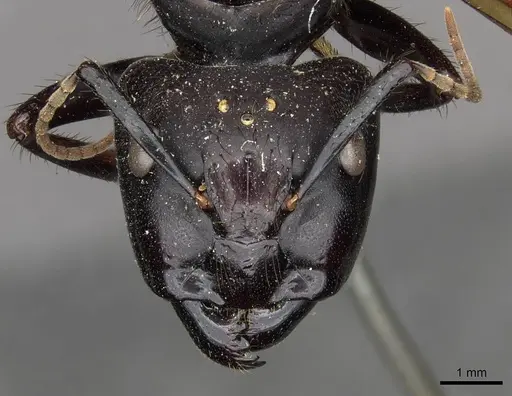
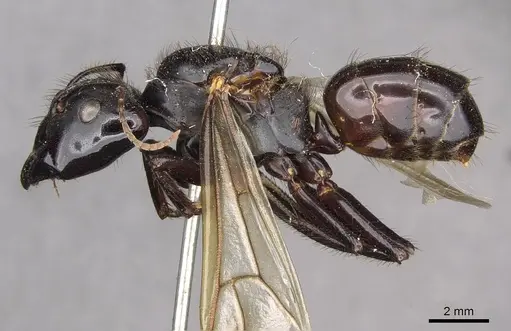
CASENT0910506
Lihat di AntWeb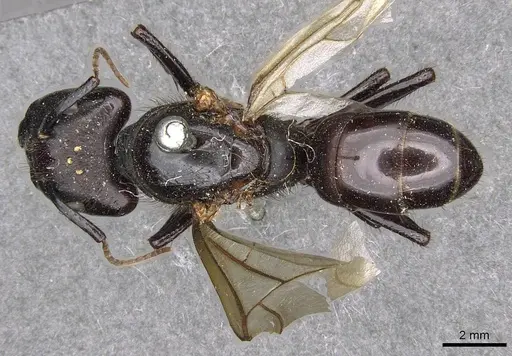
FOCOL2338
Lihat di AntWeb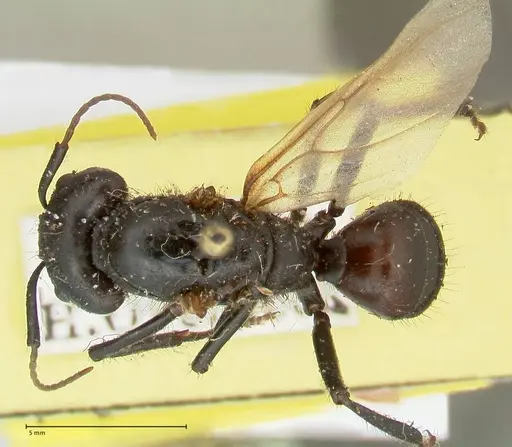
Literatur
Memuat peta distribusi...Memuat produk...