
Camponotus lividipes
- Nama Ilmiah
- Camponotus lividipes
- Subgenus
- Tanaemyrmex
- Tribe
- Camponotini
- Subfamili
- Formicinae
- Penulis
- Emery, 1887
- Distribusi
- Ditemukan di 0 negara
Pendahuluan
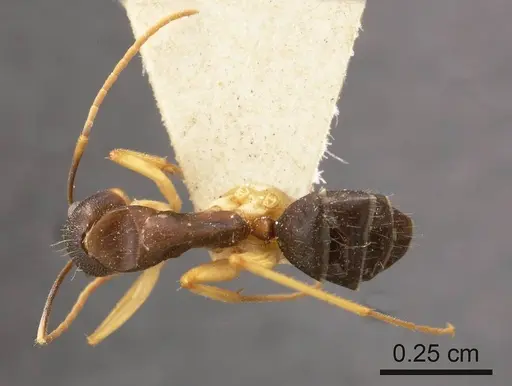
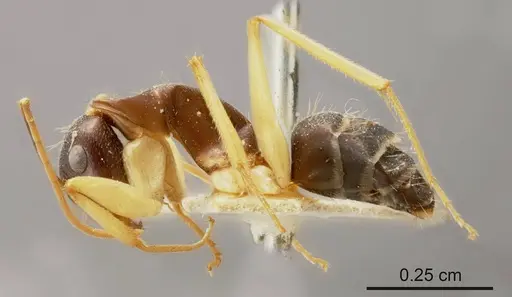
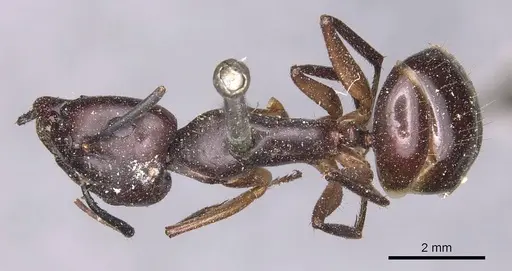
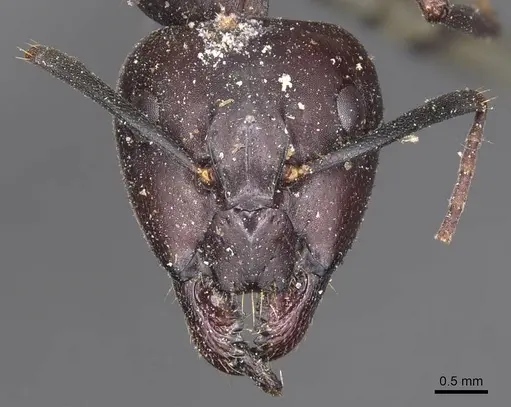
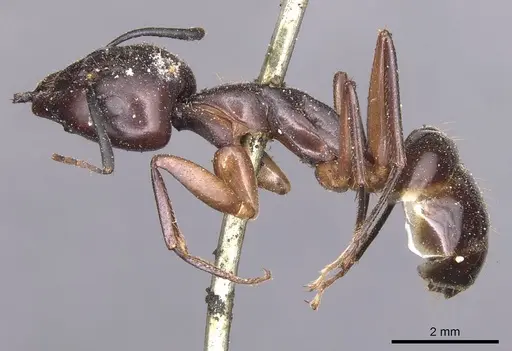
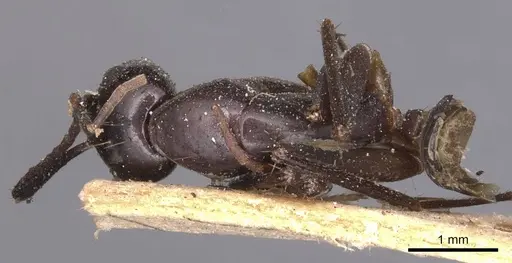
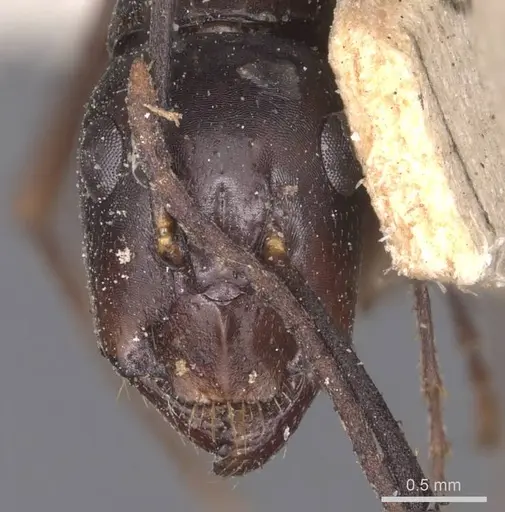
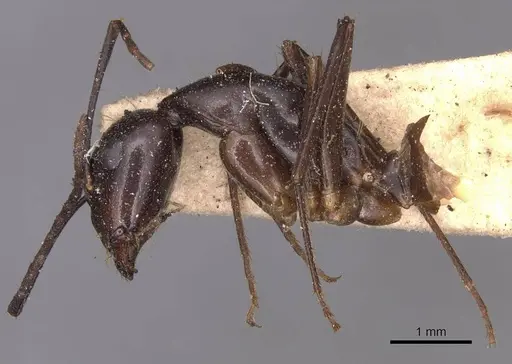
Camponotus lividipes is a carpenter ant species native to Burma (Myanmar) in Southeast Asia . As a Camponotus species, workers are polymorphic with major workers larger than minors. The species name 'lividipes' refers to their distinctive bluish-livid colored legs. These ants nest in wood in their natural habitat and are typical of the carpenter ant genus in both appearance and behavior.
Quick Summary
- Difficulty: Medium
- Origin & Habitat: Native to Burma (Myanmar) in Southeast Asia [1]. In their natural tropical habitat, they nest in rotting wood and dead trees in forested areas.
- Colony Type: Unconfirmed, colony type data is not available for this species.
- Size & Growth:
- Queen: ~18-20mm, inferred from Camponotus genus patterns
- Worker: ~6-15mm polymorphic, inferred from Camponotus genus patterns
- Colony: Several thousand workers at maturity, inferred from Camponotus genus patterns
- Growth: Moderate, inferred from Camponotus genus patterns
- Development: 6-10 weeks, inferred from Camponotus genus patterns at 24-28°C (Development time varies with temperature. First workers (nanitics) are smaller than normal workers.)
- Antkeeping:
- Temperature: Keep nest area at 24-28°C. A heating cable on one side creates a gradient allowing ants to self-regulate. Avoid temperatures above 35°C.
- Humidity: Moderate humidity around 50-60%. Carpenter ants prefer slightly drier nest conditions compared to tropical rainforest species. Provide a water tube for drinking water.
- Diapause: No true diapause required, being a tropical species, they do not need hibernation. However, a slight reduction in temperature during winter months (down to 20-22°C) may be beneficial.
- Nesting: Y-tong (AAC) nests work well for this species. They also do well in naturalistic setups with wood or cork as nesting material. Avoid overly wet substrates, they prefer dry nest chambers.
- Behavior: Workers are moderately aggressive and will defend the colony. They are primarily nocturnal foragers in the wild. Majors can deliver a painful bite but are not dangerous to humans. Escape prevention should be moderate, while not tiny, they can squeeze through small gaps. They are polymorphic with major workers that serve as soldiers and food processors.
- Common Issues: colonies may stall in development if temperatures are too cool, maintain warmth, test tube setups can flood if water reservoirs are too large, use proper water management, wild-caught colonies may have parasites that cause problems in captivity, major workers can be intimidating but are not dangerous, handle with respect, slow founding phase can cause keepers to abandon colonies, be patient during founding period
Nest Preferences
Camponotus lividipes naturally nests in rotting wood, dead trees, and wooden structures in their Burmese habitat. In captivity, they adapt well to various nest types. Y-tong (AAC) nests are popular because they allow you to observe the colony while providing appropriate darkness for the nest chambers. Naturalistic setups with cork or wood pieces also work well and mimic their natural environment. The key is providing dry nest chambers, carpenter ants prefer conditions that would allow wood decay in the wild, but in captivity they do best with stable, moderately dry conditions. Avoid nests with constantly wet substrate as this can lead to mold problems and colony stress.
Feeding and Diet
Like other Camponotus species, these ants are omnivorous with a preference for sugar sources and protein. Offer sugar water, honey, or diluted maple syrup as a constant energy source. For protein, provide insects such as mealworms, crickets, fruit flies, or other small arthropods. In the wild, they forage for honeydew from aphids and scale insects, plus hunt small invertebrates. Feed protein sources 2-3 times per week, and keep sugar water available at all times. Remove uneaten prey after 24-48 hours to prevent mold. Major workers will process larger prey items to feed the colony.
Temperature and Care
Being a tropical species from Burma, Camponotus lividipes prefers warm conditions. Keep the nest area at 24-28°C for optimal brood development. A temperature gradient is ideal, allow the ants to choose their preferred warmth by placing a heating cable on only one side of the nest. Room temperature (around 22-24°C) is acceptable but may slow development slightly. Avoid temperatures above 35°C as this can stress or kill the colony. No hibernation is required for this tropical species, though a slight seasonal temperature drop during winter months is natural and may benefit colony cycling.
Behavior and Temperament
These ants are moderately defensive, they will alert and attack threats to the colony but are not excessively aggressive. Major workers serve as soldiers and can deliver a noticeable bite if handled roughly, though they are not considered dangerous to humans. Workers are primarily nocturnal in the wild but will adjust their activity patterns to feeding schedules in captivity. They are polymorphic with distinct minor and major worker castes, majors have larger heads and can process tougher food items. The colony will establish foraging trails and become more active once established.
Frequently Asked Questions
How long does it take for Camponotus lividipes to raise first workers?
Expect 6-10 weeks from egg to first worker at optimal temperature (24-28°C). The queen will seal herself in during founding and not forage. Be patient during this founding phase and do not disturb the nest.
Can I keep Camponotus lividipes in a test tube?
Yes, test tubes work well for founding colonies. Use a standard test tube setup with a water reservoir sealed with a cotton plug. The queen will need darkness and quiet during the founding stage. Once the colony reaches 20-30 workers, consider moving to a proper formicarium.
What temperature do Camponotus lividipes need?
Keep them at 24-28°C in the nest area. A heating cable on one side creates a gradient. They are tropical and need warmth, temperatures below 20°C for extended periods can slow or stop brood development.
How big do Camponotus lividipes colonies get?
Mature colonies can reach several thousand workers. Development is moderate, expect 1-2 years to reach significant colony size. The polymorphic worker castes develop as the colony grows.
Are Camponotus lividipes good for beginners?
They are intermediate in difficulty. The founding phase requires patience, and they need warm conditions. They are more forgiving than some tropical species but require more attention than temperate ants that can tolerate room temperature.
What do Camponotus lividipes eat?
Offer sugar water, honey, or maple syrup constantly for energy. Feed protein (insects like mealworms, crickets, fruit flies) 2-3 times per week. Remove uneaten food promptly to prevent mold.
Do Camponotus lividipes need hibernation?
No, they do not require hibernation as a tropical species. However, a slight temperature reduction in winter (down to 20-22°C) is natural and may help cycle the colony. Avoid cold temperatures below 15°C.
When should I move Camponotus lividipes to a formicarium?
Move from test tube to formicarium once the colony reaches 20-40 workers. Make sure the formicarium has appropriately sized chambers and passages. They prefer dry nest conditions.
Can I keep multiple Camponotus lividipes queens together?
This is unconfirmed. Only keep one queen per colony unless you observe successful pleometrosis behavior.
Report an Issue
The current care sheet is based fully on literature. See inconsistencies, or something that's incorrect? Please , it will be resolved after review from an admin. Contributing to the blogs tab also helps providing information, to make us be able to further improve the caresheets. Thank you for your support!
References

Lembar perawatan ini dilisensikan di bawah CC BY-SA 4.0 .
Blog Komunitas
Literatur
Memuat peta distribusi...Memuat produk...