
Camponotus irritabilis
- Nama Ilmiah
- Camponotus irritabilis
- Subgenus
- Myrmotarsus
- Tribe
- Camponotini
- Subfamili
- Formicinae
- Penulis
- Smith, 1857
- Distribusi
- Ditemukan di 0 negara
Pendahuluan
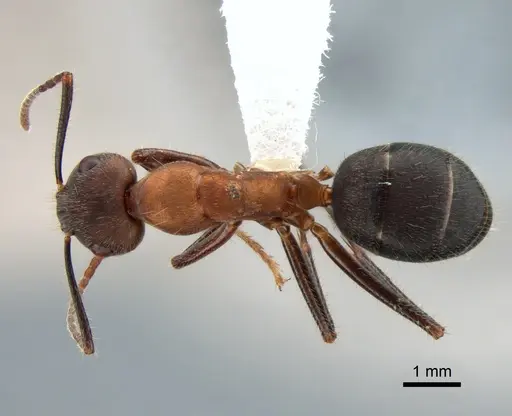
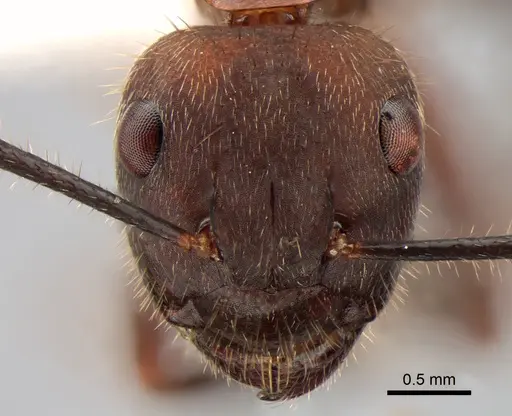
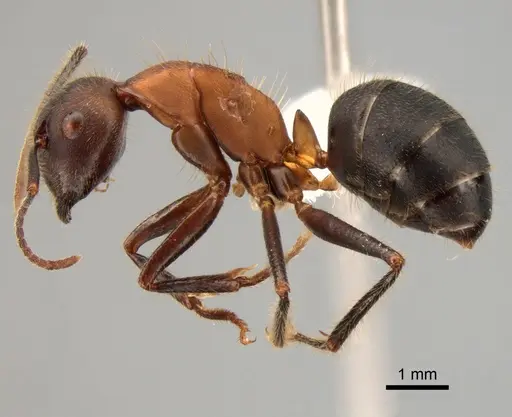
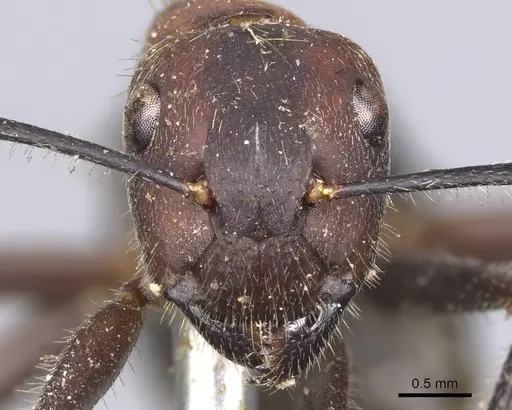
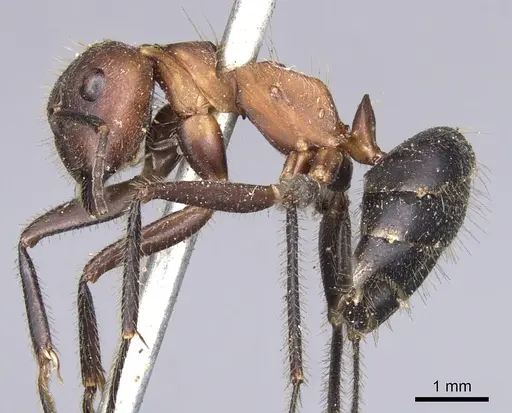
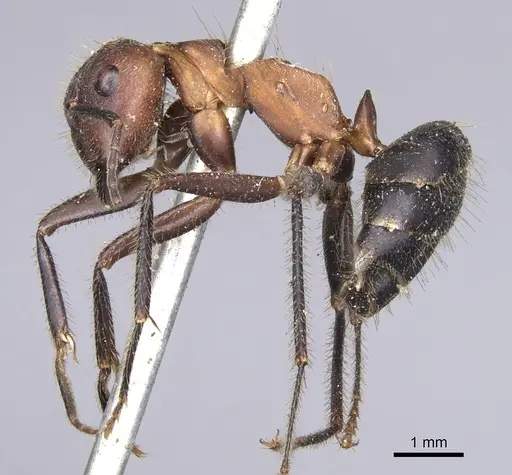
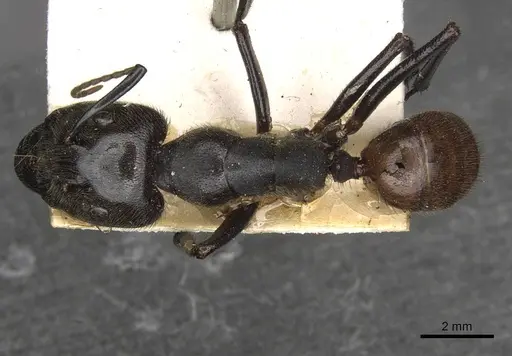
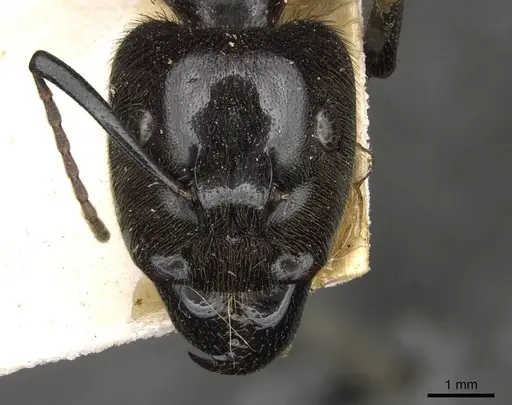
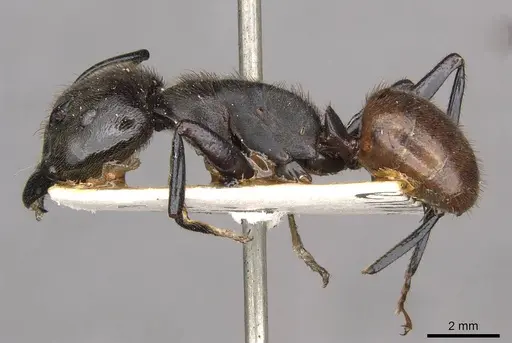
Camponotus irritabilis is a highly polymorphic carpenter ant from Southeast Asia, with workers ranging from tiny minors to powerful majors . These ants are instantly recognizable by their extreme aggression - major workers can pierce human skin with their mandibles and spray concentrated formic acid into the wound, often attacking en masse when disturbed [AntWiki]. Their bodies show the typical Camponotus profile with a single node and elbowed antennae, though coloration details vary across their range in Borneo, Malaysia, and Indonesia . What makes this species truly unique is their obligate relationship with ant gardens. Unlike most ants that can nest in soil or wood, Camponotus irritabilis must build specialized carton nests in association with specific epiphytic plants, primarily Hoya elliptica . They actively cultivate these plants by retrieving seeds, fertilizing the nest with their waste, and even pruning roots to maintain living space . This complex mutualism makes them one of the most challenging ant species to maintain in captivity, requiring specialized botanical knowledge and massive amounts of space.
Quick Summary
- Difficulty: Expert
- Origin & Habitat: Native to Borneo, Malaysia (Peninsula and Sarawak), Indonesia, and Thailand [2][3]. They inhabit tropical forests, particularly along riverbanks, where they construct elaborate carton nests in trees [1].
- Colony Type: Likely single-queen (monogyne) based on typical Camponotus patterns, though colony structure is unconfirmed in this species.
- Size & Growth:
- Queen: ~12-15 mm, inferred from typical Camponotus major worker size patterns.
- Worker: ~6-12 mm total length (highly polymorphic), inferred from alitrunk measurements of 2.1-5.0 mm [1].
- Colony: Colonies occupy up to 86 separate nest buildings, mature nests range from 4 to 29,300 cm³ in volume [1].
- Growth: Unknown, likely moderate to fast based on tropical habitat patterns.
- Development: Estimated 8-12 weeks based on typical tropical Camponotus development, but unconfirmed for this species. (Development timeline is unstudied. Tropical temperatures should support year-round brood development without hibernation.)
- Antkeeping:
- Temperature: 24-28°C (estimated from tropical Indomalaya distribution). Keep stable with minimal fluctuation.
- Humidity: High humidity required. Nest carton material stores water at 5.6 times its weight [1], substrate should feel damp but not waterlogged.
- Diapause: No, tropical species that remains active year-round.
- Nesting: Obligate carton nest builder, requires living plant association (primarily Hoya elliptica) and cannot be housed in standard artificial nests [1].
- Behavior: Extremely aggressive. Major workers can break skin with bites and spray formic acid en masse [2][1]. Forage both day and night [1]. Highly polymorphic with distinct minor and major worker castes. Practice necrophory, carrying dead colony members back to the nest [1].
- Common Issues: obligate ant garden relationship makes standard captive keeping nearly impossible without specialized botanical setup including Hoya elliptica plants., extreme aggression poses safety risk of painful bites and chemical burns from formic acid spraying., colonies require massive space, up to 380 m² foraging area and multiple nest trees in nature [1]., need to maintain live populations of scale insects (mealybugs and coccids) for honeydew [1]., carton nest construction requires specific humidity and fungal conditions that are difficult to replicate artificially.
The Ant Garden Obligate Relationship
Camponotus irritabilis is an obligate ant garden ant, meaning they cannot survive without specific epiphytic plants [1]. In nature, they form tight mutualisms with Hoya elliptica and Pachycentria constricta, retrieving and planting seeds of these plants in their carton nests with 92% and 100% retrieval rates respectively [1]. The ants actively manage their plant partners by fertilizing the nest substrate (which contains high levels of ammonium, nitrate, and phosphate from ant waste) and pruning roots that grow too deep into nesting chambers [1]. After just 17 days, Hoya elliptica seedlings reach 3.5 cm tall with root systems averaging 6 cm long, stabilizing the nest structure [1]. This means you cannot keep these ants in a standard formicarium, they require living plants and the ability to construct carton nests on branches.
Nest Construction and Structure
These ants construct elaborate carton nests on tree branches, starting with small shelters that expand as the colony grows [1]. Mature nests have a distinct three-part structure: a center with black paper-like walls containing undetermined fungi, a middle zone with dense root networks up to 2.2 cm thick, and an outer growing area with smaller chambers [1]. The carton material has remarkable water-storing capacity, holding 5.6 times its weight in water [1]. Nests without plants remain small (4-66 cm³), while those with established vegetation grow massive (255-29,300 cm³) [1]. The ants create runways and entrance holes by clearing larger areas in nest walls, and they store incorporated seeds in superficial chambers rather than deep inside [1].
Feeding and Trophobiosis
In nature, Camponotus irritabilis maintains complex trophobiotic relationships with scale insects including the mealybug Drepanoccoccus chiton and coccids Coccus hesperidum and Pulvinaria urbicola [1]. These insects live within the nests and under sheltered pavilions constructed by the ants, connected by extensive trail systems [1]. The ants harvest honeydew from these scale insects as a primary food source. They also store bird droppings and insect fragments in the outer parts of the nest, using these as additional nutrients [1]. This dietary specialization means captive colonies would need live scale insect cultures to thrive, as sugar water and standard insect prey may not provide adequate nutrition.
Behavior and Aggression
These ants have a well-deserved reputation as some of the most aggressive ants in the world [2]. When threatened, major workers attack in groups, using their powerful mandibles to break skin and then spraying concentrated formic acid into the wounds [1]. This combination of physical injury and chemical burning makes handling them dangerous without thick gloves and eye protection. Interestingly, they show necrophoric behavior, carrying corpses of their own colony members back into the nest rather than disposing of them outside [1]. They forage both day and night across areas up to 380 m² [1]. In their natural habitat, they share nest trees with Crematogaster species (mostly ignoring them) but attack Solenopsis ants aggressively [1].
Space Requirements and Colony Scale
Colonies of Camponotus irritabilis require massive amounts of space compared to typical captive ants. A single colony may spread across 1-4 nest trees and construct up to 86 separate nest buildings [1]. Their foraging area can cover up to 380 m² [1]. This scale is impossible to replicate in standard ant-keeping setups. Even the smallest natural nests (4 cm³) are larger than typical test tubes, and mature nests reach volumes of nearly 30,000 cm³ [1]. The colonies are also long-lived and stable, occupying their ant gardens for extended periods. This makes them suitable only for specialized botanical gardens or research facilities with access to large, climate-controlled arboreal setups.
Frequently Asked Questions
Can I keep Camponotus irritabilis in a test tube?
No. These ants are obligate ant garden species that must build carton nests in association with living plants like Hoya elliptica [1]. They cannot survive in test tubes or standard formicaria.
How dangerous are Camponotus irritabilis?
Extremely dangerous compared to most ants. Major workers can pierce human skin with their mandibles and spray concentrated formic acid into the wound, often attacking in groups [1][2]. They can cause painful bites and chemical burns.
What do Camponotus irritabilis eat?
They primarily feed on honeydew from scale insects (mealybugs and coccids) that they cultivate within their nests [1]. They also collect bird droppings and insect fragments [1].
Do Camponotus irritabilis need special plants?
Yes, they are obligate ant garden ants that require specific epiphytic plants, primarily Hoya elliptica [1]. They retrieve and plant seeds of these species and cannot establish colonies without them.
How big do Camponotus irritabilis colonies get?
Colonies construct up to 86 separate nest buildings and occupy volumes up to 29,300 cm³ (nearly 30 liters) [1]. They spread across multiple trees and forage over areas up to 380 m² [1].
Are Camponotus irritabilis good for beginners?
Absolutely not. They require specialized botanical setups with specific plants, massive amounts of space, maintenance of scale insect colonies for food, and pose safety risks due to their aggressive biting and acid-spraying behavior.
How long until Camponotus irritabilis get their first workers?
The egg-to-worker timeline is unconfirmed for this species. Based on typical tropical Camponotus patterns, it likely takes 8-12 weeks at 24-28°C, but this is an estimate.
Can I keep multiple Camponotus irritabilis queens together?
Combining multiple queens has not been documented for this species. While they likely form single-queen colonies based on Camponotus patterns, introducing additional queens risks fatal fighting.
Do Camponotus irritabilis need hibernation?
No. They are tropical ants from Borneo and Malaysia that remain active year-round and do not require hibernation [2].
Why are my Camponotus irritabilis dying?
Captive mortality is likely due to the inability to provide obligate ant garden conditions. These ants need carton nest material, specific plants (Hoya elliptica), high humidity, and live scale insects for honeydew [1]. Standard ant-keeping setups cannot meet these requirements.
Report an Issue
The current care sheet is based fully on literature. See inconsistencies, or something that's incorrect? Please , it will be resolved after review from an admin. Contributing to the blogs tab also helps providing information, to make us be able to further improve the caresheets. Thank you for your support!
References

Lembar perawatan ini dilisensikan di bawah CC BY-SA 4.0 .
Blog Komunitas
Literatur
Memuat peta distribusi...Memuat produk...