
Camponotus atriscapus
- Nama Ilmiah
- Camponotus atriscapus
- Subgenus
- Myrmotrema
- Tribe
- Camponotini
- Subfamili
- Formicinae
- Penulis
- Santschi, 1926
- Distribusi
- Ditemukan di 0 negara
Pendahuluan
Camponotus atriscapus is a carpenter ant species endemic to the Equateur region of the Democratic Republic of Congo in Central Africa . This is a poorly-documented species known only from historical records dating back to 1926. As with other Camponotus species, workers are polymorphic (varying sizes within the colony), with the queen being significantly larger than workers. The genus Camponotus is known for nesting in wood and excavating galleries. This species follows the typical Camponotus pattern of claustral founding, where the queen seals herself in a chamber and raises her first workers on stored body fat alone.
Quick Summary
- Difficulty: Unknown, limited data available
- Origin & Habitat: Endemic to Equateur (EQ) in the Democratic Republic of Congo, Central Africa [1]. The specific habitat within this region is not documented in available literature.
- Colony Type: Likely monogyne (single queen) based on typical Camponotus patterns, though colony structure has not been directly studied for this species.
- Size & Growth:
- Queen: Size data unavailable, inferred from Camponotus genus (~12-18mm) [2]
- Worker: Size data unavailable, inferred from Camponotus genus (~5-12mm, polymorphic) [2]
- Colony: Unknown for this species, typical Camponotus colonies reach several thousand workers [2]
- Growth: Moderate, typical for Camponotus genus [2]
- Development: Estimated 6-10 weeks based on typical Camponotus development at optimal temperature [2] (Development time is temperature-dependent, warmer conditions within the 24-28°C range will speed development, while cooler temperatures slow it down)
- Antkeeping:
- Temperature: Keep nest area around 24-28°C with a slight gradient. Room temperature (around 22-25°C) is likely suitable for this Central African species. [2]
- Humidity: Moderate humidity around 50-70%. Keep nest substrate slightly moist but not waterlogged. Provide a water source. [2]
- Diapause: Unknown, Central African species may not require strong diapause, but a brief cool period (15-18°C for 2-3 months) may benefit colony cycling. [2]
- Nesting: Y-tong (AAC) nests or naturalistic setups with wood or soil work well. Camponotus prefer nesting in wood, so cork or wood-based formicaria are ideal. Ensure chambers are appropriately sized for their polymorphic workers. [2]
- Behavior: Not directly studied. Based on typical Camponotus behavior, these ants are moderate in aggression, they will defend the nest but are not overly aggressive toward keepers. Workers are polymorphic with major and minor castes. Escape risk is moderate, they are larger ants but can still climb smooth surfaces. Use standard barrier methods like Fluon on test tube rims. As Formicinae, they lack a functional sting but can bite and spray formic acid from their acidopore. [2]
- Common Issues: limited data means care requirements are not fully confirmed, be prepared to adjust based on colony behavior, colony growth may be slow initially during the claustral founding phase, wild-caught colonies may have parasites or diseases not yet documented, specific humidity requirements are unknown, monitor for mold or excessive drying, nuptial flight timing is unconfirmed, research timing for your specific region
Nest Preferences
Camponotus species typically nest in wood, and C. atriscapus likely follows this pattern. In captivity, Y-tong (AAC) nests work well, especially those with wood or cork inserts that mimic their natural nesting preferences. Foraging areas should be spacious enough for their polymorphic workers, majors can be significantly larger than minors. Provide a water test tube connected to the outworld. Since this is a Central African species, they likely prefer stable conditions without extreme temperature swings. [2]
Feeding and Diet
Like most Camponotus species, these ants are omnivorous. They likely accept sugar sources (honey water, sugar water) and protein (insects like mealworms, crickets, fruit flies). Feed protein 2-3 times per week and keep sugar water available constantly. Remove uneaten prey after 24-48 hours to prevent mold. Camponotus workers can be messy eaters, so maintain hygiene in the outworld. [2]
Temperature and Seasonal Care
As a species from the Congo region, C. atriscapus likely prefers warm conditions around 24-28°C. Room temperature in most homes (22-25°C) should be suitable. A heating cable on one side of the nest can create a gradient if your home runs cool. Regarding diapause: Central African species experience less dramatic seasonal changes, so a true hibernation may not be necessary. However, a brief cool period (15-18°C for 2-3 months during winter) may help simulate natural cycles and promote colony health. Observe your colony's activity patterns to determine what works best. [2]
Behavior and Colony Dynamics
Camponotus colonies develop through distinct phases. The founding queen seals herself in a chamber and raises nanitic (first) workers, which are typically smaller than mature workers. Once the first workers emerge, the colony enters the growth phase. These ants will defend their nest if threatened, but they are not typically aggressive toward keepers. Workers are polymorphic, larger majors may focus on defense or seed processing while smaller minors handle foraging and brood care. Colonies can live for many years with a healthy queen. As Formicinae ants, they lack a sting but can bite and spray formic acid as a defense mechanism. [2]
Frequently Asked Questions
How long does it take for Camponotus atriscapus to have first workers?
Based on typical Camponotus development, expect first workers (nanitics) in about 6-10 weeks after the queen lays eggs, assuming temperatures around 24-28°C. Cooler temperatures will slow development significantly. [2]
What do Camponotus atriscapus ants eat?
They are omnivorous. Offer sugar water or honey constantly, and protein (insects like mealworms, fruit flies, small crickets) 2-3 times per week. Remove uneaten prey after 24 hours. [2]
Are Camponotus atriscapus good for beginners?
Difficulty level is uncertain due to limited species-specific data. As a Camponotus species, they likely follow typical genus care patterns which are manageable for intermediate keepers. However, this species has not been widely kept in captivity, so some experimentation may be needed. [2]
What temperature do Camponotus atriscapus need?
Keep nest temperatures around 24-28°C. Room temperature (22-25°C) is likely acceptable. A slight gradient allows ants to choose their preferred temperature. [2]
Do Camponotus atriscapus need hibernation?
As a Central African species, a true hibernation is likely not required. However, a brief cool period (15-18°C for 2-3 months) during winter months may benefit colony cycling. Monitor your colony's activity to determine what works best. [2]
How big do Camponotus atriscapus colonies get?
Maximum colony size is not documented for this species. Based on typical Camponotus patterns, colonies likely reach several thousand workers over several years. [2]
Can I keep multiple Camponotus atriscapus queens together?
Colony structure is not well-documented for this species. Based on typical Camponotus patterns, single-queen colonies are most common. Combining unrelated queens is not recommended as they may fight. [2]
What size nest do Camponotus atriscapus need?
Start with a test tube setup for the founding queen. Once the colony reaches 20-30 workers, you can move to a small formicarium (Y-tong or naturalistic). Ensure chambers are appropriately sized for polymorphic workers. [2]
Why is my Camponotus atriscapus colony not growing?
Possible causes include: temperatures too low (slows development), insufficient protein in diet, humidity issues (too dry or too wet), or queen health issues. Ensure proper conditions and be patient, Camponotus colonies grow steadily but not rapidly. [2]
Report an Issue
The current care sheet is based fully on literature. See inconsistencies, or something that's incorrect? Please , it will be resolved after review from an admin. Contributing to the blogs tab also helps providing information, to make us be able to further improve the caresheets. Thank you for your support!
References

Lembar perawatan ini dilisensikan di bawah CC BY-SA 4.0 .
Blog Komunitas
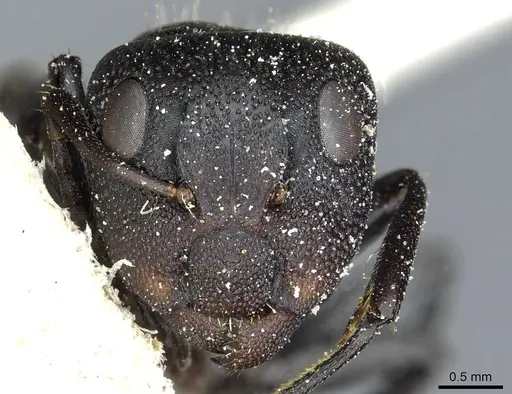
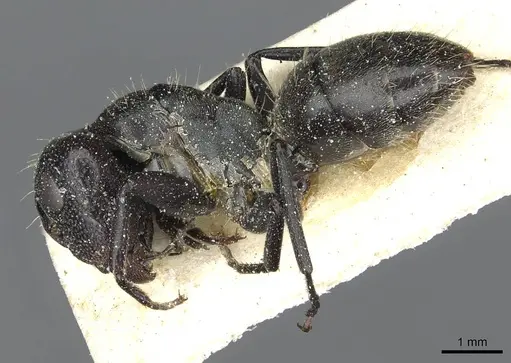
CASENT0911817
Lihat di AntWeb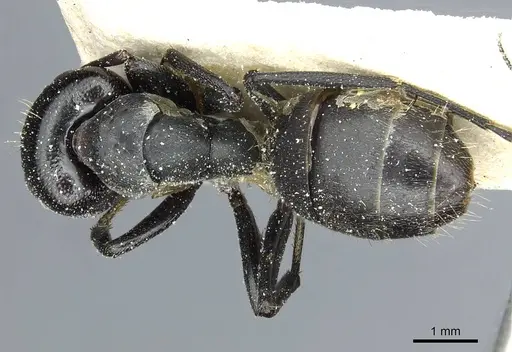
Literatur
Memuat peta distribusi...Memuat produk...