
Bothroponera henryi
- Nama Ilmiah
- Bothroponera henryi
- Tribe
- Ponerini
- Subfamili
- Ponerinae
- Penulis
- Donisthorpe, 1942
- Distribusi
- Ditemukan di 0 negara
Pendahuluan
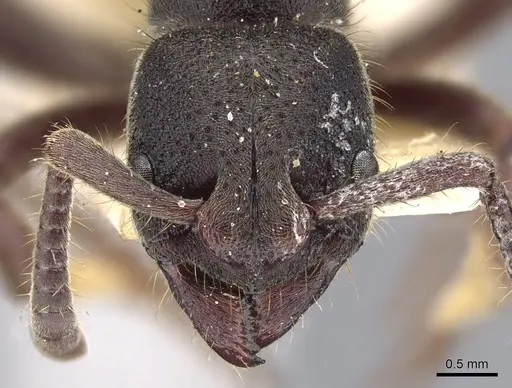
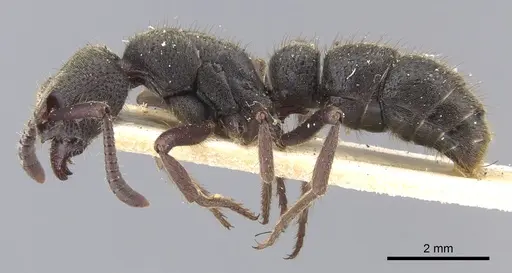
Bothroponera henryi is a medium-sized ponerine ant native to India, with workers measuring around 11mm in total length . Workers are dark brown with reddish mandibles, antennae, legs, and have distinctive yellow hairs covering their body. The head is large and subquadrate, broader than the thorax, and the species can be identified by its large shallow punctures and rugose sculpture between them . This species belongs to the Ponerinae subfamily, which contains predatory ants known for their potent stings. It is endemic to India, recorded from Tamil Nadu (the type locality), Goa, Karnataka, and West Bengal . The species was described in 1942 by Donisthorpe and named in honor of G.M. Henry, who collected the specimens during a Colombo Museum expedition to southern India.
Quick Summary
- Difficulty: Medium
- Origin & Habitat: India, specifically recorded from Tamil Nadu, Goa, Karnataka, and West Bengal [2]. Based on related Ponerinae species, likely inhabits forested areas with warm, humid conditions.
- Colony Type: Colony structure is unconfirmed. Specific data for B. henryi is lacking.
- Size & Growth:
- Queen: Unconfirmed, no queen description available
- Worker: 11mm [1]
- Colony: Unknown, no colony size data available
- Growth: Unknown, no development data available for this species
- Development: Unconfirmed, no specific data available (Development time is unknown for this species. Warmer temperatures within their range may speed development.)
- Antkeeping:
- Temperature: Keep at 24-28°C, based on typical Ponerinae preferences and the warm climate of their Indian habitat. A slight gradient allows thermoregulation.
- Humidity: Moderate to high, aim for 60-80% humidity. Keep the nest substrate consistently moist but not waterlogged, similar to forest floor conditions.
- Diapause: Unconfirmed, Indian ants may reduce activity during cooler months but full hibernation is unlikely. Consider a slight cooling period (15-18°C) during winter months.
- Nesting: Ponerinae typically nest in soil or rotting wood. In captivity, a Y-tong or plaster nest with moisture chambers works well. Provide a humid nesting area with access to a drier outworld.
- Behavior: Ponerinae ants are predatory and typically have a potent sting. Workers are likely active foragers that hunt small invertebrates. Based on related species, they are probably moderately aggressive when defending the nest. Escape prevention is important, while not tiny, they are agile and capable climbers. Their sting warrants caution when handling.
- Common Issues: limited data makes care requirements uncertain, monitor colony response and adjust accordingly, predatory nature means they need live prey, failure to provide appropriate protein can stunt growth, potent sting can cause discomfort, handle with care and use proper protection if needed, humidity control is important, too dry and brood desiccates, too wet and mold becomes an issue
Appearance and Identification
Bothroponera henryi workers are relatively large at 11mm total length, making them one of the larger Bothroponera species. They have a distinctive dark brown coloration with reddish mandibles, antennae, and legs. The tarsi and antennae tips are lighter in color. Their body is covered with long outstanding and short decumbent yellow hairs. The head is large and subquadrate, broader than the thorax, with rounded posterior angles and a slightly emarginate posterior border. The mandibles are large and triangular with seven blunt teeth. The pronotum is convex and rounded, and the petiole node is simple and unarmed. The gaster has a very marked constriction between the first and second segments. This species was distinguished from the similar Boltonopone tesseronoda by being considerably larger and having entirely different sculpture [1].
Distribution and Habitat
Bothroponera henryi is endemic to India, known from four main regions: Tamil Nadu (the type locality in the Tinnevelly District), Goa, Karnataka, and West Bengal [2]. The type specimens were collected in Dohnavur, Tamil Nadu in September 1938 during the Colombo Museum Expedition to Southern India. While specific habitat data is lacking for this species, the Ponerinae subfamily typically inhabits forested areas, often nesting in soil, under stones, or in rotting wood. The Indian regions where this species is found generally have warm, humid tropical to subtropical climates, suggesting the ants prefer similar conditions in captivity.
Feeding and Diet
As a Ponerine ant, Bothroponera henryi is predatory and will hunt small invertebrates. In captivity, you should offer a diet based on live small prey such as fruit flies, small crickets, mealworms, and other appropriately sized insects. Ponerinae ants typically have a potent sting they use to subdue prey, so they are efficient hunters. Beyond live prey, they may accept protein-based foods like boiled eggs or cat food, but live prey should form the primary diet. Sugar sources like honey or sugar water may be accepted occasionally but are not a primary food source for these predatory ants. Feed protein prey 2-3 times per week, and remove any uneaten prey after 24 hours to prevent mold.
Temperature and Humidity Requirements
Keep your Bothroponera henryi colony at temperatures between 24-28°C, which matches the warm conditions of their native Indian habitat. A temperature gradient is beneficial, allowing ants to move between warmer and cooler areas of the nest. Use a heating cable or mat on one side of the nest if room temperature is below this range. For humidity, aim for 60-80% relative humidity. Keep the nest substrate consistently moist but not waterlogged, the substrate should feel damp to the touch. Ponerinae ants typically nest in humid forest environments, so adequate moisture is important for brood development. Ensure good ventilation to prevent mold while maintaining humidity.
Nesting Preferences
In the wild, Ponerinae ants like Bothroponera typically nest in soil, under stones, or in rotting wood. For captive colonies, a Y-tong or plaster nest with moisture chambers works well. The nest should have chambers scaled to the colony size, with enough space for the queen, brood, and workers to move around. Provide a humid nesting area connected to a drier outworld for foraging. Since these ants are moderately large and have a potent sting, they will defend their nest if threatened. Ensure escape prevention is in place, though they are not as prone to escaping as smaller species.
Behavior and Temperament
Bothroponera henryi is a Ponerine ant, and like others in this subfamily, they are predatory with a potent sting. Workers are likely active foragers that hunt small invertebrates in the wild. They are probably moderately aggressive when defending their nest or colony. The sting of Ponerine ants can cause significant discomfort, so caution should be exercised when handling or working with the colony. Use proper protection such as gloves and eye protection if needed. Workers are likely to be more active during warmer periods and may reduce activity during cooler months. They communicate through chemical signals and may use tandem running to recruit nestmates to food sources, though specific behavior for this species is not documented.
Frequently Asked Questions
How long does it take for Bothroponera henryi to produce first workers?
The exact timeline is unconfirmed for this species. No specific development data is available. The queen will seal herself in during founding and raise the first workers alone on stored fat reserves.
What do Bothroponera henryi ants eat?
Bothroponera henryi is predatory and needs live small invertebrates as their primary food. Offer fruit flies, small crickets, mealworms, or similar-sized prey 2-3 times per week. They may accept protein-based foods occasionally, but live prey should form the foundation of their diet.
Do Bothroponera henryi ants sting?
Yes, as a Ponerine ant, B. henryi has a potent sting that can cause significant discomfort. Handle with care and use appropriate protection when working with the colony.
What temperature do Bothroponera henryi ants need?
Keep them at 24-28°C, which matches their warm Indian habitat. A temperature gradient is beneficial, with a heating cable on one side of the nest if room temperature is below this range.
Are Bothroponera henryi ants good for beginners?
This species is rated as Medium difficulty. While they are larger than many ants and visually striking, limited care data exists, and their potent sting requires careful handling. They are not recommended as a first ant unless you have experience with predatory species.
How big do Bothroponera henryi colonies get?
Colony size data is not available for this species. Based on typical Ponerinae patterns, colonies likely reach several hundred workers over several years.
Do Bothroponera henryi ants need hibernation?
Full hibernation is unlikely as they come from a warm tropical region. However, they may reduce activity during cooler months. Consider a slight cooling period to 15-18°C during winter, but do not freeze them.
What humidity level do Bothroponera henryi ants need?
Aim for 60-80% humidity. Keep the nest substrate consistently moist but not waterlogged. Good ventilation is important to prevent mold while maintaining humidity.
Can I keep multiple Bothroponera henryi queens together?
Colony structure is unconfirmed for this species. Combining unrelated queens is not recommended as they likely will fight.
When should I move Bothroponera henryi to a formicarium?
Keep them in a founding setup (test tube or similar) until the colony has 15-20 workers. Ponerinae prefer humid nests, so ensure your formicarium can maintain adequate moisture before transferring.
Report an Issue
The current care sheet is based fully on literature. See inconsistencies, or something that's incorrect? Please , it will be resolved after review from an admin. Contributing to the blogs tab also helps providing information, to make us be able to further improve the caresheets. Thank you for your support!
References

Lembar perawatan ini dilisensikan di bawah CC BY-SA 4.0 .
Blog Komunitas
CASENT0902482
Lihat di AntWeb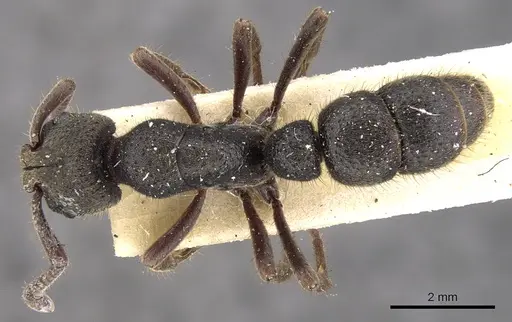
Literatur
Memuat peta distribusi...Memuat produk...