
Apterostigma scutellare
- Nama Ilmiah
- Apterostigma scutellare
- Tribe
- Attini
- Subfamili
- Myrmicinae
- Penulis
- Forel, 1885
- Distribusi
- Ditemukan di 0 negara
Pendahuluan
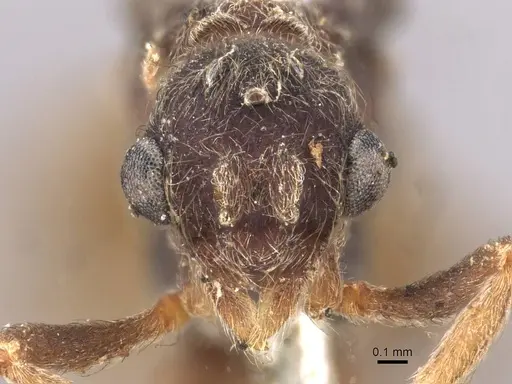
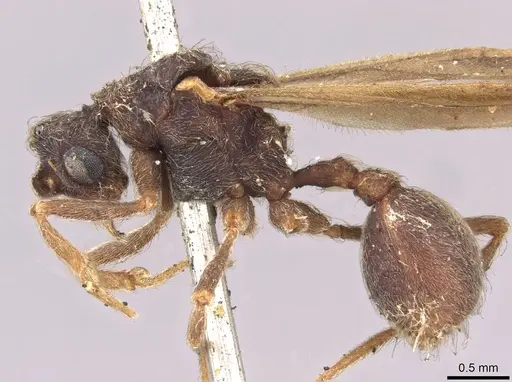
Apterostigma scutellare is a poorly known fungus-growing ant from the mountains of Veracruz, Mexico . Only a handful of specimens have ever been collected, and scientists still debate its exact status within the 'pilosum complex' - a group of closely related species that are hard to tell apart . Like all members of the Attini tribe, these ants cultivate gardens of fungus for food, making them fascinating but extremely challenging captives. In nature they likely live in small colonies on the forest floor, hidden among rotting leaves and soil . For antkeepers, this species represents a serious challenge. There are no documented captive colonies, and basic facts like queen size, colony size, and development speed remain unknown. Any attempt to keep them would require pioneering new techniques based on what we know about their better-studied relatives.
Quick Summary
- Difficulty: Expert
- Origin & Habitat: Cloud forests and montane tropical forests in Veracruz, Mexico, specifically around Córdoba [1][2]. Found in the Neotropical region at moderate elevations.
- Colony Type: Presumed single-queen (unconfirmed). Fungus-growing ants typically start with one queen, though some Apterostigma may accept multiple founding queens.
- Size & Growth:
- Queen: Unknown, likely 4-6mm based on typical Apterostigma patterns.
- Worker: Unknown, likely 3-4mm based on typical Apterostigma patterns.
- Colony: Unknown, likely under 100 workers based on related species.
- Growth: Slow
- Development: 10-14 weeks (estimated based on related fungus-growing ants at 24°C, unconfirmed) (Fungus-growing ants typically develop slowly. Nanitic workers may emerge slightly faster but smaller than subsequent workers.)
- Antkeeping:
- Temperature: Keep at 22-26°C with minimal fluctuation. Based on the climate of Veracruz, Mexico, they likely prefer stable, moderate warmth without extreme heat.
- Humidity: High humidity is essential, keep the nest material damp but not waterlogged. The fungus garden will die if it dries out.
- Diapause: Unknown. Mexican cloud forests have a dry season, so they may slow down seasonally, but true hibernation is unlikely for a tropical species.
- Nesting: Naturalistic setup with a fungus garden chamber. They need space for the fungal garden plus areas to store leaf litter and plant material.
- Behavior: Slow-moving and cryptic. They spend most of their time tending the fungus garden rather than foraging aggressively. Workers are small and can squeeze through tiny gaps, so escape prevention must be excellent.
- Common Issues: fungus garden collapse from incorrect plant material or mold contamination., desiccation, the garden dies if humidity drops even briefly., escape through tiny gaps due to small worker size., overfeeding protein which can poison the fungus symbiont., complete lack of captive care documentation means every attempt is experimental.
The Fungus Garden Challenge
Apterostigma scutellare belongs to the Attini tribe, the fungus-growing ants. This means they do not eat the food you give them directly. Instead, they chew up plant material and insect frass to grow a specific fungus, which they then eat [2]. This symbiotic relationship makes them fascinating to watch but incredibly difficult to keep alive in captivity.
The fungus garden is the heart of the colony. If the garden dies, the colony starves. Garden failure usually happens from three causes: drying out (the fungus needs constant moisture), contamination with the wrong mold, or feeding the ants plant material that contains natural antibiotics or toxins. In nature, these ants select specific types of decaying leaves and flower parts. In captivity, you must experiment with dried oak leaves, rose petals, and small amounts of insect frass to find what their particular fungus strain accepts.
Queens founding new colonies face the hardest task. Unlike most ants that simply lay eggs and wait, fungus-growing queens must leave the nest repeatedly to collect plant material to start their first garden. This makes them semi-claustral, they cannot seal themselves in and survive on fat reserves alone. They need to forage while also protecting their initial eggs and vulnerable new fungus.
Housing and Nest Design
Because this species has never been successfully kept in captivity (to our knowledge), housing recommendations are based on related fungus-growing ants. They need a naturalistic setup with distinct zones: a humid fungus garden chamber, dry storage areas for leaf litter, and a foraging area.
The fungus chamber should be made from plaster or Y-tong (aerated concrete) that stays moist but not wet. Many keepers use a 'fungus box', a small container within the main nest that holds the garden material. This helps isolate the precious fungus from disturbances. The rest of the nest can be more standard, with tunnels for the ants to live in when not tending the garden.
Ventilation requires careful balance. Too much airflow dries out the garden, too little causes mold. Use small ventilation holes covered with fine mesh. Because workers are tiny (likely 3-4mm), use the finest mesh available or cotton plugs to prevent escapes. A naturalistic setup with actual soil and leaf litter may work best, as it allows the ants to process material naturally. [2]
Temperature and Climate
These ants come from the mountains of Veracruz, Mexico, where temperatures are moderate and stable year-round [1]. They are not desert ants and cannot handle heat above 30°C. Keep them between 22-26°C with as little fluctuation as possible.
Use a heating cable or mat on one side of the nest to create a gentle gradient, but place it on top of the nest rather than underneath to prevent the lower levels from drying out. Watch the ants' behavior: if they cluster on the warm side, increase heat slightly, if they avoid it, reduce the temperature.
Humidity is even more critical than temperature. The fungus garden must never dry out. Keep the nest material damp to the touch, think forest floor after rain, not swamp. You will likely need to add water every few days depending on your local climate and ventilation.
Feeding and Diet
Do not offer these ants sugar water or honey. Unlike most ants, Attini get all their carbohydrates from the fungus garden, not from liquid sugars. Offering sugar may actually encourage the growth of unwanted molds that compete with their garden.
Instead, provide dried plant material. Start with dried oak leaves, dried rose petals, or small amounts of cornmeal. They also need protein, but in very small amounts and specific forms. Tiny pieces of dead insects or insect frass (droppings) work best. Too much protein or fresh meat can introduce bacteria that kill the fungus.
The ants will chew the plant material into a pulp and apply it to the garden. Watch carefully to see what they accept and what they ignore. Remove any material that molds or that the ants reject within 24 hours. [2]
Why You Probably Should Not Keep This Species
Be honest with yourself: Apterostigma scutellare is not a pet ant. It is a research subject. We do not know basic facts like how big the queens are, how many workers a colony reaches, or even exactly what they eat. The species is rare in collections, meaning wild-caught colonies would be ecologically valuable and should probably not be removed from the wild.
If you are determined to try, start with a more common fungus-growing ant like Atta or Acromyrmex (leafcutters) or even a common Trachymyrmex species. These have established care protocols. A. scutellare should only be attempted by expert keepers who have already successfully kept other Attini and who can obtain a colony without harming wild populations. Even then, expect the first attempts to fail while you work out the specific needs of this mysterious species. [2]
Frequently Asked Questions
Can I keep Apterostigma scutellare in a test tube?
No. Test tubes are too small and cannot maintain the fungus garden they need to survive. They require a naturalistic setup with space for a fungus chamber and plant material storage.
What do Apterostigma scutellare eat?
They eat fungus that they grow themselves. You must provide dried plant material (like oak leaves or flower petals) which they process to feed their fungus garden. They do not eat sugar water or typical ant foods directly.
How long until Apterostigma scutellare get their first workers?
Unknown. No one has documented their development timeline in captivity. Based on related fungus-growing ants, expect roughly 10-14 weeks from egg to worker at 24-26°C, but this is purely an estimate.
Do Apterostigma scutellare need hibernation?
Probably not. They come from tropical Mexico where temperatures stay moderate year-round. They may slow down during a dry season, but they do not need true hibernation like temperate ants.
Are Apterostigma scutellare good for beginners?
Absolutely not. They are among the most challenging ants to keep due to their fungus-growing requirements and the complete lack of captive care documentation. Only expert keepers with fungus-growing ant experience should attempt them.
How big do Apterostigma scutellare colonies get?
Unknown. Related Apterostigma species typically have small colonies of perhaps 50-200 workers, but this has never been documented for A. scutellare specifically.
What is the pilosum complex?
It is a group of closely related Apterostigma species that are difficult to tell apart, including A. pilosum and A. scutellare. Taxonomists are still working out which names represent real separate species [2].
Report an Issue
The current care sheet is based fully on literature. See inconsistencies, or something that's incorrect? Please , it will be resolved after review from an admin. Contributing to the blogs tab also helps providing information, to make us be able to further improve the caresheets. Thank you for your support!
References

Lembar perawatan ini dilisensikan di bawah CC BY-SA 4.0 .
Blog Komunitas
CASENT0909365
Lihat di AntWeb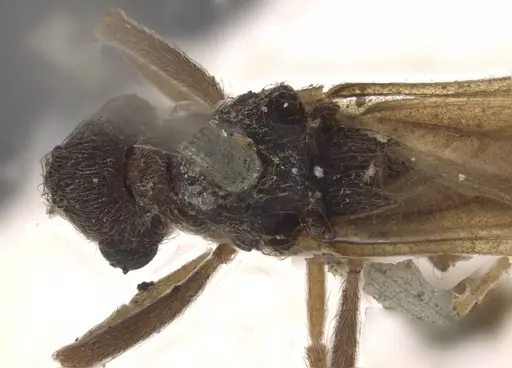
Literatur
Memuat peta distribusi...Memuat produk...