
Aenictus sonchaengi
- Nama Ilmiah
- Aenictus sonchaengi
- Subfamili
- Dorylinae
- Penulis
- Jaitrong & Yamane, 2011
- Distribusi
- Ditemukan di 0 negara
Pendahuluan
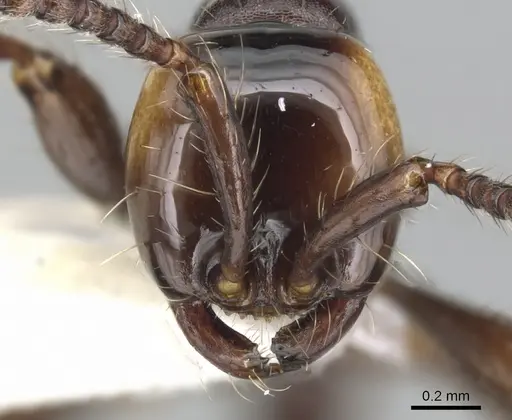
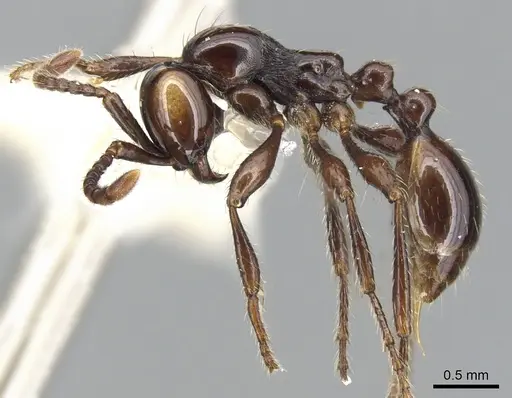
Workers of Aenictus sonchaengi measure 4.20-4.35 mm in total length and are dark reddish-brown in color . They have a distinctive high dome-shaped promesonotum when viewed from the side, with the dorsal surface of the propodeum smooth and shiny . This species lives in lowland primary rainforests of the Malay Peninsula (southern Thailand) and Borneo (Sarawak and Brunei) . As an army ant in the genus Aenictus, these ants follow a nomadic lifestyle with no permanent nest. Only the worker caste has been described for this species - no queens or males are known . Colonies are active during the night and early morning hours, and they are probably sympatric with Aenictus rotundicollis in parts of Borneo .
Quick Summary
- Difficulty: Expert
- Origin & Habitat: Malay Peninsula (southern Thailand) and Borneo (Sarawak and Brunei), lowland primary rainforest, with one colony recorded from disturbed forest [1]
- Colony Type: Army ant, only workers known, nomadic with no fixed nest
- Size & Growth:
- Antkeeping:
- Temperature: Warm tropical conditions, keep in the mid-to-high 20s°C range
- Humidity: High humidity consistent with rainforest floor conditions
- Diapause: No, tropical species from regions without cold winters
- Nesting: No permanent nest required, nomadic species needing extensive foraging space
- Behavior: Nocturnal army ant with raiding behavior, highly mobile and nomadic [1]
- Common Issues: no queens known means you cannot start a colony from a single queen., nomadic lifestyle requires huge spaces impossible to provide in captivity., specialized diet of other ant brood is difficult to maintain continuously., only workers have ever been found, no reproductive castes are described.
Why This Species Is Not Recommended for Captivity
You cannot found an Aenictus sonchaengi colony in captivity because no queens have ever been described [2]. All available specimens are workers collected from the wild. Army ants like this species live in colonies that move constantly through the forest, making them impossible to house in standard ant farms or formicaria. They require huge amounts of space to roam and forage, plus a constant supply of specific prey that is difficult to provide in captivity.
Natural History and Biology
These ants live in lowland primary rainforests of Thailand and Borneo [1]. They are active at night and in the early morning, unlike many day-active ants [1]. The species belongs to the Aenictus laeviceps species group and closely resembles Aenictus rotundicollis, though it has fewer standing hairs on the promesonotum (2-4 hairs compared to more than 4 in A. rotundicollis) and a smooth dorsal surface on the propodeum [1].
Housing Requirements (Theoretical)
If you were to attempt keeping these ants, you would need an enormous enclosure with constant high humidity and warm temperatures. Unlike most ants, they do not build permanent nests. Instead, they form temporary resting clusters that move frequently. This nomadic behavior means they need space to move constantly, which is impractical for home ant keeping. Standard test tubes, Y-tong nests, or formicaria do not work for army ants.
Feeding and Diet
Aenictus sonchaengi are army ants that prey on other social insects, particularly the brood of other ant species. In captivity, this would require a constant supply of live ant colonies to raid, which is impractical and ethically problematic for most keepers. They do not accept standard ant foods like sugar water or honey as their primary diet.
Temperature and Humidity
Coming from tropical rainforests, these ants need warm temperatures and high humidity. You should never attempt to hibernate this species as they come from a region without cold winters. Keep the enclosure humid but well-ventilated to prevent mold growth.
Frequently Asked Questions
Can I keep Aenictus sonchaengi in a test tube?
No. Test tubes are suitable for founding queens, but no queens are known for this species. Additionally, army ants need huge spaces to roam, making test tubes completely unsuitable [2].
How do I found an Aenictus sonchaengi colony?
You cannot found a colony of this species in captivity. Only workers have been discovered, no queens or males are known [2].
What do Aenictus sonchaengi eat?
They are army ants that prey on other social insects, especially the brood of other ants. This specialized diet makes them extremely difficult to keep in captivity.
Do Aenictus sonchaengi need hibernation?
No. They come from tropical rainforests in Thailand and Borneo where temperatures remain warm year-round [1].
Are Aenictus sonchaengi good for beginners?
No. This species is not suitable for captive keeping due to the lack of available queens, their nomadic lifestyle, and specialized diet.
How big do Aenictus sonchaengi colonies get?
The exact colony size is unknown. No colony size data has been published for this species.
Do Aenictus sonchaengi sting?
They can bite, but their small size means they pose little danger to humans.
Why are my Aenictus sonchaengi dying?
If you have obtained workers of this species, they are likely dying because army ants cannot survive long without their queen and the colony structure they require. Workers alone cannot sustain a colony.
Report an Issue
The current care sheet is based fully on literature. See inconsistencies, or something that's incorrect? Please , it will be resolved after review from an admin. Contributing to the blogs tab also helps providing information, to make us be able to further improve the caresheets. Thank you for your support!
References

Lembar perawatan ini dilisensikan di bawah CC BY-SA 4.0 .
Blog Komunitas
CASENT0903681
Lihat di AntWeb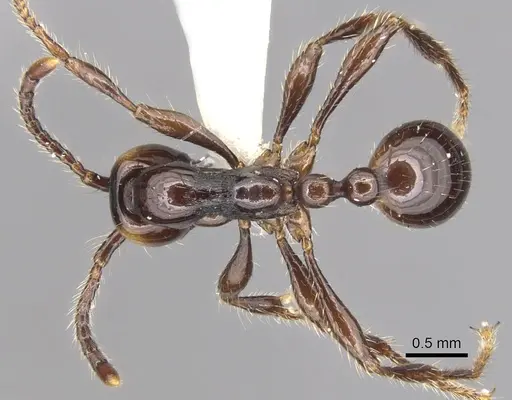
Literatur
Memuat peta distribusi...Memuat produk...