
Aenictus khaoyaiensis
- Nama Ilmiah
- Aenictus khaoyaiensis
- Subfamili
- Dorylinae
- Penulis
- Jaitrong & Yamane, 2013
- Distribusi
- Ditemukan di 0 negara
Pendahuluan
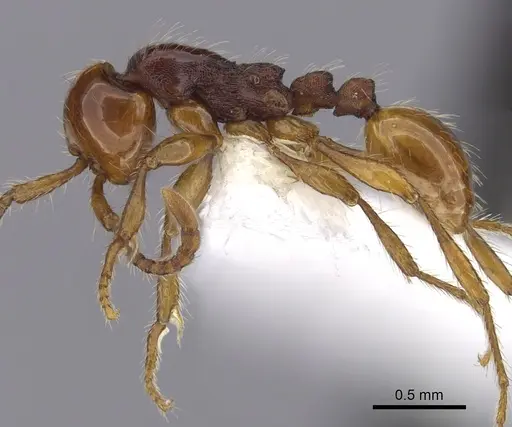
Aenictus khaoyaiensis is a small army ant species measuring 2.45 to 3.00 mm in total length . Workers have a distinctive two-tone coloration: the head, mandibles, antennae, gaster, and legs appear yellowish brown, while the mesosoma, petiole, and postpetiole are reddish brown . This species is known only from the worker caste and has only been collected in Khao Yai National Park, Nakhon Ratchasima Province, Thailand . These ants represent a significant challenge for antkeepers because only workers have ever been described, no queens or males are known for this species . As army ants, they likely exhibit the nomadic raiding behavior typical of the genus, though specific behavioral observations for this species are unavailable.
Quick Summary
- Difficulty: Expert
- Origin & Habitat: Thailand, specifically the tropical rainforests of Khao Yai National Park in Nakhon Ratchasima Province [1]. They inhabit both primary undisturbed forest and disturbed forest areas [1].
- Colony Type: Unknown, only the worker caste has been described. Queens have never been observed or described for this species.
- Size & Growth:
- Queen: Unknown, queens have never been described for this species [2].
- Worker: 2.45-3.00 mm [1].
- Colony: Unknown for this specific species. Based on typical Aenictus patterns, colonies likely contain thousands of workers.
- Growth: Unknown
- Development: Unknown. (Army ant colonies reproduce through fission rather than single-queen founding.)
- Antkeeping:
- Temperature: Likely requires warm tropical conditions around 24-28°C, inferred from their Thai rainforest habitat [1].
- Humidity: High humidity expected, matching their tropical rainforest origins, keep substrate consistently moist but not waterlogged.
- Diapause: No, tropical species from Thailand active year-round [2].
- Nesting: Army ants form temporary bivouacs rather than permanent nests. Standard formicarium setups are not suitable.
- Behavior: Highly active raiders that hunt in groups for small invertebrates. Workers are small (under 3mm) and could escape through standard barrier systems, extremely fine mesh would be required for containment.
- Common Issues: queens have never been described, standard colony founding is impossible., requires massive colony size to maintain army ant social structure., nomadic bivouac lifestyle is incompatible with static formicarium setups., enormous daily food requirements typical of army ants., only workers have ever been collected, no method exists to obtain a founding queen.
Why These Ants Are Not Suitable for Standard Antkeeping
Aenictus khaoyaiensis is an army ant in the subfamily Dorylinae, and their biology makes captive keeping nearly impossible for hobbyists. Unlike typical ants that start with a single queen in a test tube, army ants require established colonies with thousands of workers to function. They reproduce by colony fission, splitting existing colonies, rather than through nuptial flights where queens mate and found new nests alone. This means you cannot purchase or catch a single queen and raise a colony. You would need to collect an entire functioning colony fragment with thousands of workers and multiple queens, which is not feasible for standard antkeeping setups and would require specialized research facilities. [1][2]
What We Know From Scientific Collections
All known specimens of Aenictus khaoyaiensis come from a single location: Khao Yai National Park in Nakhon Ratchasima Province, Thailand [1]. The type series was collected in May 2000 from tropical rainforest habitat [1]. Workers were found in both primary undisturbed forest and disturbed forest areas, suggesting the species can tolerate some habitat modification [1]. However, this adaptability to habitat disturbance does not translate to survival in captivity, as their social structure and space requirements remain specialized.
Morphological Identification
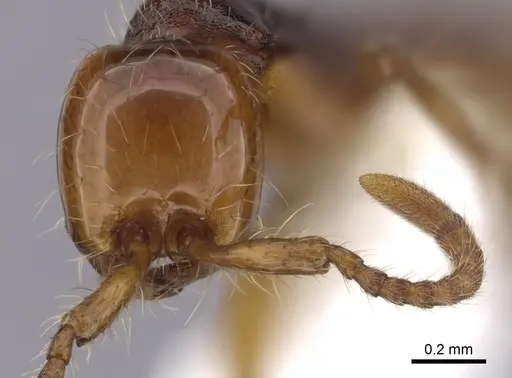
Workers are small, measuring 2.45 to 3.00 mm in total length [1]. Their antennae are relatively short, extending only slightly past halfway along the head [1]. The head is almost as long as it is wide, with weakly convex sides [1]. You can identify them by the several irregular longitudinal ridges on their mesopleuron (the middle body section), and by their petiole which is almost as long as it is high [1]. The coloration is distinctive: yellowish brown on the head, mandibles, antennae, gaster, and legs, with reddish brown on the mesosoma, petiole, and postpetiole [1].
Housing Requirements for Army Ants
If maintained in a research setting, army ants require massive arenas with continuous foraging space, not standard nests. They need constant access to large amounts of live prey and space to form temporary bivouacs, living structures made from the ants' own bodies that house the queen and brood. Standard test tubes, Y-tong nests, plaster nests, or acrylic formicaria are completely unsuitable. The colony would need a large, sealed arena with soil or leaf litter substrate, extremely fine mesh or barriers to prevent escape (given their small size), and daily provision of substantial live prey. [2]
Feeding and Diet
Specific dietary studies for Aenictus khaoyaiensis do not exist. However, based on typical Aenictus behavior, they are obligate predators of small invertebrates such as termites, other ants, and soil arthropods. Army ants do not accept sugar water or honey as their primary food source, they need protein-rich live prey. A colony would likely require hundreds of prey items daily, making feeding impractical for home antkeeping. [2]
Frequently Asked Questions
Can I keep Aenictus khaoyaiensis in a test tube?
No. These are army ants that require massive colonies and continuous foraging space. Test tubes are completely unsuitable for their biology and social structure.
How do I start a colony of Aenictus khaoyaiensis?
You cannot start a colony from a single queen because queens have never been described for this species. Army ants reproduce by splitting existing colonies (fission), not by founding from a single mated queen.
What do Aenictus khaoyaiensis eat?
Specific diet is unstudied, but related army ants are obligate predators of small invertebrates like termites and other ants. They would require large quantities of live prey daily and do not survive on sugar sources alone.
How big do Aenictus khaoyaiensis colonies get?
Unknown for this specific species, but related army ants maintain colonies with thousands of workers.
Do Aenictus khaoyaiensis need a queen?
Yes, but since queens are unknown for this species, you cannot establish a normal colony. Army ant colonies require their queen and massive worker numbers to survive.
Are Aenictus khaoyaiensis dangerous?
They are small (under 3mm) and unlikely to sting humans effectively. Army ants can be aggressive defenders when threatened, but their small size limits the effect on humans.
What temperature do Aenictus khaoyaiensis need?
Warm tropical temperatures around 24-28°C, based on their Thai rainforest habitat.
Do Aenictus khaoyaiensis need hibernation?
No. They come from tropical Thailand and remain active year-round.
Can I keep multiple queens together?
Unknown for this species. Army ants often have multiple queens, but combining unrelated queens is not possible with army ant biology, they must come from the same colony via fission.
Why are my Aenictus khaoyaiensis dying?
If you somehow obtained these ants, they are likely dying because army ants cannot survive in standard antkeeping setups. They require specialized facilities with massive space, specific humidity gradients, and continuous large-scale feeding that home setups cannot provide.
Report an Issue
The current care sheet is based fully on literature. See inconsistencies, or something that's incorrect? Please , it will be resolved after review from an admin. Contributing to the blogs tab also helps providing information, to make us be able to further improve the caresheets. Thank you for your support!
References

Lembar perawatan ini dilisensikan di bawah CC BY-SA 4.0 .
Blog Komunitas
CASENT0249271
Lihat di AntWeb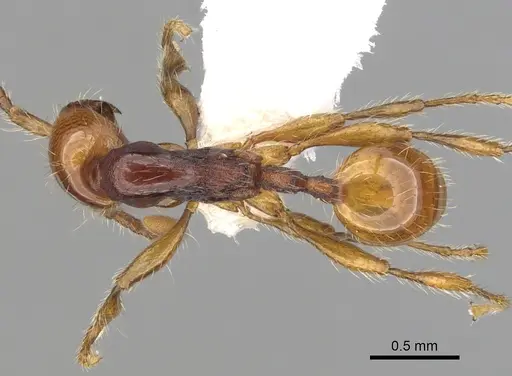
Literatur
Memuat peta distribusi...Memuat produk...