
Aenictus brevicornis
- Nama Ilmiah
- Aenictus brevicornis
- Subfamili
- Dorylinae
- Penulis
- Mayr, 1879
- Distribusi
- Ditemukan di 2 negara
Pendahuluan
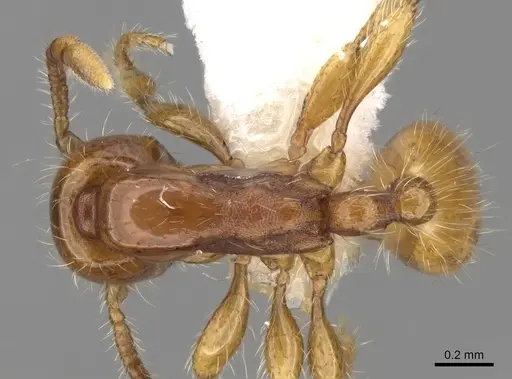
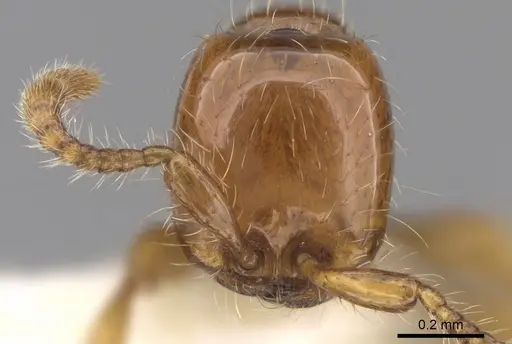
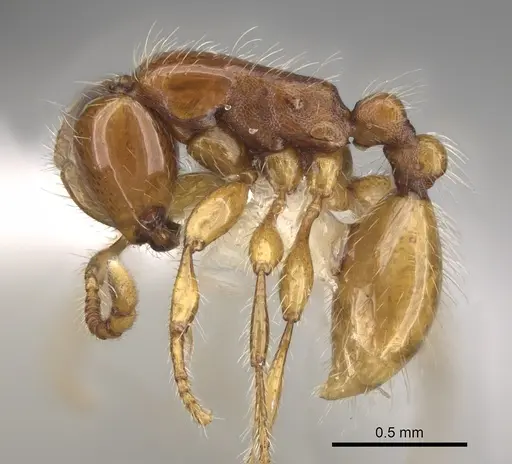
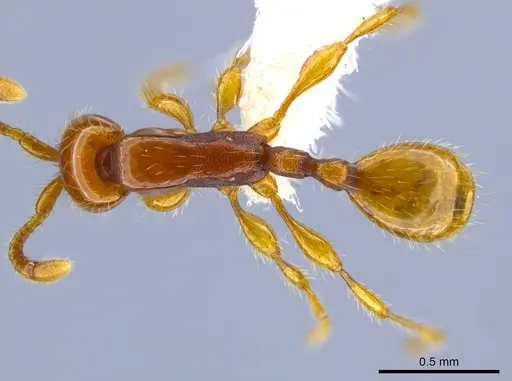
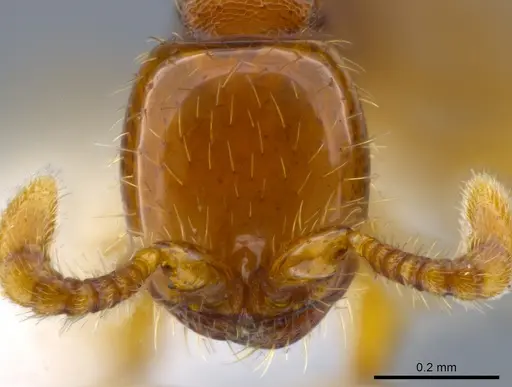
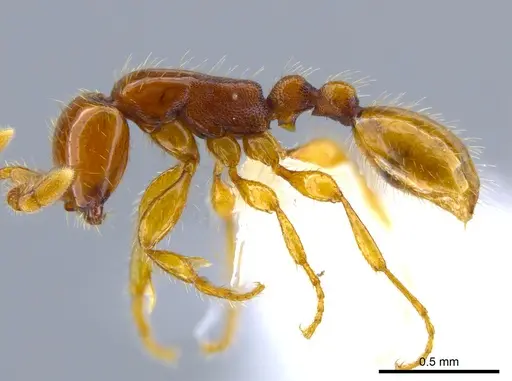
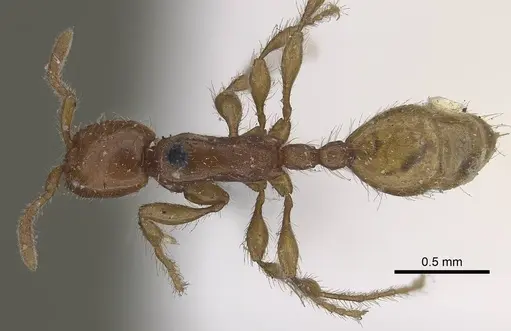
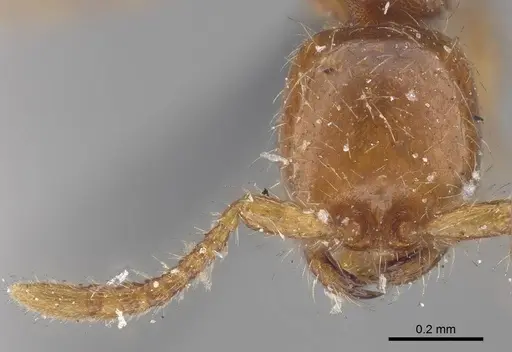
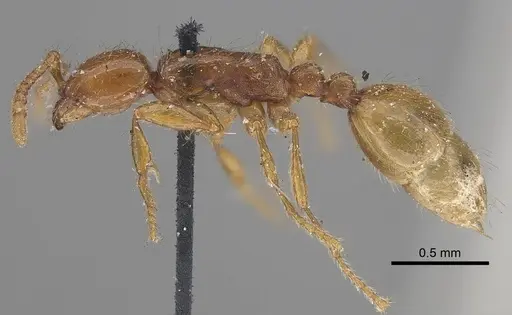
Aenictus brevicornis is a tiny army ant from the forests of India and Southeast Asia. Workers measure 2.5-3 mm and are brownish-yellow with darker heads and thoraxes, covered in more hair than any other Indo-Australian army ant species . They have distinctive narrow mandibles with three large teeth and 10-segmented antennae . Despite being described in 1879,this species remains a mystery to science - only worker ants have ever been collected, and no queens, males, or colony founding behavior has been documented . In nature, they live exclusively in undisturbed forest habitats, foraging on the soil surface and avoiding human-disturbed areas .
Quick Summary
- Difficulty: Not Recommended
- Origin & Habitat: Tropical forests of India (Assam, West Bengal, Karnataka, Kerala), Bangladesh, and Vietnam [1][6][7]. Strictly confined to undisturbed forest habitats, absent from grasslands and human-disturbed areas [4][5].
- Colony Type: Unknown, only the worker caste has ever been collected [3].
- Size & Growth:
- Queen: Unknown, no queens documented [3]
- Worker: 2.5-3 mm [2]
- Colony: Unknown, estimated thousands based on typical Aenictus biology
- Growth: Unknown
- Development: Unknown, no reproductive castes or brood development documented (Colony reproduction and development timelines are unconfirmed for this species.)
- Antkeeping:
- Temperature: Likely 24-28°C based on tropical Indian distribution, start at 25°C and observe activity levels.
- Humidity: Likely high humidity based on forest floor habitat, keep substrate moist but not waterlogged.
- Diapause: Unlikely required, tropical species with no documented dormancy needs
- Nesting: Unknown natural nesting structure. Army ants typically do not build permanent nests.
- Behavior: Army ant behavior likely includes nomadic raiding of other ant colonies. Workers are extremely small at 2.5-3 mm, requiring excellent escape prevention [2]. Activity patterns unconfirmed.
- Common Issues: no queens have ever been collected, making captive colony founding impossible., army ant biology requires massive enclosures and specialized feeding on other ant brood., nomadic lifestyle is incompatible with standard formicarium setups., tiny worker size requires extreme escape prevention measures.
Why This Species Is Not Suitable for Keeping
Aenictus brevicornis cannot be recommended for captive keeping. No queens have ever been collected for this species, meaning you cannot found a colony [3]. Even if a colony were obtained through wild collection, army ants present unique challenges that make them unsuitable for hobbyist ant keeping. They are nomadic, meaning they do not stay in one nest location but instead move frequently, requiring enormous enclosures that allow for this natural behavior. They are also specialist predators that raid other ant colonies for food and brood, making them difficult and expensive to feed in captivity. Standard formicarium setups cannot accommodate their space requirements or feeding ecology.
Natural History and Habitat
This species inhabits the forest floor of tropical woodlands across India, from Assam and West Bengal in the east to Karnataka and Kerala on the peninsula [1][7]. Records also exist from Bangladesh and Vietnam [6]. They show strict habitat fidelity, studies found them only in undisturbed forest habitats, completely absent from grasslands and human-disturbed areas [4][5]. Workers forage on the soil surface [4]. Their presence in rural sacred groves but absence from urbanized areas suggests they require stable, undisturbed forest ecosystems [5].
Morphology and Identification
Workers are among the smallest army ants in the region at just 2.5-3 mm in length [2]. They are brownish-yellow in color with the head and thorax slightly darker than the rest of the body [1]. The species is immediately recognizable by its extremely abundant hair coverage, more than any other Indo-Australian Aenictus, with the longest pronotal hairs reaching about 0.20 mm [1]. The mandibles are very narrow with three large teeth, and the antennae have 10 segments [1]. The subpetiolar process varies between individuals, with some showing a forward-directed lobe and others a smaller anterior-directed flange [1].
Army Ant Biology and Care Implications
As a member of the Dorylinae subfamily, Aenictus brevicornis is a true army ant. Based on typical army ant biology, they likely exhibit nomadic behavior alternating with stationary phases, group predation, and specialized foraging columns. Colonies likely contain thousands of workers. This biology makes them impossible to house in standard ant farms or formicaria. They require continuous access to large foraging areas and a constant supply of specific prey. Temperature and humidity requirements, while likely similar to other tropical forest ants, remain unstudied for this specific species.
Frequently Asked Questions
Can I keep Aenictus brevicornis in captivity?
No. This species is not suitable for captive keeping. Only workers have ever been collected, no queens are known to science, so you cannot start a colony [3]. Additionally, as army ants, they require massive space for their nomadic lifestyle and specialized feeding that is impractical for hobbyists.
Where can I buy Aenictus brevicornis queens?
Queens of this species are not available and have never been documented. No reproductive females have been collected since the species was described in 1879 [3]. Any seller claiming to offer queens of this species is likely mistaken or fraudulent.
What do Aenictus brevicornis eat?
The diet is unconfirmed, but as army ants, they likely specialize in raiding other ant colonies and consuming their brood. This specialized predatory diet makes them extremely difficult to maintain in captivity.
How big do Aenictus brevicornis colonies get?
Colony size is unknown for this specific species. Based on other Aenictus army ants, colonies likely contain thousands of workers, possibly tens of thousands. This large size contributes to their unsuitability for standard ant keeping.
Are Aenictus brevicornis dangerous?
They are tiny ants (2.5-3 mm) and unlikely to pose any danger to humans [2]. However, as army ants, they may bite if disturbed. Their small size means they cannot penetrate human skin effectively.
What temperature do Aenictus brevicornis need?
Specific temperature requirements are unstudied. Based on their distribution in tropical India, they likely prefer warm conditions around 24-28°C. Start at 25°C and adjust based on activity levels.
Do Aenictus brevicornis need a formicarium?
Standard formicaria are unsuitable for this species. As army ants, they do not build permanent nests but instead move frequently. They require massive enclosures with soil substrates that allow for natural movement patterns, not typical acrylic or plaster nests.
Why are there no queens documented for this species?
This is a common gap in army ant taxonomy. Queens may be subterranean or possess cryptic habits that make them difficult to collect. Alternatively, they may be morphologically similar to workers, though this has not been confirmed for Aenictus brevicornis [3].
Report an Issue
The current care sheet is based fully on literature. See inconsistencies, or something that's incorrect? Please , it will be resolved after review from an admin. Contributing to the blogs tab also helps providing information, to make us be able to further improve the caresheets. Thank you for your support!
References

Lembar perawatan ini dilisensikan di bawah CC BY-SA 4.0 .
Blog Komunitas
Literatur
Memuat peta distribusi...Memuat produk...