
Acromyrmex ameliae
- Nama Ilmiah
- Acromyrmex ameliae
- Tribe
- Attini
- Subfamili
- Myrmicinae
- Penulis
- De Souza <i>et al.</i>, 2007
- Distribusi
- Ditemukan di 1 negara
Pendahuluan
Acromyrmex ameliae is a tiny social parasite that lives permanently inside the nests of the leafcutter ant Acromyrmex subterraneus in Brazil. You cannot keep this species by itself - it is an inquiline (a permanent social parasite) that requires a host colony to survive. The queens are dramatically smaller than their host queens (about 8mm compared to the host's 10mm) and dark brown to black in color. They do produce their own workers, but these make up only about 3% of the combined colony population and rely entirely on the host's fungus garden and worker force for survival . What makes this species unusual is its reproductive strategy. While most leafcutter ants have synchronized annual nuptial flights, A. ameliae produces winged reproductives year-round, with peaks from October through February and again in April. The sex ratio is heavily skewed toward females (over 5 females for every male). Interestingly, researchers observed a behavioral shift over time: initially queens performed mating flights, but later generations mated inside the nest. This constant production of sexuals eventually exhausts and kills the host colony after several months .
Quick Summary
- Difficulty: Expert
- Origin & Habitat: Minas Gerais, Brazil, parasitizes nests of Acromyrmex subterraneus in eucalyptus stands and natural habitats [1]
- Colony Type: Polygyne (multiple queen colonies with 2-4+ queens observed per nest), socially parasitic inquiline living permanently within host colonies [1][2]
- Size & Growth:
- Queen: ~8 mm total body length (significantly smaller than host queens at ~10 mm) [2]
- Worker: size data unavailable, minor workers are smaller than host minor workers in specific proportions [1]
- Colony: up to 30 workers in parasitized nests (parasite workers comprise approximately 3% of total workforce) [2]
- Growth: Moderate to fast reproduction of sexuals, but colony lifespan limited by host survival [2]
- Development: Unknown for this species (No direct measurements available)
- Antkeeping:
- Temperature: 24-28°C, provide a gentle gradient allowing thermoregulation [1]
- Humidity: High humidity required for fungus garden maintenance, nest substrate should remain consistently moist but not waterlogged [1]
- Diapause: No, tropical species from Brazil [1]
- Nesting: Requires established host nest of Acromyrmex subterraneus with active fungus garden, cannot be kept in independent nests [1]
- Behavior: Parasitic, integrates into host colonies and suppresses host queen reproduction. Host workers eventually transport parasite males to waste piles. Parasite workers do not forage independently. High escape risk due to host worker presence (leafcutter ants are skilled escape artists). This species possesses a stinger, though it is less medically significant than fire ant stings [1][2]
- Common Issues: cannot be kept without host colony Acromyrmex subterraneus, will die without host workers and fungus garden., host colonies inevitably decline and die after several months of parasitism due to continuous overproduction of parasite sexuals., extremely difficult to obtain legally (Brazilian endemic with export restrictions)., parasite workers are few and do not perform normal foraging or nest maintenance duties., requires living fungus garden maintenance via host species, if the host fungus dies, the parasite dies., approximately 70% of host nests in the study area were parasitized, indicating this species is common but easily overlooked [1].
Social Parasitism and Host Requirements
Acromyrmex ameliae is an inquiline social parasite, meaning it lives permanently inside the nests of its host species. It specifically parasitizes Acromyrmex subterraneus subterraneus and Acromyrmex atrina [1]. Unlike some parasitic ants that kill the host queen immediately, A. ameliae coexists with the host colony for an extended period, with its queens and workers integrating into the host's social structure.
The specific mechanism by which newly mated queens invade host colonies is unconfirmed. Once established, the parasite queens suppress host queen reproduction while producing their own alates continuously [2]. The parasite relies entirely on the host's fungus garden for food, the workers do not forage for leaves or tend fungus independently. This means you must maintain a healthy colony of Acromyrmex subterraneus first, then introduce parasite queens or workers. Be aware that parasitized colonies have shortened lifespans, the constant drain of resources for parasite sexual production eventually causes host colony death after several months [2].
Colony Structure and Reproduction
Unlike many parasitic ants that lose the worker caste entirely, A. ameliae retains the ability to produce workers, though they make up only about 3% of the total workforce in parasitized nests [2]. These workers are morphologically similar to host minor workers but can be distinguished by a smaller distance between the spiracle and bulla relative to pronotum width [1].
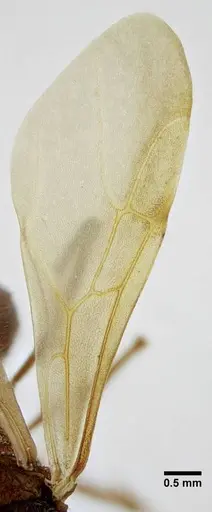
Colonies are polygynous, with researchers finding 2,3,and 4 queens coexisting in single nests [1]. Reproduction is continuous rather than seasonal, alates appear year-round with peaks from October through February and again in April [2]. The sex ratio is heavily female-biased at approximately 1 male to 5.3 females [2]. Interestingly, researchers observed a shift in mating behavior: initially, queens performed nuptial flights (showing phototaxis in the lab), but later observations showed mating occurring inside colonies with mated females being readopted by their mother colonies [2]. Queens are monandrous (mate with a single male) and lay significantly fewer eggs than host queens (less than 6 eggs per 16 hours compared to the host's ~230) [2].
Morphology and Identification
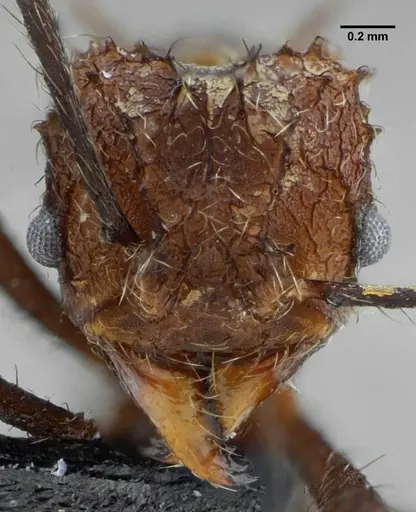
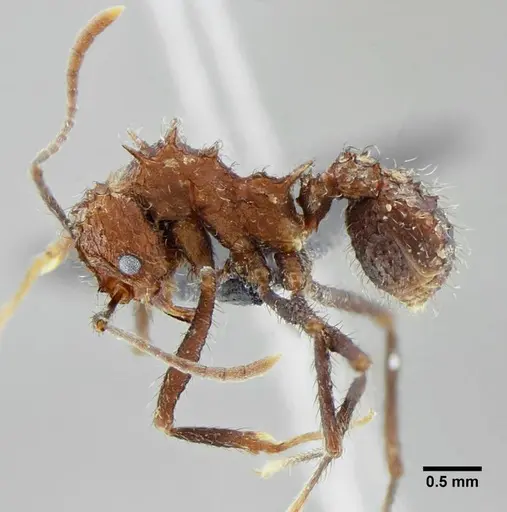
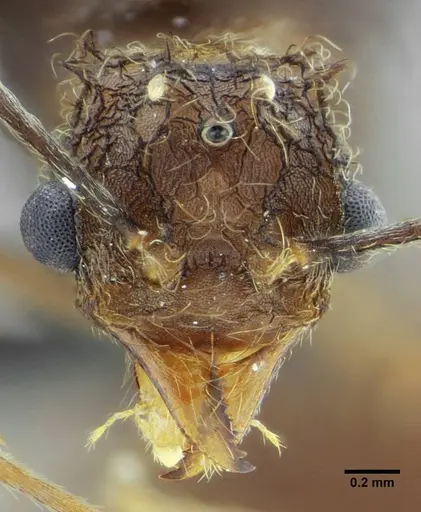
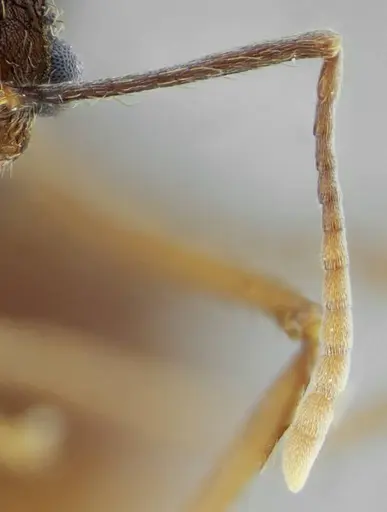
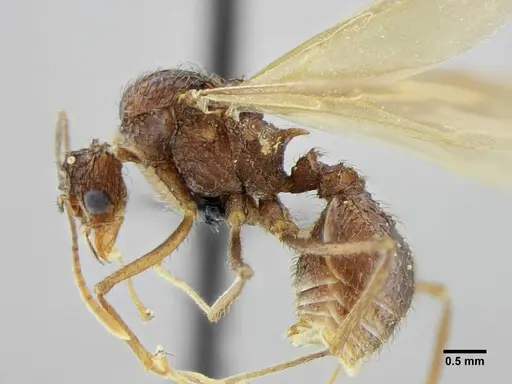
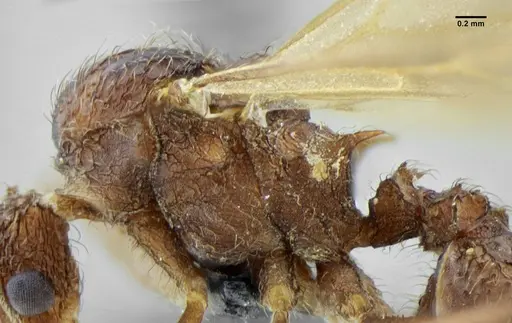
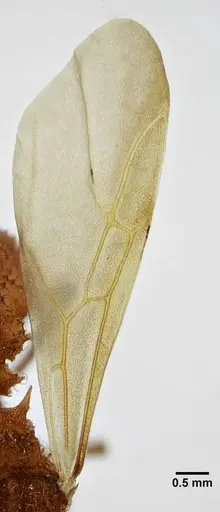
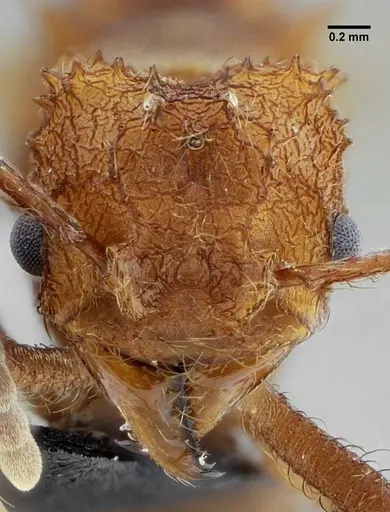
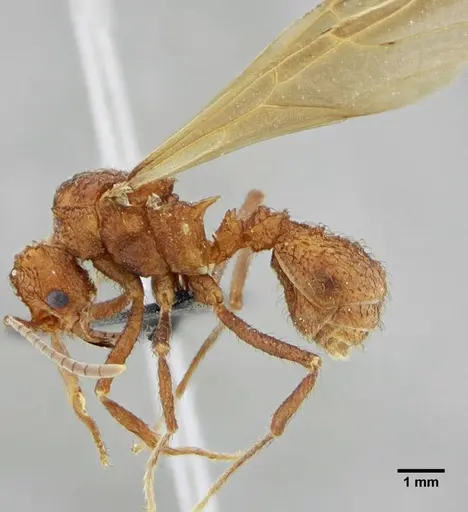
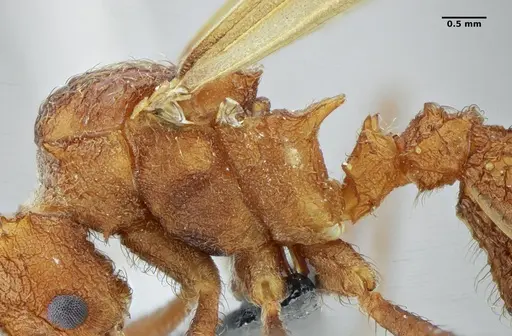
Acromyrmex ameliae queens are much smaller than their host queens, measuring approximately 8mm in total body length compared to the host's 10mm (roughly 60% of the host queen size) [2][1]. They vary from brownish to brownish-black in color and have more abundant, thicker, and longer hairs on the gaster and head compared to hosts [1].
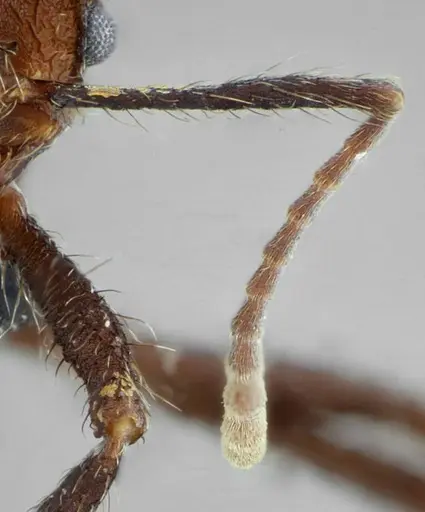
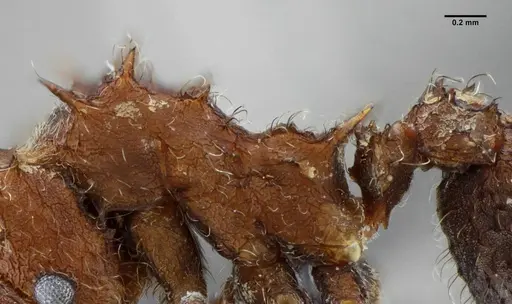
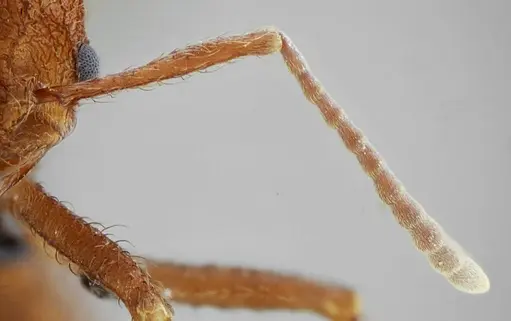
Key diagnostic features include straight, laterally compressed propodeal spines (unlike the curved spines of A. subterraneus), prominent ridges on the head and first gaster segment, and irregular extensions on the anteroventral margin of the postpetiole [1]. The tubercles on the gaster are arranged in four longitudinal lines but are much reduced compared to the host. Workers can be distinguished from host minors by their spiracle-to-bulla distance, which is significantly smaller relative to pronotum width [1]. Males are also smaller than host males (under 7mm vs ~8mm) and have 13 antennal segments (though some show fusion of segments 4-5 resulting in 12) [2][1].
Temperature and Environmental Conditions
As a Brazilian species from Minas Gerais, aim for temperatures around 24-28°C with a gentle gradient allowing the ants to thermoregulate [1].
High humidity is essential for maintaining the fungus garden that sustains the colony. Keep the nest substrate consistently moist but not waterlogged, it should feel damp to the touch. Provide adequate ventilation to prevent mold while maintaining humidity. As a tropical species, A. ameliae does not require hibernation or diapause [1].
Feeding and Fungus Maintenance
Acromyrmex ameliae does not forage for food independently. The parasite workers and queens feed entirely on the fungus garden maintained by the host colony [1][2]. This means you must provide the host colony with fresh leaves and other vegetation as you normally would for Acromyrmex subterraneus.
The parasite's small worker force does not contribute significantly to leaf processing or fungus tending. If the host fungus garden crashes or the host worker population declines, the parasite will starve. Monitor the fungus garden health closely, it should appear white and fluffy, not gray or moldy. Do not attempt to feed A. ameliae directly with sugar water or insects, they rely on the symbiotic fungus cultivated by their hosts [2].
Defense Mechanism
As a member of the tribe Attini (leafcutter ants), Acromyrmex ameliae possesses a functional stinger. However, compared to other Myrmicines like fire ants, their sting is less medically significant to humans. The primary defense comes from the host colony's workers rather than the parasite caste.
Chromosome Data
Cytogenetic studies reveal that A. ameliae has a diploid chromosome number of 2n = 36 (compared to the typical 2n = 38 in other Acromyrmex species). This reduction is due to a Robertsonian translocation between two non-homologous subtelocentric chromosomes. The chromosome number is identical to its host species, supporting the close evolutionary relationship between parasite and host [3].
Frequently Asked Questions
Can I keep Acromyrmex ameliae without a host colony?
No. Acromyrmex ameliae is an obligate social parasite (inquiline) that cannot survive without its host species Acromyrmex subterraneus. It requires the host's fungus garden and worker force for food and nest maintenance [1][2].
What host species does Acromyrmex ameliae require?
Acromyrmex ameliae parasitizes Acromyrmex subterraneus subterraneus and Acromyrmex atrina. You must establish a healthy colony of one of these host species before attempting to keep A. ameliae [1].
How many queens can live together in an Acromyrmex ameliae colony?
Colonies are polygynous (multiple queens). Researchers have observed nests containing 2,3,and 4 queens living together simultaneously [1].
Why did my host colony die after introducing Acromyrmex ameliae?
This is expected. Acromyrmex ameliae continuously produces sexual offspring year-round, which drains the host colony's resources. After several months of supporting this reproduction, the host colony typically declines and dies [2].
Do Acromyrmex ameliae workers forage for food?
No. The workers comprise only about 3% of the colony workforce and do not forage independently. They rely entirely on the host's fungus garden for nutrition [2].
Are Acromyrmex ameliae queens smaller than their workers?
No, the queens are larger than their own workers (workers are minor-sized), but they are significantly smaller than the host queens they live alongside [1][2].
Do Acromyrmex ameliae need hibernation?
No, this is a tropical species from Brazil that remains active year-round. They do not require diapause or hibernation [1].
What do Acromyrmex ameliae eat?
They eat the symbiotic fungus cultivated by their host Acromyrmex subterraneus. They do not accept sugar water, insects, or other foods directly, they must obtain nutrition through the host's fungus garden [2].
How fast do Acromyrmex ameliae grow?
While specific egg-to-worker timelines are unknown, they produce alates (sexual offspring) continuously throughout the year with peaks in October-February and April. This constant reproduction contributes to rapid colony turnover but eventual host death [2].
Can I legally buy Acromyrmex ameliae?
Acromyrmex ameliae is endemic to Brazil (Minas Gerais) and subject to Brazilian export restrictions. Additionally, as a parasite requiring specific host species, it is extremely difficult to obtain legally in the antkeeping trade. Most keepers will never encounter this species [1].
Report an Issue
The current care sheet is based fully on literature. See inconsistencies, or something that's incorrect? Please , it will be resolved after review from an admin. Contributing to the blogs tab also helps providing information, to make us be able to further improve the caresheets. Thank you for your support!
References

Lembar perawatan ini dilisensikan di bawah CC BY-SA 4.0 .
Blog Komunitas
UFV-LABECOL-001083
Lihat di AntWeb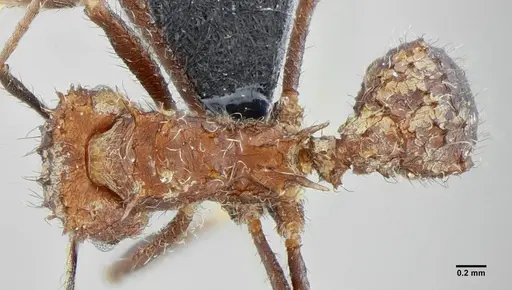
UFV-LABECOL-001088
Lihat di AntWeb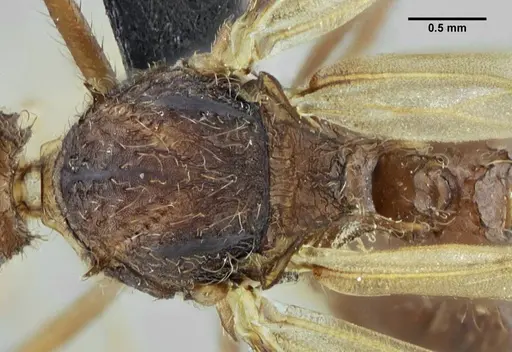
UFV-LABECOL-001089
Lihat di AntWeb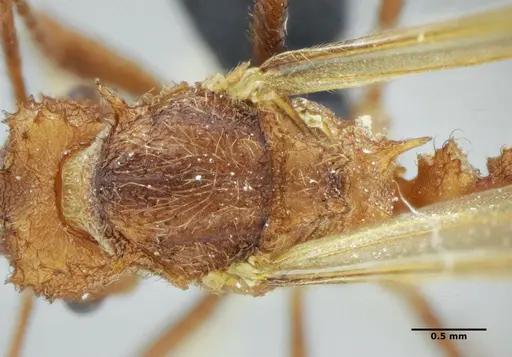
Literatur
Memuat peta distribusi...Memuat produk...