
Acanthostichus concavinodis
- Nama Ilmiah
- Acanthostichus concavinodis
- Subfamili
- Dorylinae
- Penulis
- MacKay, 1996
- Distribusi
- Ditemukan di 0 negara
Pendahuluan
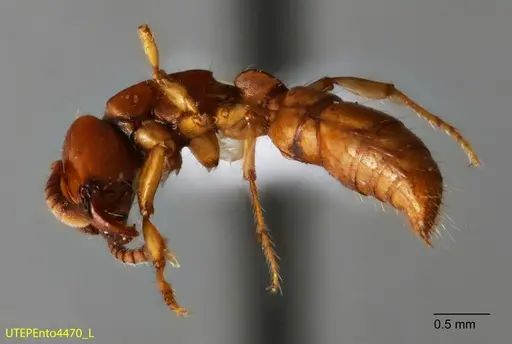
Acanthostichus concavinodis is a rare, small ant species from the Neotropical region, documented only in Bolivia and Peru. Workers have a golden reddish-brown color with a polished, shiny body surface. The species is most easily identified by the strongly concave anterior face of the petiole - a unique feature that gives them their name (concavinodis comes from Latin for 'curved inward node'). Only the worker caste has been described; queens and males remain completely unknown. This species belongs to the serratulus species complex within the genus Acanthostichus, which is part of the Dorylinae subfamily (army ants and their relatives).
Quick Summary
- Difficulty: Not recommended, insufficient biological data exists for captive care
- Origin & Habitat: Neotropical region, Bolivia and Peru. Type locality is Ivon Beni, Bolivia, collected in February 1922 during the Mulford Biological Expedition [1].
- Colony Type: Colony structure is completely unknown. Only three worker specimens have ever been documented (one holotype and two paratypes). No queens or reproductive castes have been described.
- Size & Growth:
- Queen: Size data unavailable, queen caste has never been described [1]
- Worker: Size data unavailable, only head and mesosoma measurements exist for workers (no total body length data). Workers are documented as tiny ants based on available measurements [1].
- Colony: Unknown, colony size has never been documented
- Growth: Unknown
- Development: Unknown, no breeding or development data exists for this species (This species is known from only three worker specimens collected in 1922. No captive colonies or biological observations exist.)
- Antkeeping:
- Temperature: Unknown, no species-specific temperature data exists
- Humidity: Unknown, no humidity data exists for this species
- Diapause: Unknown, no seasonal data exists
- Nesting: Unknown natural nesting behavior. No data exists on preferred nest types or substrates.
- Behavior: Behavior is completely unstudied. No observations on temperament, aggression, foraging, or any aspect of daily life have been documented.
- Common Issues: no biological data exists, all care recommendations would be speculative guesses, only three worker specimens have ever been documented in scientific literature, queen caste unknown, cannot establish proper colony founding, no confirmed diet or feeding requirements exist, no temperature, humidity, or nesting preferences documented
Species Overview and Identification
Acanthostichus concavinodis is an extremely rare ant species that has never been successfully kept in captivity. Only three worker specimens have ever been documented in scientific literature, all collected in 1922. The species is identified by its distinctive petiole shape: the anterior face is strongly concave, curving inward, which is unusual among related species. Workers have a golden reddish-brown color and polished, shiny body surface. The species is part of the serratulus species complex within the genus Acanthostichus, which belongs to the Dorylinae subfamily. The type locality is Ivon Beni in Bolivia, with additional records from Peru [2].
Why This Species Is Not Recommended for Keeping
This species is NOT recommended for antkeeping. The biological and ecological requirements of Acanthostichus concavinodis are completely unknown, the scientific literature contains no information whatsoever about their diet, nesting preferences, colony structure, queen biology, or any aspect of their daily life. Keeping an ant species with zero biological data is extremely risky and likely to result in colony failure. Additionally, no queens have ever been documented, meaning captive breeding would be essentially impossible without wild collection. For these reasons, antkeepers should consider alternative, better-documented species where care requirements are understood. [1]
What We Know About Related Species
While Acanthostichus concavinodis specifically has no documented biology, the genus Acanthostichus as a whole provides some general context. These are small predatory ants in the army ant lineage. However, these are generalities, each species can have unique requirements, and without specific data on Acanthostichus concavinodis, we cannot make reliable care recommendations. Any attempt to keep this species would be essentially experimental with no established baseline for success. [1]
Research Gaps and Future Directions
This species represents a significant gap in ant biology research. Since its description in 1996 (based on specimens collected in 1922), no additional specimens have been documented and no field studies have been published on its biology. Future research would need to document: queen morphology and colony structure, worker behavior and foraging patterns, preferred nesting habitats, diet and prey items, seasonal activity patterns, and distribution within its known range. Until such research is conducted, captive keeping cannot be recommended with any confidence. [1]
Frequently Asked Questions
Can I keep Acanthostichus concavinodis as a pet ant?
No, this species is not recommended for captive keeping. There is zero biological data available, we do not know what they eat, how they nest, what temperature they need, or anything about their colony structure. Keeping them would be irresponsible and almost guaranteed to fail.
What do Acanthostichus concavinodis eat?
Unknown. No specific diet has been documented for this species.
How big do Acanthostichus concavinodis colonies get?
Unknown. Only three worker specimens have ever been documented. No colony size data exists.
Where is Acanthostichus concavinodis found?
This species is known from Bolivia (type locality: Ivon Beni) and Peru in the Neotropical region [2].
Do Acanthostichus concavinodis queens exist?
Queens have never been described in scientific literature. Only worker specimens have been documented. The queen caste may be unknown, undescribed, or the species may reproduce in an unusual way.
What temperature should I keep Acanthostichus concavinodis at?
No specific temperature requirements are known. This is not a recommended species to keep.
How long does it take for Acanthostichus concavinodis to develop from egg to worker?
Unknown. No breeding data exists for this species. Even basic colony founding has never been observed.
Can I find Acanthostichus concavinodis in the wild to start a colony?
This is not recommended. The species is extremely rare, only three specimens have been documented in nearly a century. Wild collection would be harmful to wild populations and likely unsuccessful.
Is Acanthostichus concavinodis a good beginner ant species?
Absolutely not. This species has no documented care requirements and would be impossible to keep successfully. Beginners should choose well-documented species like Lasius niger, Camponotus species, or other established pet ants.
Report an Issue
The current care sheet is based fully on literature. See inconsistencies, or something that's incorrect? Please , it will be resolved after review from an admin. Contributing to the blogs tab also helps providing information, to make us be able to further improve the caresheets. Thank you for your support!
References

Lembar perawatan ini dilisensikan di bawah CC BY-SA 4.0 .
Blog Komunitas
UTEPENTO4470
Lihat di AntWeb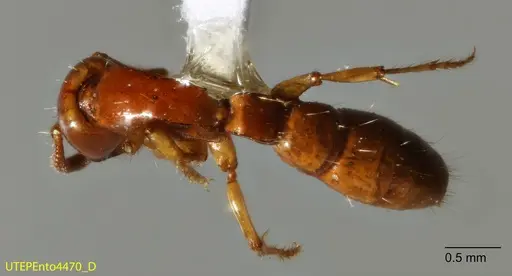
Literatur
Memuat peta distribusi...Memuat produk...