
Acanthomyrmex humilis
- Nama Ilmiah
- Acanthomyrmex humilis
- Tribe
- Crematogastrini
- Subfamili
- Myrmicinae
- Penulis
- Eguchi <i>et al.</i>, 2008
- Distribusi
- Ditemukan di 0 negara
Pendahuluan
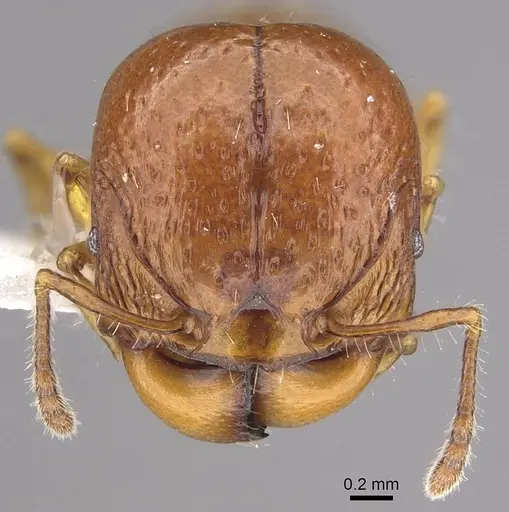
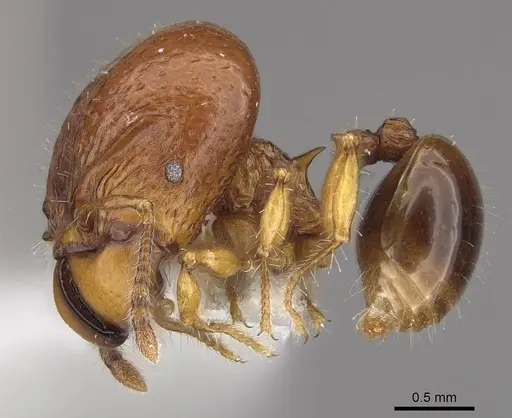
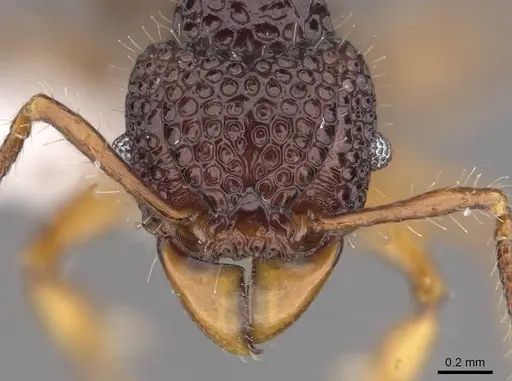
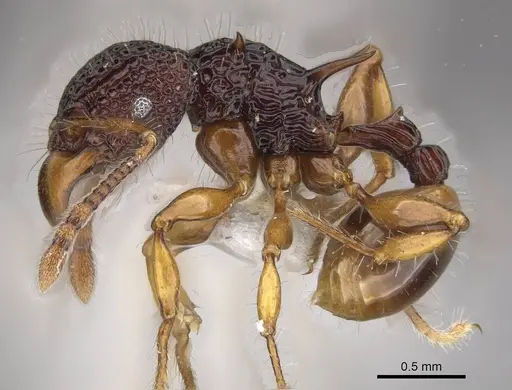
Acanthomyrmex humilis are tiny dimorphic ants native to the dipterocarp forests of Vietnam, specifically around Cat Tien National Park . They are small ants with major workers having large heads for seed processing, while minor workers are slender and tiny. They nest in cavities of rotting twigs and wood fragments on the forest floor . Unlike most ants, this species has only wingless ergatoid queens - no normal winged queens have ever been found . These ergatoid queens look like large workers with slightly bulkier thoraxes, and colonies remain small . They also have a specialized diet that includes seeds .
Quick Summary
- Difficulty: Expert
- Origin & Habitat: Vietnam (Dong Nai Province, Cat Tien National Park region), specifically dipterocarp forests on hills [1][2]
- Colony Type: Single ergatoid queen (wingless reproductive). Colonies contain only one reproductive individual and do not have winged queens [1][3].
- Size & Growth:
- Queen: size data unavailable, ergatoid queens have head length 1.10-1.11mm [1]
- Worker: size data unavailable, minor workers have head length 0.83-0.85mm, majors have head length 1.68-1.88mm [1]
- Colony: up to 100 workers, inferred from related species Acanthomyrmex careoscrobis [4]
- Growth: Slow
- Development: unknown (Development time has not been studied for this species.)
- Antkeeping:
- Temperature: 24-28°C (tropical species). Provide a heating cable on one side of the nest to create a gradient [1][2].
- Humidity: Moderate to high humidity. Keep nest substrate moist but not waterlogged, similar to rotting wood conditions [1][3].
- Diapause: No. Tropical species that remains active year-round [1].
- Nesting: Small cavities in rotting wood or soft plant stems. Naturalistic setups with twigs or Y-tong nests with small chambers work best [1][3].
- Behavior: Slow-moving, cryptic ants that prefer to stay hidden in wood cavities. Major workers have large heads for crushing seeds. Because minor workers are extremely small, escape prevention must be extreme, they can fit through the tiniest gaps [1].
- Common Issues: extreme escape risk due to tiny size, minors can fit through gaps under 1mm and require fine mesh barriers and excellent Fluon application., cannot be founded from a single queen, wingless ergatoid queens require collection with workers/brood from the field., colony failure from incorrect diet, they need seeds as part of their diet, not just sugar and protein., desiccation, small colonies dry out quickly without consistent moisture., overfeeding protein, small colonies need tiny amounts of food to avoid mold issues in their humid nests.
Ergatoid Queens and Colony Founding
Acanthomyrmex humilis has a unique reproductive system where normal winged queens do not exist. Instead, colonies are headed by a single ergatoid queen, a wingless reproductive that looks like a large worker with a slightly more robust thorax [1][3]. These queens cannot fly, which means you cannot catch them after a nuptial flight to start a colony. In the wild, they likely spread by budding, where a queen walks away from the parent nest with some workers to start a new colony nearby. This means captive colonies must be started by collecting an entire colony or a queen with brood and workers directly from rotting wood in the field. A single ergatoid queen collected alone will likely fail to found a colony because she lacks the worker assistance she needs and may not have the physiological adaptations for solo founding [1][4].
Nest Preferences
In nature, Acanthomyrmex humilis nests in cavities of rotting twigs and wood fragments, and occasionally under or between stones on the forest floor [1][3]. They prefer small, enclosed spaces with high humidity. For captive care, use naturalistic setups with hollow twigs or soft cork, or specialized small Y-tong nests with chambers sized to their tiny bodies. Avoid large open spaces, these ants feel secure in tight cavities. The nest material should retain moisture well but not become soggy. Provide a thin layer of substrate in the outworld to allow foraging, but keep the nest itself as enclosed wood-like cavities [1].
Feeding and Diet
These ants are seed harvesters, seeds form a significant part of their natural diet [1][3][4]. In captivity, offer small seeds like chia, amaranth, or crushed millet. They also require protein sources such as springtails, fruit flies, or tiny pieces of mealworms. Because colonies are small, feed tiny amounts to avoid mold. Place seeds in a dry feeding area while keeping protein and sugars in separate dishes. They may accept sugar water or honey water, but seeds are essential for their specialized diet [1][4].
Temperature and Care
As a tropical species from Vietnamese dipterocarp forests, Acanthomyrmex humilis requires warm temperatures between 24-28°C [1][2]. Use a heating cable or heat mat on one side of the nest to create a thermal gradient, allowing the ants to choose their preferred temperature. Do not hibernate this species, they remain active year-round. Maintain moderate to high humidity by keeping the nest substrate damp but not waterlogged, mimicking the moist rotting wood they inhabit. Ventilation should be adequate to prevent mold but not so strong that it dries out the nest [1].
Worker Castes and Behavior
This species shows strong worker dimorphism, meaning majors and minors look quite different [1][3]. Major workers have large heads with powerful mandibles for processing seeds, while minors are tiny with more slender heads, likely handling brood care and foraging. Both castes are slow-moving and cryptic, preferring to stay hidden in their wood cavities rather than foraging openly. They are not aggressive and rely on their small size and hiding behavior for defense. Activity is typically low, with workers emerging briefly to collect seeds and food before retreating back to safety [1].
Frequently Asked Questions
What is an ergatoid queen in Acanthomyrmex humilis?
An ergatoid queen is a wingless reproductive ant that looks like a large worker. Unlike normal queens that have wings and fly to mate, ergatoid queens remain wingless and likely mate in the nest or nearby. Acanthomyrmex humilis has only ergatoid queens, no winged queens exist in this species [1][3].
Can I start an Acanthomyrmex humilis colony from a single queen?
No. Because this species has only wingless ergatoid queens, you cannot catch a single queen after a flight and expect her to start a colony. You must collect an entire colony or a queen with workers and brood directly from the field, likely from rotting twigs or wood [1][4].
How do I prevent escapes with such small ants?
Acanthomyrmex humilis minors are extremely small and can fit through gaps under 1mm. You must use extremely fine mesh (stainless steel screen) for ventilation, apply Fluon or PTFE barrier to all vertical surfaces, and ensure lids seal tightly with no gaps. Even tiny imperfections in sealant or mesh size will result in escapes [1].
What do Acanthomyrmex humilis eat?
They are seed harvesters, so seeds must be part of their diet. Offer small seeds like chia, amaranth, or millet. They also need protein from springtails, fruit flies, or tiny insect pieces, and may accept sugar water [1][3][4].
Do Acanthomyrmex humilis need heating?
Yes. They come from tropical Vietnam and need temperatures of 24-28°C. Use a heating cable on one side of the nest to create a warm area, and never hibernate them [1][2].
How big do Acanthomyrmex humilis colonies get?
Colonies remain small, up to 100 workers based on related species in the genus [4].
Can I keep multiple Acanthomyrmex humilis queens together?
No. This species is monogyne, meaning colonies have only one reproductive queen. Combining multiple queens will result in fighting and colony failure [1].
Do Acanthomyrmex humilis ants sting?
They are not dangerous to humans. They rely on their small size and hiding behavior for defense rather than aggression [1].
What is the best nest type for Acanthomyrmex humilis?
Small naturalistic setups with rotting twigs, hollow wood, or soft cork work best. You can also use Y-tong nests with very small chambers. They need enclosed, humid cavities similar to the rotting wood they inhabit in nature [1][3].
Are Acanthomyrmex humilis good for beginners?
No. They are expert-level ants due to their extremely small size (requiring extreme escape prevention), specialized diet including seeds, tropical heating requirements, and the difficulty of obtaining and establishing colonies since they cannot be founded from single queens [1].
Report an Issue
The current care sheet is based fully on literature. See inconsistencies, or something that's incorrect? Please , it will be resolved after review from an admin. Contributing to the blogs tab also helps providing information, to make us be able to further improve the caresheets. Thank you for your support!
References

Lembar perawatan ini dilisensikan di bawah CC BY-SA 4.0 .
Blog Komunitas
CASENT0911123
Lihat di AntWeb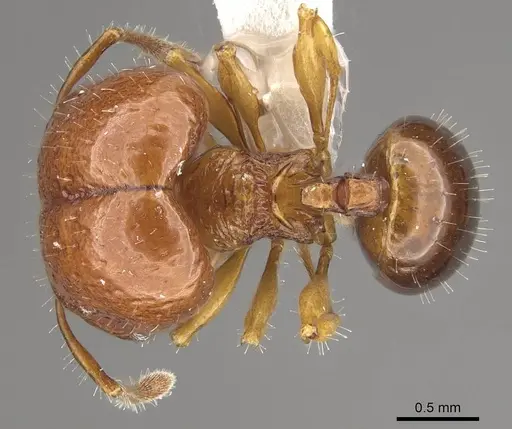
CASENT0911124
Lihat di AntWeb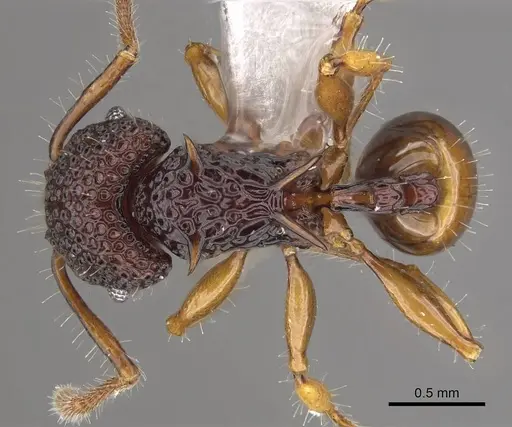
Literatur
Memuat peta distribusi...Memuat produk...