
Vollenhovia minuta
- Tud. név
- Vollenhovia minuta
- Nemzetség
- Crematogastrini
- Alcsalád
- Myrmicinae
- Szerző
- Viehmeyer, 1916
- Elterjedés
- 0 országban megtalálható
Bevezetés
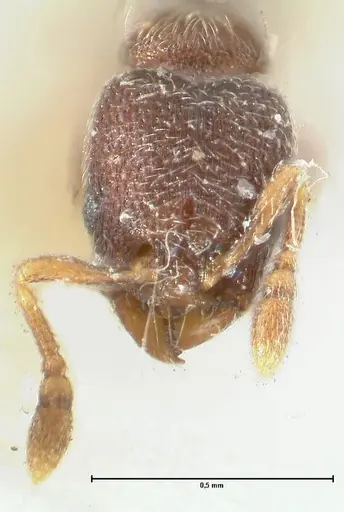
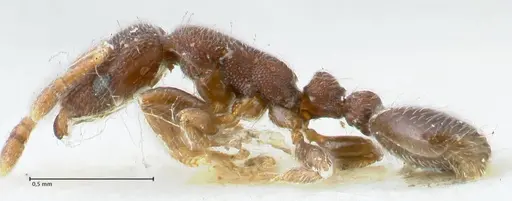
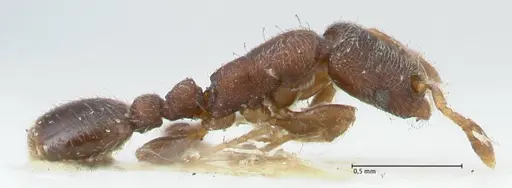
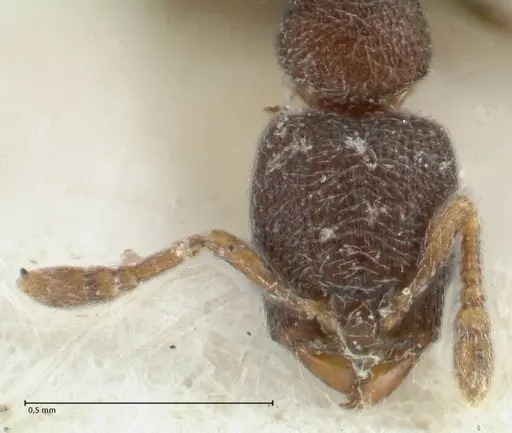
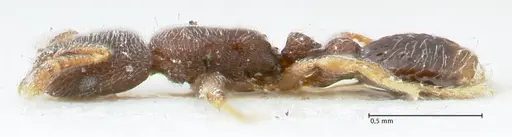
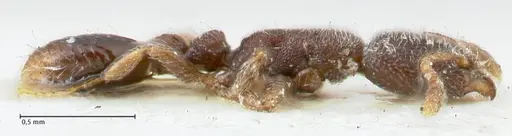
Vollenhovia minuta is a tiny ant species from Southeast Asia, with workers measuring just 1.8-2mm in total length . Its head is much longer than wide, with a flattened profile and very short antennal scapes that don't reach the back of the head. The body lacks propodeal spines and is densely pitted (reticulate-punctate), giving a textured appearance. Originally described as a subspecies of V. brevicornis, it is now considered a distinct species based on morphological differences . This ant lives in old secondary forests and abandoned plantations in Malaysia and Singapore. It nests under the bark of large fallen tree trunks or near the base of live trees . The type locality is Gunong Angsi, Malaysia.
Quick Summary
- Difficulty: Medium, tiny size makes housing challenging, requires careful escape prevention.
- Origin & Habitat: Native to Malaysia and Singapore. Found in old/mature secondary forest and abandoned plantation forests, typically nesting under bark of large fallen tree trunks or near bases of live trees [1].
- Colony Type: Unconfirmed, a single queen was documented in Singapore, but social structure is not known [1].
- Size & Growth:
- Queen: Undocumented, size data unavailable.
- Worker: 1.8-2mm total length [1].
- Colony: Unknown, likely small, possibly under 500 workers based on tiny worker size, but not documented.
- Growth: Unknown, likely slow to moderate.
- Development: Estimated 4-6 weeks based on typical tropical Myrmicinae development. (Direct study is lacking, timeline is inferred from similar small tropical ants.)
- Antkeeping:
- Temperature: Keep at 24-28°C. As a tropical forest species, they need warm, stable conditions year-round.
- Humidity: Moderate to high humidity, keep the nest substrate damp but not waterlogged. Mimic the humid microclimate under bark in forests.
- Diapause: No, tropical species from Singapore and Malaysia, no hibernation required.
- Nesting: Small test tubes with water reservoir, or small plaster/acrylic nests with narrow chambers (3-5mm). They nest under bark in nature, so prefer dark, snug spaces. Avoid large open formicaria.
- Behavior: Very small and docile. Defense mechanism: uses a modified spatulate stinger to smear venom on enemies (typical of Crematogastrini tribe). High escape risk due to tiny size, use fine mesh and seal all gaps. Not aggressive and poses no danger to keepers.
- Common Issues: escape prevention is critical due to minute size, they slip through tiny gaps., small colony size means growth is slow and requires patience., wild-caught colonies may carry parasites that can decimate small populations., humidity control is important, too dry can desiccate, too wet promotes mold., cotton stoppers in test tubes must be packed very tightly to prevent escape.
Housing and Nest Setup
Because of their tiny size, Vollenhovia minuta needs secure housing. Use small test tubes (10-12mm diameter) with a water reservoir for founding. Pack the cotton stopper extremely tight, these ants can squeeze through standard cotton fibers. For established colonies, small plaster or acrylic nests with narrow chambers (3-5mm high) work well. They naturally nest under bark [1], so prefer dark, tight spaces. Avoid large open formicaria. Connect a small outworld for foraging via narrow tubing, and seal all joints with tape or silicone.
Feeding and Diet
Vollenhovia minuta is likely a generalist omnivore. Offer sugar water or diluted honey (1:1 with water) on a small piece of cotton or in a tiny dish. For protein, provide very small prey: fruit flies, pinhead crickets, or small mealworms. Cut larger prey into pieces that match their 2mm worker size. Feed every 2-3 days and remove uneaten food quickly to prevent mold. They may also collect honeydew if given access to plants.
Temperature and Humidity
Maintain temperatures between 24-28°C year-round. This tropical species does not tolerate cool conditions. Use a heating cable or heat mat on one side of the nest to create a gradient, place it above the nest to avoid drying out the water reservoir. For humidity, keep the nest substrate damp (not wet) by watering the substrate or using a moistened cotton plug in test tubes. Avoid direct misting of the nest, mist the outworld instead. These conditions mimic the humid forest understory. [1]
Colony Care and Maintenance
Colonies will likely stay small, expect up to a few hundred workers at most. Growth will be slow, so be patient. Do not disturb the founding queen, leave her alone until nanitics appear. Monitor for mold, especially in humid setups. Because of their minute size, check all escape routes: use fine mesh (0.5mm or smaller) on ventilation, apply fluon to barriers, and examine connections under bright light. Quarantine any wild-caught colonies for several weeks to check for parasites before introducing near other colonies.
Frequently Asked Questions
How long does it take for Vollenhovia minuta to produce first workers?
The exact timeline is unconfirmed. Based on similar small tropical Myrmicinae, first workers (nanitics) likely appear within 4-6 weeks at around 26°C. Growth is slow, colonies may take many months to reach even 20 workers.
Can I keep Vollenhovia minuta in a test tube?
Yes. Use a small-diameter test tube (10-12mm) with a water reservoir. Pack the cotton stopper very tightly, as these tiny ants can squeeze through standard cotton. Secure the connection with tape or a rubber band.
Do Vollenhovia minuta ants sting?
As a Myrmicinae ant, they have a stinger, but it is tiny and used to smear venom rather than pierce (typical of Crematogastrini tribe). They are docile and not aggressive toward keepers, you would need to handle them roughly to provoke any reaction.
What do Vollenhovia minuta eat?
They are generalist omnivores. Offer sugar water or honey as a carbohydrate source. For protein, provide small insects like fruit flies, pinhead crickets, or tiny mealworms. Cut prey into appropriately small pieces given their 2mm size.
Are Vollenhovia minuta good for beginners?
This species is rated medium difficulty. While docile, their minute size makes housing challenging. Escape prevention requires extra attention and specialized barriers. Best for keepers with some experience handling small ant species.
Do Vollenhovia minuta need hibernation?
No. As a tropical species from Singapore and Malaysia, they require warm temperatures year-round (24-28°C). Cool conditions can slow or stop brood development.
How big do Vollenhovia minuta colonies get?
Colony size is not documented. Given the tiny worker size (1.8-2mm), colonies likely reach a few hundred workers at most. Expect slow growth and small colonies compared to larger species.
Why are my Vollenhovia minuta escaping?
Their minute size makes them expert escape artists. Check all connections and openings, they slip through gaps that seem sealed. Use fine mesh (0.5mm or smaller), apply fluon to barriers, and examine connections under bright light.
When should I move Vollenhovia minuta to a formicarium?
Wait until the colony has at least 30-50 workers. They prefer small, snug spaces, a small acrylic or plaster nest with narrow chambers works better than large formicaria. Moving too early can stress the colony.
Can I keep multiple Vollenhovia minuta queens together?
Colony structure is not well documented. A single queen was found in Singapore [1], suggesting single-queen colonies may be typical. Combining unrelated queens is not recommended due to lack of data on founding behavior.
Report an Issue
The current care sheet is based fully on literature. See inconsistencies, or something that's incorrect? Please , it will be resolved after review from an admin. Contributing to the blogs tab also helps providing information, to make us be able to further improve the caresheets. Thank you for your support!
References

Ez a tartási útmutató a következő licenc alatt áll: CC BY-SA 4.0 .
Közösségi blogok
FOCOL1657
Megtekintés az AntWeb-en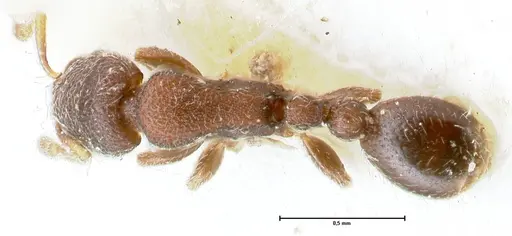
FOCOL1658
Megtekintés az AntWeb-en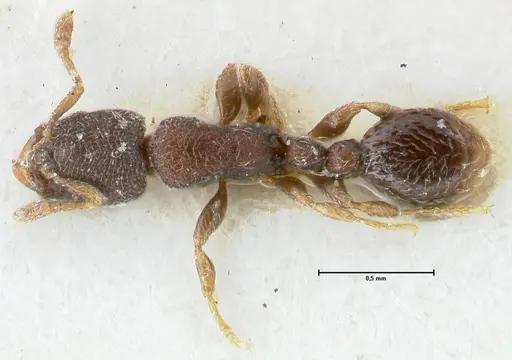
Irodalom
Elterjedési térkép betöltése...Termékek betöltése...