
Tetramorium vombis
- Tud. név
- Tetramorium vombis
- Nemzetség
- Crematogastrini
- Alcsalád
- Myrmicinae
- Szerző
- Bolton, 1976
- Elterjedés
- 0 országban megtalálható
Bevezetés
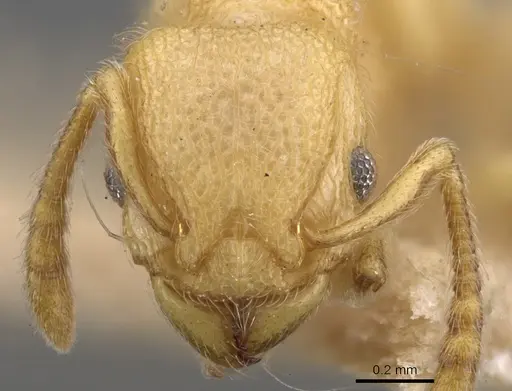
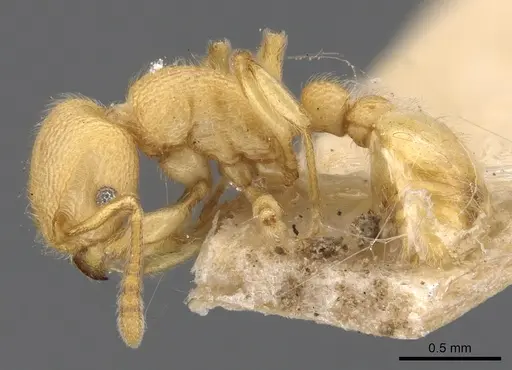
Tetramorium vombis is a small ant species endemic to the Solomon Islands, found only on Guadalcanal and Makira islands . It was originally described by Bolton in 1976 after recognizing that earlier specimens collected by Mann (1919) had been misidentified as T. obesa . The species was officially recorded from the Solomon Islands in 1985 . Like other members of the genus, it has a compact body and a two-segmented petiole, but specific size data is not available from the literature.
Quick Summary
- Difficulty: Medium
- Origin & Habitat: Endemic to the Solomon Islands, recorded from Guadalcanal and Makira [1]. Specific habitat preferences have not been documented, but as a tropical island species, it likely inhabits forests.
- Colony Type: Unknown, no data on colony structure is available for this species.
- Size & Growth:
- Queen: No data available.
- Worker: No data available.
- Colony: Unknown, no colony size data exists.
- Growth: Unknown
- Development: No specific data available. (Development time has not been studied for this species.)
- Antkeeping:
- Temperature: No specific data. As a tropical species, it likely requires warm temperatures around 24-28°C. Avoid cold drafts and sudden drops.
- Humidity: No specific data. Based on its tropical origin, high humidity (70-80%) is likely needed. Keep nest substrate consistently damp but not waterlogged.
- Diapause: No, this tropical species does not require hibernation.
- Nesting: No specific data. Based on the genus, likely nests in soil, under stones, or in rotting wood. Y-tong (AAC) or plaster nests with good moisture retention may work in captivity.
- Behavior: Behavior has not been studied for this species. As a myrmicine ant, it likely has a functional stinger for defense, but aggression toward keepers is probable only if the colony is threatened. Due to the small worker size, escape prevention is important, use tight-fitting lids and fine mesh.
- Common Issues: care information is largely unknown, base decisions on general Tetramorium care and observe colony closely, high humidity combined with poor ventilation can cause mold growth, ensure some airflow, tropical species may struggle if kept cool, maintain stable warmth, small size makes escape easy, use fine mesh and sealed connections, limited data means missteps in temperature, humidity, or diet may be hard to diagnose
Housing and Nest Setup
Since no specific nesting data exists for Tetramorium vombis, general Tetramorium care can be followed. A Y-tong (AAC) or plaster nest that holds humidity well is a good starting point. Use chambers sized for small workers (3-4 mm) with tight passages to help the colony feel secure. A naturalistic setup with moist soil and flat stones or bark may also work. Ensure the nest has a water source to maintain humidity. Cover all ventilation with fine mesh, as small ants can escape through tiny gaps.
Feeding and Diet
Based on the genus, Tetramorium vombis is likely omnivorous. Offer a mix of protein and sugar: small insects (fruit flies, pinhead crickets, mealworm pieces) and diluted honey or sugar water. Feed small amounts several times per week and remove leftover food after 24 hours to prevent mold. Once workers are present, a constant sugar source can be provided.
Temperature and Heating
No specific temperature data is available for this species. As a tropical ant from the Solomon Islands, it likely needs consistently warm conditions around 24-28°C. In cooler climates, use a heating cable placed on top of the nest (not underneath) to provide a gentle heat gradient. Avoid placing the nest near air conditioning vents or drafty windows. Stable warmth year-round is important, as this species does not experience cold winters in its native range.
Humidity Management
Proper humidity is critical for tropical species. Although no specific data exists for T. vombis, its origin suggests high humidity (likely 70-80%) is needed. Keep the nest substrate damp but not waterlogged. In test tubes, maintain a filled water reservoir. In formicariums, check moisture levels regularly. Poor humidity can cause brood death, but too little ventilation with high humidity invites mold, find a balance.
Colony Development
The founding and development of Tetramorium vombis have not been studied. For many Tetramorium species, queens found claustrally (sealing themselves in a chamber and raising the first brood on stored reserves) and colonies grow moderately. However, without specific data, these patterns are speculative. Observe your colony carefully and adjust care based on their response.
Frequently Asked Questions
How long does it take for Tetramorium vombis to produce first workers?
Unknown, no specific data is available. In related Tetramorium species, it can take 6-8 weeks under optimal conditions, but this is a guess.
Do Tetramorium vombis ants sting?
As a member of Myrmicinae, it likely has a functional stinger. However, its effect is probably mild due to the ant's small size, and aggression toward keepers is not documented.
What temperature do Tetramorium vombis need?
No specific data. Since it is a tropical Solomon Islands endemic, it likely requires warm temperatures around 24-28°C year-round. Avoid prolonged exposure below 22°C.
Can I keep multiple queens together?
Unknown, colony structure has not been studied. For most Tetramorium, single-queen colonies are typical, but this cannot be assumed.
Do Tetramorium vombis need hibernation?
No, as a tropical species, it does not require a winter diapause. Keep warm throughout the year.
How big do Tetramorium vombis colonies get?
Unknown, no colony size data exists for this species.
What do Tetramorium vombis eat?
Based on the genus, they are likely omnivorous. Offer small insects (fruit flies, pinhead crickets) for protein and sugar water or diluted honey for carbohydrates.
Are Tetramorium vombis good for beginners?
Not recommended. Their care requirements are poorly known, and maintaining the needed tropical conditions requires experience. Limited data makes troubleshooting difficult.
When should I move my colony to a formicarium?
No species-specific advice exists. As a general rule for small ants, wait until you have at least 20-30 workers before moving them from a test tube to a humid nest setup (e.g., Y-tong or plaster).
Why is my Tetramorium vombis colony declining?
Without specific data, check common issues: temperatures below 22°C, too low or too high humidity, insufficient protein, or excessive disturbance. Adjust based on observation.
Report an Issue
The current care sheet is based fully on literature. See inconsistencies, or something that's incorrect? Please , it will be resolved after review from an admin. Contributing to the blogs tab also helps providing information, to make us be able to further improve the caresheets. Thank you for your support!
References

Ez a tartási útmutató a következő licenc alatt áll: CC BY-SA 4.0 .
Közösségi blogok
CASENT0901057
Megtekintés az AntWeb-en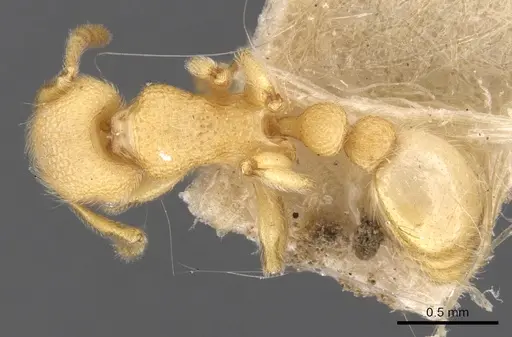
Irodalom
Elterjedési térkép betöltése...Termékek betöltése...