
Tetramorium akengense
- Tud. név
- Tetramorium akengense
- Nemzetség
- Crematogastrini
- Alcsalád
- Myrmicinae
- Szerző
- Wheeler, 1922
- Elterjedés
- 0 országban megtalálható
Bevezetés
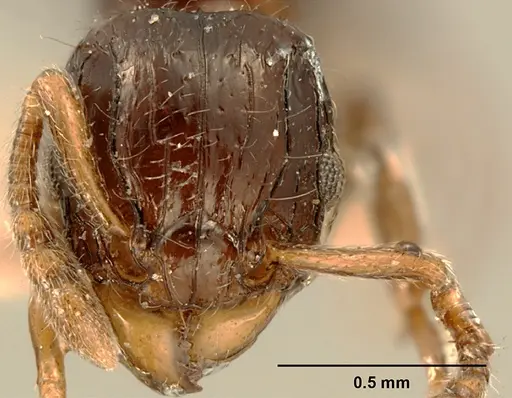
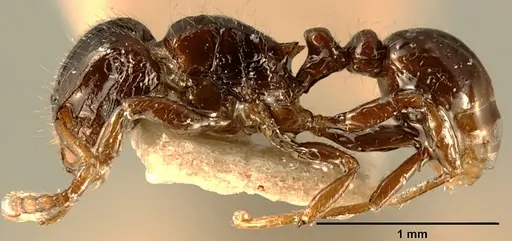
Tetramorium akengense is a small, reddish-brown ant species only known from the Democratic Republic of Congo in central Africa. Workers have a head length of around 0.7 mm (total body length not available) . The species belongs to the Tetramorium weitzeckeri group, specifically the muralti complex, and is recognized by its thickly squamiform petiolar node that appears nearly high nodiform and its postpetiole distinctly wider than the petiole . Originally described in 1922 as a variety of Tetramorium occidentale, it was later synonymized and then revived to full species status in 2010 based on consistent differences in morphology and coloration . This ant is only known from the original type specimens collected in 1913, it has never been seen again. What makes this species unusual is its extreme rarity: it is one of the least-studied ants in the world, with virtually nothing known about its wild biology.
Quick Summary
- Difficulty: Expert
- Origin & Habitat: Democratic Republic of Congo, central Africa, specifically the type locality at Akengi, collected in October 1913 [1][3]
- Colony Type: Completely unconfirmed, only worker specimens are known. No queens, nests, or social organization have ever been documented.
- Size & Growth:
- Queen: Unknown, only worker specimens exist, no queen has ever been collected [1]
- Worker: Head length 0.672-0.722 mm (total body length not available) [1]
- Colony: Unknown, no colony size data exists
- Growth: Unknown, no growth data exists
- Development: Unknown, no developmental data exists for this species (No data on founding, brood development, or colony growth timeline. Any estimates would be entirely speculative.)
- Antkeeping:
- Temperature: Unknown for this species. Based on typical Tetramorium genus patterns and its central African origin, aim for 22-26°C as a starting point. Observe colony activity and adjust accordingly.
- Humidity: Unknown for this species. Central African habitats typically provide moderate to high humidity. Use standard Tetramorium husbandry, keep the nest substrate moderately moist but not waterlogged, with some drier areas available.
- Diapause: Unknown, no data on overwintering or seasonal behavior exists. Central Africa does not experience harsh winters, so diapause may not be required.
- Nesting: Unknown, no natural nesting observations exist. Related Tetramorium species typically nest in soil, under stones, or in rotting wood. Start with standard small Myrmicinae setups (test tubes, Y-tong nests, or plaster nests).
- Behavior: Behavior is completely unobserved and undocumented. Based on subfamily patterns, workers possess a spatulate stinger used to smear venom onto enemies (a trait of the Crematogastrini tribe). Tetramorium ants are typically ground-nesting, foraging for small prey and tending aphids for honeydew. Given their very small size, escape prevention is critical, standard barriers like fluon or oil should be used.
- Common Issues: no captive breeding data exists, this species has never been kept in captivity, wild colonies may be impossible to obtain since the species has only been collected once in 1913 and may be extremely rare or extinct, queen founding behavior is unknown, no data on claustral or semi-claustral founding, diet preferences are completely unstudied, temperature and humidity requirements are inferred, not confirmed
Species Overview and Identification
Tetramorium akengense is a member of the Afrotropical Tetramorium weitzeckeri species group, specifically the muralti species complex [1][2]. This complex includes several closely related species that are often hard to tell apart. T. akengense is distinguished by its thickly squamiform petiolar node (less than twice as wide as long) that appears nearly high nodiform in side view. The postpetiole is distinctly wider than the petiole (PPI 119-129), and the body is uniformly reddish brown, unlike the very dark brown or black of the closely related Tetramorium occidentale [1]. Workers are small, with head lengths around 0.7 mm. The front edge of the clypeus is distinctly notched in the middle, and the propodeal spines are moderate in size. The species was first described in 1922 as a subspecies of Tetramorium occidentale, later synonymized, and finally raised to full species status in 2010 based on detailed morphological work [1].
Distribution and Collection History
Tetramorium akengense is known only from its type locality in the Democratic Republic of Congo. The type specimens were collected in October 1913 by H.O. Lang from Akengi [1][3]. This single collection event represents the entire known distribution, the species has never been recorded from any other location, despite over a century since its initial discovery. The Democratic Republic of Congo has a tropical climate with warm temperatures year-round. Beyond the basic location, nothing is known about the habitat or ecology of this species. No additional specimens have been collected in any scientific survey since 1913 [3]. This extreme rarity makes it one of the least-known ant species in the entire Tetramorium genus.
Keeping an Unstudied Species, General Guidelines
Keeping Tetramorium akengense would be a pioneering effort since this species has never been kept in captivity and almost nothing is known about its biology. The guidance below is based on typical Tetramorium genus patterns and should be treated as experimental. For housing, start with standard small Myrmicinae setups: test tubes for founding, or Y-tong (AAC) or plaster nests with chambers scaled to the tiny workers (under 1 mm head). Temperature should be 22-26°C, fitting both typical Tetramorium needs and the species' central African origin. Humidity should be moderate, keep the nest substrate moist but allow some drying between waterings. For feeding, offer small protein sources like fruit flies, springtails, or tiny insects. Sugar water or honey may also be accepted, but this is completely untested. Because this species has never been kept, be ready for experimentation. Document everything you do, any successful husbandry would represent valuable new knowledge for the antkeeping community.
Legal and Ethical Considerations
There are no specific legal restrictions documented for Tetramorium akengense, but important ethical considerations apply. This species is known only from the Democratic Republic of Congo and has never been found again in over 100 years. If wild populations still exist, they could be extremely fragile. Harvesting them could threaten the species. Any acquisition would likely require working with scientific institutions. For antkeepers interested in rarely kept African Tetramorium species, more common species like Tetramorium bicolinum or Tetramorium sericeiventre may be better candidates. If you do obtain this species through legitimate channels, consider publishing observations, it would represent genuinely new knowledge about one of the world's least-known ants.
Frequently Asked Questions
Can I keep Tetramorium akengense as a pet ant?
This species has never been kept in captivity, and no captive colonies exist in the antkeeping hobby. It is known only from a handful of worker specimens collected in 1913. While theoretically possible if you obtained a colony through scientific channels, it would be the first captive breeding attempt ever. More commonly available Tetramorium species are far better choices for hobbyists.
What do Tetramorium akengense ants eat?
Diet is completely unstudied for this species. Based on typical Tetramorium behavior, they likely accept small live prey (fruit flies, springtails, tiny insects) and may tend aphids for honeydew. Sugar water or honey may be accepted, but this is entirely unconfirmed. Start with small live prey and observe acceptance, documenting any findings.
How big do Tetramorium akengense colonies get?
Colony size is completely unknown, no colony has ever been documented. No estimate can be reliably given.
Do Tetramorium akengense ants sting?
Tetramorium ants have functional stingers (subfamily Myrmicinae). Based on the tribe Crematogastrini, workers likely have a modified spatulate stinger used to smear venom rather than pierce. However, no specific observations exist for this species. Given their very small size (head length ~0.7 mm), any sting would be barely noticeable to humans.
What temperature do Tetramorium akengense ants need?
Temperature requirements are unconfirmed. Based on its central African origin and typical Tetramorium patterns, aim for 22-26°C. This is an estimate, not a confirmed range. Adjust if workers appear sluggish (too cold) or cluster away from heat sources (too warm).
Do Tetramorium akengense ants need hibernation?
Diapause requirements are unknown. The Democratic Republic of Congo has a tropical climate without harsh winters, so a true diapause may not be necessary. Some seasonal slowdowns may occur. If keeping this species, maintain stable temperatures year-round and watch for seasonal changes in activity.
Is Tetramorium akengense a good species for beginners?
No. This species is not suitable for beginners or even intermediate keepers. It has never been kept in captivity, no care information exists, and colonies are essentially unavailable. The complete lack of information makes keeping it entirely experimental with high risk of failure. Beginners should start with well-documented species like Lasius niger or common Camponotus or Tetramorium species.
Where does Tetramorium akengense live in the wild?
The species is known only from the Democratic Republic of Congo, specifically the type locality at Akengi, collected in October 1913 [1][3]. No additional wild populations have been documented. The exact habitat is unknown, but central African Tetramorium typically live in forest floors, savanna, or grassy areas where they nest in soil or under stones.
How long does it take for Tetramorium akengense to develop from egg to worker?
Development time is completely unstudied. No data exists for this species.
Can I keep multiple Tetramorium akengense queens together?
Colony structure (monogyne vs polygyne) is completely unconfirmed. No queen specimens have ever been collected. Do not attempt to combine unrelated queens, this has not been studied and would be speculative.
Report an Issue
The current care sheet is based fully on literature. See inconsistencies, or something that's incorrect? Please , it will be resolved after review from an admin. Contributing to the blogs tab also helps providing information, to make us be able to further improve the caresheets. Thank you for your support!
References

Ez a tartási útmutató a következő licenc alatt áll: CC BY-SA 4.0 .
Közösségi blogok
ZFMKHYM20096176
Megtekintés az AntWeb-en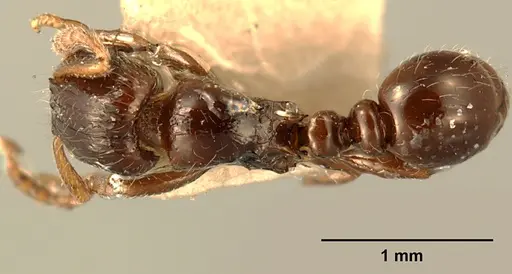
Irodalom
Elterjedési térkép betöltése...Termékek betöltése...