
Temnothorax laurae
- Tud. név
- Temnothorax laurae
- Nemzetség
- Crematogastrini
- Alcsalád
- Myrmicinae
- Szerző
- Emery, 1884
- Elterjedés
- 0 országban megtalálható
Bevezetés
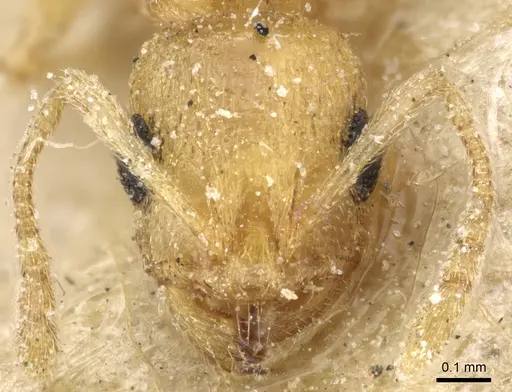
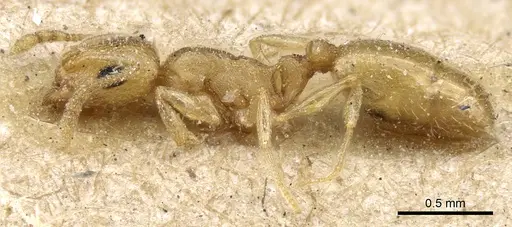
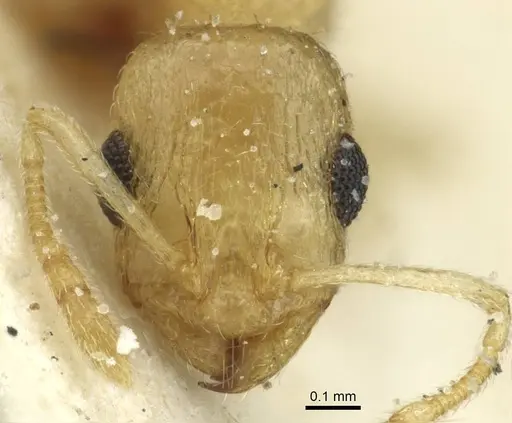
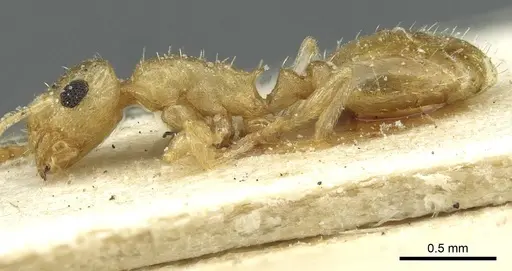
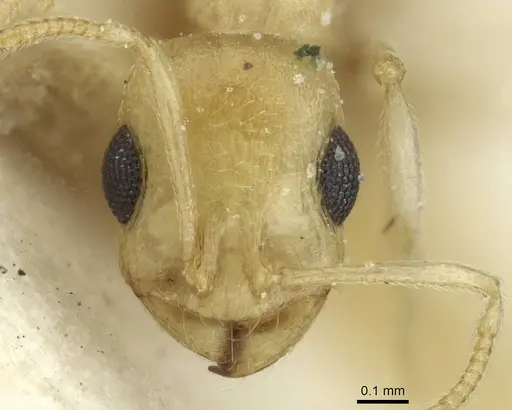
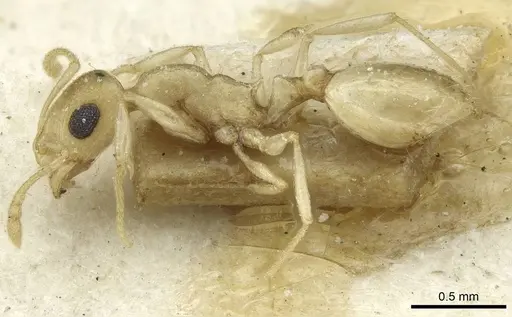
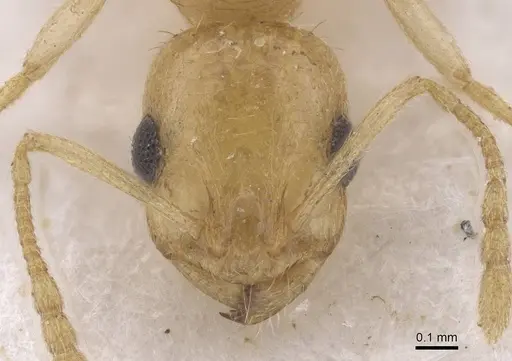
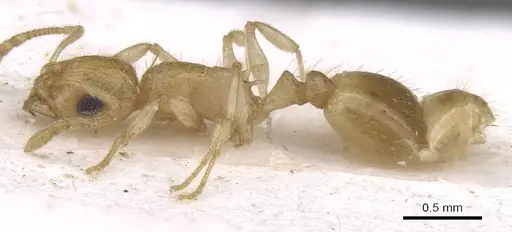
Temnothorax laurae is a tiny, pale ant native to North Africa. Workers have a light reddish-brown or rust color that blends perfectly with sandy soil . They are nocturnal, spending the day motionless in underground nests and emerging at night. Their eyes are enlarged compared to related diurnal species - an adaptation for low-light activity . The species was described by Emery in 1884 from Tunisia, and is known from Tunisia, Morocco (High Atlas), and the central Sahara up to 1560 m elevation . Three subspecies are recognized: T. l. antoniae, T. l. colettae, and T. l. rosae.
Quick Summary
- Difficulty: Medium
- Origin & Habitat: Northern Africa: Tunisia, Morocco (High Atlas), and the central Sahara (Hoggar). They nest in compacted sand, often under a small debris crater 2-3 cm wide with an entrance hole about 2 mm in diameter [1][2][4].
- Colony Type: Unconfirmed, likely single-queen (monogyne) based on genus patterns, but no specific data exists for this species.
- Size & Growth:
- Queen: Size data unavailable, no direct measurements recorded.
- Worker: Size data unavailable, based on Temnothorax genus, workers are typically 2-3 mm.
- Colony: Unknown, no reliable estimates for this species.
- Growth: Moderate (estimated from genus)
- Development: Estimated 6-8 weeks at 20-24°C, based on typical Temnothorax development. (Specific data for this species is lacking, timeline is inferred.)
- Antkeeping:
- Temperature: Based on its North African desert habitat, keep at 20-28°C with a temperature gradient. Avoid constant high heat above 30°C. Room temperature is often suitable.
- Humidity: Low to moderate. The nest substrate should be barely moist, never waterlogged. Provide a dry area with a slightly damp patch, mimicking their natural compacted sand environment.
- Diapause: Unknown, given its North African origin, a cold diapause may not be necessary. A mild winter rest at 12-15°C for 2-3 months might be beneficial, but this is unconfirmed.
- Nesting: In nature they nest in compacted sand with a tiny entrance hole (~2 mm) [2]. In captivity use a Y‑tong (AAC) or plaster nest with small, snug chambers. Add a thin layer of sand or clay for nesting. Avoid large open spaces.
- Behavior: Nocturnal and docile. Workers freeze when disturbed, relying on camouflage [1]. They are completely harmless to humans. Due to their very small size, escape prevention is critical, use fine mesh and seal all gaps.
- Common Issues: escape risk is high because of their tiny size, use tight-fitting lids and fine mesh on ventilation., nocturnal activity means you may see little movement during the day, use red light to observe at night., founding behavior is unconfirmed, be patient with wild‑caught queens or small colonies., overheating is a risk, avoid direct sunlight or heat sources near the nest., dry conditions are preferred, keep substrate mostly dry, not wet.
Housing and Nest Setup
Temnothorax laurae is a tiny ant that needs appropriately small housing. Use a Y‑tong (AAC) or plaster nest with small chambers, they naturally nest in compacted sand with a 2 mm entrance hole [2]. Provide a thin layer of sandy substrate they can interact with, but they don’t need deep soil. The outworld should be simple with a small water tube and feeding area. Because they are nocturnal, avoid bright lights near the nest. Use fine mesh on any ventilation openings, these ants can squeeze through tiny gaps [1].
Feeding and Diet
Like most Temnothorax, they are likely omnivorous. Offer sugar water, honey, or diluted maple syrup as a constant energy source. Provide small protein sources such as fruit flies, pinhead crickets, or tiny mealworm pieces. Since they are nocturnal, offer food in the evening to encourage consumption. Remove uneaten prey after 24-48 hours to prevent mold. Feed in small amounts.
Temperature and Seasonal Care
This North African species prefers warm conditions. Keep the nest at 20-28°C, with a cooler spot around 18-20°C if possible. Avoid temperatures above 30°C for long periods. They have been found at elevations up to 1560 m, suggesting some tolerance for cooler nights [1]. Diapause requirements are unknown, if the colony slows down in winter, reduce feeding and consider a mild rest at 12-15°C for 2-3 months, but this is not proven.
Behavior and Observation
Temnothorax laurae is nocturnal and cryptic. Workers have a pale color (brightness value 72.7) and enlarged eyes, adaptations for night activity [3]. They freeze when disturbed, making them hard to spot against sand [1][2]. They are docile and non‑aggressive. Their defense mechanism, typical of the tribe Crematogastrini, involves smearing venom from a modified stinger rather than stinging. Although non‑harmful to humans, you should avoid handling them because of their tiny size.
Acquiring and Establishing a Colony
This species is rarely available in the hobby. If collecting in North Africa (where legal), look for their characteristic small nest craters (2-3 cm diameter) in compacted sand [2]. Queens may be found in nests during the active season. Founding behavior is unconfirmed, if you catch a queen, provide a small test tube with a water reservoir and keep it dark and quiet. Be patient, growth is expected to be slow. There is no confirmed information on colony foundation.
Frequently Asked Questions
How long does it take for Temnothorax laurae to produce first workers?
Since founding behavior is unconfirmed, we can only estimate. Based on typical Temnothorax, expect 6-8 weeks from egg to worker at 20-24°C. Actual data for this species is lacking.
What do Temnothorax laurae eat?
They are likely omnivorous. Provide sugar water, honey, or syrup as an energy source, and small insects (fruit flies, tiny crickets) for protein. Feed in the evening since they are nocturnal.
Do Temnothorax laurae ants sting?
They belong to the tribe Crematogastrini, which have a modified stinger used for smearing venom rather than piercing. They are harmless to humans, but you should avoid direct contact due to their small size and escape risk.
Can I keep Temnothorax laurae in a test tube?
Yes, a test tube with a water reservoir works well for a founding queen or small group. Once the colony grows and needs more space, move them to a small Y‑tong or plaster nest with snug chambers.
What temperature do Temnothorax laurae need?
Keep the nest at 20-28°C, with a cooler area available. Avoid temperatures above 30°C. Room temperature is usually fine. They come from a warm climate but can handle cooler nights.
Do Temnothorax laurae need hibernation?
This is unknown. Given their North African origin, a full hibernation may not be required. If the colony becomes less active in winter, you can try a mild rest at 12-15°C for 2-3 months, but it is not confirmed.
How big do Temnothorax laurae colonies get?
No colony size data exists for this species. Most Temnothorax species have colonies of several dozen to a few hundred workers. Growth is expected to be moderate.
Why are my Temnothorax laurae not moving?
That is normal. They are nocturnal and often freeze when disturbed, a camouflage strategy. You will see most activity in the evening or under dim red light.
Are Temnothorax laurae good for beginners?
They are moderate difficulty. Their tiny size makes escape prevention challenging, and specific care details are unknown. They are better suited to intermediate keepers.
When should I move my colony to a formicarium?
Move them when the test tube becomes crowded, when you see workers frequently outside the cotton and the queen is surrounded by brood. Choose a small nest with chambers that match their size.
Report an Issue
The current care sheet is based fully on literature. See inconsistencies, or something that's incorrect? Please , it will be resolved after review from an admin. Contributing to the blogs tab also helps providing information, to make us be able to further improve the caresheets. Thank you for your support!
References

Ez a tartási útmutató a következő licenc alatt áll: CC BY-SA 4.0 .
Közösségi blogok
CASENT0904742
Megtekintés az AntWeb-en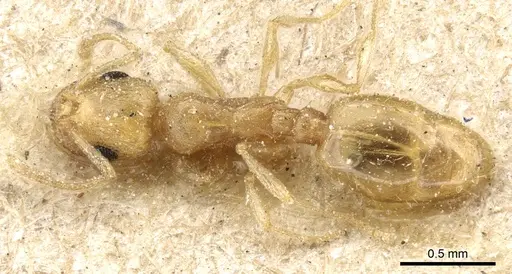
CASENT0912955
Megtekintés az AntWeb-en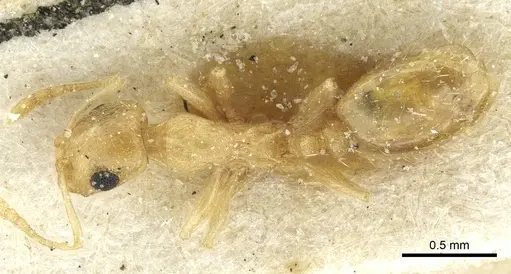
CASENT0912956
Megtekintés az AntWeb-en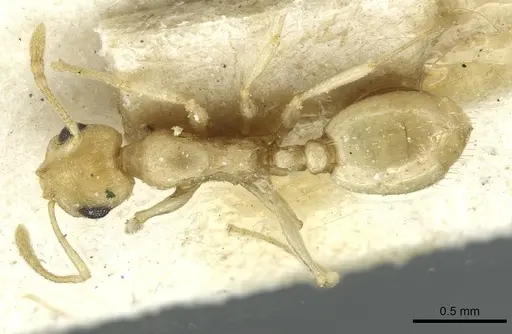
CASENT0915393
Megtekintés az AntWeb-en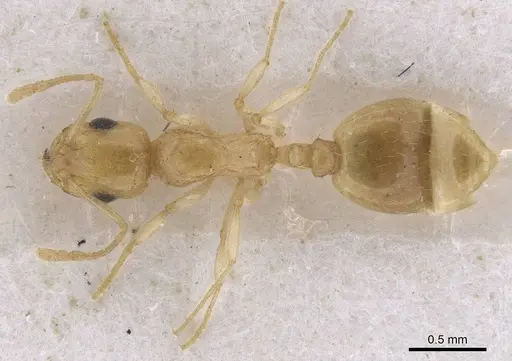
Irodalom
Elterjedési térkép betöltése...Termékek betöltése...