
Temnothorax fultonii
- Tud. név
- Temnothorax fultonii
- Nemzetség
- Crematogastrini
- Alcsalád
- Myrmicinae
- Szerző
- Forel, 1902
- Elterjedés
- 0 országban megtalálható
Bevezetés
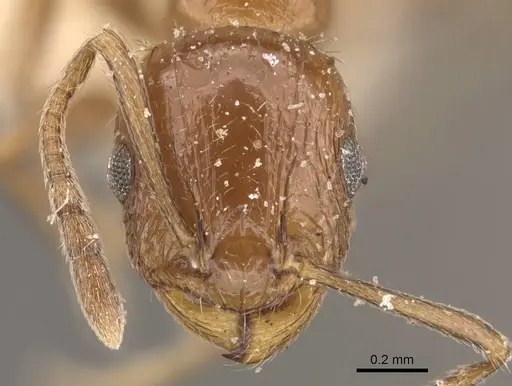
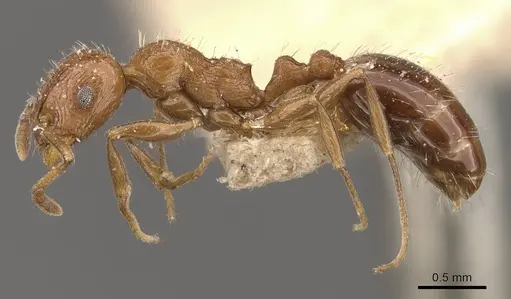
Temnothorax fultonii is a tiny bicolored ant native to the Himalayan regions of northern India. Workers measure 2.4-3.1 mm and feature a distinctive color pattern: the head is chestnut brown, while the mesosoma, legs, antennae, petiole, and postpetiole are yellowish brown, with a dark brown gaster . This species is found in Himachal Pradesh and Jammu & Kashmir, at elevations between 1500-3150 meters above sea level . It is a cold-climate specialist adapted to cooler mountain conditions .
Quick Summary
- Difficulty: Medium
- Origin & Habitat: Himalayan regions of northern India (Himachal Pradesh, Jammu & Kashmir) at elevations of 1500-3150 meters [3][4]. This is a high-altitude, cold-climate species endemic to the Himalayas [5].
- Colony Type: Single-queen colonies are likely based on typical Temnothorax patterns, but this has not been confirmed for this species. Workers are small and colonies are modest in size.
- Size & Growth:
- Queen: Unconfirmed, likely 4-5 mm based on genus patterns
- Worker: 2.4-3.1 mm [1][2]
- Colony: Unknown based on limited data, typical Temnothorax colonies are modest, rarely exceeding a few hundred workers
- Growth: Moderate
- Development: Estimated 6-10 weeks at optimal temperature based on related species (Development time is estimated from typical Temnothorax patterns since specific data for this species is unavailable.)
- Antkeeping:
- Temperature: Keep cool compared to most ants, aim for 15-22°C. This is a cold-climate specialist adapted to Himalayan temperatures, so avoid overheating. Room temperature is often ideal. Avoid temperatures above 25°C.
- Humidity: Moderate humidity around 50-70%. These ants come from Himalayan environments where moisture levels vary with elevation. Provide a moisture gradient so ants can choose their preferred spot.
- Diapause: Yes, this species requires a winter dormancy period given its high-altitude origin. Provide 3-4 months of cold temperatures (5-10°C) during winter months, roughly November to February in the Northern Hemisphere. Avoid prolonged dormancy beyond 4 months.
- Nesting: Prefers small cavities, in nature they likely nest under stones or in small rock crevices. Y-tong (AAC) nests with narrow chambers work well, or small test tube setups. Provide tight-fitting chambers scaled to their tiny size.
- Behavior: Generally peaceful and non-aggressive. Workers are small but active foragers. Escape prevention is critical due to their tiny 2.4-3.1 mm size, they can squeeze through remarkably small gaps. Use fine mesh barriers and ensure all openings are sealed. They are cold-active rather than heat-seeking.
- Common Issues: escape prevention is critical, their tiny size means they can slip through gaps that seem impossible, overheating is a major risk, keep them cool, never above 25°C, colonies stay small, don't expect large worker numbers, this is normal for the species, winter dormancy is required, failing to provide diapause can weaken or kill colonies, wild-caught colonies may have parasites given their remote Himalayan origin
Temperature and Cooling Requirements
This is the most critical aspect of keeping Temnothorax fultonii. As a cold-climate specialist from high-altitude Himalayas, these ants need cooler temperatures than most ant species. Keep the nest area between 15-22°C, with room temperature often being ideal. Never expose them to temperatures above 25°C, overheating can be fatal. During summer months, ensure the colony is not near heat sources or in direct sunlight. A slight temperature gradient allows workers to choose their preferred spot. In winter, provide natural seasonal cooling. These ants are adapted to survive harsh Himalayan winters, so cold periods are essential for their long-term health [3][5].
Housing and Nest Setup
Due to their tiny size (workers are only 2.4-3.1 mm), these ants need appropriately scaled housing [1][2]. Y-tong (AAC) nests with narrow chambers work well, as do small test tube setups. The chambers should be tight-fitting, large open spaces stress these small ants. Provide a water tube for humidity but avoid flooding. A small piece of cotton inside the test tube works as both a water reservoir and substrate. For the outworld, keep it simple with a small foraging area. Escape prevention is critical, these ants can squeeze through gaps that seem impossibly small. Use fine mesh on any ventilation holes and ensure all lids fit tightly.
Feeding and Diet
Like most Temnothorax species, these ants are omnivorous. Offer small protein sources such as tiny insects (fruit flies, small mealworms, springtails), and provide sugar water or honey as an energy source. Feed small amounts 2-3 times per week, removing any uneaten food after 24 hours. Given their tiny size, prey items should be appropriately scaled, very small pieces or small live prey. Sugar water can be offered on a soaked cotton ball. Monitor acceptance, some colonies prefer protein while others favor sugars. Remove any moldy food promptly to prevent contamination.
Winter Dormancy and Diapause
Temnothorax fultonii requires a winter dormancy period due to its high-altitude Himalayan origin. This is not optional, failing to provide proper diapause can weaken or kill the colony over time [3][5]. Reduce temperatures to roughly 5-10°C for 3-4 months, typically from November through February in the Northern Hemisphere. You can move the colony to an unheated garage, basement, or refrigerator (using a separate ant-only fridge). Do not feed during dormancy. Keep the substrate slightly moist but not wet. In spring, gradually warm the colony back to room temperature over several days before resuming feeding. The colony will become active again as temperatures rise.
Colony Development and Growth
Colonies remain relatively small compared to many ant species. Based on typical Temnothorax patterns, expect colonies to reach perhaps 100-200 workers at maturity, though this is not confirmed for this species. Growth rate is moderate, founding colonies may take several months to produce their first workers (nanitics), and several years to reach moderate size. Founding behavior is unconfirmed, but queens likely seal themselves in (claustral) to raise the first workers, typical of the genus. Be patient with founding colonies, these small ants take time to develop. The small colony size makes them suitable for keepers with limited space.
Behavior and Temperament
These are peaceful, non-aggressive ants that pose no threat to keepers. Workers are active foragers but not particularly aggressive toward each other or other colonies. Their primary defense is smearing venom using a modified stinger, typical of the Crematogastrini tribe. They may also bite if threatened. Their tiny size makes them difficult to observe in detail, but they are interesting to watch as they navigate their environment. They are cold-active rather than heat-seeking, so you will see more activity at room temperature or slightly cooler conditions. They do not form large supercolonies, each nest remains small and discrete.
Frequently Asked Questions
What temperature do Temnothorax fultonii ants need?
Keep them cool, between 15-22°C is ideal. This is a cold-climate species from high-altitude Himalayas, so never let temperatures exceed 25°C. Room temperature is often perfect. Overheating is one of the biggest mistakes keepers make with this species [3][5].
How big do Temnothorax fultonii colonies get?
Colonies remain relatively small, likely under a few hundred workers at maturity. This is normal for the genus, they are small ants with modest colony sizes compared to many tropical species. Exact colony size limits are unknown.
Do Temnothorax fultonii ants need hibernation?
Yes, they require a winter dormancy period. Reduce temperatures to 5-10°C for 3-4 months during winter (roughly November to February in the Northern Hemisphere). This is essential for their health given their high-altitude Himalayan origin [3][5].
What do Temnothorax fultonii eat?
They are omnivorous. Offer small protein sources like tiny insects (fruit flies, springtails) and sugar water or honey. Feed small amounts 2-3 times per week, removing uneaten food after 24 hours.
Are Temnothorax fultonii good for beginners?
They are intermediate difficulty. The main challenges are maintaining cool temperatures, providing proper winter dormancy, and preventing escapes due to their tiny size. If you can meet their temperature needs, they are manageable.
How long does it take for Temnothorax fultonii to produce first workers?
Estimated 6-10 weeks from egg to first worker at optimal temperature, based on typical Temnothorax development patterns. Founding colonies require patience as these small ants develop slowly.
Can I keep multiple Temnothorax fultonii queens together?
This is not recommended. Colony structure is unconfirmed, but most Temnothorax species are monogyne. Keeping multiple queens together would likely lead to aggression. It's safest to keep each queen separate.
How do I prevent Temnothorax fultonii from escaping?
Escape prevention is critical due to their tiny 2.4-3.1 mm size. Use fine mesh on all ventilation, ensure lids fit tightly, and seal any gaps. These ants can squeeze through remarkably small spaces that would hold larger species [1][2].
Where is Temnothorax fultonii found in the wild?
This species is endemic to the Himalayas, specifically found in Himachal Pradesh and Jammu & Kashmir, India at elevations between 1500-3150 meters above sea level [3][4].
What makes Temnothorax fultonii different from other ants?
They are cold-climate specialists adapted to high-altitude Himalayan environments. Their bicolored appearance (chestnut brown head, yellowish body, dark gaster) helps distinguish them. They require cooler temperatures and winter dormancy that most tropical ant species do not need [3][1][5].
Report an Issue
The current care sheet is based fully on literature. See inconsistencies, or something that's incorrect? Please , it will be resolved after review from an admin. Contributing to the blogs tab also helps providing information, to make us be able to further improve the caresheets. Thank you for your support!
References

Ez a tartási útmutató a következő licenc alatt áll: CC BY-SA 4.0 .
Közösségi blogok
CASENT0909052
Megtekintés az AntWeb-en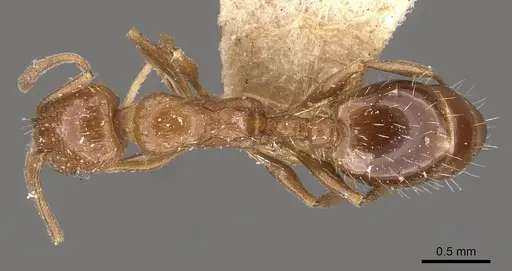
Irodalom
Elterjedési térkép betöltése...Termékek betöltése...