
Technomyrmex reductus
- Tud. név
- Technomyrmex reductus
- Nemzetség
- Tapinomini
- Alcsalád
- Dolichoderinae
- Szerző
- Bolton, 2007
- Elterjedés
- 0 országban megtalálható
Bevezetés
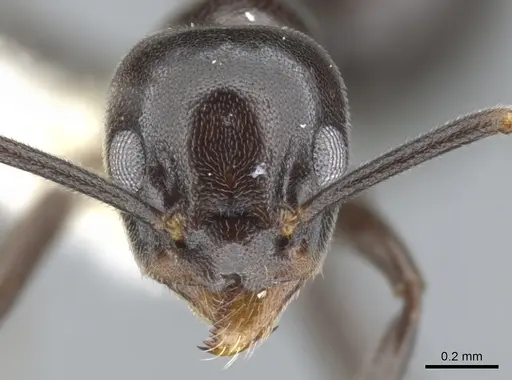
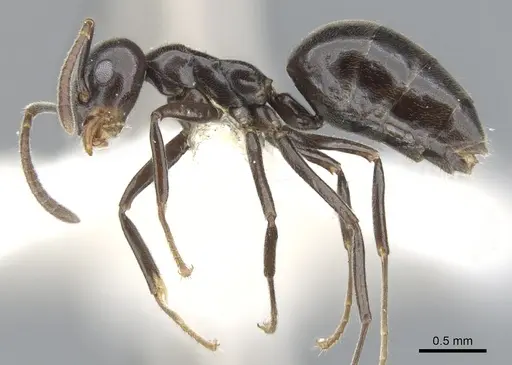
Technomyrmex reductus is a small, dark brown ant from Southeast Asia. It is found in Borneo, Thailand, Malaysia, and Brunei . Workers are very small, measuring 2.87-3.7 mm in total length . The body is mostly bare: only the tip of the abdomen has tiny, microscopic hairs . A unique feature is the palp formula of 4,3 (four maxillary, three labial palps) which is shared only with the unrelated African species T. lujae . These ants live in lowland rainforests at 200-500 m altitude and also in limestone forest. Workers forage on trees like Crerodendron . Little is known about this species in captivity. As a Dolichoderinae ant, they lack a functional stinger. Instead they defend themselves by exuding sticky, foul-smelling secretions from an anal gland. Their small size and secretive habits make them a challenge even for experienced keepers.
Quick Summary
- Difficulty: Expert
- Origin & Habitat: Borneo, Thailand, Malaysia, Brunei Darussalam, lowland rainforests at 200-500 m altitude, also limestone forest [2][1]
- Colony Type: Colony structure is unconfirmed, likely monogyne (single queen) based on typical genus patterns, but no specific studies exist
- Size & Growth:
- Queen: Unconfirmed, queen has not been described in scientific literature
- Worker: 2.87-3.7 mm total length [2][1]
- Colony: Unknown, no colony size data available
- Growth: Unknown, no development data available
- Development: Unknown, no direct measurements exist. Based on typical Dolichoderine patterns, expect 6-10 weeks at optimal temperature, but this is an estimate (No published development data exists for this species. Related Technomyrmex species suggest moderate development times, but T. reductus specifically has not been studied)
- Antkeeping:
- Temperature: Likely requires warm temperatures typical of tropical lowland rainforests, around 24-28°C [2]. Room temperature (22-25°C) is probably suitable. Likely should not drop below 22°C.
- Humidity: Keep the nest substrate consistently moist but not waterlogged. These ants come from damp forest habitats. Provide good ventilation to prevent mold while keeping humidity high.
- Diapause: Unlikely, as a tropical species from lowland rainforests, they probably do not require a true diapause. However, a slight reduction in temperature during winter months may be appropriate.
- Nesting: No specific nesting data exists. Based on habitat (lowland rainforest, limestone forest), they likely nest in soil, rotting wood, or under stones. A naturalistic setup with moist substrate and multiple chambers works well. Test tubes are suitable for founding, but a larger setup may be preferred.
- Behavior: Workers are shy and non-aggressive. They forage individually on vegetation, collecting honeydew and small prey [2]. They pose no threat to keepers. Escape prevention is critical, at under 3 mm, they can squeeze through remarkably small gaps. Use fine mesh and tight-fitting lids.
- Common Issues: escape prevention is critical, their tiny size means they can slip through standard barrier setups, no captive care information exists, you will be pioneering husbandry for this species, slow colony growth is likely, expect months or years to reach significant numbers, humidity management is tricky, they need damp conditions but mold can quickly become a problem, wild-caught colonies may have parasites or diseases with no documented treatment
Housing and Nest Setup
Housing Technomyrmex reductus requires careful attention to their tiny size. Standard test tube setups can work for founding colonies, but pack the cotton very tightly, these ants can squeeze through surprisingly small gaps. For established colonies, a naturalistic terrarium works best: use a moist substrate layer (coconut fiber or soil mix) about 3-4 cm deep, with pieces of rotting wood, bark, or stones as cover. The enclosure should have excellent escape prevention, fine mesh on all ventilation holes and a barrier of fluon or similar around the rim. Because they forage on vegetation in the wild, include some vertical surfaces or plants for them to climb. A small water reservoir helps maintain humidity without over-misting. [2][1]
Feeding and Diet
Based on the single observation of workers foraging on a Crerodendron tree, these ants likely follow the typical Dolichoderine diet of honeydew, nectar, and small insects [2]. Offer a constant sugar source (sugar water, honey, or diluted honeydew), replace every 2-3 days to prevent fermentation. For protein, provide tiny prey items: fruit flies, pinhead crickets, small mealworms, or other micro-insects. Crush larger prey so tiny workers can handle it. Feed every 2-3 days, removing uneaten prey to prevent mold. Since no captive feeding observations exist, be prepared to experiment with what your colony accepts.
Temperature and Humidity
Keep these tropical ants warm, aim for 24-28°C in the nest area [2]. Room temperature (22-25°C) in most homes should be adequate, but a heating cable on one side of the enclosure can create a gradient if needed. Place heating on top of the nest material, not under it, to avoid drying out the substrate too quickly. Humidity is critical: maintain consistently moist substrate without it becoming waterlogged. Check daily and mist as needed, the surface should feel damp but not have standing water. Good ventilation helps prevent mold while maintaining humidity. Likely should not drop below 22°C.
Behavior and Colony Dynamics
Technomyrmex reductus workers are small, dark, and inconspicuous. They are not aggressive and do not defend their nest vigorously, this makes them poor competitors against larger or more aggressive ant species. Workers forage individually rather than in trails, searching for honeydew on plants and small arthropods [2]. As Dolichoderines, they can exude sticky, foul-smelling secretions from an anal gland when threatened, but this is a minor defense and unlikely to affect keepers. Colonies likely remain small compared to many common ant species, expect slow growth over many months. The queen has never been scientifically described, so founding behavior and colony structure are educated guesses based on related species.
Challenges and Known Problems
This species presents significant challenges for antkeepers. First, they are rarely available, T. reductus is not commonly collected or traded. Second, no established captive husbandry protocols exist, you will essentially be experimenting. Third, their tiny size makes everything harder: escape prevention requires fine mesh, feeding requires appropriately-sized prey, and observing colony behavior requires patience. Fourth, growth will likely be very slow, antkeepers accustomed to fast-growing Camponotus or Formica species may lose patience. Finally, wild-caught colonies may carry parasites or pathogens with no documented treatment. Start with the smallest possible colony and be prepared for a multi-year commitment.
Frequently Asked Questions
How long does it take for Technomyrmex reductus to produce first workers?
Unknown, no development data exists for this species. Based on typical Dolichoderine development, expect 6-10 weeks from egg to worker at optimal temperature (around 26°C), but this is purely an estimate. Related Technomyrmex species suggest moderate development times, but T. reductus specifically has never been studied.
Can I keep Technomyrmex reductus in a test tube setup?
Yes, test tubes can work for founding colonies, but you must use excellent escape prevention. These ants are under 3 mm and can squeeze through tiny gaps. Pack cotton tightly and consider adding a fluon barrier. For larger colonies, transition to a naturalistic setup with moist substrate.
Are Technomyrmex reductus good for beginners?
No, this is an expert-level species. They are rarely available, no captive husbandry information exists, their tiny size creates practical challenges, and colony growth is likely very slow. Beginners should start with species like Lasius niger, Camponotus species, or Messor species that have well-documented care requirements.
What do Technomyrmex reductus eat?
Based on their foraging behavior (foraging on trees), they likely eat honeydew, nectar, and small insects. Offer sugar water or honey as a constant energy source. For protein, provide tiny prey like fruit flies, small mealworms, or micro-crickets. No captive feeding observations exist, so be prepared to experiment.
How big do Technomyrmex reductus colonies get?
Unknown, no colony size data exists for this species. Based on their small worker size and the related T. champasakensis, colonies likely remain relatively small, probably under a few hundred workers at maturity. Do not expect the large colonies common in species like Formica or Camponotus.
Do Technomyrmex reductus need hibernation?
Unlikely, they are tropical ants from lowland rainforests in Southeast Asia. A true diapause is probably not required. However, a slight reduction in temperature during winter months (a few degrees cooler) may be appropriate if you replicate seasonal changes. More research is needed.
Where is Technomyrmex reductus found?
They are native to Borneo, Thailand, Malaysia, and Brunei Darussalam, living in lowland rainforests at 200-500 m altitude and limestone forest habitats [2][1].
Why are my Technomyrmex reductus escaping?
Their tiny size (under 3 mm) makes them excellent escape artists. Standard barrier setups often fail. Use fine mesh (at least 0.5 mm or smaller), apply fluon or similar barriers to all edges, and check for any gaps. Even small gaps around tubing connections can allow escape.
Can I keep multiple Technomyrmex reductus queens together?
Unknown, no information exists about colony founding or queen relationships in this species. Based on typical Dolichoderine behavior, single-queen colonies are most likely. Do not attempt combining unrelated queens without understanding their social structure, this could result in fighting and colony loss.
Report an Issue
The current care sheet is based fully on literature. See inconsistencies, or something that's incorrect? Please , it will be resolved after review from an admin. Contributing to the blogs tab also helps providing information, to make us be able to further improve the caresheets. Thank you for your support!
References

Ez a tartási útmutató a következő licenc alatt áll: CC BY-SA 4.0 .
Közösségi blogok
CASENT0903046
Megtekintés az AntWeb-en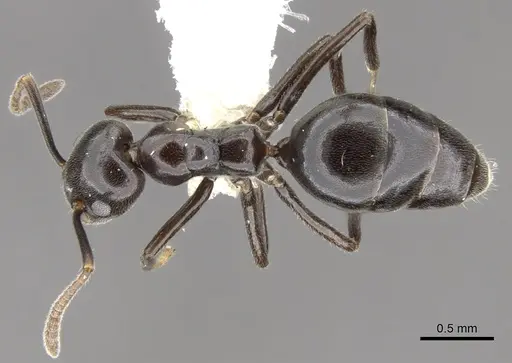
Irodalom
Elterjedési térkép betöltése...Termékek betöltése...