
Technomyrmex parandrei
- Tud. név
- Technomyrmex parandrei
- Nemzetség
- Tapinomini
- Alcsalád
- Dolichoderinae
- Szerző
- Bolton, 2007
- Elterjedés
- 1 országban megtalálható
Bevezetés
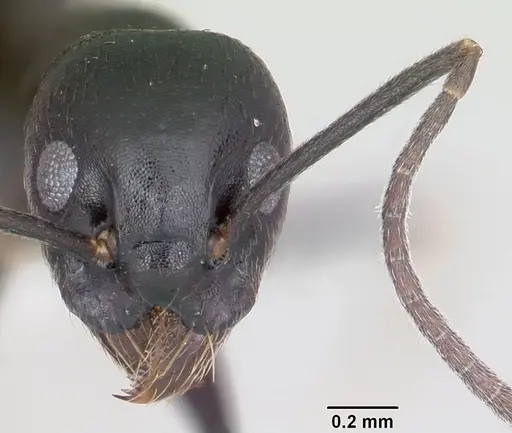
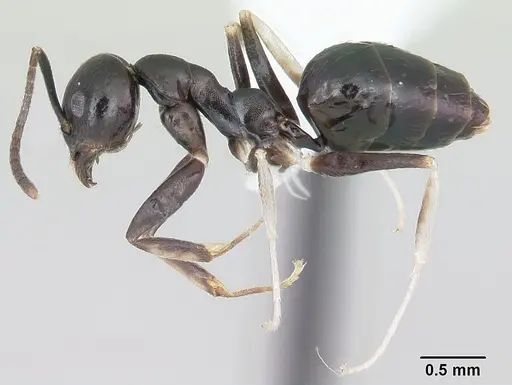
Technomyrmex parandrei is a small, dark ant known only from Central Africa. Workers are 3.5-3.7 mm in total length, black with yellow trochanters and pale yellow tibiae and tarsi . The species was described in 2007 from specimens collected in rainforest leaf litter in Gabon . It has also been recorded in cocoa farmlands in Cameroon . As a member of the ant subfamily Dolichoderinae, they lack a functional sting and instead use chemical secretions from their anal glands to deter predators.
Quick Summary
- Difficulty: Medium
- Origin & Habitat: Native to the rainforests of Gabon, Central Africa. The type series was collected from sifted leaf litter and rotten wood in the Monts Doudou region at about 630 m elevation [1]. The species has also been found in cocoa farmlands in southern Cameroon [2].
- Colony Type: Unknown, no species-specific data on queen number or social structure. Most Technomyrmex species are monogyne, but polygyny occurs in some. Assume single-queen until evidence suggests otherwise.
- Size & Growth:
- Queen: Undescribed, no queen specimens recorded in the literature.
- Worker: ~3.5-3.7 mm (total length) [1]
- Colony: Unknown, no data available for this species.
- Growth: Unknown, no data.
- Development: Unknown, no species-specific studies. (All development data are speculative, no research exists for this species.)
- Antkeeping:
- Temperature: Requires warm, tropical conditions. Suggested range 24-28°C based on natural habitat, but no controlled studies exist. Maintain stable warmth year-round.
- Humidity: High humidity is recommended. Keep nest substrate consistently moist but not waterlogged, using a water reservoir. Specific humidity preferences unknown.
- Diapause: No, as a tropical ant, it likely does not require hibernation. Keep warm all year.
- Nesting: Unknown. Natural habitat is rainforest leaf litter and rotten wood. Try naturalistic soil-based nests with rotting wood pieces, or Y-tong/3D-printed nests with high humidity. Avoid large open spaces. Note: no captive husbandry data exists.
- Behavior: Timid and non-aggressive. Lacks a functional sting, uses chemical secretions from the anal gland when threatened. Tiny workers (3.5-3.7 mm) can squeeze through minute gaps, exceptional escape prevention is mandatory. Species-specific behavior is unstudied.
- Common Issues: escape prevention is critical due to very small size, use fine mesh and tight seams., high humidity needs can cause mold if ventilation is poor., tropical temperature requirements necessitate heating in most climates., lack of scientific data on this species makes care experimental, expect unknowns., wild-caught colonies may carry parasites or diseases.
Housing and Nest Setup
Due to the complete lack of captive husbandry records for Technomyrmex parandrei, nest design is experimental. Based on the natural habitat (rainforest leaf litter and rotting wood), try a naturalistic formicarium with a mix of soil, sand, and decayed wood. Keep the substrate moist. Y-tong or plaster nests with tight, humid chambers may also work. Avoid large open areas. Use a test tube with a water reservoir for starting colonies. Ensure all connections are escape-proof, workers are only 3.5-3.7 mm long. Maintain a consistent temperature of 24-28°C. Provide a gradient if possible. Note: no specific data supports any particular nest type. [1]
Feeding and Diet
No dietary studies exist for this species. For related Technomyrmex, a mix of carbohydrates (sugar water, honey) and protein (small insects like fruit flies) is typical. Feed tiny portions, a drop of sugar water and a small fruit fly per day for a small colony. Remove uneaten food to prevent mold. Adjust based on colony response.
Temperature and Seasonal Care
As a tropical species from rainforests near the equator, Technomyrmex parandrei likely requires warm temperatures all year. Aim for 24-28°C in the nest area. Use a heating cable on one side to create a gradient. Do not allow temperatures below 20°C for extended periods. No hibernation needed, keep warm throughout the year. [2]
Behavior and Colony Dynamics
Very little is known about the behavior of this species. As a Dolichoderinae ant, it lacks a sting and uses chemical secretions from the anal gland as a defense. It is assumed to be non-aggressive and timid. Foraging behavior and colony organization are unstudied. Given the very small size, workers can escape through tiny gaps. Expect them to be skittish and fast-moving.
Escape Prevention
Workers measure only 3.5-3.7 mm, so escape prevention is the top priority. Use test tubes with well-packed cotton plugs. Use tight-fitting lids and fluon barriers. Ventilation must use fine mesh (0.5 mm or smaller). Check daily for new gaps. Even small cracks can allow escapes. This is not an optional step, your colony will vanish if setup is not secure. [1]
Frequently Asked Questions
How long does it take for Technomyrmex parandrei to produce first workers?
Unknown. No breeding data exists for this species. If you are lucky to have a queen, expect it to take at least several weeks to months under warm conditions, but this is purely speculative.
Can I keep Technomyrmex parandrei in a test tube?
Yes, test tubes are a good starting point for any unknown species. Use a standard test tube setup with a water reservoir. Ensure the cotton plug is tightly packed to prevent escapes given their tiny size. Move to a larger setup only once you have many workers.
What temperature do they need?
As a tropical rainforest species, they require warm temperatures year-round. The suggested range is 24-28°C, based on their natural habitat. No specific studies exist. Use a heating cable to maintain warmth if your room is cooler.
Are they good for beginners?
Not recommended. Very little is known about this species' captive care. The complete lack of husbandry data, combined with high humidity and temperature needs, and tiny size requiring exceptional escape prevention, make this an advanced project even for experienced keepers.
How big do colonies get?
Unknown. No data on colony size for this species. Related Technomyrmex can range from a few hundred to several thousand workers, but this is speculative.
Do they need hibernation?
No. As a tropical ant from equatorial Africa, they do not hibernate. Keep warm all year.
What do they eat?
No specific data. A diet of sugar water and small insects like fruit flies is recommended, based on general ant needs. Start with small portions and adjust.
Why are my ants escaping?
Their size (3.5-3.7 mm) allows them to fit through tiny gaps. Check all seals, mesh, and cotton plugs. Use fluon or PTFE barriers. If escapes happen, identify the gap and seal it immediately.
Can I keep multiple queens together?
Unknown. No data on colony structure. It is best to assume single-queen and not attempt to combine queens.
Report an Issue
The current care sheet is based fully on literature. See inconsistencies, or something that's incorrect? Please , it will be resolved after review from an admin. Contributing to the blogs tab also helps providing information, to make us be able to further improve the caresheets. Thank you for your support!
References

Ez a tartási útmutató a következő licenc alatt áll: CC BY-SA 4.0 .
Közösségi blogok
CASENT0103271
Megtekintés az AntWeb-en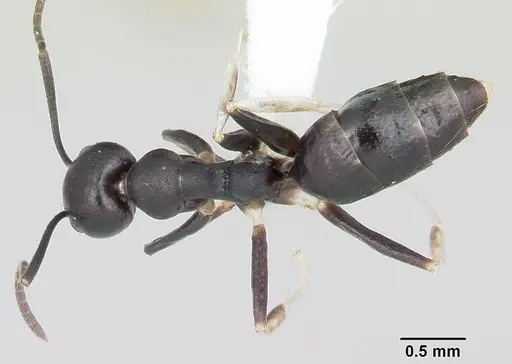
CASENT0424014
Megtekintés az AntWeb-en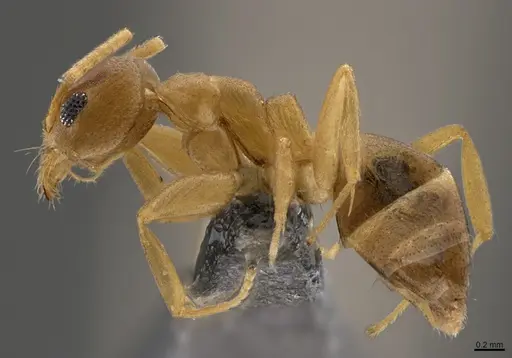
Irodalom
Elterjedési térkép betöltése...Termékek betöltése...