
Technomyrmex convexifrons
- Tud. név
- Technomyrmex convexifrons
- Nemzetség
- Tapinomini
- Alcsalád
- Dolichoderinae
- Szerző
- Karavaiev, 1926
- Elterjedés
- 0 országban megtalálható
Bevezetés
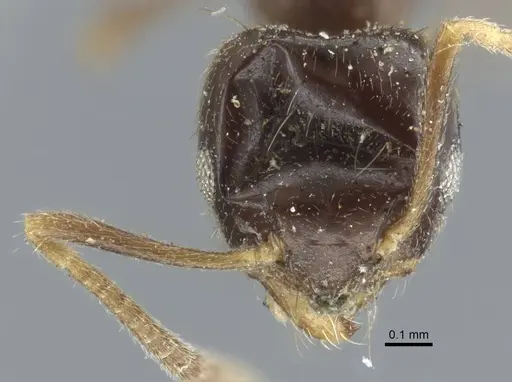
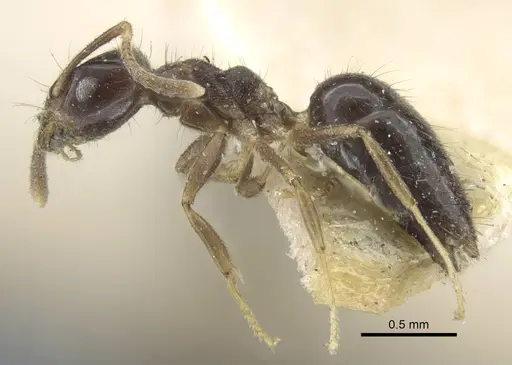
Technomyrmex convexifrons is a small dolichoderine ant measuring just 2.6mm in total length . Workers have a dark brown head and gaster, a slightly lighter mesosoma, and numerous long setae (bristles) covering their bodies - the longest head setae are at least as long as the diameter of their eyes . This ant belongs to the Technomyrmex strenuus group and is most closely related to T. strenuus, but it can be distinguished by having elevated setae on the tibiae (lower legs) . This ant is known only from Sumatra, Indonesia, where it was collected in 1913 at the Tapung Kiri location . Nothing has been documented about its biology in the scientific literature - we don't know what it eats, how it nests, its colony structure, or any aspect of its behavior . This makes it an extremely challenging species to keep, with no established care protocols to draw from.
Quick Summary
- Difficulty: Expert
- Origin & Habitat: This species is known only from Sumatra, Indonesia in the Indomalaya region [1]. The single collection was made at Tapung Kiri in February 1913 [2]. Nothing is known about its natural habitat preferences.
- Colony Type: Unconfirmed. The colony structure of this species has not been documented. Most Technomyrmex species are generalist foragers that form moderate-sized colonies, but T. convexifrons specifically remains unstudied.
- Size & Growth:
- Antkeeping:
- Temperature: Unknown for this species. Based on its tropical Indonesian origin, warm conditions around 24-28°C would be a reasonable starting point, but this is purely speculative.
- Humidity: Unknown. Given its Sumatran origin, high humidity similar to tropical rainforest would be a logical starting assumption.
- Diapause: Unknown, no seasonal data exists. As a tropical species from Sumatra, it may not require a diapause period, but this is unconfirmed.
- Nesting: Unknown. No information exists on this species' natural nesting preferences. Related Technomyrmex species often nest in soil, under stones, or in rotting wood, but this is unconfirmed.
- Behavior: Completely unstudied. As a Dolichoderinae ant, this species does not have a functional stinger or formic acid spray. Dolichoderines defend themselves by exuding a sticky, foul-smelling chemical secretion from their anal glands. The workers are small (2.6mm) so escape prevention would be important if the species were ever acquired. No information exists on their temperament, foraging behavior, or activity patterns.
- Common Issues: this species has never been kept in captivity, no established care protocols exist, virtually nothing is known about its biology, making successful keeping extremely uncertain, queen caste has never been described, wild colonies cannot be identified with certainty, no information on what foods this species accepts, cannot verify if it is monogyne or polygyne, colony structure unknown
Why This Species Is Extremely Challenging
Technomyrmex convexifrons is one of the least studied ant species in the world. The entire scientific knowledge base consists of: the original worker description from 1926,a taxonomic revision in 2007,and documentation of the type specimens [1][2]. No researcher has ever documented its behavior, diet, colony structure, reproduction, or any aspect of its biology [1]. This means there are no established care protocols, no feeding guides, no temperature benchmarks, and no one to ask for advice if problems arise. Keeping this species would essentially be experimental research rather than antkeeping. Unless you are an advanced myrmecologist specifically studying this species for conservation purposes, there are far better choices available. Better-studied Technomyrmex species exist that would be more suitable for hobbyist antkeepers.
Taxonomy and Identification
Technomyrmex convexifrons was originally described by Karavaiev in 1926 from workers collected on Sumatra [1]. It belongs to the Technomyrmex strenuus species group, making it most closely related to T. strenuus. The key distinguishing feature is that T. convexifrons has elevated setae (bristles) on the tibiae (lower legs), while T. strenuus does not [1]. Workers measure approximately 2.6mm in total length, with a dark brown head and gaster and a slightly lighter mesosoma. The eyes are relatively large for the body size, and the entire body is covered in numerous long setae [1]. The species is only known from the type locality of Tapung Kiri on Sumatra, Indonesia, collected in 1913 [2].
Related Species and What We Might Expect
While T. convexifrons specifically is unstudied, we can make very rough inferences from what is known about other Technomyrmex species. The genus contains around 90 species distributed primarily in the Old World tropics and subtropics [1]. Many Technomyrmex species are generalist foragers that exploit a wide variety of food sources, including honeydew from aphids, small insects, and sugary liquids. They typically form moderate-sized colonies. However, these are broad genus-level patterns and may not apply to T. convexifrons specifically. The strenuus group contains several similar-looking species often found in disturbed habitats, but without direct observation of T. convexifrons, these inferences remain highly speculative. You should not rely on genus-level assumptions for keeping this species.
Legal and Ethical Considerations
Technomyrmex convexifrons is known only from Sumatra, Indonesia. If this species were to become available, you would need to verify the legal status of exporting or keeping it. Indonesia has specific regulations regarding the export of native wildlife, and international trade may be regulated under CITES appendices. Additionally, given how rare and unstudied this species is, there are significant ethical considerations about removing any potential colonies from the wild for captive keeping. If your goal is to keep ants, there are many well-established species available in the hobby that are far better choices. If your goal is scientific study, you should connect with professional entomologists who can properly document and preserve specimens for research. [1]
Frequently Asked Questions
Can I keep Technomyrmex convexifrons as a pet ant?
No, this species is not recommended for antkeeping. It has never been kept in captivity, and nothing is known about its biology, what it eats, what temperature it needs, how it nests, or anything else. There are no established care protocols. If you want to keep ants, choose from the many well-documented species available in the hobby.
Where does Technomyrmex convexifrons live?
This species is known only from Sumatra, Indonesia. The only known collection was made at Tapung Kiri in February 1913 [2]. It has never been found anywhere else or documented in the wild since that single collection.
What does Technomyrmex convexifrons look like?
Workers are tiny at about 2.6mm total length. They have a dark brown head and gaster, with a slightly lighter mesosoma. Their most distinctive feature is the numerous long setae covering their bodies, the longest setae on the head are at least as long as the diameter of their relatively large eyes [1].
How big do Technomyrmex convexifrons colonies get?
Unknown. No one has ever documented a colony of this species. The maximum colony size is completely unstudied [1].
What do Technomyrmex convexifrons ants eat?
Unknown. No observations exist of this species foraging or feeding. While other Technomyrmex species are generalist foragers that eat honeydew, small insects, and sugary liquids, we cannot confirm that T. convexifrons shares these habits [1].
Is Technomyrmex convexifrons a good species for beginners?
Absolutely not. This species is not suitable for any antkeeper, beginner or experienced. There is no information available on how to keep it alive. Even expert antkeepers would have no idea how to care for this species. Choose a well-documented species instead.
How do I identify Technomyrmex convexifrons?
Identification is extremely difficult and requires expert taxonomic knowledge. The species has elevated setae on the tibiae, which distinguishes it from the similar T. strenuus. Workers are about 2.6mm with dark brown coloration and numerous body setae [1]. However, since no one has documented this species in the wild since 1913,you are extremely unlikely to encounter it.
Do Technomyrmex convexifrons queens have wings?
Unknown. The queen caste has never been described for this species. We have no information about whether queens are winged, wingless (ergatoid), or anything about their reproductive biology [1].
Does Technomyrmex convexifrons need hibernation?
Unknown. As a tropical species from Sumatra, it likely does not experience cold winters and may not require a diapause. However, this has never been studied, so we cannot confirm whether hibernation is needed or beneficial [1].
Can I find Technomyrmex convexifrons in the wild?
Extremely unlikely. This species has only been collected once, in 1913,from a single location on Sumatra. It has never been documented in the wild since that single collection over 110 years ago [2]. It may be extinct, very rare, or simply never looked for properly.
What is the closest alternative species to keep?
If you are interested in Technomyrmex ants, other better-studied species in the genus would be more appropriate, though even those are not commonly kept. For general antkeeping, well-established species like Lasius niger, Camponotus species, or Messor species are far better choices with comprehensive care guides available.
Report an Issue
The current care sheet is based fully on literature. See inconsistencies, or something that's incorrect? Please , it will be resolved after review from an admin. Contributing to the blogs tab also helps providing information, to make us be able to further improve the caresheets. Thank you for your support!
References

Ez a tartási útmutató a következő licenc alatt áll: CC BY-SA 4.0 .
Közösségi blogok
CASENT0917128
Megtekintés az AntWeb-en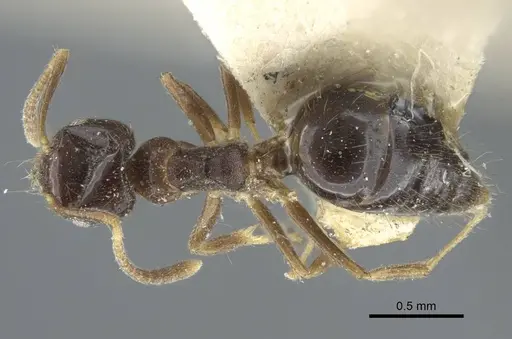
Irodalom
Elterjedési térkép betöltése...Termékek betöltése...