
Syllophopsis sersalata
- Tud. név
- Syllophopsis sersalata
- Nemzetség
- Solenopsidini
- Alcsalád
- Myrmicinae
- Szerző
- Bolton, 1987
- Elterjedés
- 0 országban megtalálható
Bevezetés
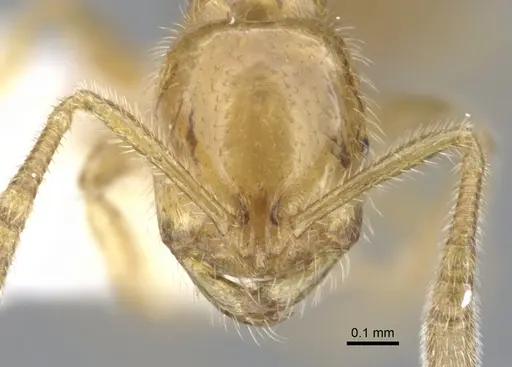
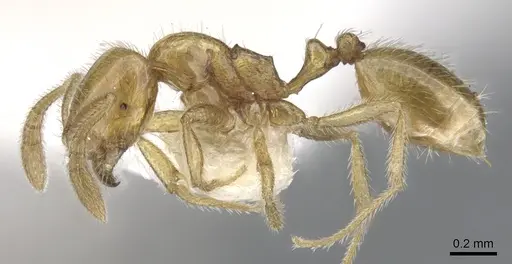
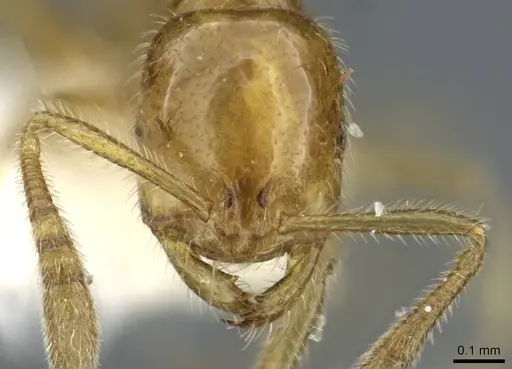
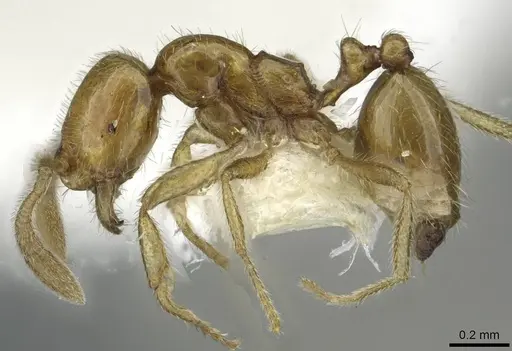
Syllophopsis sersalata is a rare ant species known only from a few collections in Rwanda's montane forests. Workers are small, about 2.0-2.2 mm, with uniform yellow color and tiny single-lens eyes . The species was originally described as Monomorium sersalatum by Bolton in 1987 and later moved to Syllophopsis . It is only recorded from high-elevation sites between 1800-2100 m in Rwanda .
Quick Summary
- Difficulty: Expert
- Origin & Habitat: Known only from Rwanda in montane forest leaf litter at 1800-2100 m elevation [3][4].
- Colony Type: Unconfirmed colony structure. Only known from a handful of wild-collected specimens, no captive colonies or colony studies exist.
- Size & Growth:
- Queen: No data available (only a single queen specimen known, size not recorded)
- Worker: 2.0-2.2 mm [1]
- Colony: Unknown, no colony size data available
- Growth: Unknown
- Development: Unknown, no data exists. Based on related small Myrmicinae, estimate 6-10 weeks at optimal temperature. (No direct studies, inference from related species.)
- Antkeeping:
- Temperature: Keep cool, montane origin suggests 18-22°C, similar to room temperature [3].
- Humidity: Moderate to high, leaf litter habitat suggests consistently moist but not waterlogged substrate [1].
- Diapause: Unknown, no data on overwintering. Rwanda's high-elevation forests have mild winters, so diapause may not be required.
- Nesting: Natural habitat is leaf litter in forest floors. In captivity, a test tube setup or small formicarium with moist natural substrate is appropriate [1].
- Behavior: Behavior unstudied. Their tiny single-lens eyes suggest poor vision [1]. Escape prevention is critical due to 2 mm size, standard barriers may not contain them.
- Common Issues: no captive husbandry data exists, you are pioneering care., tiny 2 mm size makes escape prevention very difficult., montane origin suggests sensitivity to overheating., no information on queen number or colony founding., extremely rare in hobby, almost impossible to obtain.
Rarity and Collection History
Syllophopsis sersalata is known from only a few specimens collected in Rwanda in the 1970s. The holotype worker was collected in January 1976 at Kamiranzovu (1900 m), with paratypes from Kayove (2100 m) and Rangiro (1800 m) [3]. The species was originally described by Bolton in 1987 as Syllophopsis sersalata and transferred to Syllophopsis in 2015 [1].
Natural Habitat and Temperature
This species occupies montane forest leaf litter at elevations between 1800-2100 m in Rwanda [3]. The high elevation suggests cooler temperatures than lowland tropics, aim for 18-22°C, similar to cool room temperature. Avoid direct heat sources [4].
Size and Escape Prevention
Workers measure just 2.0-2.2 mm in length, making them among the smallest ants you could keep [1]. Their eyes are reduced to a single ommatidium, indicating very poor vision [1]. Escape prevention is critical: use fine mesh for ventilation, ensure all connections are snug, and consider double barriers. Standard fluon barriers may not be effective.
Nesting in Captivity
Specimens have been collected from leaf litter in forest habitats, suggesting they nest in moist, decaying organic material near the soil surface [1]. For captive housing, a test tube setup works for founding, keep the water chamber moderate and cotton snug. Once established, transition to a small naturalistic formicarium with moist soil and leaf litter. Maintain consistent moisture without waterlogging.
Frequently Asked Questions
How hard is Syllophopsis sersalata to keep?
Expert, this is one of the rarest ant species with no captive husbandry data. You would be pioneering care from scratch.
Where does Syllophopsis sersalata come from?
It is known only from Rwanda, in montane forest leaf litter at 1800-2100 m elevation [3][2].
How big do Syllophopsis sersalata workers get?
Workers are tiny at just 2.0-2.2 mm in length [1].
What temperature do Syllophopsis sersalata ants need?
Based on their montane origin, keep them at 18-22°C (cool room temperature) [3].
Do Syllophopsis sersalata ants sting?
They belong to Myrmicinae, which have functional stingers, but at 2 mm their sting is negligible to humans.
How long does it take for Syllophopsis sersalata eggs to become workers?
Not studied, based on similar tiny Myrmicinae, estimate 6-10 weeks at optimal temperature.
Can I keep multiple Syllophopsis sersalata queens together?
Unknown, no colony structure data exists. Only a single queen specimen is known.
What do Syllophopsis sersalata ants eat?
No dietary data exists. Based on related Solenopsidini, they likely take small insects and sugary liquids, but this is speculation.
Why is Syllophopsis sersalata so rare in antkeeping?
It is known only from a few 1970s collections in Rwanda, with no documented colonies since [3][2].
How do I prevent escapes with Syllophopsis sersalata?
Their 2 mm size requires fine mesh, snug connections, and possibly double barriers. Standard barriers may not hold them [1].
Do Syllophopsis sersalata need hibernation?
Unknown, no data. Rwanda's high-elevation winters are mild, so diapause may not be needed.
Is Syllophopsis sersalata available to buy?
Extremely unlikely, no captive populations exist. It is essentially never available in the hobby.
Report an Issue
The current care sheet is based fully on literature. See inconsistencies, or something that's incorrect? Please , it will be resolved after review from an admin. Contributing to the blogs tab also helps providing information, to make us be able to further improve the caresheets. Thank you for your support!
References

Ez a tartási útmutató a következő licenc alatt áll: CC BY-SA 4.0 .
Közösségi blogok
CASENT0902227
Megtekintés az AntWeb-en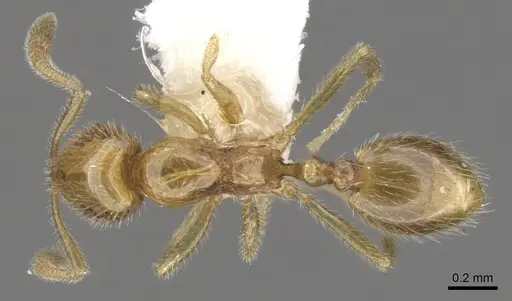
CASENT0911198
Megtekintés az AntWeb-en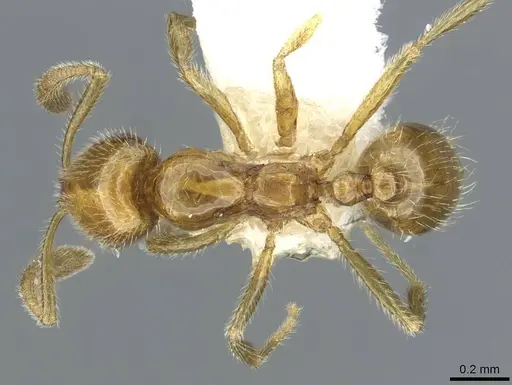
Irodalom
Elterjedési térkép betöltése...Termékek betöltése...