
Strumigenys ravidura
- Tud. név
- Strumigenys ravidura
- Nemzetség
- Attini
- Alcsalád
- Myrmicinae
- Szerző
- Bolton, 1983
- Elterjedés
- 1 országban megtalálható
Bevezetés
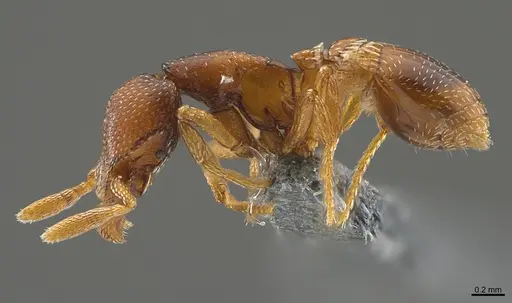
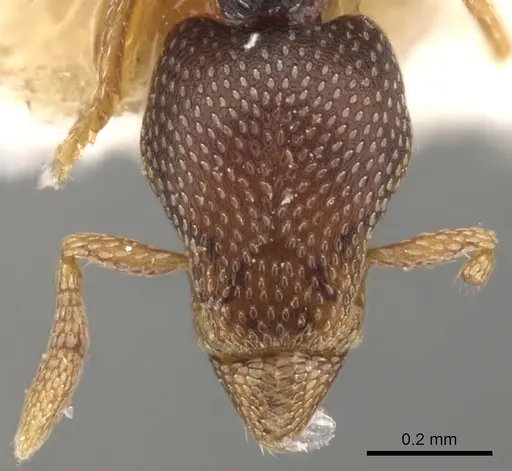
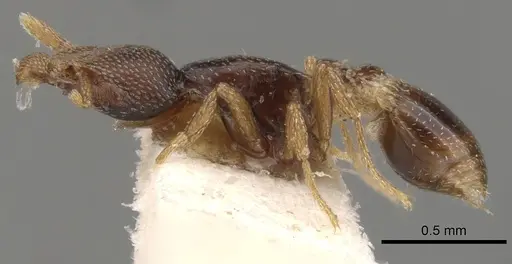
Strumigenys ravidura is an extremely tiny predatory ant measuring just 2.0-2.1mm in total length . Workers are dark brown with a distinctive covering of conspicuous appressed scale-like hairs on the head, body, and antennae - this is one of their most recognizable features. The clypeal dorsum is distinctly concave, and unlike related species, they lack standing hairs anywhere on the head, alitrunk, and gaster . This species belongs to the Strumigenys thuvida group and was originally described by Bolton in 1983 . These ants are part of the tribe Dacetonini (specialized predatory ants) within the subfamily Myrmicinae . In the wild, they inhabit rainforest leaf litter in Central Africa, found at elevations from 110m to 640m in Gabon . Their distribution covers Cameroon, the Democratic Republic of Congo, and Gabon .
Quick Summary
- Difficulty: Expert
- Origin & Habitat: Rainforest leaf litter in the Afrotropical region, specifically Cameroon, Democratic Republic of Congo, and Gabon. Found at elevations between 110m and 640m in montane rainforest environments [2][1].
- Colony Type: Colony structure is unconfirmed. Based on related Strumigenys species, likely monogyne (single queen) colonies, though this has not been directly documented for this specific species.
- Size & Growth:
- Queen: Undescribed, queen measurements not available in the literature [1].
- Worker: 2.0-2.1mm total length [1].
- Colony: Unknown, no colony size data available. Based on related Strumigenys species, colonies likely reach several hundred workers.
- Growth: Unknown, no development data available for this species.
- Development: Unconfirmed, no direct development data exists. Based on typical Strumigenys patterns and their tiny size, development likely takes 2-4 months from egg to worker at optimal temperatures. (Development timeline is estimated based on genus-level patterns for small Myrmicinae. Actual times may vary significantly.)
- Antkeeping:
- Temperature: Keep warm and stable, roughly 24-26°C, mimicking tropical rainforest floor conditions. Avoid drastic fluctuations and never let the temperature drop below 20°C. Use a heating cable on one side to create a gentle gradient if needed [2].
- Humidity: Keep the nest substrate consistently moist, like damp leaf litter. Provide a water reservoir (e.g., test tube with water plug) and avoid drying out. The substrate should feel damp to the touch but not waterlogged [1].
- Diapause: Unlikely, tropical species from Central Africa, they do not experience cold winters. Keep stable warm temperatures year-round [2][1].
- Nesting: Use a test tube setup for founding, or a small plaster or ytong nest with very narrow chambers scaled to their minute size (2mm). Avoid large open areas. Escape prevention is critical, use fine mesh (0.5mm or smaller) and tight-fitting lids. Cover the nest to keep it dark [1].
- Behavior: Strumigenys ravidura is a specialized predator that hunts tiny arthropods using its specialized mandibles [2]. Based on its subfamily (Myrmicinae), it possesses a functional sting, but it is not medically significant to humans. Workers are shy and non-aggressive, preferring to flee and hide. Their tiny size (2mm) makes escape prevention essential, they can squeeze through gaps that larger ants cannot.
- Common Issues: escape prevention is critical due to their extremely tiny size, they can slip through gaps that larger ants cannot, slow growth and small colony sizes make them vulnerable to stress from sudden changes in humidity or temperature, specialized diet means they may refuse standard ant foods, they need live micro-prey like springtails, wild-caught colonies may carry parasites that can decimate the colony in captivity, difficulty establishing colonies from wild-caught queens due to their cryptic rainforest litter habitat
Housing and Nest Setup
Strumigenys ravidura requires careful housing due to their extremely tiny size. Use a test tube setup as a founding chamber, the small diameter helps maintain humidity and prevents the queen from wandering. For established colonies, a small plaster or ytong nest with very tight, narrow chambers works well. The chambers should be scaled to their minute size, avoid large open spaces that these tiny ants will feel exposed in. Escape prevention is very important: use fine mesh (0.5mm or smaller), tight-fitting lids, and apply fluon or other barriers generously. These ants can slip through gaps that seem extremely small. Place the nest in a dark, quiet location away from vibrations and direct sunlight. A humidity chamber or outworld with moist substrate helps maintain the high humidity they need [1].
Feeding and Diet
Strumigenys ravidura is a specialized predatory ant [2] that hunts tiny arthropods in leaf litter. In captivity, their primary food should be live springtails, these are the ideal natural prey and most Strumigenys species readily accept them. Other small live prey may be accepted experimentally, including micro-arthropods like booklice (psocids), minute soil mites, and very small fruit fly larvae. Do not rely on sugar sources or honey, dacetine ants are predators, not sugar-seekers. Feed small prey items every 2-3 days, adjusting based on colony size and consumption. Remove any uneaten prey after 24 hours to prevent mold. A well-fed colony will have workers with distended abdomens, appearing slightly glossy.
Temperature and Humidity Requirements
Keep Strumigenys ravidura at warm, stable temperatures between 24-26°C [2]. This mimics the conditions of their rainforest leaf litter habitat in Central Africa. Avoid temperature fluctuations and never let them experience temperatures below 20°C. Use a heating cable placed on one side of the nest to create a gentle thermal gradient if your room temperature is below 22°C. Place the heating element on top of the nest, not underneath, to prevent drying out the substrate. Humidity should be very high, think constantly damp rainforest floor. The nest substrate should remain moist but not waterlogged. A water tube connected to the test tube setup helps maintain humidity. If using a plaster or ytong nest, ensure the water reservoir is adequate and check regularly that the material hasn't dried out [1].
Behavior and Colony Dynamics
Strumigenys ravidura workers are tiny, slow-moving predators that forage individually through leaf litter. They use their specialized mandibles to capture tiny prey like springtails [2]. Workers likely communicate through chemical trails. Colonies are probably small to moderate in size, likely reaching only a few hundred workers based on related species. The queen is likely claustral and seals herself in during founding, raising the first nanitic workers on her own. Workers are not aggressive toward humans, their main defense is fleeing and hiding. They possess a functional sting, but it is not medically significant. Observe colony activity patterns to gauge health: active foraging, brood development, and workers with full abdomens indicate a healthy, well-fed colony.
Acquiring and Establishing Colonies
Obtaining Strumigenys ravidura is challenging due to their cryptic rainforest litter habitat and extremely small size. They are not commonly available in the antkeeping hobby. If acquiring a colony, it will almost certainly be wild-caught. Quarantine any new colony for several weeks, observing for signs of parasites or disease. Wild-caught colonies often struggle to adapt to captive conditions, the transition from natural leaf litter to artificial nests can be stressful. Start with a simple test tube setup and minimize disturbances during the founding period. Do not attempt to combine unrelated queens, this species has not been studied for pleometrosis behavior, and combining foundresses is risky. Be patient: growth is likely slow, and a small colony may take many months to establish firmly in captivity [1].
Frequently Asked Questions
How long does it take for Strumigenys ravidura to raise first workers?
The exact development timeline is unconfirmed for this species. Based on typical Strumigenys patterns and their very small size, expect 2-4 months from egg to first worker at optimal temperatures (around 24-26°C). Growth is likely slow compared to larger ant species.
Can I keep Strumigenys ravidura in a test tube setup?
Yes, a test tube setup is ideal for this species. The small diameter helps maintain humidity and contains their tiny workers. Ensure the tube has a water reservoir and use cotton to secure it. Cover the tube with a dark sleeve to reduce stress from light exposure.
What do Strumigenys ravidura ants eat?
They are specialized predators [2] that need live micro-prey. Feed live springtails as their primary food, this is the most natural and accepted prey for dacetine ants. Other tiny live prey like micro-arthropods may be accepted. They do not typically accept sugar sources or honey.
Are Strumigenys ravidura good for beginners?
No, this species is not recommended for beginners. They are extremely tiny (only 2mm), require specialized live prey diet, need very high humidity, and are difficult to keep established. They are considered an expert-level species.
How big do Strumigenys ravidura colonies get?
Colony size is unconfirmed for this specific species. Based on related Strumigenys species, colonies likely reach several hundred workers at most. They are not large colony builders.
Do Strumigenys ravidura need hibernation?
No, hibernation is not required. Being a tropical species from Central Africa (Cameroon, DRC, Gabon), they do not experience cold winters in their natural habitat. Keep them at stable warm temperatures year-round [2][1].
Why are my Strumigenys ravidura dying?
Common causes include: escape through tiny gaps (they are extremely small), humidity dropping too low (they need constant dampness), temperature stress (below 20°C or above 30°C), starvation (needing live micro-prey not standard ant food), or parasites from wild-caught colonies. Review each parameter and ensure they match rainforest litter conditions.
When should I move Strumigenys ravidura to a formicarium?
Wait until the colony is well-established and the test tube seems too small, maybe 20-30 workers, but this is a rough guess. They do well in test tube setups long-term. If moving, use a small plaster or ytong nest with chambers scaled to their tiny size. Minimize disturbance during the transition.
Can I keep multiple Strumigenys ravidura queens together?
Not recommended, combining unrelated queens of this species has not been documented and is likely to result in aggression. Based on typical Strumigenys behavior, they are likely single-queen (monogyne) colonies.
Report an Issue
The current care sheet is based fully on literature. See inconsistencies, or something that's incorrect? Please , it will be resolved after review from an admin. Contributing to the blogs tab also helps providing information, to make us be able to further improve the caresheets. Thank you for your support!
References

Ez a tartási útmutató a következő licenc alatt áll: CC BY-SA 4.0 .
Közösségi blogok
CASENT0355675
Megtekintés az AntWeb-en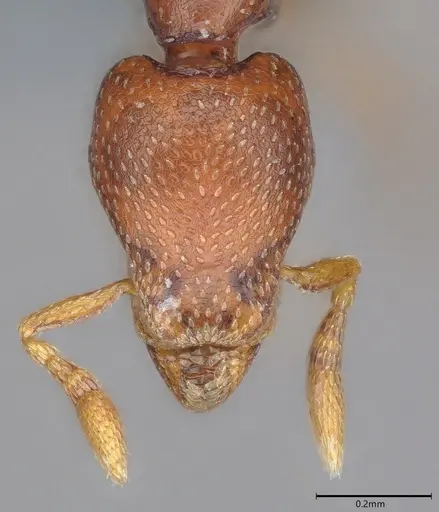
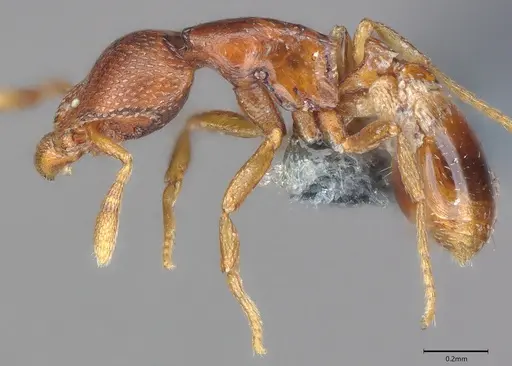
CASENT0355677
Megtekintés az AntWeb-en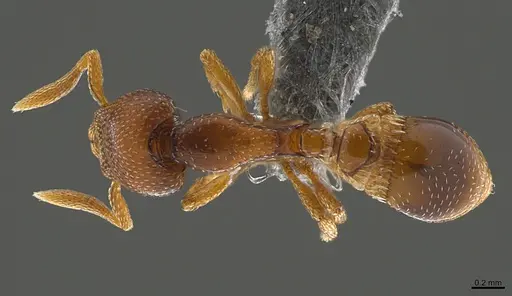
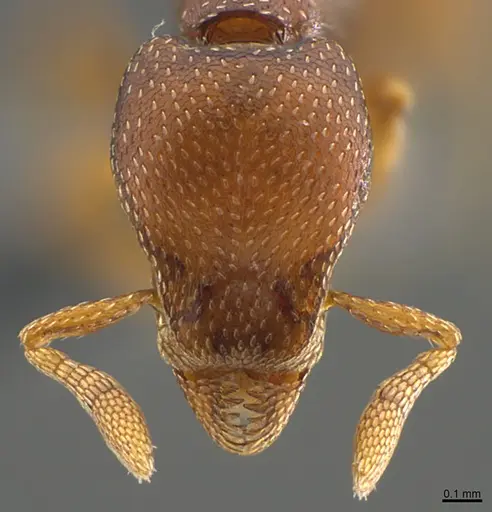
CASENT0900054
Megtekintés az AntWeb-en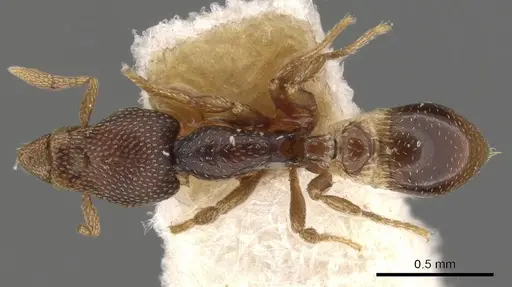
Irodalom
Elterjedési térkép betöltése...Termékek betöltése...