
Strumigenys praefecta
- Tud. név
- Strumigenys praefecta
- Nemzetség
- Attini
- Alcsalád
- Myrmicinae
- Szerző
- Bolton, 2000
- Elterjedés
- 1 országban megtalálható
Bevezetés
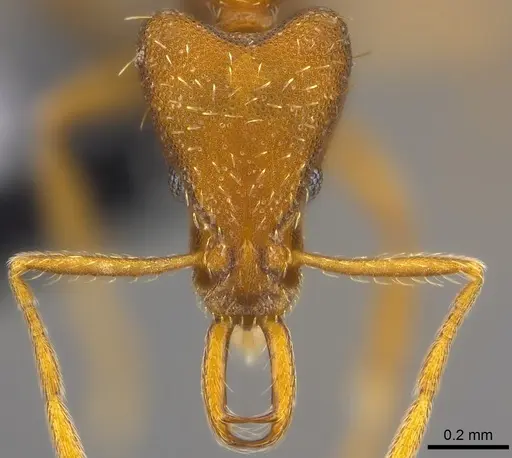
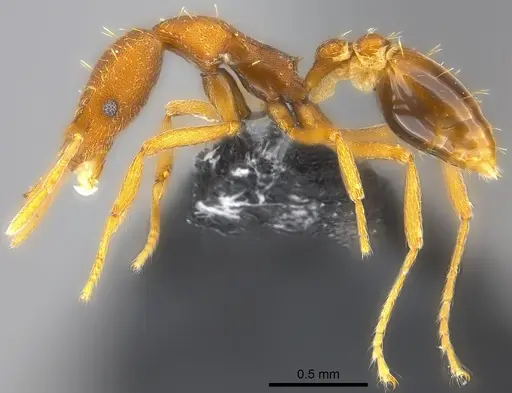
Strumigenys praefecta is a tiny trap-jaw ant endemic to Fiji, measuring 2.5-2.6 mm in total length . Workers are a dark reddish-brown color with very short antennal scrobes and finely reticulate-punctate sculpture on the head and mesosoma . They belong to the signeae complex within the Strumigenys godeffroyi-group and lack pronotal humeral hairs . This is one of the larger-bodied Fijian Strumigenys, found in high-elevation rainforests on Viti Levu and Taveuni . Most specimens were collected from under moss on trees, under bark, and in canopy fogging, suggesting an arboreal lifestyle .
Quick Summary
- Difficulty: Hard
- Origin & Habitat: Endemic to Fiji, specifically high-elevation rainforests on Viti Levu and Taveuni at around 500 m altitude [6][7][2]. The type locality is the Namosi/Queens Road Divide on Viti Levu, collected from rainforest litter and moss [2].
- Colony Type: Unknown, no data available on queen number or social structure.
- Size & Growth:
- Queen: Undescribed, no measurements available [2].
- Worker: 2.5-2.6 mm total length [1][2].
- Colony: Unknown, not documented [5].
- Growth: Unknown
- Development: Unknown, no direct measurements. Estimated 6-10 weeks at optimal temperature based on related species. (Development timeline is unconfirmed. Related Strumigenys species typically take 6-10 weeks from egg to worker.)
- Antkeeping:
- Temperature: Warm and stable, around 24-28°C. Avoid drops below 20°C. Based on high-elevation forest habitat [4].
- Humidity: High, keep substrate consistently moist but not waterlogged. Target 70-85% relative humidity. Create a moisture gradient in the nest [5].
- Diapause: Unknown, as a tropical endemic from Fiji, diapause is likely unnecessary. If you notice seasonal slowdown, a brief cool period above 20°C might help.
- Nesting: Likely arboreal or semi-arboreal. Provide a small container with moist substrate topped with bark, moss, and leaf litter. A test tube in a humid enclosure also works. Fine mesh on all openings is critical to prevent escape [1][2][5].
- Behavior: Has a functional stinger (subfamily Myrmicinae), but it is not medically significant to humans. Workers are not aggressive and use their trap-jaw mandibles to hunt small prey. Because they are only 2.5 mm long, they can squeeze through gaps smaller than 1 mm, seal all openings with fine mesh.
- Common Issues: escape prevention is critical, they easily slip through tiny gaps because of their small size., humidity control is challenging, too dry causes colony decline, too wet promotes mold., this species is endemic to Fiji and captive information is extremely limited, expect trial and error., as a tropical high-elevation species, they likely cannot tolerate prolonged temperatures below 20°C., their specialized diet of live micro-arthropods (springtails) can be difficult to maintain long-term.
Housing and Nest Setup
Because Strumigenys praefecta likely lives in arboreal microhabitats (under moss on trees, under bark), set up a small naturalistic enclosure. Use a container with moist substrate (soil, peat, or coco coir) and top it with pieces of bark, moss, and leaf litter. A test tube half-filled with water and plugged with cotton can also work if placed inside a larger humid box. The most important thing is to seal every gap with fine mesh or silicone, these ants are only 2.5 mm long and will escape through any crack. Avoid acrylic nests, instead use plaster, Y-tong, or soil-based setups that hold humidity [1][2][5].
Feeding and Diet
Strumigenys are specialized predators of small soil arthropods. In captivity, feed live springtails (Collembola) as the staple food. They may also accept booklice, mold mites, and fruit fly larvae. Offer tiny prey every 2-3 days and remove leftovers after 24 hours to prevent mold. It is unclear if they consume sugar, you can try a small drop of honey or sugar water, but do not expect them to take it. No dietary studies exist for this species, so observe their preferences and adjust [5].
Temperature and Humidity
Your colony needs stable warm conditions, around 24-28°C, as this species comes from high-elevation rainforest in Fiji [4]. Avoid letting the temperature drop below 20°C for extended periods. Humidity should stay high, keep the nest substrate moist but not waterlogged. Provide a moisture gradient by having one wet area (e.g., a water tube) and one drier area. Use a hygrometer inside the enclosure to confirm conditions are in the 70-85% range. Drafty locations or direct air conditioning will dry out the nest quickly and harm the colony.
Behavior and Temperament
These ants have a functional stinger, but they are not aggressive toward humans and will not sting unless severely provoked. Their trap-jaw mandibles are for hunting small prey, not defense. Workers are active, deliberate hunters that explore the nest and outworld for food. The main challenge is their tiny size, they are expert escape artists. Always use very fine mesh (0.2 mm or smaller) on ventilation holes. They are not known to be invasive, this species is endemic to Fiji [6][7].
Frequently Asked Questions
How long does it take for Strumigenys praefecta to develop from egg to worker?
The exact development time is unknown. Based on typical Strumigenys patterns, expect around 6-10 weeks at optimal temperature (24-28°C). No specific data exists for this species.
Can I keep Strumigenys praefecta in a test tube setup?
Yes, a test tube setup can work, but place it inside a larger container with damp substrate to maintain high humidity. Seal all openings with fine mesh, these ants are tiny and will escape through gaps smaller than 1 mm.
What do Strumigenys praefecta eat?
They are specialized predators that need live prey. Feed them small springtails (Collembola) as their main food. They may also accept booklice, mold mites, or fruit fly larvae. It is not known if they take sugar, offer a drop of honey water occasionally, but don't rely on it.
Are Strumigenys praefecta good for beginners?
No, this species is not recommended for beginners. They have demanding humidity requirements, are expert escape artists, need a constant supply of live micro-prey, and almost no captive breeding data exists. Only experienced keepers willing to experiment should attempt to keep them.
Do Strumigenys praefecta need hibernation or diapause?
Probably not, as a tropical species from Fiji, they have no evolutionary need for a cold diapause. If you want to simulate a seasonal change, a slight temperature drop (still above 20°C) for a few weeks may be attempted, but it is not required.
How big do Strumigenys praefecta colonies get?
Colony size is undocumented. Based on related Strumigenys species, they likely remain small, probably a few dozen to a few hundred workers at most.
Why are my Strumigenys praefecta dying?
Common causes include: humidity too low (below 70%), temperature too cold (below 20°C), escape through tiny gaps, and lack of suitable live prey. Check these parameters first. Because so little is known about this species, some die-off may be expected during the adjustment period.
Can I keep multiple queens together?
Unknown, no data exists on colony founding or queen tolerance. Without evidence of polygyny, it is safest to keep only one queen per colony.
When should I move Strumigenys praefecta to a formicarium?
Wait until the colony has at least 20-30 workers and is actively foraging. A small naturalistic setup (soil, bark, moss) is usually better than a standard formicarium for these tiny, arboreal ants.
Report an Issue
The current care sheet is based fully on literature. See inconsistencies, or something that's incorrect? Please , it will be resolved after review from an admin. Contributing to the blogs tab also helps providing information, to make us be able to further improve the caresheets. Thank you for your support!
References

Ez a tartási útmutató a következő licenc alatt áll: CC BY-SA 4.0 .
Közösségi blogok
CASENT0013151
Megtekintés az AntWeb-en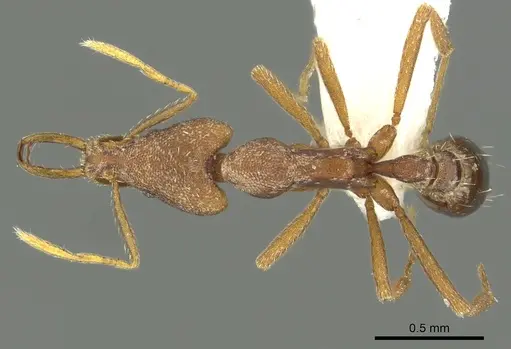
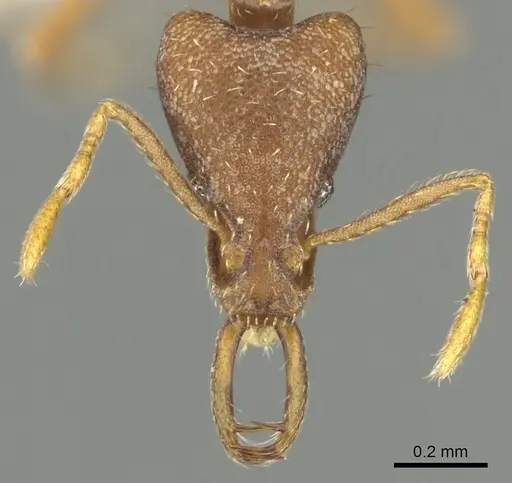
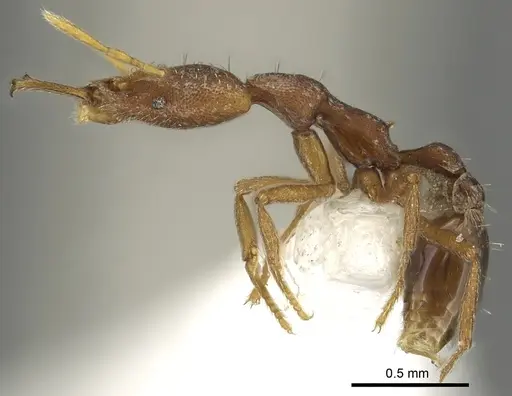
CASENT0186986
Megtekintés az AntWeb-en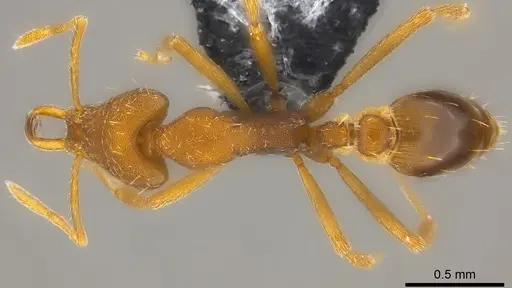
Irodalom
Elterjedési térkép betöltése...Termékek betöltése...