
Strumigenys nubila
- Tud. név
- Strumigenys nubila
- Nemzetség
- Attini
- Alcsalád
- Myrmicinae
- Szerző
- Lattke & Goitía, 1997
- Elterjedés
- 0 országban megtalálható
Bevezetés
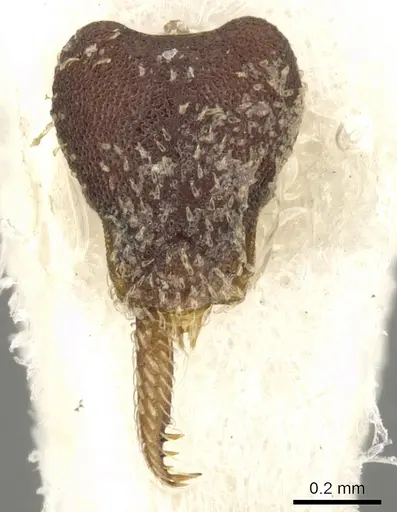
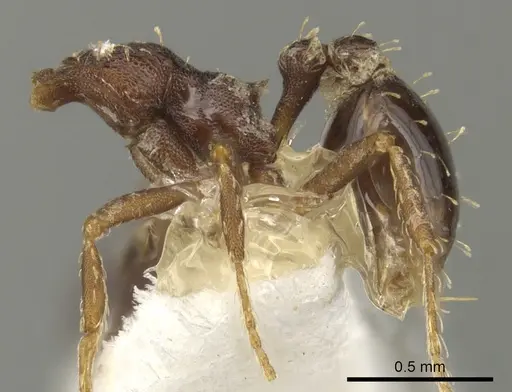
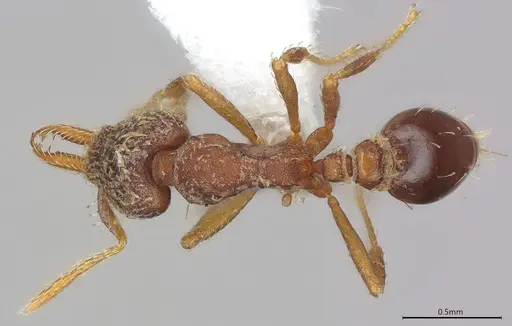
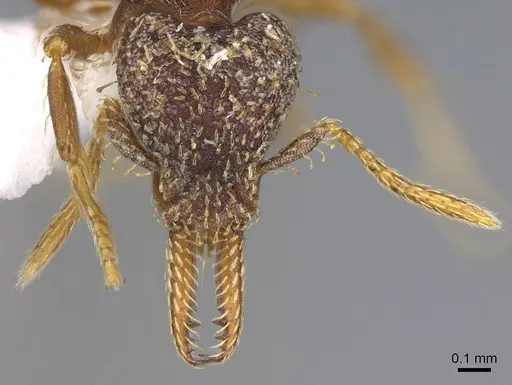
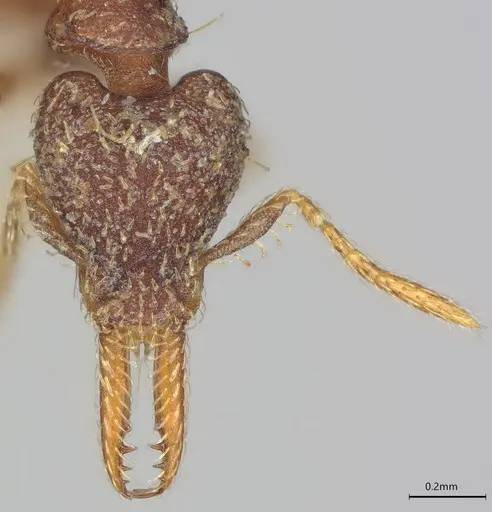
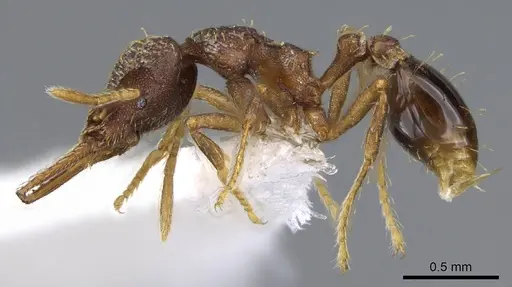
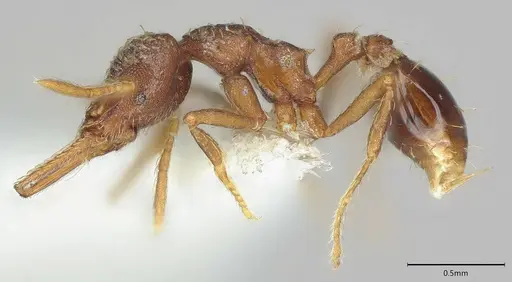
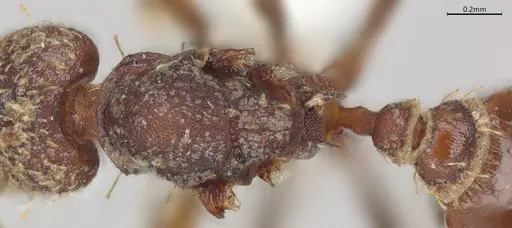
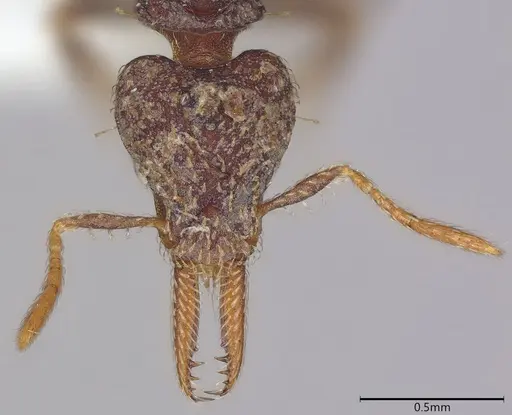
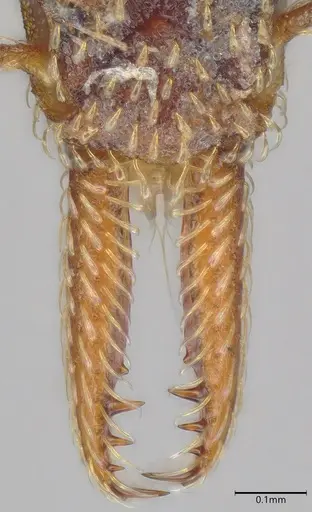
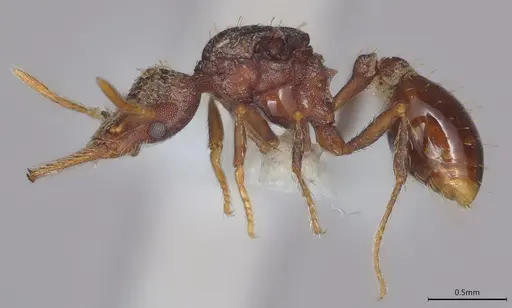
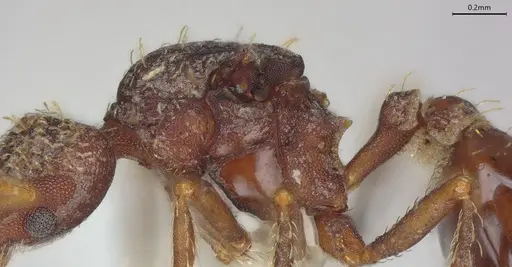
Strumigenys nubila is a tiny predatory ant measuring 3.2-3.3 mm in total length . Workers have long, narrow mandibles and unique pilosity with coarse, flattened or spoon-shaped hairs on the scape leading edge; flagellate hairs are absent . The head and alitrunk have stout standing hairs, and the postpetiole disc is mostly smooth with fine longitudinal costulae . This species belongs to the gundlachi complex and lives in high-altitude cold forests (2000-2500 m) in Colombia and Venezuela . It is known from Caquetá, Caldas, Quindío, Risaralda, and Valle del Cauca in Colombia .
Quick Summary
- Difficulty: Expert
- Origin & Habitat: High-altitude cold montane forests (2000-2500 m) in Colombia and Venezuela. Found in cloud forest habitats with dense leaf litter, including Caquetá, Caldas, Quindío, Risaralda, and Valle del Cauca [2][3].
- Colony Type: Unknown colony structure. Single-queen colonies are typical for the genus, but specific data for Strumigenys nubila is lacking.
- Size & Growth:
- Queen: Undescribed, workers are 3.2-3.3 mm [1]
- Worker: 3.2-3.3 mm total length [1]
- Colony: Up to 500 workers (estimated based on related species) [1]
- Growth: Slow
- Development: Unknown, likely 8-12 weeks based on genus patterns for cold-adapted species (Development is likely slow due to cold montane habitat (2000-2500 m altitude).)
- Antkeeping:
- Temperature: Cool conditions essential, aim for 15-20 °C [1]. Avoid overheating. These ants come from cold montane forests where temperatures stay consistently cool year-round [1].
- Humidity: Keep the nest substrate consistently moist, like a wrung-out sponge [1]. High humidity is needed, but allow some ventilation to prevent mold. Mist the leaf litter regularly if using a naturalistic setup.
- Diapause: Likely required due to cold high-altitude habitat. Provide a winter dormancy period of 3-4 months at 10-15 °C [1].
- Nesting: Natural nesting in leaf litter and rotting wood. In captivity, use naturalistic setups with moist substrate or Y-tong (AAC) nests with tight chambers scaled to their tiny 3 mm size. Escape prevention is critical, use fine mesh (0.5 mm or smaller) and fluon.
- Behavior: These ants are cryptic and slow-moving. They are specialized predators that use their long mandibles to capture tiny prey (springtails, mites). They forage individually through leaf litter rather than in groups. Workers are non-aggressive and will flee from threats. They possess a functional sting but it is rarely used defensively and is not medically significant to humans. Escape prevention is essential due to their tiny size, they can squeeze through standard test tube cotton and mesh barriers [1].
- Common Issues: escape prevention is critical due to tiny 3 mm size, use fine mesh and tight-fitting lids, cold temperature requirements make them difficult to keep in warm rooms, slow growth and cryptic behavior make it hard to monitor colony health, specialized diet requires live tiny prey (springtails) which may be difficult to culture, high humidity needs can lead to mold problems if ventilation is poor
Temperature and Cooling Requirements
Strumigenys nubila comes from cold montane forests at 2000-2500 m altitude in Colombia and Venezuela [1]. Keep the nest area at 15-20 °C. Room temperature is often too warm, you may need a cool basement or a thermoelectric cooler in summer. A heating cable on one side can create a gradient, but ensure the cool end stays below 20 °C. Temperature stress is likely fatal, watch for workers clustering away from any heat source. In winter, provide a dormancy period at 10-15 °C for 3-4 months [1].
Feeding and Specialized Diet
These ants are specialized predators that hunt tiny arthropods in leaf litter. Live springtails are the ideal food, they are the right size and can be cultured in damp terrariums. They may also accept soil mites and tiny isopods [1]. Strumigenys nubila is unlikely to accept sugar water or honey as they are obligate predators. Feed small prey every 2-3 days and remove uneaten prey after 24 hours to prevent mold. Some keepers occasionally offer fruit flies, but springtails should be the staple.
Housing and Nest Setup
Due to their tiny size and cryptic nature, careful housing is needed. A naturalistic setup with a deep layer of moist leaf litter works best, this mimics their forest floor habitat [2]. Use a plastic container with damp soil and leaf litter, covered with fine mesh. Alternatively, a Y-tong (AAC) nest with very narrow chambers (scaled to 3 mm) can work, but ensure the chambers are tight enough to prevent escapes. Escape prevention is critical, these ants can squeeze through standard test tube cotton. Apply fluon on container rims and use fine mesh (0.5 mm or smaller) for ventilation.
Humidity and Substrate Care
Keep the substrate consistently moist, like a wrung-out sponge [1]. In naturalistic setups, mist the leaf litter regularly and ensure good ventilation to prevent stagnation and mold. In nest setups, provide a water reservoir that wicks moisture gradually. Watch for mold, if it appears, reduce feeding, improve ventilation, and replace affected substrate. The goal is damp conditions with enough airflow to prevent fungal growth.
Behavior and Observation
Strumigenys nubila workers are slow-moving and cryptic, you may rarely see them even when the colony is healthy. They forage individually through leaf litter, hunting tiny prey with their specialized mandibles. They move slowly and methodically. This is not a display ant, there are no dramatic foraging columns or aggressive defense. The colony stays hidden most of the time. Patience is key. When you do see workers, notice their distinctive spoon-shaped hairs and long mandibles, these are identification features of the gundlachi group [1]. They have a functional sting but rarely use it defensively.
Frequently Asked Questions
Can I keep Strumigenys nubila in a test tube?
Test tubes can work but are not ideal. Their tiny 3 mm size makes them prone to escaping through standard cotton plugs. If using test tubes, apply fluon to the cotton or use a double-plug. A naturalistic setup with moist leaf litter is better as it mimics their natural hunting habitat [1].
What do Strumigenys nubila ants eat?
They are specialized predators that need live tiny prey. Springtail cultures are ideal, these small arthropods are the right size and can be cultured in damp conditions. They may also accept soil mites and small fruit flies occasionally. They are unlikely to accept sugar water or honey [1].
How long does it take for Strumigenys nubila to develop from egg to worker?
The exact timeline is unknown for this species, but based on related cold-adapted Strumigenys, expect 8-12 weeks at optimal temperature. Development is slow due to their cold habitat [1].
Are Strumigenys nubila good for beginners?
No, this is an expert-level species. They need cool temperatures (15-20 °C), high humidity, specialized live prey (springtails), and excellent escape prevention. Their cryptic behavior makes colony health monitoring difficult. This species is best left to experienced keepers who can provide these specific conditions [1].
Do Strumigenys nubila need hibernation?
Yes, likely required. Given their cold montane habitat (2000-2500 m altitude), they probably need a winter dormancy period. Provide 3-4 months at 10-15 °C during winter, reduce food, and keep the substrate slightly drier but not dry [1].
Why are my Strumigenys nubila escaping?
Their tiny 3 mm size means they can squeeze through gaps you might not notice. Apply fluon to all rims and lid edges, use fine mesh (0.5 mm or smaller) for ventilation, and check for any gaps. Standard test tube cotton may not stop them, use cotton with fluon or switch to a sealed naturalistic setup [1].
How big do Strumigenys nubila colonies get?
The maximum colony size is unknown for this species, but related Strumigenys species reach up to 500 workers. Growth is slow and colonies will likely stay modest in size [1].
Can I keep multiple Strumigenys nubila queens together?
The colony structure is unknown for this species. Single-queen colonies are most likely based on typical Strumigenys behavior. Combining unrelated queens is not recommended [1].
What is the ideal temperature for Strumigenys nubila?
Keep them cool, 15-20 °C is ideal. This reflects their natural cold montane forest habitat above 2000 m in the Andes. Room temperature is often too warm. Use a thermoelectric cooler or keep them in a consistently cool location like a basement [1].
Report an Issue
The current care sheet is based fully on literature. See inconsistencies, or something that's incorrect? Please , it will be resolved after review from an admin. Contributing to the blogs tab also helps providing information, to make us be able to further improve the caresheets. Thank you for your support!
References

Ez a tartási útmutató a következő licenc alatt áll: CC BY-SA 4.0 .
Közösségi blogok
CASENT0900178
Megtekintés az AntWeb-en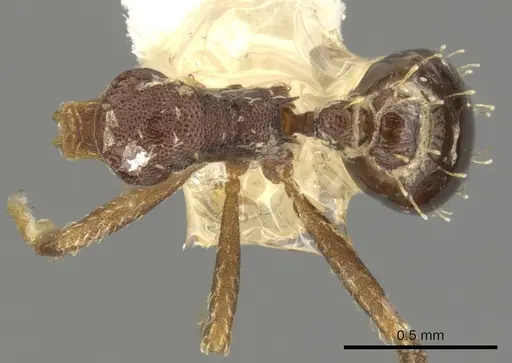
CASENT0914613
Megtekintés az AntWeb-en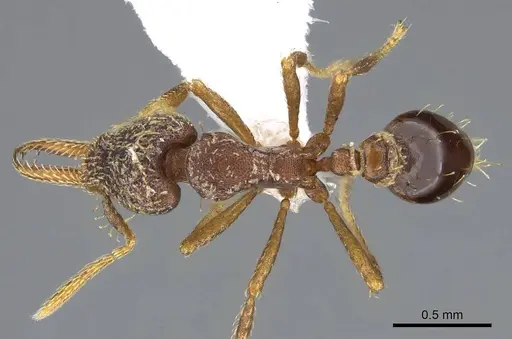
CASENT4031340
Megtekintés az AntWeb-en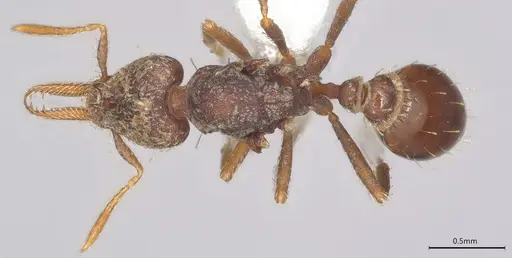
Irodalom
Elterjedési térkép betöltése...Termékek betöltése...