
Strumigenys gatuda
- Tud. név
- Strumigenys gatuda
- Nemzetség
- Attini
- Alcsalád
- Myrmicinae
- Szerző
- Bolton, 1983
- Elterjedés
- 0 országban megtalálható
Bevezetés
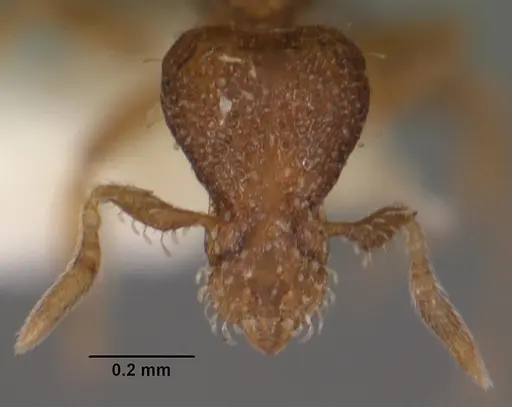
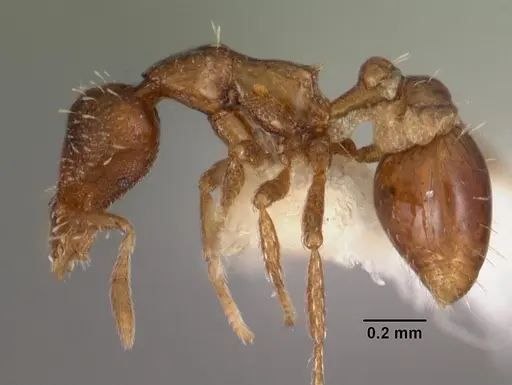
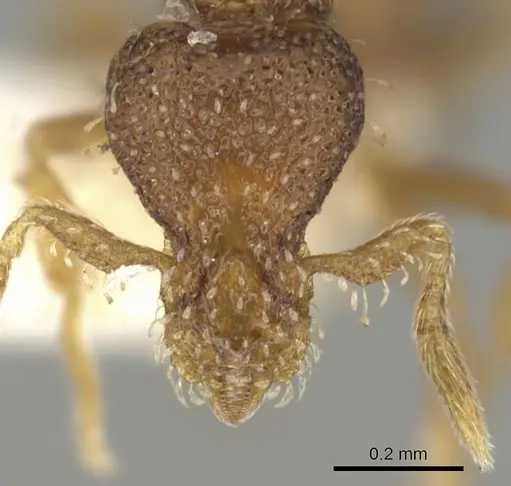
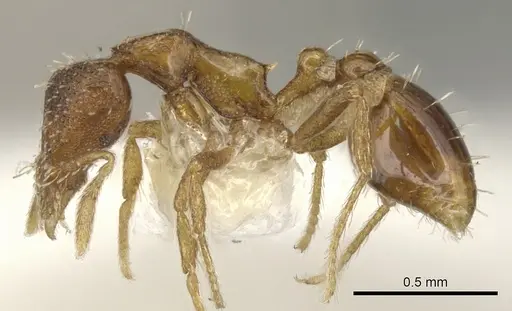
Strumigenys gatuda is a tiny ant species, with workers measuring just 2.2–2.3 mm in total length . They have a glassy-smooth, highly polished body, light brown in color, and are covered in distinctive spoon-shaped hairs. This species belongs to the Strumigenys emarginata group (truncatidens complex). It is endemic to Rwanda, found only in highland tropical rainforest at around 1800 m elevation, known from Rangiro and Kitabi in Nyungwe National Park . Because it is found nowhere else on Earth, its natural biology is almost completely unknown.
Quick Summary
- Difficulty: Expert
- Origin & Habitat: Endemic to Rwanda, restricted to highland tropical rainforest at about 1800 m elevation in the Nyungwe region [2][3]. The type locality is Rangiro, and it has also been recorded at Kitabi in Nyungwe National Park.
- Colony Type: Unknown. No data exists on queen number or social structure.
- Size & Growth:
- Queen: Size unknown – inferred from Strumigenys genus (~3 mm) [1]
- Worker: 2.2–2.3 mm [1]
- Colony: Unknown – likely small, possibly under 200 workers based on related species
- Growth: Unknown – likely slow like other Strumigenys
- Development: Unknown – estimated 8–12 weeks based on related Strumigenys at optimal temperature (No direct development data exists. Estimate is rough and based on genus-level patterns for tropical Myrmicinae.)
- Antkeeping:
- Temperature: Keep around 22–26 °C. These are tropical highland ants, avoid drops below 20 °C or sustained heat above 30 °C.
- Humidity: Keep the nest substrate consistently moist but not waterlogged. High ambient humidity (70–85%) is ideal but can be approximated by maintaining damp substrate and good ventilation.
- Diapause: Unlikely – being a tropical species from near the equator, they probably do not require a true diapause. A slight temperature reduction during a simulated dry season may be considered, but not necessary.
- Nesting: Use small, tight chambers scaled to their tiny size. Y-tong (AAC) or plaster nests with very small cavities work best. Provide completely dark conditions and minimal disturbance.
- Behavior: Very shy and non-aggressive. They possess a functional sting but it is tiny and harmless to humans. Their trap-jaw mandibles are specialized for hunting microscopic prey like springtails. Escape prevention is critical due to their 2.2 mm size – they can squeeze through gaps that larger ants cannot. Workers are slow-moving and secretive.
- Common Issues: escape prevention is critical – 2.2 mm size means they can slip through standard barrier setups, specialized diet makes feeding difficult – they only accept live springtails or other micro-arthropods, no biological data means you are pioneering captive care, high humidity requirements can lead to mold if ventilation is poor, slow growth and small colony size make them vulnerable to stress
Housing and Nest Setup
Because Strumigenys gatuda are only 2.2–2.3 mm long, standard nest chambers are far too large. Use Y-tong (AAC) or plaster nests with very small chambers – just big enough for a dozen workers to move around. Test tubes can work but need careful water management to avoid flooding. Keep the nest completely dark or very dim, as they are light-averse. Place the setup in a quiet, low-vibration area. The outworld should also remain humid, a small plastic container with damp substrate is better than a dry arena. Use fine mesh (at least 0.3 mm openings) on all vents to prevent escapes. [2][3][1]
Feeding and Diet
This is the biggest challenge. Like all Strumigenys, they are specialized predators that hunt tiny arthropods – primarily springtails (Collembola). They will not accept sugar water, honey, or large insects. You must culture your own springtails or obtain them regularly. Other potential prey includes booklice (psocids) and dust mites. Offer prey every 2–3 days, removing uneaten items after 24 hours to prevent mold. Do not offer sugary foods, Strumigenys do not consume nectar or honeydew. Some keepers report success with tiny fruit flies as occasional variety, but springtails should be the staple.
Temperature and Humidity
Maintain temperatures between 22–26 °C. These are highland tropical ants, so they prefer warm, stable conditions without extremes. Humidity is critical – keep the nest substrate consistently moist but not waterlogged. Aim for 70–85% relative humidity in the nest area by using a water reservoir or a moisture gradient in the substrate. Avoid both drying out and standing water. If your room is below 22 °C, consider a small heat mat on one side of the setup. [2][3]
Behavior and Temperament
These ants are extremely docile and harmless to humans. They have a tiny sting but it is not used for defense against large animals. Their trap-jaw mandibles are for hunting microscopic prey. Workers are slow-moving and secretive, spending most of their time in the nest. They are not active climbers, but their 2.2 mm size means they can slip through gaps you would not believe. Use fine mesh and fluon barriers. Colonies stay small, so do not expect large worker numbers. They are not territorial toward other colonies, but mixing is not advised due to unknown compatibility. [1]
Colony Establishment
Founding behavior is unconfirmed. Based on genus patterns, Strumigenys queens are likely claustral – they seal themselves in a small chamber and raise the first brood on stored reserves. However, do not assume this, treat with caution. The queen will be tiny (around 3 mm) and fragile. Do not disturb the founding chamber for at least 6 weeks. Once workers emerge, they will start hunting springtails. Growth will be slow. Do not combine multiple queens – pleometrosis is unreported and risky.
Frequently Asked Questions
What do Strumigenys gatuda eat?
They only accept live tiny prey, primarily springtails (Collembola). They will not eat sugar water, honey, seeds, or large insects. You must culture or purchase small springtails.
How big do Strumigenys gatuda colonies get?
Maximum colony size is unknown, but based on related Strumigenys, they likely stay under 200 workers. Workers are only 2.2–2.3 mm long [1].
Are Strumigenys gatuda good for beginners?
No. This is an expert-level species due to their tiny size, specialized diet, high humidity needs, and lack of biological data. Beginners should start with easier species like Lasius niger or Messor barbarus.
Do Strumigenys gatuda need hibernation?
Probably not. They are tropical near-equatorial ants and likely do not require diapause. A slight temperature reduction during the dry season may be tried, but do not cool them significantly.
Can I keep Strumigenys gatuda in a test tube?
Yes, but with modifications. Use a very small test tube with a tight cotton plug and small water reservoir. Standard test tubes are too large for comfortable founding. Scale everything to their tiny size.
How long does it take for Strumigenys gatuda to raise first workers?
Unknown for this species. Based on related Strumigenys, estimate 6–10 weeks from egg to first worker at optimal temperature (around 24 °C). This is a rough estimate with no direct data.
Why is my Strumigenys gatuda colony dying?
Most likely causes: wrong food (not springtails), low humidity, temperature extremes, or escape. They are sensitive and require precise conditions. Also check for mites or other pests.
Where is Strumigenys gatuda found in the wild?
Endemic to Rwanda, known only from Nyungwe National Park area at about 1800 m elevation in highland tropical rainforest [2][3].
When do Strumigenys gatuda have nuptial flights?
Unknown. No data exists. Being tropical highland, flights may be less seasonal than in temperate species.
Can I keep multiple Strumigenys gatuda queens together?
Not recommended. No data exists on pleometrosis. Combining unrelated queens usually leads to fighting. Stick to single-queen colonies.
How do I prevent Strumigenys gatuda from escaping?
Use fine mesh (0.3 mm or smaller) on all openings, apply fluon barriers, and check for any gaps. Their 2.2 mm size means they can slip through tiny cracks. Cover the outworld and seal everything carefully.
Report an Issue
The current care sheet is based fully on literature. See inconsistencies, or something that's incorrect? Please , it will be resolved after review from an admin. Contributing to the blogs tab also helps providing information, to make us be able to further improve the caresheets. Thank you for your support!
References

Ez a tartási útmutató a következő licenc alatt áll: CC BY-SA 4.0 .
Közösségi blogok
CASENT0102545
Megtekintés az AntWeb-en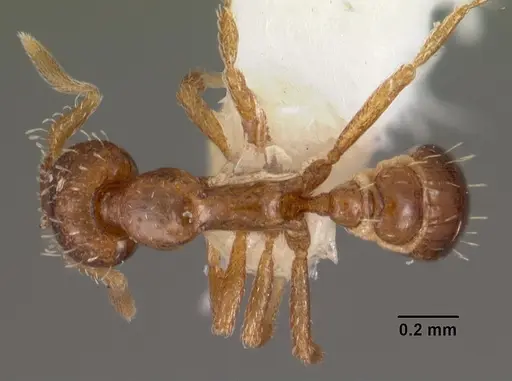
CASENT0900072
Megtekintés az AntWeb-en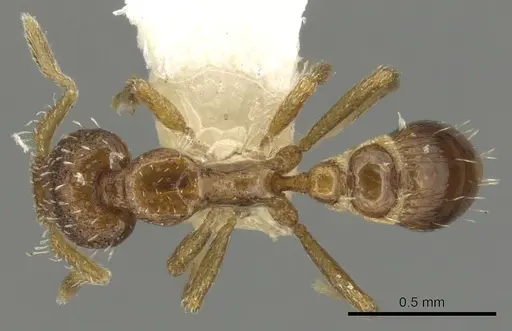
Irodalom
Elterjedési térkép betöltése...Termékek betöltése...