
Stenamma picetojuglandeti
- Tud. név
- Stenamma picetojuglandeti
- Nemzetség
- Stenammini
- Alcsalád
- Myrmicinae
- Szerző
- Arnol'di, 1975
- Elterjedés
- 0 országban megtalálható
Bevezetés
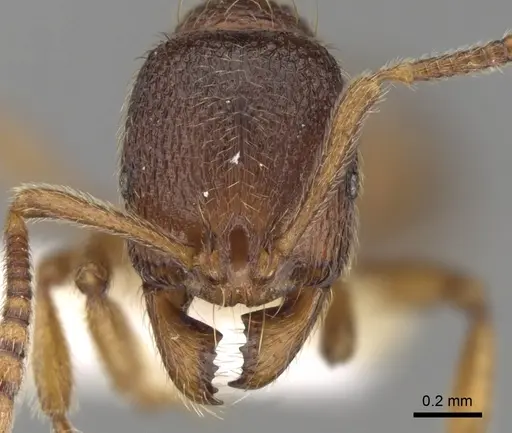
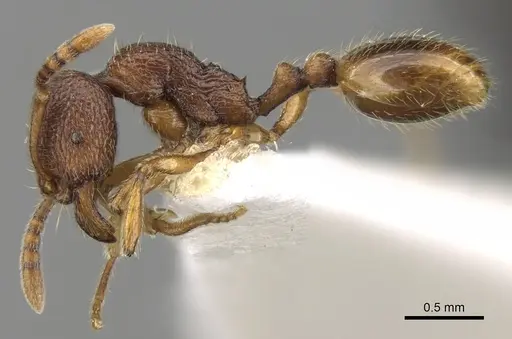
Stenamma picetojuglandeti is a small, cryptic ant from the Tian Shan mountains of Central Asia (Kyrgyzstan, Kazakhstan, Uzbekistan) . Workers have antennal scapes that reach the back corners of the head, a petiolar node that is distinctly longer than the front stalk, and short, straight propodeal spines with trapezoid-shaped plates at their bases . They belong to the westwoodii species group and inhabit mountain forests at extratropical latitudes around 41.5°N . Very little is known about their specific biology, making them a challenging species for antkeepers.
Quick Summary
- Difficulty: Hard
- Origin & Habitat: Tian Shan mountains of Kyrgyzstan, Kazakhstan, and Uzbekistan, moist woodland and forest floor at extratropical latitude ~41.5°N [2][1]
- Colony Type: Likely single-queen (monogyne) based on typical Stenamma patterns, though colony structure is unconfirmed
- Size & Growth:
- Queen: Unknown, inferred from genus (~3-5 mm)
- Worker: Unknown, inferred from genus (~2-3 mm)
- Colony: Unknown, likely under 100 workers based on typical Stenamma patterns
- Growth: Slow
- Development: Unknown, estimate 8-12 weeks at 20°C based on related temperate Myrmicinae patterns (Development timing is unconfirmed for this species)
- Antkeeping:
- Temperature: Cool mountain species, keep at 15-20°C during the active season. Requires winter diapause at 5-10°C [2].
- Humidity: High humidity required, nest material should stay consistently moist, never dry
- Diapause: Yes, required for 3-4 months at reduced temperatures [2]
- Nesting: Soil and rotting wood in nature [1]. For captivity, use naturalistic setups with soil and decaying wood, or plaster nests with narrow chambers. Keep damp.
- Behavior: Likely cryptic and slow-moving with low aggression (inferred from genus). Workers are tiny, so escape risk is high despite calm temperament. Use fine mesh and barrier fluids.
- Common Issues: tiny size means escapes are likely without fine mesh barriers and PTFE coating., colonies often fail if kept too warm, they need cool mountain temperatures, not tropical heat., desiccation kills quickly, nest material must stay moist at all times., overfeeding causes mold in small, humid nests.
Nest Preferences
In nature, Stenamma picetojuglandeti nests in soil and rotting wood in the mountain forests of the Tian Shan range [1]. The type specimens were collected from Chatkal, Arkit in Kyrgyzstan [1]. For captive care, replicate these conditions with a naturalistic setup containing soil and decaying wood, or use a plaster nest that maintains moisture. They need narrow chambers and tunnels scaled to their small size, avoid tall, open spaces that stress small ants. Keep the nest material consistently damp but not waterlogged, as these mountain forest ants require high humidity.
Temperature and Seasonal Care
Coming from extratropical regions at 41.5°N latitude [2], these ants experience distinct seasons and require a winter diapause. Keep the colony at 15-20°C during the active season. When workers slow down and brood development stops, move them to a cooler location at 5-10°C for 3-4 months to simulate winter. Do not let them freeze. A heating cable is unnecessary and potentially harmful for this cool-climate species, room temperature in most homes may even be too warm during summer.
Feeding and Diet
Based on typical Stenamma behavior, these ants are generalist predators that hunt small invertebrates in the leaf litter. Offer tiny live prey such as springtails, fruit flies, or very small cricket nymphs. Pre-killed insects may be accepted but live prey triggers better feeding responses. Provide sugar sources like honey water or sugar water in small drops. Given their small colony size, feed small amounts frequently rather than large meals that could mold in the humid nest environment.
Behavior and Temperament
Inferred from the genus: these are likely cryptic ants, slow-moving, shy, and rarely seen in the open. They probably forage individually rather than in trails and show little aggression. Their small size makes them excellent escape artists despite their calm nature. You must use excellent escape prevention including fine mesh (under 0.5 mm) and PTFE barriers on all outworld surfaces. They pose no sting risk to humans due to their minute size.
Frequently Asked Questions
Can I keep Stenamma picetojuglandeti in a test tube?
Yes, initially. Founding queens can be kept in standard test tubes with water reservoirs, but ensure the cotton is pushed far enough to give narrow space suitable for small ants.
Do Stenamma picetojuglandeti need hibernation?
Yes. As an extratropical mountain species from 41.5°N latitude [2], they require a winter diapause period of 3-4 months at 5-10°C.
How big do Stenamma picetojuglandeti colonies get?
Unknown specifically, but based on typical Stenamma patterns, likely under 100 workers.
What do Stenamma picetojuglandeti eat?
Based on the genus, they are generalist predators. Offer small live prey like springtails and fruit flies, plus sugar water.
Are Stenamma picetojuglandeti good for beginners?
No. They are small, require specific cool temperatures, need diapause management, and have rarely been kept in captivity.
How long until first workers for Stenamma picetojuglandeti?
Unknown. Based on related temperate Myrmicinae, estimate 8-12 weeks at 20°C.
Can I keep multiple Stenamma picetojuglandeti queens together?
Not recommended. Colony structure is unconfirmed, but Stenamma are typically single-queen, so queens will likely fight.
What is the best nest type for Stenamma picetojuglandeti?
Naturalistic setups with soil and rotting wood best replicate their mountain forest habitat [1]. Plaster nests with narrow chambers also work well.
Report an Issue
The current care sheet is based fully on literature. See inconsistencies, or something that's incorrect? Please , it will be resolved after review from an admin. Contributing to the blogs tab also helps providing information, to make us be able to further improve the caresheets. Thank you for your support!
References

Ez a tartási útmutató a következő licenc alatt áll: CC BY-SA 4.0 .
Közösségi blogok
CASENT0280812
Megtekintés az AntWeb-en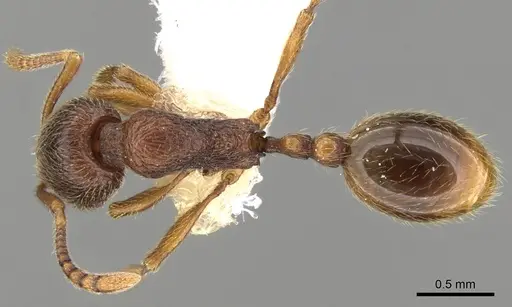
Irodalom
Elterjedési térkép betöltése...Termékek betöltése...