
Protalaridris leponcei
- Tud. név
- Protalaridris leponcei
- Nemzetség
- Attini
- Alcsalád
- Myrmicinae
- Szerző
- Delsinne & Lattke, 2018
- Elterjedés
- 0 országban megtalálható
Bevezetés
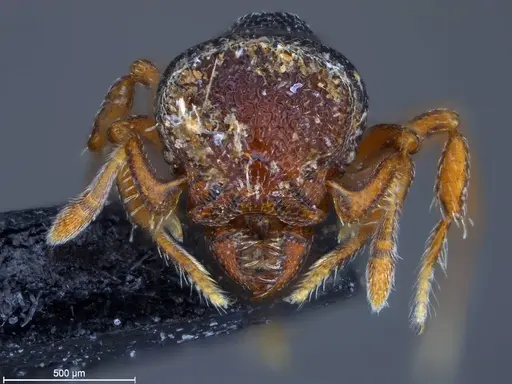
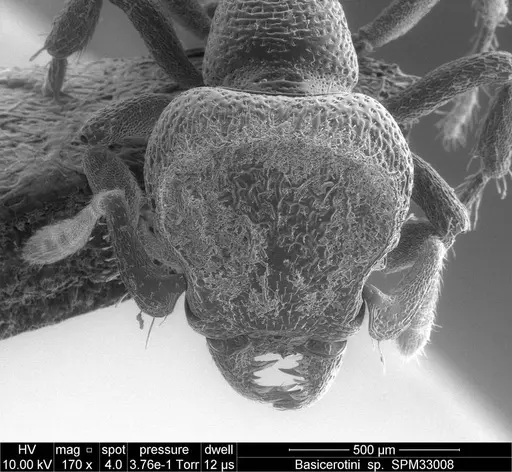
Protalaridris leponcei is a rare ant species from the cloud forests of southern Ecuador. Workers have highly distinctive short, stout, triangular mandibles that are strongly bowed . The species is only known from the Reserva Biológica San Francisco at 1970m elevation . Body size data is not specified in research. The species was discovered in 2018 and named after myrmecologist Maurice Leponce . This ant is part of the Attini tribe and has a very restricted distribution, making it exceptionally rare .
Quick Summary
- Difficulty: Expert
- Origin & Habitat: Eastern Andean slope of southern Ecuador, Zamora-Chinchipe province. Found at 1970m elevation in the leaf litter of evergreen lower montane forest in nearly pristine condition at the Reserva Biológica San Francisco [1][2].
- Colony Type: Unknown, colony structure has not been documented in scientific literature.
- Size & Growth:
- Queen: Unknown, queen caste has not been described
- Worker: Size data unavailable for total length. Head measurements are provided in research, but body size is not specified [1].
- Colony: Unknown, based on low abundance in wild observations, colonies are likely small [1].
- Growth: Unknown
- Development: Unknown, no data available on development timeline. (No direct development data exists. Based on typical ant patterns and cool montane habitat, development may be slower, but this is unconfirmed.)
- Antkeeping:
- Temperature: Based on high-elevation habitat (1970m), likely cool temperatures around 16-20°C. A temperature gradient is recommended [1].
- Humidity: Based on cloud forest habitat, high humidity is likely required. Keep nest substrate consistently moist but not waterlogged [1].
- Diapause: Likely required due to montane habitat. Based on similar species, a cool period of 2-3 months at 10-15°C may be needed [1].
- Nesting: In the wild, found in leaf litter. Naturalistic setups with moist soil and leaf litter are recommended [1].
- Behavior: Workers are cryptic and slow-foraging. Their tiny size means escape prevention is critical. Defense mechanism: as Myrmicinae, they have a sting, but it is not medically significant to humans (general taxonomic knowledge).
- Common Issues: extreme rarity makes acquisition difficult, this species is rarely available in the antkeeping hobby [1]., restricted distribution means captive breeding may be the only source of colonies [1]., escape prevention is critical due to their tiny size, use fine mesh barriers., slow growth and low colony sizes make propagation challenging., virtually no captive care information exists, keepers must be prepared to experiment carefully.
Discovery and Rarity
Protalaridris leponcei was only described in 2018 and remains one of the rarest ant species in the hobby. The entire known global distribution consists of a tiny area in the Reserva Biológica San Francisco in southern Ecuador, at approximately 1970m elevation [1]. Researchers found only five workers across 25 Winkler samples, and intensive sampling just 1.1km away yielded zero specimens [2]. This suggests the species has extremely specific habitat requirements. For antkeepers, this means colonies are exceptionally difficult to obtain and captive breeding may be the only ethical source.
Identification and Morphology
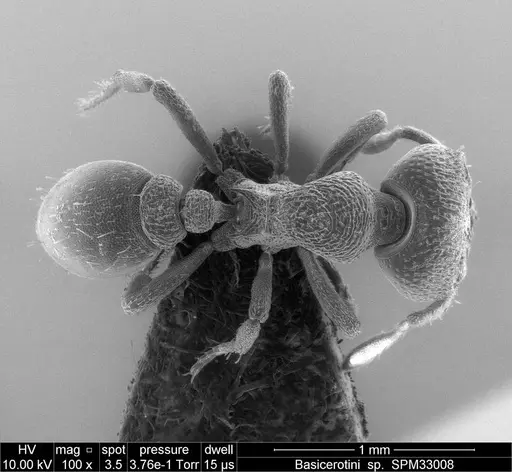
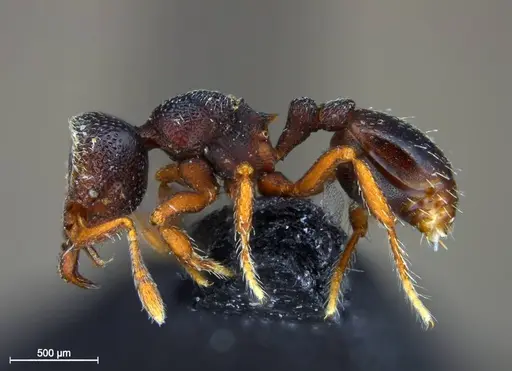
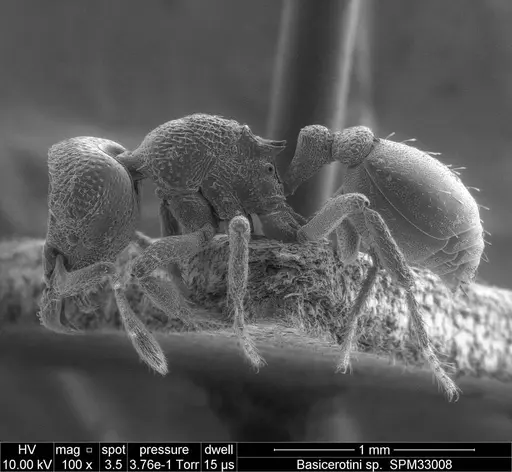
Workers of Protalaridris leponcei are unmistakable due to their highly distinctive mandibles, short, stout, triangular, and strongly bowed when viewed from the side [1]. The basal mandibular tooth is continuous with the basal rim, and the mandible has 10 teeth [1]. The eyes are reduced but distinct, with 10-12 partially fused ommatidia [1]. The head has a unique truncated area delimited by the frontal carinae and frontovertexal ridge [1]. Body size is not specified, but the ants are small.
Habitat and Distribution
This species is known only from the type locality in the Reserva Biológica San Francisco on the eastern Andean slope of southern Ecuador [1]. The habitat is evergreen lower montane forest at 1970m elevation, a cool, humid cloud forest environment [1]. The restricted distribution suggests very narrow ecological tolerances [2].
Feeding and Diet
Based on related leaf-litter predators in the Attini tribe, Protalaridris leponcei likely hunts small soil micro-arthropods like springtails and mites [3]. In captivity, offer small live prey such as springtails and fruit flies. Sugar sources are unlikely to be accepted. Feed small prey items every few days, adjusting based on consumption.
Temperature and Humidity
Based on the high-elevation cloud forest habitat, these ants require cool, humid conditions. Aim for temperatures in the 16-20°C range with a temperature gradient [1]. Humidity should be high with consistently moist substrate, allowing workers to self-regulate [1].
Nesting Preferences
In the wild, these ants live in leaf litter and rotting wood fragments on the forest floor [1]. For captive care, a naturalistic setup with moist soil, decomposing leaves, and small hiding spots works best. Chambers should be tight and scaled to their tiny size. Y-tong nests with narrow chambers are suitable.
Seasonal Care
Given the montane habitat, these ants likely require a winter rest period. During cooler months, reduce temperatures to around 10-15°C for 2-3 months [1]. Do not feed during this period or feed very sparingly. Keep substrate slightly drier but not completely dry.
Frequently Asked Questions
How long does it take for Protalaridris leponcei to produce first workers?
The exact development timeline is unknown. Based on related ant species in cool habitats, development may take several weeks, but no specific data exists.
Are Protalaridris leponcei good for beginners?
No. This is an expert-level species due to extremely limited availability, unknown captive care requirements, and specific temperature and humidity needs.
What do Protalaridris leponcei eat?
They are likely predatory leaf-litter ants. Feed small live prey like springtails and fruit flies [3].
What temperature do Protalaridris leponcei need?
Keep them cool, around 16-20°C, based on their high-elevation habitat [1].
How big do Protalaridris leponcei colonies get?
Colony size is unknown but likely small based on wild observations [1].
Can I keep multiple queens together?
This is unknown. Colony structure has not been documented for this species.
Do Protalaridris leponcei need hibernation?
Likely yes, based on their montane habitat. A cool winter rest period of 2-3 months is recommended [1].
Why are my Protalaridris leponcei dying?
Common causes include temperatures too warm, incorrect humidity, stress from handling, and lack of appropriate small live prey.
Where can I get Protalaridris leponcei?
This species is extremely rare in the antkeeping hobby. Ethical acquisition is a significant challenge [1].
Report an Issue
The current care sheet is based fully on literature. See inconsistencies, or something that's incorrect? Please , it will be resolved after review from an admin. Contributing to the blogs tab also helps providing information, to make us be able to further improve the caresheets. Thank you for your support!
References

Ez a tartási útmutató a következő licenc alatt áll: CC BY-SA 4.0 .
Közösségi blogok
RBINS33008
Megtekintés az AntWeb-en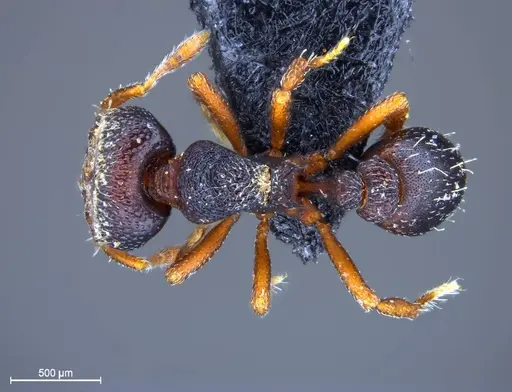
Irodalom
Elterjedési térkép betöltése...Termékek betöltése...