
Ponera pentodontos
- Tud. név
- Ponera pentodontos
- Nemzetség
- Ponerini
- Alcsalád
- Ponerinae
- Szerző
- Xu, 2001
- Elterjedés
- 0 országban megtalálható
Bevezetés
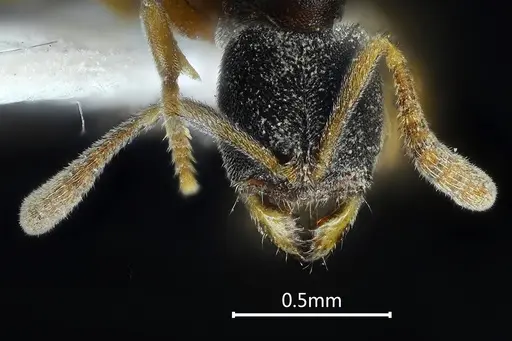
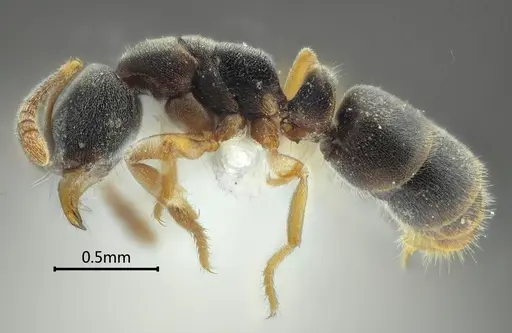
Ponera pentodontos is a tiny predatory ant species described from Yunnan Province, China. Workers measure 2.6-2.8 mm in total length and are entirely black with yellowish-brown mandibles, antennae, and legs. The species is endemic to China, known from seasonal rainforests in Xishuangbanna at approximately 730 meters elevation . This ant is distinguished by its five distinct teeth on the mandible and relatively broad head, as detailed in the original taxonomy .
Quick Summary
- Difficulty: Medium
- Origin & Habitat: Endemic to Yunnan Province, China, specifically the Xishuangbanna region, collected from soil samples in seasonal rainforest at 730 meters elevation [1].
- Colony Type: Colony structure is unconfirmed for this species. No specific literature on social structure exists.
- Size & Growth:
- Queen: Size data unavailable, no measurements provided in literature.
- Worker: 2.6-2.8 mm total length [1].
- Colony: Size data unavailable, no colony size estimates in literature.
- Growth: Moderate, inferred from related Ponera species.
- Development: Unknown, inferred from genus patterns to be 6-10 weeks at optimal temperature. (Development time is estimated based on related species, exact timeline for P. pentodontos has not been documented.)
- Antkeeping:
- Temperature: Keep warm, roughly 22-26°C, based on subtropical habitat inference.
- Humidity: Keep nest substrate consistently moist but not waterlogged, based on rainforest habitat.
- Diapause: Likely required, based on temperate origin, a winter rest period of 2-3 months at 10-15°C is probable.
- Nesting: In nature, nests in soil, for captivity, use small test tube or Y-tong nest.
- Behavior: Ponera pentodontos is predatory, secretive, and slow-moving. Workers are not aggressive toward humans and rely on hunting small arthropods. Due to their tiny size, escape prevention is critical. Primary defense is sting, as typical for Ponerinae tribe.
- Common Issues: escape prevention is critical due to their tiny size, use fine mesh and tight-fitting lids., slow colony growth can lead to keeper impatience and overfeeding., high humidity requirements can lead to mold if ventilation is poor., limited documented care information means keepers must adapt from related species., wild-caught colonies may have parasites that are difficult to detect.
Housing and Nest Setup
Because Ponera pentodontos is an extremely small species, housing must be carefully scaled. A small test tube setup works well for founding colonies, use a test tube with a water reservoir stopped with cotton. For established colonies, a small Y-tong nest with narrow chambers is suitable. An outworld is necessary for feeding since they are predatory. Escape prevention is critical, use fine mesh on ventilation holes and ensure all connections are tight. Keep the nest in a dark area, as Ponera species prefer dark, humid environments.
Feeding and Diet
Ponera pentodontos is predatory, like other Ponera species. Offer small live prey such as fruit flies, pinhead crickets, and springtails. Prey should be appropriately sized, no larger than the ant itself. They are not typically attracted to sugar sources. Feed every 2-3 days, removing uneaten prey after 24 hours to prevent mold. A shallow water dish should always be available.
Temperature and Seasonal Care
This species comes from subtropical rainforests, so maintain temperatures between 22-26°C for optimal health. A heating cable on top of the nest can provide gentle warmth if needed. For winter care, a period of cooler temperatures (10-15°C) for 2-3 months is likely beneficial given the temperate origin. Reduce feeding during this time and maintain light moisture.
Behavior and Colony Dynamics
Ponera pentodontos is a secretive, slow-moving ant that spends much time within the nest. Workers hunt individually using their mandibles. Colonies are likely small, but size data is unavailable. Queens may seal themselves in during founding, but this is unconfirmed. The colony should be kept undisturbed to reduce stress.
Frequently Asked Questions
How long does it take for Ponera pentodontos to produce first workers?
The exact timeline is unknown, but based on typical Ponera genus development, expect 6-10 weeks from egg to first worker at optimal temperature (22-26°C). Be patient, this is a slow-growing species.
What do Ponera pentodontos ants eat?
They are predatory ants that hunt small arthropods. Feed live prey such as fruit flies, springtails, or small crickets. Prey should be appropriately sized for their tiny workers.
Can I keep multiple Ponera pentodontos queens together?
This has not been documented for this species. Based on typical Ponera behavior, single-queen colonies are most common. Combining unrelated queens is not recommended.
What temperature do Ponera pentodontos ants need?
Keep them warm at 22-26°C. This subtropical species prefers stable, warm conditions.
Is Ponera pentodontos a good species for beginners?
This is a moderately difficult species due to their small size, high humidity needs, and specific dietary requirements. It is better suited for keepers with some experience.
How big do Ponera pentodontos colonies get?
Colony size data is unavailable. Based on related species, colonies are likely small, but no estimates exist for this species.
Do Ponera pentodontos ants need hibernation?
Likely yes. Based on their temperate origin, a 2-3 month winter rest period at 10-15°C is probable, but specific requirements are unconfirmed.
Why are my Ponera pentodontos dying?
Common causes include escape through tiny gaps, improper humidity, temperature stress, and insufficient live prey. This species is sensitive to husbandry errors.
When should I move Ponera pentodontos to a formicarium?
Wait until the colony has enough workers and the test tube is cramped. Use a small Y-tong nest and minimize disturbance during transition.
Report an Issue
The current care sheet is based fully on literature. See inconsistencies, or something that's incorrect? Please , it will be resolved after review from an admin. Contributing to the blogs tab also helps providing information, to make us be able to further improve the caresheets. Thank you for your support!
References

Ez a tartási útmutató a következő licenc alatt áll: CC BY-SA 4.0 .
Közösségi blogok
ANTWEB1060523
Megtekintés az AntWeb-en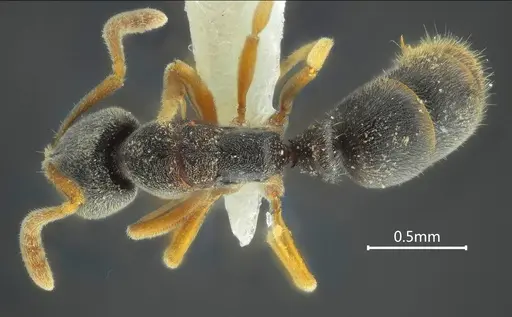
Irodalom
Elterjedési térkép betöltése...Termékek betöltése...