
Polyrhachis montana
- Tud. név
- Polyrhachis montana
- Nemzetség
- Camponotini
- Alcsalád
- Formicinae
- Szerző
- Hung, 1970
- Elterjedés
- 0 országban megtalálható
Bevezetés
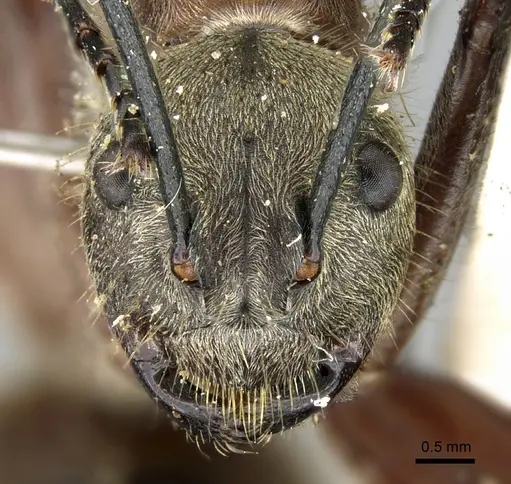
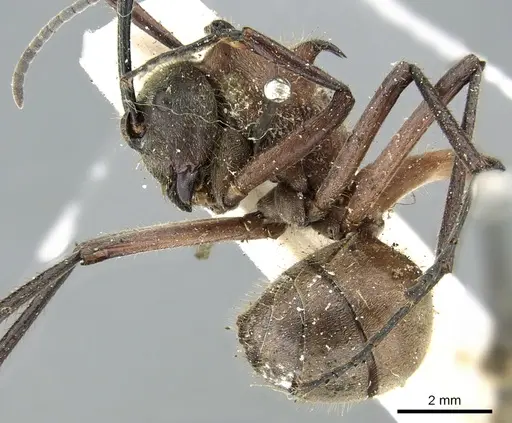
Polyrhachis montana is a large, spiny ant endemic to Borneo and the Philippines. Workers reach 10.73–10.99 mm in total length, making them a notably large Polyrhachis species . They have curved spines on the pronotum, mesonotum, and petiole – the most striking feature being two widely separated, upward-pointing pyramidal spines on the mesonotum that bend backward at an angle greater than 90 degrees. Their body is dark reddish-brown with lighter legs and black-tipped spines. These ants are found in montane forests of Borneo (Sarawak: Mt Murud and Mt Dulit) and have recently been recorded from Mindanao, Philippines . Queens and reproductive forms have never been described . What makes P. montana particularly interesting is its foraging behavior – it forages individually rather than in groups, and shows strong attraction to protein baits like fish scraps and cooked rice. One observed individual carried a grain of cooked rice from an illegal logging site up a tree into the canopy, traveling approximately 70 meters from the food source before being lost to view . This arboreal tendency suggests they may nest in elevated wood cavities or under bark, though exact nesting sites remain unstudied.
Quick Summary
- Difficulty: Expert
- Origin & Habitat: Montane forests of Borneo (Sarawak) and the Philippines (Mindanao). In the Philippines, they have been found foraging in lumber slabs and sawdust at disturbed forest sites [2].
- Colony Type: Colony structure is unconfirmed – only worker specimens have been collected, queens and sexuals are unknown [1].
- Size & Growth:
- Queen: Unknown – queens have not been described [1]
- Worker: 10.73–10.99 mm total length [1]
- Colony: Unknown – colony size has not been documented
- Growth: Unknown
- Development: Unconfirmed – based on related Polyrhachis species, estimate 6–10 weeks at optimal tropical temperatures (No direct data exists. Related Polyrhachis typically develop in 6–10 weeks from egg to worker at 24–28°C.)
- Antkeeping:
- Temperature: As a tropical montane species, keep the nest at 24–28°C. Montane habitats may occasionally dip cooler, but avoid temperatures below 20°C.
- Humidity: Keep the nest substrate moist but not waterlogged. Ensure good ventilation to prevent mold. Their natural Borneo montane habitat is humid.
- Diapause: Unlikely – as a tropical species from a consistent climate, they probably do not require a diapause period.
- Nesting: Based on their foraging in wood and twig habitats [2], they likely nest in pre-existing cavities in rotting wood, under bark, or in hollow twigs. A naturalistic setup with rotting wood, cork, or a plaster/Y‑tong nest with wood elements works well. Avoid completely dry setups.
- Behavior: Polyrhachis montana forages individually and can travel long distances – one ant was observed carrying food 70 meters into the canopy [2]. They are strongly attracted to protein baits. Their defense mechanism: they lack a functional sting, instead, they bite and spray formic acid from the tip of the gaster (typical of Formicinae). Their large size and sharp spines also deter predators. Escape risk is moderate – they are large enough that standard barriers work, but their climbing ability means all connections must be secure.
- Common Issues: limited availability – only known from a few specimens in Borneo and the Philippines [1][2]., unknown colony structure – it is unclear whether they are monogyne or polygyne, queens have never been found [1]., no data on founding behavior – claustral or semi‑claustral founding is unknown [1]., foraging is individual, so they do not recruit to food – prey may spoil before discovered., tropical humidity requirements can lead to mold if ventilation is poor., almost nothing is known about this species, making all care experimental.
Housing and Nest Setup
Polyrhachis montana is an arboreal forager that likely nests in wood cavities, under bark, or in hollow twigs. In captivity, provide pieces of rotting wood, cork, or a plaster/Y‑tong nest with wood elements. Keep the nest humid with a moisture gradient. Because they forage individually and travel long distances in the wild [2], give them a spacious outworld. Use a water test tube as a humidity source. Escape prevention is moderate – they are large ants, standard barriers work, but their climbing ability requires secure connections.
Feeding and Diet
Field observations show P. montana is strongly attracted to protein baits like fish scraps, fish bones, and cooked rice [2]. In captivity, offer small insects (mealworms, crickets, roaches), fish flakes, or cooked meat. They show less interest in sugar than some ants, but you can offer honey or sugar water occasionally. Feed protein 2–3 times per week, removing uneaten food after 24–48 hours. Because they forage individually, place food where foragers can discover it rather than expecting group recruitment.
Temperature and Seasonal Care
As a tropical species from Borneo and the Philippines, keep the nest at 24–28°C. Montane origin means they may tolerate slightly cooler periods, but avoid temperatures below 20°C. A small heating cable on one side creates a gradient. In winter, you can reduce temperatures to around 22–24°C, but avoid cold shocks. No true diapause is expected. If workers become sluggish, increase the temperature slightly.
Behavior and Foraging
Polyrhachis montana forages individually – one ant carried a rice grain 70 meters uphill into the canopy before being lost to view [2]. They are not known to form foraging trails. Their defense: they lack a functional sting, instead, they bite and spray formic acid (typical of Formicinae). The sharp body spines also deter predators. In captivity, provide enrichment like small branches, leaves, or climbing structures to mimic their natural arboreal environment.
Colony Establishment and Growth
Colony establishment is extremely challenging because queens and reproductive forms have never been described [1]. Only worker specimens have ever been collected. This means no founding colonies are known. Without colony structure data, it is impossible to know whether they are monogyne or polygyne. Growth rate is unknown, but based on related large Polyrhachis species, it is likely moderate. Expect months or years to reach significant colony sizes, if any colony can be established at all.
Legal and Ethical Considerations
Polyrhachis montana is native to Borneo (Malaysia/Indonesia) and the Philippines. If you obtain this species, ensure it was legally acquired from a reputable source. Never release any non‑native ant into the wild – they could become invasive. Because this species is rare and poorly known, responsible antkeeping means not contributing to over‑collection from wild populations. If you successfully maintain a colony, you may help preserve knowledge of a species that has never been kept in the hobby.
Frequently Asked Questions
How long does it take for Polyrhachis montana to develop from egg to worker?
The development timeline has not been documented for this species. Based on related Polyrhachis species, estimate 6–10 weeks from egg to first worker at optimal tropical temperatures (24–28°C). Queens have never been described, so founding behavior and timeline are completely unknown.
What do Polyrhachis montana ants eat?
Based on field observations, they are strongly attracted to protein baits like fish scraps, fish bones, and cooked rice [2]. In captivity, feed small insects (mealworms, crickets), fish flakes, or cooked meat. They show less interest in sugar than some ants, but you can offer honey or sugar water occasionally.
Can I keep multiple Polyrhachis montana queens together?
The colony structure is completely unknown – queens have never been described [1]. There is no data on whether they are monogyne (single queen) or polygyne (multiple queens). Without this information, combining unrelated queens is not recommended.
What temperature do Polyrhachis montana ants need?
Keep them at 24–28°C. As a tropical species from Borneo and the Philippines, they need warm conditions year‑round. A small heating cable on part of the nest can create a temperature gradient. They may tolerate slightly cooler temperatures due to their montane origin, but aim for the warmer end of this range.
Are Polyrhachis montana good for beginners?
No – this species is not recommended for beginners. It is extremely rare in the hobby, and almost nothing is known about its biology. Queens have never been described, colony structure is unknown, and there is no established care protocol. This species is best left to experienced antkeepers who can handle the uncertainty.
How big do Polyrhachis montana colonies get?
Colony size is unknown – no data exists on maximum colony size. Based on related large Polyrhachis species, colonies likely reach several hundred to over a thousand workers, but this is only an estimate.
Do Polyrhachis montana need hibernation?
No – as a tropical species from consistent climates in Borneo and the Philippines, they do not require a true diapause. You can slightly reduce temperatures during winter (to around 22–24°C) if kept in a temperate climate, but avoid cold shocks or temperatures below 20°C.
What type of nest is best for Polyrhachis montana?
Based on their natural nesting in wood cavities and arboreal foraging behavior, a naturalistic setup with wood elements works best. A plaster or Y‑tong nest with added cork or wood pieces provides appropriate nesting sites. Keep the nest humid with good ventilation to prevent mold.
Why is Polyrhachis montana so rare in the antkeeping hobby?
This species is known only from a handful of specimens collected in the 1920s–1930s from two mountains in Borneo (Mt Murud and Mt Dulit) and more recently from Mindanao in the Philippines [1][2]. Queens have never been described, so the species cannot be bred in captivity. The recent Philippines record suggests more populations may exist, but they remain one of the rarest Polyrhachis species.
Report an Issue
The current care sheet is based fully on literature. See inconsistencies, or something that's incorrect? Please , it will be resolved after review from an admin. Contributing to the blogs tab also helps providing information, to make us be able to further improve the caresheets. Thank you for your support!
References

Ez a tartási útmutató a következő licenc alatt áll: CC BY-SA 4.0 .
Közösségi blogok
CASENT0906321
Megtekintés az AntWeb-en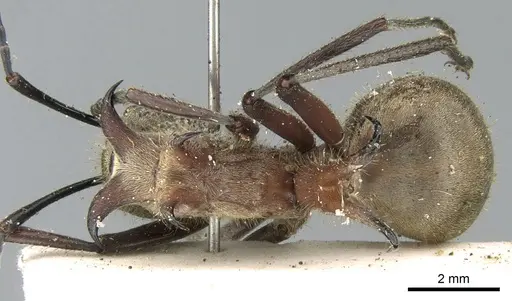
Irodalom
Elterjedési térkép betöltése...Termékek betöltése...