
Polyrhachis furcula
- Tud. név
- Polyrhachis furcula
- Alnem
- Myrmatopa
- Nemzetség
- Camponotini
- Alcsalád
- Formicinae
- Szerző
- Emery, 1911
- Elterjedés
- 0 országban megtalálható
Bevezetés
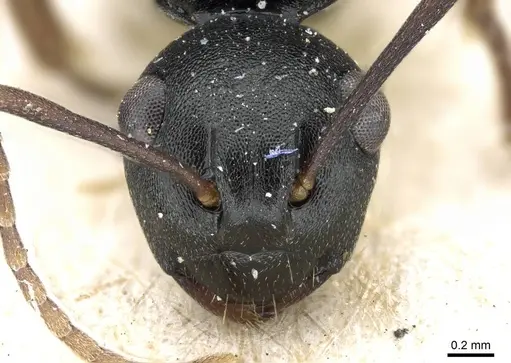
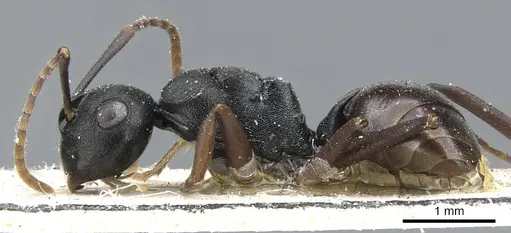
Polyrhachis furcula is a small ant species native to New Guinea. Workers measure approximately 5 mm in length and are brownish-black with brown limbs. They have a spiny petiole that curves forward over the abdomen. The body is densely punctate, with very short hairs on the gaster and legs, and no erect hairs . This species is arboreal and typically nests in tropical rainforest environments . Polyrhachis ants are known for their arboreal nesting habits, often living in trees rather than on the ground. As a New Guinea species, they require warm and humid conditions in captivity.
Quick Summary
- Difficulty: Medium
- Origin & Habitat: New Guinea (Manikion region) in tropical rainforest environments [1][2]
- Colony Type: Based on Polyrhachis patterns, likely monogyne.
- Size & Growth:
- Queen: Estimated ~6-8 mm, inferred from Polyrhachis genus
- Worker: 5 mm [1]
- Colony: Up to several hundred workers, estimated from genus patterns
- Growth: Moderate, estimated based on related species
- Development: Estimated 6-8 weeks at optimal temperature, inferred from typical Formicinae development [2] (Development time is inferred from genus patterns.)
- Antkeeping:
- Temperature: Based on tropical habitat, keep at 24-28°C [2].
- Humidity: Keep the nest substrate consistently moist but not waterlogged, as they come from humid rainforest environments [2].
- Diapause: No, as a tropical species from New Guinea, they do not require hibernation [2].
- Nesting: Polyrhachis are arboreal nesters. In captivity, they do well in Y-tong, plaster, or 3D-printed nests with wood/branches for elevation [2].
- Behavior: Workers are active foragers, generally not aggressive. They lack a sting but can spray formic acid from their acidopore. They are fast-moving and can be skittish. Escape risk is high due to small size (5 mm), so use fine mesh barriers.
- Common Issues: cold temperatures slow or stop brood development., dry conditions cause stress and colony decline., small size allows escapes through tiny gaps, use fine mesh barriers., arboreal nature requires elevated nesting, soil-based setups may cause stress.
Housing and Nest Preferences
Polyrhachis furcula does well in Y-tong, plaster, or 3D-printed nests that mimic their arboreal nature. Unlike ground-nesting ants, they prefer nests with some elevation or that include wood/branches. A nest with multiple connected chambers works well, the ants will use different chambers for brood storage, food, and waste. You can also create a naturalistic setup with cork, wood pieces, or plants. Keep the nest humid but ensure some dry areas exist so the ants can regulate moisture [2].
Feeding and Diet
Feed your colony a balanced diet of sugars and proteins. Sugar water, honey, or diluted maple syrup works well as a constant energy source. For protein, offer small insects like fruit flies, small crickets, or mealworms. Polyrhachis are generalists and will accept most standard ant foods [2].
Temperature and Heating
As a tropical species from New Guinea, Polyrhachis furcula needs warm conditions to thrive. Keep the nest area at 24-28°C. Below 20°C, brood development slows significantly, and prolonged cold can kill the colony. Use a heating cable or small heat mat on one side of the nest to create a temperature gradient [2].
Humidity and Water
High humidity is essential for this species. The nest substrate should feel consistently damp but never waterlogged. Polyrhachis come from humid rainforest environments, and dry conditions cause stress and colony decline. Mist the nest occasionally and keep a water tube connected [2].
Behavior and Colony Life
Polyrhachis furcula workers are active foragers that explore their environment thoroughly. They're generally peaceful and won't aggressively defend the nest unless threatened. Workers lack a sting but can spray formic acid from their acidopore. They are fast-moving and can be nervous, sudden vibrations or light changes may cause them to scatter [2].
Growth and Development
Colony growth is moderate, expect the first workers to emerge 6-8 weeks after the queen lays eggs, assuming optimal temperature. Growth rate depends heavily on temperature and feeding. A healthy colony will grow steadily over the first year, potentially reaching several hundred workers [2].
Frequently Asked Questions
How long does it take for Polyrhachis furcula to get first workers?
Expect first workers to emerge 6-8 weeks after the queen lays her first eggs, at optimal temperature (around 26°C). This is estimated from typical Formicinae development [2].
What do Polyrhachis furcula ants eat?
They eat a standard ant diet: sugar sources (honey, sugar water) for energy and protein (small insects like fruit flies, crickets) for growth [2].
What temperature do Polyrhachis furcula ants need?
Keep them warm at 24-28°C. Tropical species need consistent warmth, use a heating cable or heat mat on one side of the nest [2].
Do Polyrhachis furcula need hibernation?
No. As a tropical species from New Guinea, they don't require hibernation. Keep them warm year-round [2].
What humidity do Polyrhachis furcula ants need?
Keep the nest substrate consistently moist but not waterlogged. They come from humid rainforest environments [2].
Are Polyrhachis furcula good for beginners?
They're rated as medium difficulty. They're more challenging than common species because they need warm, humid tropical conditions [2].
What size do Polyrhachis furcula workers reach?
Workers are approximately 5 mm in length [1]. Queens are estimated at 6-8 mm based on genus patterns.
How big do Polyrhachis furcula colonies get?
Colony size is up to several hundred workers, estimated from typical Polyrhachis colony sizes [2].
Can I keep multiple Polyrhachis furcula queens together?
Polyrhachis are typically monogyne (single queen colonies). Combining unrelated queens is not recommended as they likely won't form polygynous colonies [2].
What type of nest is best for Polyrhachis furcula?
Y-tong, plaster, or 3D-printed nests with wood/branches work best. They're arboreal nesters and prefer elevated nesting sites [2].
Where is Polyrhachis furcula found in the wild?
New Guinea, specifically the Manikion region. They live in tropical rainforest environments and are arboreal nesters [1][2].
Report an Issue
The current care sheet is based fully on literature. See inconsistencies, or something that's incorrect? Please , it will be resolved after review from an admin. Contributing to the blogs tab also helps providing information, to make us be able to further improve the caresheets. Thank you for your support!
References

Ez a tartási útmutató a következő licenc alatt áll: CC BY-SA 4.0 .
Közösségi blogok
CASENT0905555
Megtekintés az AntWeb-en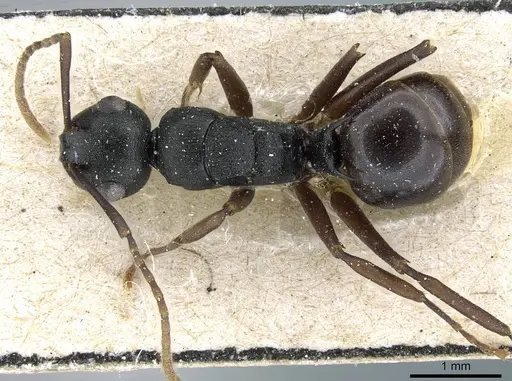
Irodalom
Elterjedési térkép betöltése...Termékek betöltése...