
Polyrhachis carinata
- Tud. név
- Polyrhachis carinata
- Alnem
- Myrma
- Nemzetség
- Camponotini
- Alcsalád
- Formicinae
- Szerző
- Fabricius, 1804
- Elterjedés
- 0 országban megtalálható
Bevezetés
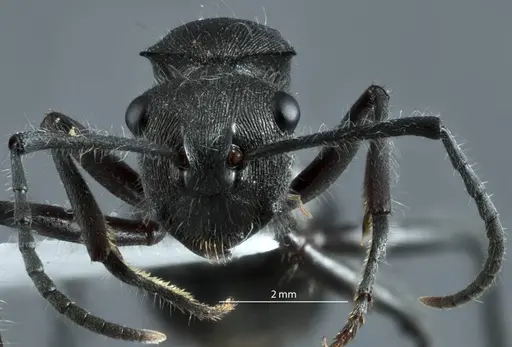
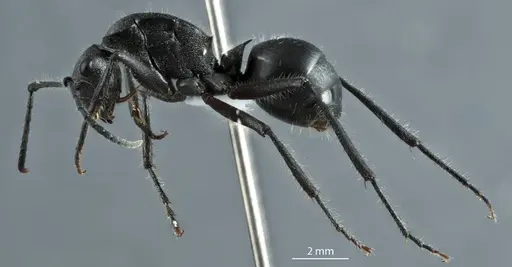
Polyrhachis carinata is a small to medium-sized ant species originally described from New Caledonia in 1804. The worker was first described by Fabricius, and the species was later moved to the genus Polyrhachis by Smith in 1857. Size data is unavailable for this species . Members of the genus Polyrhachis are commonly called 'spiny ants' due to their distinctive spines or projections on the thorax, which this species likely possesses given its name 'carinata' (meaning 'keeled' or 'ridged'). This species is part of the subgenus Myrma and represents a poorly documented ant from the Australasian region .
Quick Summary
- Difficulty: Medium
- Origin & Habitat: New Caledonia (Australasian Region) [1][2].
- Colony Type: Colony structure is unconfirmed. Most Polyrhachis species are monogyne (single queen colonies), but this has not been documented specifically for Polyrhachis carinata.
- Size & Growth:
- Queen: size data unavailable
- Worker: size data unavailable
- Colony: Up to several hundred workers (inferred from Polyrhachis genus patterns [3])
- Growth: Moderate (inferred from genus patterns [3])
- Development: 6-10 weeks (inferred from typical Polyrhachis development [3]) (Development time is inferred from genus-level data. Warmer temperatures will speed development.)
- Antkeeping:
- Temperature: Based on tropical Polyrhachis patterns, keep at 24-28°C [3].
- Humidity: Maintain moderate to high humidity, keep nest substrate consistently moist but not waterlogged [3].
- Diapause: No, tropical species from New Caledonia do not require diapause [3].
- Nesting: Prefers arboreal or semi-arboreal nesting sites. In captivity, use Y-tong (AAC), plaster, or naturalistic setups with vertical space [3].
- Behavior: Polyrhachis carinata is likely relatively calm with moderate activity. They lack a functional sting and instead spray formic acid from an acidopore, which is a typical defense mechanism for subfamily Formicinae. Escape risk is moderate due to climbing ability, ensure secure barriers.
- Common Issues: very limited species-specific information means care is largely inferred from genus patterns., humidity control is critical, too dry and brood will desiccate, too wet and mold becomes a problem., tropical species may struggle if room temperature drops below 20°C., wild-caught colonies may have parasites or diseases not yet understood., their spines can make them tricky to handle gently.
Natural History and Distribution
Polyrhachis carinata was originally described from New Caledonia by Fabricius in 1804,making it one of the older described ant species from that region. New Caledonia is a French territory in the southwestern Pacific, known for its unique biodiversity and tropical environment. The species was later moved to the genus Polyrhachis by Frederick Smith in 1857,and eventually placed in the subgenus Myrma [1][2]. Despite being described over two centuries ago, this species remains poorly studied in terms of its specific biology, colony structure, and behavior [3].
Temperature and Heating Requirements
Being from tropical New Caledonia, Polyrhachis carinata requires warm conditions to thrive. Based on tropical Polyrhachis patterns, aim for a nest temperature between 24-28°C [3]. New Caledonia maintains warm temperatures year-round, so these ants do not experience cold winters that would trigger diapause. In cooler climates or during winter, provide supplemental heating using a heating cable or heat mat on one side of the nest to create a gradient [3].
Feeding and Diet
Like most Polyrhachis species, Polyrhachis carinata is likely an omnivore that accepts both sugar sources and protein. Offer sugar water or honey as a constant energy source, and protein-rich foods like mealworms or small insects 2-3 times per week [3]. Remove uneaten prey after 24-48 hours to prevent mold.
Nesting Preferences in Captivity
Polyrhachis ants often prefer nests that allow for some vertical space and climbing. In captivity, use Y-tong (AAC) nests, plaster nests, or naturalistic setups with multiple chambers [3]. Include vertical elements in the outworld for climbing and foraging exploration.
Humidity Management
Maintaining proper humidity is crucial for this tropical species. Keep the nest substrate consistently moist but not waterlogged, aiming for moderate to high humidity [3]. Good ventilation helps prevent mold while maintaining humidity.
Colony Founding and Early Development
The founding behavior of Polyrhachis carinata has not been documented and is unconfirmed. Based on genus patterns, some Polyrhachis queens may seal themselves in a chamber to raise first workers, but this is not specific to this species. During any founding stage, keep the chamber humid and at stable warm temperatures [3].
Frequently Asked Questions
How long does it take for Polyrhachis carinata to produce first workers?
Based on typical Polyrhachis development, expect first workers to emerge in approximately 6-10 weeks after eggs are laid, assuming optimal temperatures around 26°C [3].
What temperature do Polyrhachis carinata ants need?
Keep nest temperatures between 24-28°C based on tropical Polyrhachis patterns [3]. These ants need warmth to thrive and develop brood properly.
Can I keep Polyrhachis carinata in a test tube setup?
Yes, test tube setups work well for founding colonies. Ensure the water reservoir is properly sized to maintain humidity without flooding [3].
What do Polyrhachis carinata eat?
They are omnivores. Offer sugar water or honey as a constant energy source, and protein like small insects 2-3 times per week [3].
Are Polyrhachis carinata good for beginners?
This species is rated as medium difficulty. While not the hardest species, the limited species-specific information means keepers should have some basic ant-keeping experience [3].
Do Polyrhachis carinata need hibernation?
No, as a tropical species from New Caledonia, they do not require true hibernation [3].
How big do Polyrhachis carinata colonies get?
Colony size is not specifically documented, but based on related Polyrhachis species, colonies likely reach up to several hundred workers [3].
Why are my Polyrhachis carinata dying?
Common causes include low humidity causing brood desiccation, temperatures below 20°C, mold from excessive moisture, or poor nutrition [3]. Check your setup against the temperature and humidity guidelines.
Can I keep multiple Polyrhachis carinata queens together?
The colony structure of this specific species is unconfirmed. Most Polyrhachis are monogyne, so keeping multiple unrelated queens together is not recommended unless you observe peaceful founding behavior [3].
Report an Issue
The current care sheet is based fully on literature. See inconsistencies, or something that's incorrect? Please , it will be resolved after review from an admin. Contributing to the blogs tab also helps providing information, to make us be able to further improve the caresheets. Thank you for your support!
References

Ez a tartási útmutató a következő licenc alatt áll: CC BY-SA 4.0 .
Közösségi blogok
ANTWEB1041222
Megtekintés az AntWeb-en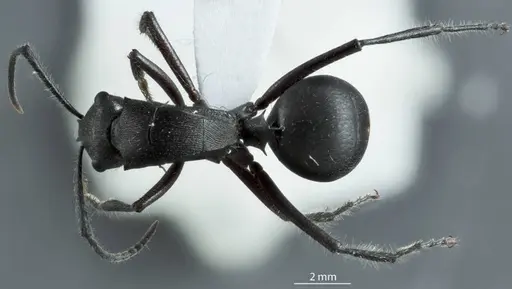
Irodalom
Elterjedési térkép betöltése...Termékek betöltése...