
Pheidole tampony
- Tud. név
- Pheidole tampony
- Nemzetség
- Attini
- Alcsalád
- Myrmicinae
- Szerző
- Salata & Fisher, 2020
- Elterjedés
- 0 országban megtalálható
Bevezetés
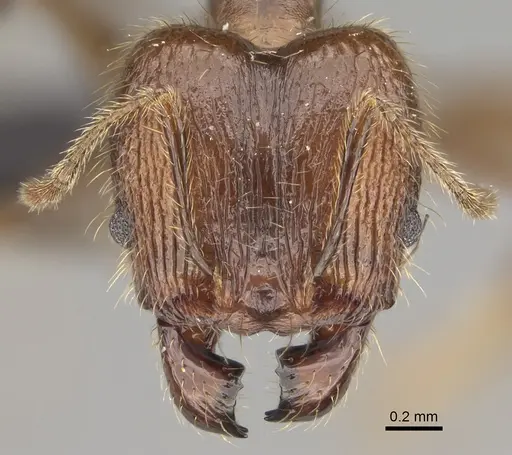
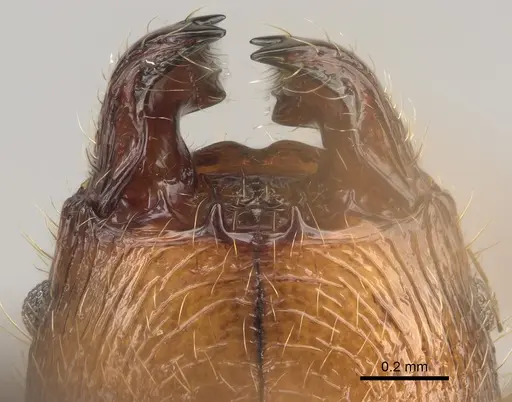
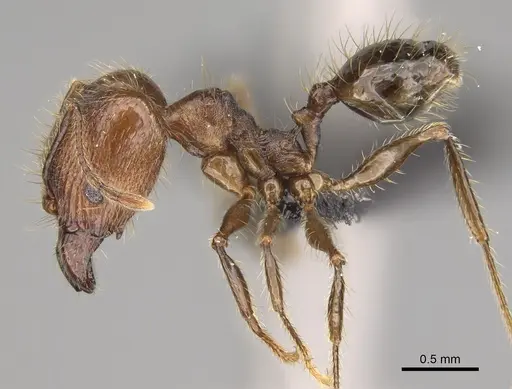
Pheidole tampony is an ant species native to Madagascar, described in 2020 . It inhabits montane shrubland at 2100m elevation, where nests are found under rootmats on stones . Body size data is unavailable for this species. This species belongs to the sikorae group, characterized by major workers with reduced head sculpture and smooth occipital lobes .
Quick Summary
- Difficulty: Hard
- Origin & Habitat: Montane shrubland in Parc National de Marojejy, northern Madagascar at 2100m elevation [1][2]
- Colony Type: Colony structure is unconfirmed, based on typical Pheidole patterns, likely single-queen [2]
- Size & Growth:
- Queen: Size data unavailable, inferred from Pheidole genus (~6-8mm)
- Worker: Size data unavailable
- Colony: Unknown for this species
- Growth: Unknown, estimated moderate based on genus patterns
- Development: Estimated 6-8 weeks at optimal temperature based on typical Pheidole development (No specific data available, estimates based on genus-level patterns)
- Antkeeping:
- Temperature: Based on montane habitat, keep at 20-24°C and avoid overheating [2]
- Humidity: Keep nest substrate moderately moist but not waterlogged, with some drier areas available, based on montane shrubland conditions [2]
- Diapause: No, Madagascar is tropical with minimal seasonal variation [2]
- Nesting: In nature, nests are under rootmats on stones. In captivity, use Y-tong or plaster nests with narrow chambers [1][2]
- Behavior: Pheidole species are generally non-aggressive toward keepers but will defend their nest. Majors have functional stingers but are too small to cause meaningful pain to humans. Workers are active foragers. Escape risk is moderate due to small size, use fine mesh barriers.
- Common Issues: no documented captive husbandry means care requirements are uncertain., very limited availability as a newly described species., wild-caught colonies may not adapt well to captive conditions., small size requires escape prevention attention.
Species Discovery and Taxonomy
Pheidole tampony was described in 2020 by Salata and Fisher as part of a taxonomic revision of the sikorae species group from Madagascar [1]. The species name means 'summit' in Malagasy, referring to the type locality near a mountain peak in Parc National de Marojejy [1]. This ant was collected at 2100 meters elevation, making it a montane species [1]. The sikorae group includes species with major workers having reduced head sculpture and smooth occipital lobes [1].
Natural Nesting Habitat
In the wild, Pheidole tampony nests are found under rootmats on stones in montane shrubland habitat [1][2]. This suggests a preference for sheltered, humid microhabitats with soil coverage. The rootmat provides protection and moisture retention. At 2100m elevation, temperatures are cooler than lowland tropical areas [2].
Size and Morphology
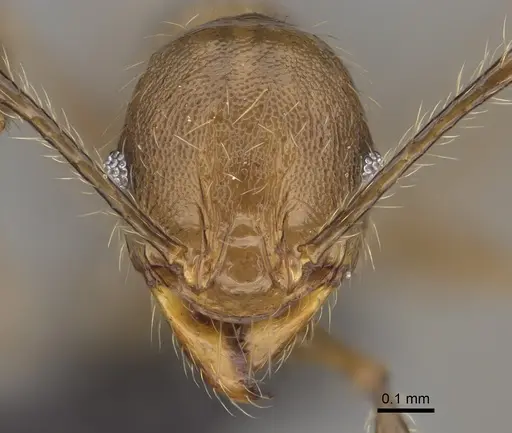
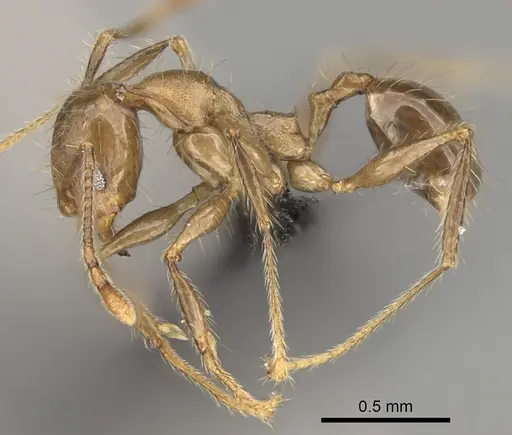
This species shows typical Pheidole dimorphism with major and minor workers. Major workers have enlarged heads for defense and processing hard foods, while minor workers are smaller and handle foraging. Body coloration is brown for majors and bright brown for minors [1]. The significant size difference between castes means prey items should be appropriately sized when feeding.
Care Recommendations
Care recommendations are based on inference from natural habitat and genus patterns. Keep temperatures around 20-24°C [2], maintain moderate humidity [2], and feed small insects and sugar water. Escape prevention is important due to small size [2]. Since no captive breeding data exists, document observations carefully.
Frequently Asked Questions
How do I keep Pheidole tampony ants?
Care is uncertain due to lack of captive data. Based on their montane habitat, keep them at 20-24°C with moderate humidity [2]. Use a Y-tong or plaster nest with some substrate coverage [1][2]. Feed small insects and sugar water.
What do Pheidole tampony ants eat?
Like other Pheidole species, they likely accept small insects as protein and sugar sources [2]. Start with these basic foods and observe acceptance.
How long does it take for Pheidole tampony to develop from egg to worker?
No specific data exists. Based on typical Pheidole development, estimate 6-8 weeks from egg to first worker at optimal temperature.
Are Pheidole tampony good for beginners?
Not recommended for beginners due to lack of captive husbandry data. This is a newly described species with no established care protocols.
What temperature do Pheidole tampony ants need?
Based on their montane habitat at 2100m elevation, they likely prefer cooler conditions. Aim for 20-24°C and avoid overheating [2].
Do Pheidole tampony need hibernation?
No, Madagascar is tropical with minimal seasonal temperature variation [2].
How big do Pheidole tampony colonies get?
No colony size data exists for this species. Based on typical Pheidole, colonies likely reach several thousand workers over time.
Can I keep multiple Pheidole tampony queens together?
Not documented. Pheidole species are typically monogyne (single queen). Combining unrelated queens is not recommended without evidence they accept it.
Where is Pheidole tampony found?
Only known from Parc National de Marojejy in northern Madagascar at 2100m elevation [1][2]. This is a rare endemic species described in 2020.
Report an Issue
The current care sheet is based fully on literature. See inconsistencies, or something that's incorrect? Please , it will be resolved after review from an admin. Contributing to the blogs tab also helps providing information, to make us be able to further improve the caresheets. Thank you for your support!
References

Ez a tartási útmutató a következő licenc alatt áll: CC BY-SA 4.0 .
Közösségi blogok
CASENT0809550
Megtekintés az AntWeb-en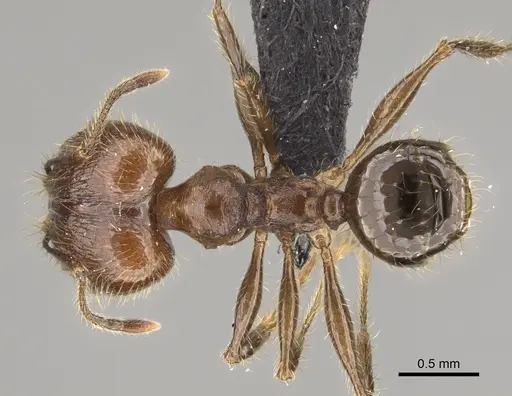
CASENT0923285
Megtekintés az AntWeb-en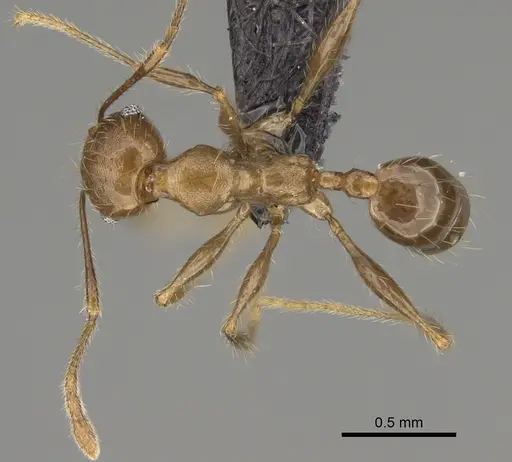
Irodalom
Elterjedési térkép betöltése...Termékek betöltése...