
Pheidole jujuyensis
- Tud. név
- Pheidole jujuyensis
- Nemzetség
- Attini
- Alcsalád
- Myrmicinae
- Szerző
- Forel, 1913
- Elterjedés
- 0 országban megtalálható
Bevezetés
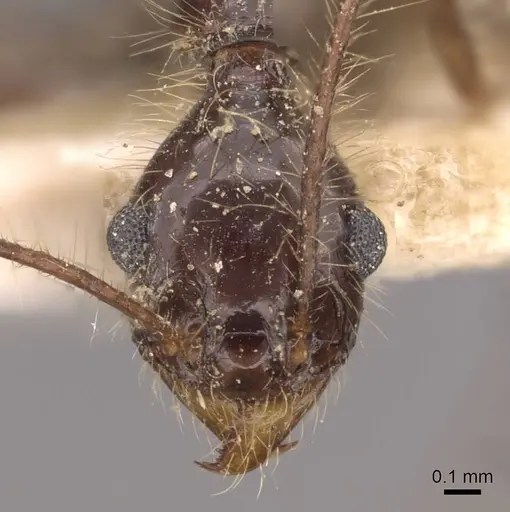
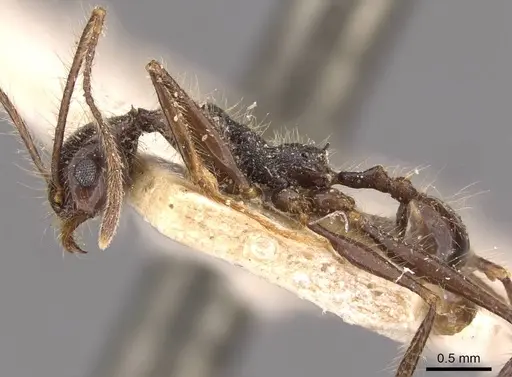
Pheidole jujuyensis is a dimorphic ant species native to South America, recorded in Jujuy province, Argentina, and Minas Gerais and Pará in Brazil . It belongs to the 'jujuyensis complex' within the fallax group, characterized by slender body form and long antennae scapes. Both major and minor workers have abundant long erect hairs . Size data is unavailable as no total length measurements are documented. This species is poorly studied, with no specific biological data on founding, colony size, or diet. All care recommendations are inferred from related Pheidole species.
Quick Summary
- Difficulty: Medium
- Origin & Habitat: Native to Jujuy, Argentina, and Minas Gerais and Pará, Brazil, inhabiting warm forest environments [1][2].
- Colony Type: Colony structure is unconfirmed. Most Pheidole species are monogyne (single queen), but no data exists for this species.
- Size & Growth:
- Queen: Size data unavailable. Based on Pheidole genus, queens are typically 8-12mm total length, inferred from related species.
- Worker: Size data unavailable. Based on Pheidole genus, workers are typically 2-4mm total length, inferred from related species.
- Colony: Up to 3000 workers, estimated from related Pheidole species [1].
- Growth: Estimated moderate, based on genus patterns [1].
- Development: Estimated 6-10 weeks at optimal temperatures, based on typical Pheidole development [1]. (Development time is inferred from related Neotropical Pheidole species.)
- Antkeeping:
- Temperature: Keep nest area at 24-28°C. As a Neotropical species, they require warm temperatures [1].
- Humidity: Maintain moderate humidity. Keep substrate moist but not waterlogged [1].
- Diapause: No diapause required, as a tropical species [1].
- Nesting: In nature, Pheidole species nest in soil or under stones. In captivity, use Y-tong (AAC), plaster, or soil nests with damp substrate [1].
- Behavior: Pheidole jujuyensis is expected to be non-aggressive based on genus patterns. Major workers have large heads for defense, but they are not particularly aggressive toward keepers. Escape risk is low due to size, but standard containment practices should be used.
- Common Issues: lack of species-specific data requires careful observation and adaptation., colony growth may be slow due to resource needs for major workers., humidity management is critical to prevent brood death or mold., temperature drops below 20°C can stress colonies., wild-caught colonies may carry parasites that are difficult to detect.
Nest Preferences and Housing
Pheidole jujuyensis will thrive in setups that mimic their natural ground-nesting habits. In the wild, Pheidole species typically excavate nests in soil or occupy pre-existing cavities under stones and logs [1]. For captive care, a Y-tong (AAC) nest, plaster nest, or naturalistic setup with soil works well. The key is providing damp substrate that holds moisture without becoming waterlogged [1]. Because workers are small, ensure connections are appropriately sized [1].
Feeding and Diet
As a member of the tribe Attini, Pheidole jujuyensis likely has omnivorous tendencies with a preference for seeds and protein [1]. In captivity, offer a varied diet including seeds, small insects, and sugar sources [1]. Pheidole majors have specialized large heads for seed-crushing, so providing appropriate seed options is beneficial [1].
Temperature and Seasonal Care
Pheidole jujuyensis originates from warm Neotropical regions, so they require consistently warm temperatures [1]. Maintain nest temperatures between 24-28°C for optimal brood development [1]. A heating cable can help maintain these temperatures [1]. Unlike temperate species, this ant likely does not require a true diapause period [1].
Understanding the Major-Minor Caste System
Pheidole jujuyensis has a dimorphic caste system with major and minor workers [1]. Minor workers handle most tasks, while major workers have large heads for defense and seed-crushing [1]. Majors appear once the colony reaches a certain size, typically after 50-100 workers, but this is inferred from genus patterns [1].
Colony Establishment and Growth
Establishing a colony requires patience, as no specific founding behavior is documented [1]. Based on typical Pheidole patterns, claustral founding is likely, but this is unconfirmed [1]. Expect 4-6 weeks before eggs, followed by 6-10 weeks until first workers, but this is estimated [1].
Frequently Asked Questions
How long does it take for Pheidole jujuyensis to produce first workers?
The timeline is unconfirmed for this specific species, but based on typical Pheidole development, expect 8-14 weeks from egg to first worker at optimal temperatures (24-28°C) [1].
What do Pheidole jujuyensis eat?
They likely have an omnivorous diet typical of Pheidole species: seeds, small insects, and sugar sources [1]. Offer crushed millet or chia seeds, fruit flies, and honey water, adjusting based on colony acceptance.
Are Pheidole jujuyensis good for beginners?
This species is not ideal for complete beginners due to the lack of species-specific data. All care recommendations are inferences from related Pheidole species, requiring observation and adaptation.
What temperature do Pheidole jujuyensis need?
Keep them warm at 24-28°C. As a Neotropical species, they require tropical temperatures [1].
How big do Pheidole jujuyensis colonies get?
Colony size is unconfirmed, but based on related large Pheidole species, colonies may reach up to 3000 workers over several years [1].
Can I keep multiple Pheidole jujuyensis queens together?
This has not been studied for this species. Most Pheidole species are monogyne, so it is not recommended to house more than one queen together without evidence.
Do Pheidole jujuyensis need hibernation?
No, they likely do not require hibernation as a tropical species [1].
What type of nest is best for Pheidole jujuyensis?
A Y-tong (AAC) nest, plaster nest, or naturalistic setup with damp soil works well. The key is providing humid, dark chambers with moisture-retaining substrate [1].
Why is no biological information available for this species?
Pheidole jujuyensis is a poorly studied species with limited research. It was described in 1913 and raised to species status in 1964,but no focused studies on its biology exist [1].
Report an Issue
The current care sheet is based fully on literature. See inconsistencies, or something that's incorrect? Please , it will be resolved after review from an admin. Contributing to the blogs tab also helps providing information, to make us be able to further improve the caresheets. Thank you for your support!
References

Ez a tartási útmutató a következő licenc alatt áll: CC BY-SA 4.0 .
Közösségi blogok
CASENT0908195
Megtekintés az AntWeb-en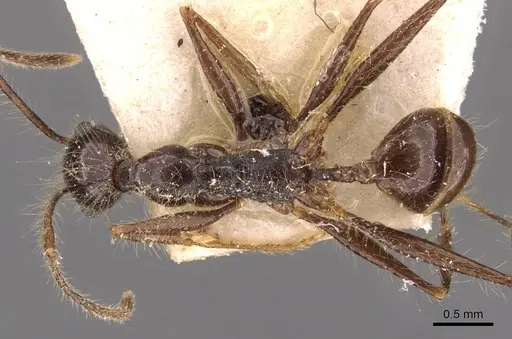
Irodalom
Elterjedési térkép betöltése...Termékek betöltése...