
Pheidole allani
- Tud. név
- Pheidole allani
- Nemzetség
- Attini
- Alcsalád
- Myrmicinae
- Szerző
- Bingham, 1903
- Elterjedés
- 0 országban megtalálható
Bevezetés
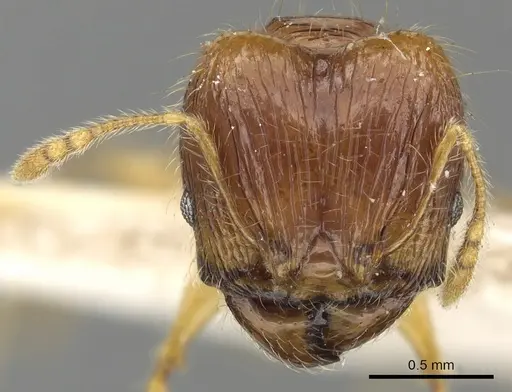
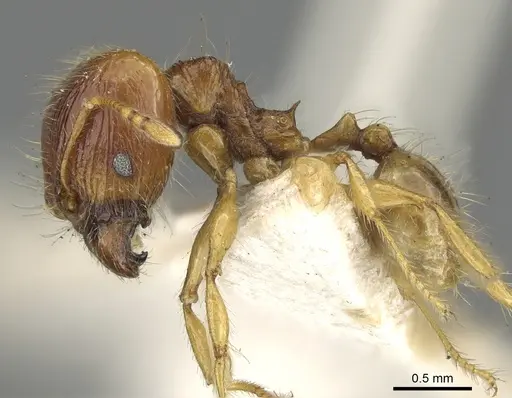
Pheidole allani is a small ant species with distinct castes. Soldiers have large heads and are about 4.7mm long, while minor workers are 2.5-2.9mm long . This species is found in India, Myanmar, and southern China, including Yunnan Province at altitudes up to 2400m . It is notable for its adaptability to cooler mountainous environments, as collected in the Gaoligong Shan mountains .
Quick Summary
- Difficulty: Easy
- Origin & Habitat: Found in India, Myanmar, and southern China (Yunnan), at elevations up to 2400m in mountainous areas [2][3][1].
- Colony Type: Likely monogyne (single-queen colonies) based on Pheidole genus patterns
- Size & Growth:
- Queen: Size data unavailable
- Worker: Minor workers: 2.5-2.9mm TL, Major workers: 4.7mm TL [1]
- Colony: Size data unavailable for this species
- Growth: Moderate, inferred from genus patterns
- Development: 6-8 weeks, inferred from related Pheidole species (Development time may vary with temperature)
- Antkeeping:
- Temperature: Keep at 22-26°C, based on typical Pheidole care patterns
- Humidity: Keep nest substrate consistently moist but not waterlogged, as they are ground-nesting ants
- Diapause: Unknown
- Nesting: Ground-nesting, prefer soil-based nests with a humidity gradient, inferred from genus habits
- Behavior: Minor workers handle foraging and brood care, majors defend the nest and process food. They are not aggressive but will defend if threatened. Escape risk is moderate due to small size, ensure barriers are secure. As members of Myrmicinae, they have a sting, but it is not medically significant to humans.
- Common Issues: keep humidity appropriate, too wet can cause issues for this species, colony growth may be slow, be patient as development takes time, major workers may appear after colony reaches sufficient size, based on genus patterns
Nest Preferences
Pheidole allani is a ground-nesting ant. In captivity, use test tubes for founding colonies, then move to soil-based nests like Y-tong or formicariums. Provide a moisture gradient so ants can choose their preferred humidity zone. This is inferred from genus patterns, as no specific nesting data is available for this species [1][3].
Feeding and Diet
As members of the tribe Attini, they are seed-harvesters but opportunistic omnivores. Offer seeds (e.g., millet) as a staple, protein like small insects 2-3 times weekly, and sugar sources like honey water. Remove uneaten protein after 24 hours to prevent mold. Minor workers do most foraging, while majors help with larger food items.
Temperature and Care
Keep colonies at 22-26°C for optimal growth. Use a heating cable on one side to create a gradient, allowing ants to self-regulate. This is based on typical Pheidole care, as no specific temperature data is available for this species.
Colony Development
Queens likely seal themselves in to raise first brood alone, but founding behavior is unconfirmed. First workers emerge after 6-8 weeks at warm temperatures. Major workers may appear once the colony reaches sufficient size, inferred from genus patterns.
Behavior and Temperament
Workers are active foragers and not particularly aggressive. Major soldiers defend the nest with their mandibles. Escape prevention is important due to small size, use fluon on barriers. This is typical Pheidole behavior, inferred from genus patterns.
Frequently Asked Questions
How long does it take for Pheidole allani to get their first workers?
Expect first workers in 6-8 weeks at 24-26°C, inferred from related Pheidole species. Warmer temperatures speed development.
What do Pheidole allani ants eat?
They are omnivorous seed-harvesters. Offer seeds as a staple, protein like insects 2-3 times weekly, and sugar water. Remove uneaten protein after 24 hours.
Are Pheidole allani good for beginners?
Yes, they are relatively hardy and do not require extreme conditions, making them suitable for beginners.
How big do Pheidole allani colonies get?
Colony size is unconfirmed for this species, but typical Pheidole colonies can reach several hundred workers.
What temperature do Pheidole allani need?
Keep them at 22-26°C. A temperature gradient helps ants self-regulate.
Do Pheidole allani need hibernation?
Diapause requirements are unknown for this species.
Can I keep multiple Pheidole allani queens together?
This is unconfirmed, but based on genus patterns, they are likely monogyne, so combining queens may cause fighting.
When should I move Pheidole allani to a formicarium?
Move them once the colony has 30-50 workers or the test tube water is low, using a soil-based setup with a humidity gradient.
Why are my Pheidole allani dying?
Common causes include improper humidity, stress, or insufficient food. Check that the nest substrate is not too wet.
Report an Issue
The current care sheet is based fully on literature. See inconsistencies, or something that's incorrect? Please , it will be resolved after review from an admin. Contributing to the blogs tab also helps providing information, to make us be able to further improve the caresheets. Thank you for your support!
References

Ez a tartási útmutató a következő licenc alatt áll: CC BY-SA 4.0 .
Közösségi blogok
CASENT0901512
Megtekintés az AntWeb-en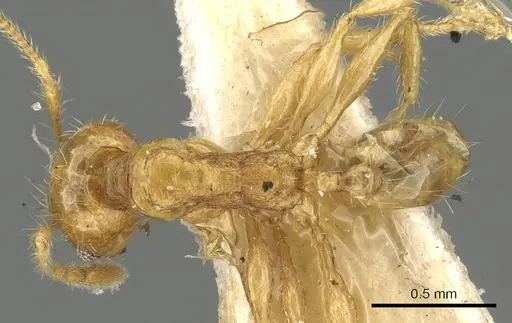
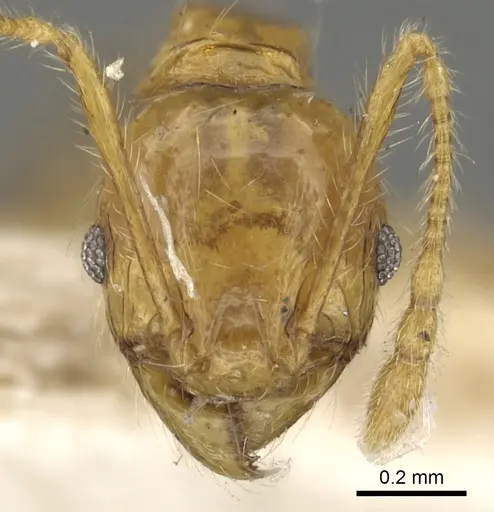
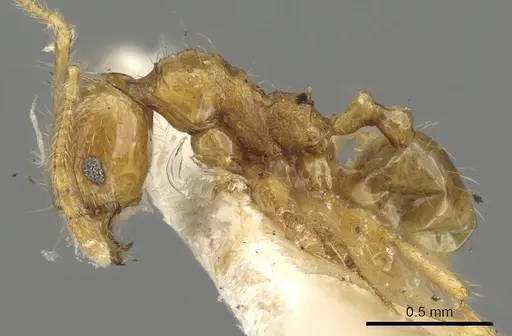
CASENT0901513
Megtekintés az AntWeb-en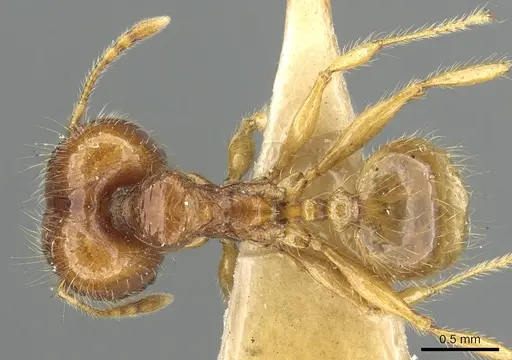
Irodalom
Elterjedési térkép betöltése...Termékek betöltése...