
Perissomyrmex medogensis
- Tud. név
- Perissomyrmex medogensis
- Nemzetség
- Crematogastrini
- Alcsalád
- Myrmicinae
- Szerző
- Xu & Zhang, 2012
- Elterjedés
- 0 országban megtalálható
Bevezetés
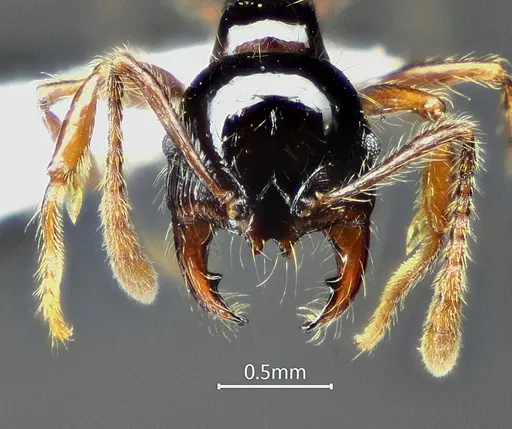
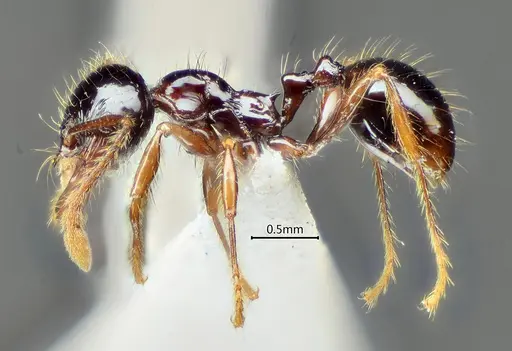
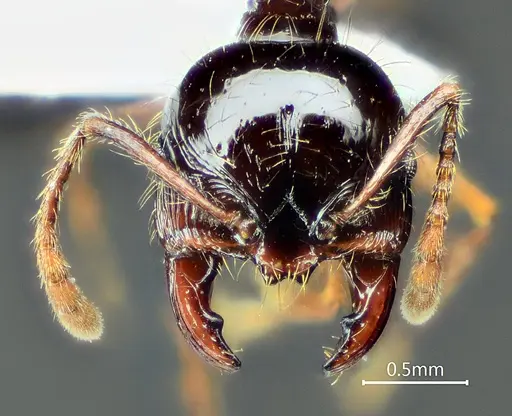
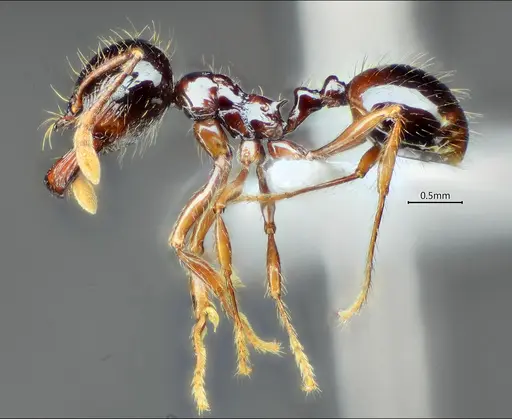
Perissomyrmex medogensis is a small ant from Tibet, China. Workers are 3.9-4.1 mm long, black with brownish mandibles, antennae, and legs . They have a nearly square head and short propodeal spines about one-third the length of the propodeal dorsum . This species nests in decayed wood in Abies forests at 2750 m elevation on the southern slopes of the Himalayas . Colonies are monogynous with a single queen and include a dedicated soldier caste . A notable feature is the soldier caste, which has a larger head and body compared to workers .
Quick Summary
- Difficulty: Expert
- Origin & Habitat: Tibet, China, Medog County at 2750 m elevation in Abies forest on the south slope of the Himalaya Mountains [1]. Nests inside decayed wood in ground samples [1].
- Colony Type: Monogynous with single queen colonies [1].
- Size & Growth:
- Antkeeping:
- Temperature: Based on high-altitude origin, likely prefers cool conditions around 18-22°C [1].
- Humidity: Provide moderate humidity with a moist nest substrate, based on nesting in decayed wood [1].
- Diapause: Unknown, but likely requires winter diapause due to temperate origin [1].
- Nesting: Nests in decayed wood in wild, so wood-based or plaster nests with wood inclusions are suitable [1].
- Behavior: Workers are weakly dimorphic and possibly forage on the ground [1]. Based on their subfamily (Myrmicinae) and tribe (Crematogastrini), they likely use a smear defense mechanism. Escape risk is moderate due to small size.
- Common Issues: lack of species-specific care data could lead to improper husbandry., diet preferences are unknown, risking starvation., temperature and humidity requirements are unclear., hibernation needs are undocumented., colony failure risk due to limited knowledge., rare in hobby, difficult to acquire.
Discovery and Distribution
Perissomyrmex medogensis was described in 2012 by Xu and Zhang. It is known only from Medog County, Tibet, China, at about 2750 m elevation in Abies forest [1]. The species nests inside decayed wood in ground samples [1].
Appearance and Identification
Workers are 3.9-4.1 mm long with a nearly square head and short propodeal spines [1]. The body is black with brownish mandibles, antennae, and legs [1]. Soldiers are larger at 4.4-4.8 mm with proportionally bigger heads [1].
Colony Structure
Colonies are monogynous with a single queen [1]. A small soldier caste makes up about 6.5% of the colony [1]. Workers are weakly dimorphic [1].
Housing and Nesting
In the wild, these ants nest in decayed wood [1]. For captivity, wood-based or plaster nests with wood inclusions are suitable [1]. Maintain moderate humidity and provide escape prevention for small ants.
Feeding and Diet
Diet preferences have not been studied for this species [1]. As Myrmicine ants, they may accept typical ant foods, but specific acceptance is unknown.
Temperature and Seasonal Care
No specific temperature requirements are documented, but high-altitude origin suggests cool conditions around 18-22°C [1]. Diapause is likely but undocumented [1].
Frequently Asked Questions
How difficult is Perissomyrmex medogensis to keep?
This species is rated Expert difficulty due to lack of captive care data [1]. Only experienced keepers should attempt it.
What do Perissomyrmex medogensis ants eat?
Diet preferences are completely unstudied [1]. Start with sugar water, honey, and protein sources like insects, and observe acceptance.
What temperature do Perissomyrmex medogensis ants need?
Specific requirements are unknown, but based on high-altitude origin, start around 18-22°C [1].
How big do Perissomyrmex medogensis colonies get?
Colonies contain up to 70 individuals [1].
Do Perissomyrmex medogensis ants have soldiers?
Yes, soldiers make up about 6.5% of the colony and are larger than workers [1].
Where is Perissomyrmex medogensis found?
This species is known only from Medog County, Tibet, China, at 2750 m elevation in Abies forest [1].
How many queens does Perissomyrmex medogensis have?
Colonies are monogynous with a single queen [1].
Do Perissomyrmex medogensis ants need hibernation?
This is unknown but likely yes due to temperate origin [1].
Are Perissomyrmex medogensis ants aggressive?
Aggression levels are not documented, but as small ants, they pose little threat [1].
How long does it take for Perissomyrmex medogensis to raise first workers?
No development data exists for this species [1].
Report an Issue
The current care sheet is based fully on literature. See inconsistencies, or something that's incorrect? Please , it will be resolved after review from an admin. Contributing to the blogs tab also helps providing information, to make us be able to further improve the caresheets. Thank you for your support!
References

Ez a tartási útmutató a következő licenc alatt áll: CC BY-SA 4.0 .
Közösségi blogok
ANTWEB1060567
Megtekintés az AntWeb-en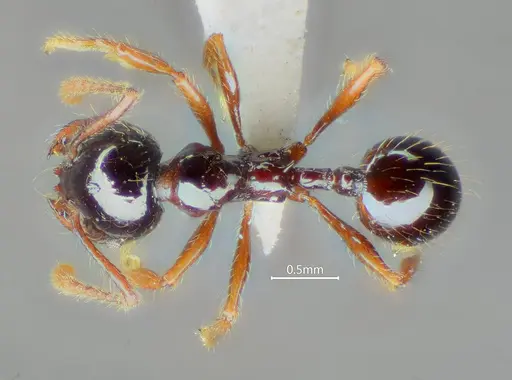
ANTWEB1060568
Megtekintés az AntWeb-en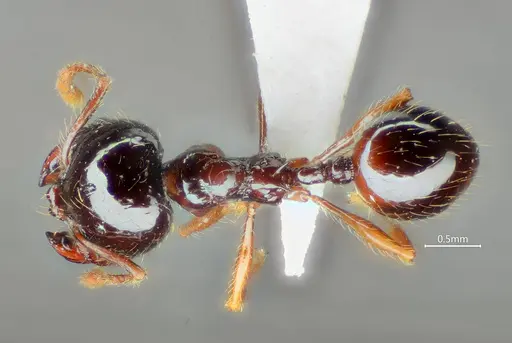
Irodalom
Elterjedési térkép betöltése...Termékek betöltése...