
Nylanderia manni
- Tud. név
- Nylanderia manni
- Nemzetség
- Lasiini
- Alcsalád
- Formicinae
- Szerző
- Donisthorpe, 1941
- Elterjedés
- 0 országban megtalálható
Bevezetés
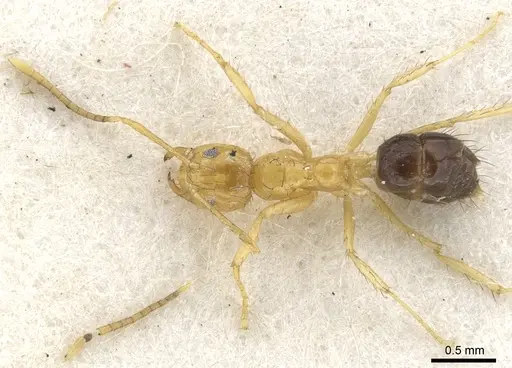
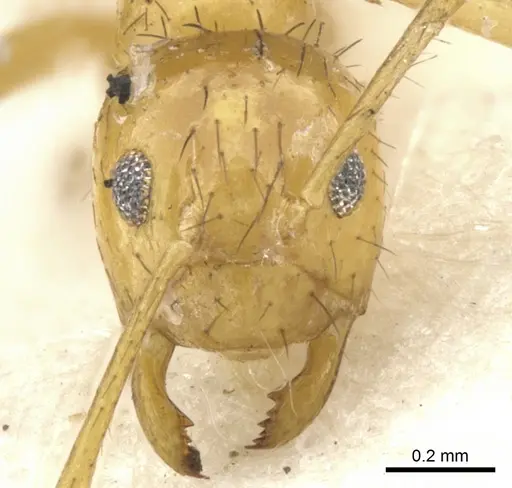
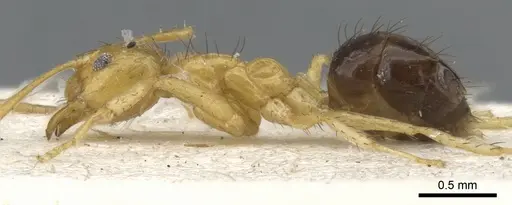
Nylanderia manni is a small ant species native to the Solomon Islands in the Oceania region . Workers are small, with size inferred from the Nylanderia genus . The species was first described in 1941 by Donisthorpe from specimens collected in the Solomon Islands, specifically recorded from Makira Island . As a tropical ant species from the Pacific islands, they inhabit warm, humid environments typical of the Solomon Islands archipelago . The species is part of the diverse Nylanderia genus, which contains numerous species adapted to various habitats .
Quick Summary
- Difficulty: Easy
- Origin & Habitat: Solomon Islands (Oceania region), specifically recorded from Makira Island [1]. As a tropical Pacific island species, they inhabit warm, humid forest environments [2].
- Colony Type: Colony structure is unconfirmed. No specific data exists for this species.
- Size & Growth:
- Queen: ~3-5mm, inferred from Nylanderia genus [2]
- Worker: ~2-4mm, inferred from Nylanderia genus [2]
- Colony: Unknown for this specific species. Based on related Nylanderia species, colonies may reach several hundred workers [2]
- Growth: Moderate, inferred from tropical ant patterns
- Development: Estimated 6-8 weeks at tropical temperatures based on related Formicinae species [2] (Development timeline is estimated, not directly studied for this species.)
- Antkeeping:
- Temperature: Keep at 24-28°C. As a tropical species, they need warm, stable conditions [2].
- Humidity: Keep the nest substrate consistently moist but not waterlogged, reflecting their tropical habitat [2].
- Diapause: No, being a tropical species, they do not require hibernation [2].
- Nesting: In captivity, they do well in test tubes for founding colonies. Once established, they adapt well to Y-tong nests or plaster formicariums. They prefer narrow chambers scaled to their small size [2].
- Behavior: These are small, active ants that are generally non-aggressive and peaceful toward keepers. They are fast-moving and can be skittish when disturbed. Escape prevention is critical due to their very small size, they can squeeze through standard barrier gaps easily [2].
- Common Issues: escape prevention is critical, their tiny size means they can slip through the smallest gaps., tropical species need constant warmth, cold drafts can stress or kill colonies., overheating is a risk, keep heating gradients gentle and provide cooler areas., wild-caught colonies may carry parasites that can devastate captive populations., small colonies grow slowly, which can frustrate beginners who overfeed or check too frequently.
Housing and Nest Setup
For founding colonies, a standard test tube setup works well. Fill the tube with water and plug with cotton, providing a dark enclosure for the queen [2]. Once workers arrive, you can keep them in the test tube for several months as the colony establishes. For growing colonies, Y-tong nests or plaster formicariums work well. The chambers should be narrow and scaled to their small size [2]. Avoid tall, open spaces that can make them feel insecure. They do well with a small outworld for foraging. Use excellent escape prevention, their small size means they can escape through gaps that larger ants cannot. Apply fluon to container edges and use fine mesh on any ventilation [2].
Feeding and Diet
Nylanderia manni is likely an omnivorous species, similar to other Nylanderia ants [2]. Offer sugar water or honey as a constant energy source. For protein, provide small insects like fruit flies, small mealworms, or cricket legs. They likely tend aphids in the wild for honeydew, so they may accept sugar sources readily. Feed protein 2-3 times per week, removing any uneaten prey after 24 hours. Fresh sugar water should be offered every few days. Remove any moldy food promptly to prevent colony health issues [2].
Temperature and Seasonal Care
As a tropical species from the Solomon Islands, Nylanderia manni needs warm conditions year-round. Keep the nest area at 24-28°C [2]. A heating cable placed on one side of the nest creates a temperature gradient allowing workers to choose their preferred warmth. Avoid placing the nest directly on heating mats, gentle, indirect warmth is better. Room temperature (around 22-24°C) may be acceptable if your home is naturally warm. They do not need hibernation or cooling periods. Sudden temperature drops or cold drafts can stress or kill colonies, so position the setup away from windows, air conditioning vents, and exterior doors [2].
Colony Development
A newly mated queen should be placed in a test tube with water reservoir. She will seal herself in a chamber and lay eggs [2]. The first workers (nanitics) will be smaller than normal workers and typically emerge in 6-8 weeks under optimal warm conditions [2]. After nanitics appear, the colony grows gradually. The queen will continue laying eggs while workers expand the nest, tend brood, and forage for food. Colony growth is moderate, expect several months to reach 50 workers and over a year to reach several hundred. Patience is key with small tropical ants [2].
Handling and Observation
These are small, fast-moving ants that can be challenging to observe closely. They are generally peaceful and will flee rather than attack when disturbed. They do not have a painful sting, most Nylanderia species are considered harmless to keepers. When observing, use a red film over your light source if you want to watch night activity without disturbance. Their small size requires good lighting and magnification for detailed observation. Avoid frequent disturbances during the founding stage as this can cause queens to abandon or eat their brood [2].
Frequently Asked Questions
How long does it take for Nylanderia manni to produce first workers?
Expect first workers (nanitics) in about 6-8 weeks at optimal tropical temperatures (25-28°C). This is an estimate based on related Formicinae species, as the specific development timeline has not been studied for this species [2].
What temperature do Nylanderia manni ants need?
Keep them at 24-28°C. As a tropical Solomon Islands species, they need warm, stable conditions year-round. A gentle temperature gradient allows workers to regulate their own temperature preference [2].
Do Nylanderia manni ants need hibernation?
No. Being a tropical species from the Solomon Islands, they do not require hibernation. Maintain warm temperatures throughout the year. Do not expose them to cool temperatures below about 20°C for extended periods [2].
How big do Nylanderia manni colonies get?
The maximum colony size is not documented for this species. Based on related Nylanderia species, colonies may reach several hundred workers. Growth is moderate, expect several months to reach 50 workers [2].
Can I keep multiple Nylanderia manni queens together?
This has not been studied for this specific species. Most Nylanderia species are monogyne (single queen), but some can be polygynous. It is generally not recommended to combine unrelated foundress queens, as fighting is likely [2].
What do Nylanderia manni ants eat?
They are omnivorous. Offer sugar water or honey as a constant energy source. For protein, provide small insects like fruit flies, small mealworms, or cricket legs. They likely accept a variety of foods similar to other Nylanderia species [2].
Are Nylanderia manni ants good for beginners?
Yes, they are considered a good beginner species due to their easy care requirements. They are forgiving of minor mistakes, don't require hibernation, and are peaceful. The main challenge is their tiny size requiring excellent escape prevention [2].
When should I move Nylanderia manni to a formicarium?
You can keep them in a test tube setup for the first several months. Move to a proper nest (Y-tong or plaster) when the colony reaches 30-50 workers and the test tube is showing signs of drying or crowding [2].
Why are my Nylanderia manni ants escaping?
Their tiny size means they can squeeze through very small gaps. Use excellent escape prevention: apply fluon to barrier edges, use tight-fitting lids, and ensure any ventilation has fine mesh (at least 0.5mm or smaller). Check all potential escape routes regularly [2].
Report an Issue
The current care sheet is based fully on literature. See inconsistencies, or something that's incorrect? Please , it will be resolved after review from an admin. Contributing to the blogs tab also helps providing information, to make us be able to further improve the caresheets. Thank you for your support!
References

Ez a tartási útmutató a következő licenc alatt áll: CC BY-SA 4.0 .
Közösségi blogok
CASENT0903126
Megtekintés az AntWeb-en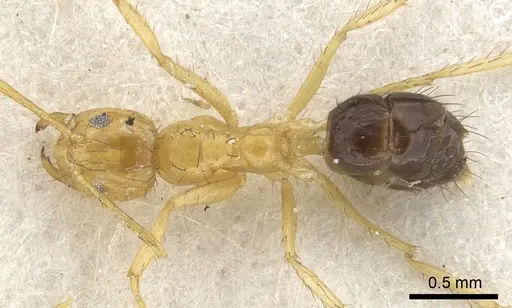
Irodalom
Elterjedési térkép betöltése...Termékek betöltése...