
Myrmoteras marianneae
- Tud. név
- Myrmoteras marianneae
- Alnem
- Myagroteras
- Nemzetség
- Myrmoteratini
- Alcsalád
- Formicinae
- Szerző
- Agosti, 1992
- Elterjedés
- 0 országban megtalálható
Bevezetés
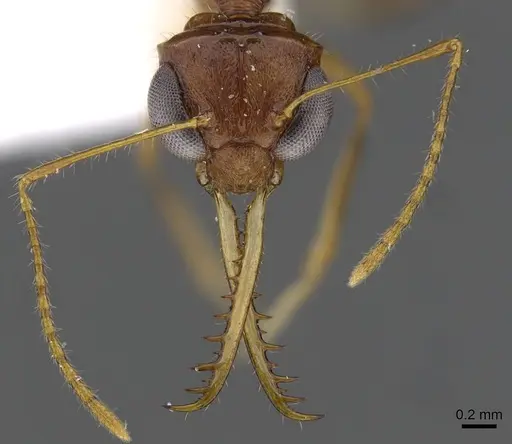
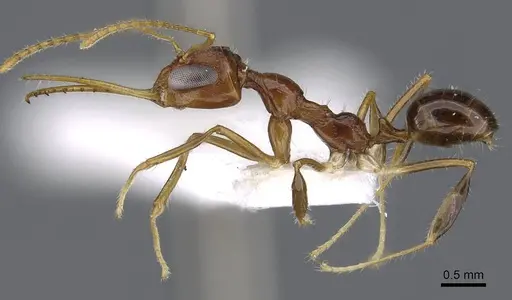
Myrmoteras marianneae is a small trap-jaw ant native to the Indonesian islands of Sulawesi and Sumatra. Workers measure approximately 4-5mm and possess the genus' signature feature: large mandibles capable of snapping shut rapidly to capture prey. They have a dark reddish-brown to black coloration with a slender build typical of forest-floor ants. This species was described by Agosti in 1992 and is part of the tribe Myrmoteratini within Formicinae . What makes Myrmoteras marianneae interesting is their trap-jaw mechanism - these ants snap their mandibles shut with speed to subdue prey, similar to the more famous Odontomachus trap-jaw ants but belonging to a different subfamily. They are ground-dwelling ants collected from leaf litter in primary forest ecosystems, indicating they prefer humid, shaded environments with abundant ground cover .
Quick Summary
- Difficulty: Medium
- Origin & Habitat: Native to Indonesia, specifically Sulawesi and Sumatra islands. They inhabit primary forest ecosystems where they are found in leaf litter on the forest floor [2][1].
- Colony Type: Colony structure is not documented in scientific literature.
- Size & Growth:
- Queen: Approximately 5-6mm, inferred from genus patterns
- Worker: Approximately 4-5mm [1]
- Colony: Likely small colonies of several dozen to a few hundred workers based on typical genus behavior
- Growth: Moderate
- Development: Estimated 6-8 weeks at tropical temperatures based on related Formicinae species (Development timeline is not directly documented for this species, estimates based on genus-level data)
- Antkeeping:
- Temperature: Keep at 24-28°C, mimicking tropical forest floor conditions. A slight gradient allowing cooler areas is beneficial.
- Humidity: High humidity is essential, aim for 70-85%. These leaf-litter ants need consistently moist substrate conditions.
- Diapause: No, given their tropical distribution, they do not require true diapause. They may show reduced activity during cooler periods.
- Nesting: Naturalistic setups with moist substrate work well. They prefer enclosed, humid spaces with access to a foraging area. Y-tong nests or plaster nests with good moisture retention are suitable options.
- Behavior: Myrmoteras marianneae are active predators with their characteristic trap-jaw mandibles. They are likely more active hunters compared to typical Formicinae, using their snap-jaws to capture small prey. Workers are probably moderately aggressive when defending their nest but not typically territorial outside the nest. Their small size means escape prevention is important, they can squeeze through small gaps. They are diurnal foragers active during the day in the humid leaf litter layer.
- Common Issues: high humidity maintenance is critical, drying out can quickly kill colonies, small size makes escape prevention challenging without fine mesh barriers, limited available care information means keepers must adapt from related species, predatory nature requires live prey acceptance, they may not accept dead food easily, slow colony growth compared to common hobby species requires patience
Housing and Nest Setup
Myrmoteras marianneae requires a setup that maintains high humidity while providing space for hunting and foraging. A naturalistic terrarium-style setup works well, use a container filled with moist substrate (a mix of soil and leaf litter) that allows the ants to create their own chambers. Alternatively, a Y-tong nest with narrow chambers and a connected outworld provides good visibility while maintaining humidity. The nest area should be kept dark or dimly lit, as these forest-floor ants prefer shaded conditions. Use a water reservoir or moisture system to maintain substrate dampness without waterlogging. The outworld should have a small dish of water and be escape-proofed with fine mesh or vaseline barriers due to their small size. [1]
Feeding and Diet
As predatory trap-jaw ants, Myrmoteras marianneae likely requires live prey to thrive. Offer small live insects such as fruit flies, pinhead crickets, small mealworms, and other appropriately-sized arthropods. Based on their leaf-litter habitat, they probably prey on tiny invertebrates including springtails, mites, and small beetles. Sugar sources may be accepted occasionally, you can offer a drop of honey or sugar water, but protein-rich live prey should form the primary diet. Feed every 2-3 days, removing uneaten prey after 24 hours to prevent mold. Young colonies may require even smaller prey items. [2]
Temperature and Humidity Control
Maintain temperatures in the range of 24-28°C for optimal colony health and development. These tropical ants do not tolerate cool conditions well, temperatures below 20°C for extended periods may cause problems. A small heating cable on one side of the nest can create a gentle gradient if room temperature is insufficient. Humidity is critical: aim for 70-85% relative humidity within the nest area. The substrate should feel consistently moist but never waterlogged. Mist the setup occasionally and use a water reservoir in the nest to maintain moisture over time. Poor humidity leads to colony decline and death.
Behavior and Defense
Myrmoteras marianneae possesses the genus' characteristic trap-jaw mandibles, large, powerful jaws capable of snapping shut rapidly. This is a defensive adaptation and hunting mechanism. When threatened, workers may gape their mandibles wide and snap them shut forcefully. While not typically aggressive toward humans, their bite can be noticeable due to the force of their jaws. Workers are active foragers, likely hunting alone or in small groups through the leaf litter. The colony will establish nest sites in protected, humid locations within the substrate. They are diurnal, with peak activity during daylight hours in their natural forest-floor habitat. [1]
Colony Development and Growth
Little specific data exists on the development timeline of Myrmoteras marianneae. Based on related Formicinae species, expect approximately 6-8 weeks from egg to first worker at optimal temperatures. Initial colonies will grow slowly, the first generation of workers (nanitics) will be smaller than mature workers. Colony growth is likely moderate, with colonies probably reaching several hundred workers at maturity over the course of a year or more. Patience is essential, as this is not a fast-growing species. The queen will remain hidden within the nest chamber, tended by workers, and focused on egg production.
Frequently Asked Questions
How long does it take for Myrmoteras marianneae to produce first workers?
The exact timeline is not documented, but based on related Formicinae species, expect approximately 6-8 weeks from egg to first worker at optimal temperatures of 24-28°C. Initial colony growth is slow, be patient during the founding phase.
What do I feed Myrmoteras marianneae?
These are predatory ants requiring live prey. Offer small live insects like fruit flies, pinhead crickets, small mealworms, and other tiny arthropods. They may occasionally accept sugar sources like honey water, but protein-rich live prey should form the bulk of their diet.
Are Myrmoteras marianneae good for beginners?
This species is rated as medium difficulty. While not the hardest species to keep, the requirements for high humidity, live prey feeding, and limited available care information make it better suited for antkeepers with some experience maintaining tropical, humidity-dependent species.
What temperature and humidity do Myrmoteras marianneae need?
Keep temperatures at 24-28°C and humidity at 70-85%. These tropical leaf-litter ants need consistently warm and humid conditions to thrive. Avoid temperatures below 20°C.
Can I keep multiple Myrmoteras marianneae queens together?
Colony structure is not documented for this species. Based on typical genus patterns, they likely form single-queen colonies. Combining unrelated queens is not recommended as it has not been studied for this species.
How big do Myrmoteras marianneae colonies get?
Based on typical Myrmoteras behavior, colonies likely reach several hundred workers at maturity. They are not among the largest ant species, with workers measuring approximately 4-5mm.
Do Myrmoteras marianneae need hibernation?
No, these are tropical ants from Indonesia and do not require hibernation. They may show reduced activity during cooler periods but should be kept at warm temperatures year-round.
Why are my Myrmoteras marianneae dying?
The most common causes are low humidity (drying out), temperatures below 20°C, and inadequate food. These ants need consistently moist substrate, warm conditions, and live prey. Also check for escape issues, their small size allows them to slip through tiny gaps.
When should I move Myrmoteras marianneae to a formicarium?
Wait until the colony has reached at least 20-30 workers before moving to a formicarium. A test tube setup works well for the founding phase and early growth. Move to a larger naturalistic or Y-tong setup once the colony is established and growing.
Report an Issue
The current care sheet is based fully on literature. See inconsistencies, or something that's incorrect? Please , it will be resolved after review from an admin. Contributing to the blogs tab also helps providing information, to make us be able to further improve the caresheets. Thank you for your support!
References

Ez a tartási útmutató a következő licenc alatt áll: CC BY-SA 4.0 .
Közösségi blogok
CASENT0910214
Megtekintés az AntWeb-en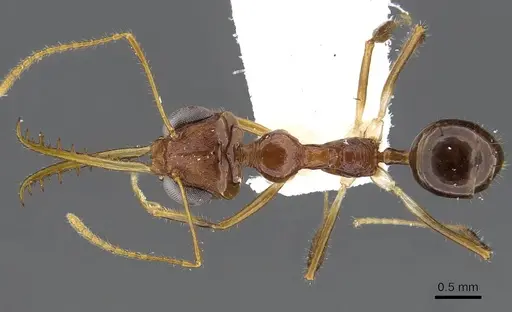
Irodalom
Elterjedési térkép betöltése...Termékek betöltése...